Book 8 teaser: Your heritage doesn’t determine your legacy, and that’s a good thing.

As a 10th grade English teacher, I learn a lot about students from their writing. I read about divorces, neglect, drug use, alcohol problems, and misery.

And I hold all of their words sacred. They’ve trusted me with them, and they could write about something easier, but they share what eats at them. They have to, before it consumes them.

My students likely don’t realize how much they’re revealing, but maybe they do. Maybe they hope someone’s paying attention when they write, “But that’s not who I want to be. I plan to be different.”

And I write back to them. “I know you’ll be different. You’re amazing already.”

They apologize for turning in work late—someone was kicked out of the house in the middle of the night, someone was taken away by the police, someone was using again, someone didn’t pay the electricity bill, an elderly guardian was afraid of the snow and didn’t want to send the child out into more danger—

I smile and say, “Whenever you can get it to me.”

“I will,” they say with determination. And they do. And it’s good.

My heart seizes nearly every day. Yesterday a student, with tears in her eyes, said, “Today’s my last day. My dad got custody again and I’m moving to his town this weekend.” Her best friend sat in the corner, weeping.

I realize I have no real problems—none at all. The ones I have are merely stubbed toes compared to the severed arteries these students walk around with, smiling bravely and vowing to be better to the world than it’s been to them.

I wish them luck. I pray silently for them, asking for inspiration as to how I can help. All I get back is, “Show them love. They need someone to love them.”

I know some people who take great pride in their heritage, brag about their legacy and ancestors, sit arrogantly on the shoulders of giants as if they climbed there all by themselves.

Then there are others who have crawled out of pits their families have dug, and they wipe themselves off and declare, “My children will never know of this place.”

I stand in awe of the second group.

Since I’ve moved to Maine last year and was asked to be a permanent substitute teacher (I love that oxymoron), I’ve taught my students probably a dozen things. In return they’ve taught me thousands.

I have a lot of catching up to do.

“I’ll remind her every day that her heritage doesn’t determine her actions. She’ll be the best beginning of a new legacy.”

~Book 8, The Last Day, coming Summer 2018

best beginning BOOK 8 teaser

The semester in which Mahrree Shin suddenly became my mentor

I haven’t been too active on my blog since September, as I’ve mentioned before, because I was offered to teach 10th grade English at a local high school when a teacher suddenly had to leave.

The strange thing is, I’d forgotten that I’d given up on the idea of teaching a couple of years ago. Burned out by grading and freshman college students’ attitudes, (“Wait, college is hard?! No one told me college would be hard!”) I had pursued a small business and my writing.

Then why was I suddenly agreeing to teach high school in a matter of days?!

I still don’t know why, except that, strangely, I really, really wanted to.

The adjustment has been immense—working full-time, learning how to teach high schoolers, reading their novels rapidly to be two days’ ahead of them. I’ve never worked harder in my entire life. I’ve never been so drained and depleted and exhausted.

And, shockingly, I’ve loved it.

Well, most of it.

Because there’s 2nd period.

Everyone at this school of 400 students and teachers knows about my 2nd period. A senior that I have in 4th period stopped by last week to turn in something, glanced at the back row of boys I teach, and exclaimed, “Whoa—you’ve got ALL of the rotten ones!”

Yes, yes I do. Out of 20 students, 17 are boys. One-fourth are retaking the class because last year’s teacher failed them (and yes, I’ve heard all about THAT injustice from them repeatedly). A couple are retaking English 10 for the third time. They’re juniors who are feeling a bit panicked.

As you might imagine they have attitudes. Disrespectful, bitter, bratty, insolent—yep, I’ve got the full gamut. This has always been my biggest nightmare: a classroom where half of the students are the school’s known bullies.

And, for the strangest of reasons, I love each one of them.

No, it’s not a strange reason, really; it’s an absolute gift. The first day I faced them—and I had been warned about them by the assistant head of school, the head of the English department, and their current substitute teacher—I gazed over their scowls and cynicism, and I was filled inexplicably, wholly, with love for them.

Realize, this is NOT my nature. I can be rather nasty and cynical myself, as anyone whose read my books can attest. But not right then, and not since then. I was filled with pure love.

It wasn’t my love, but God’s love for them. I felt at that moment such a profound sense of, These are my children, and they need someone to care for them. This is your task, and here’s how I feel about them.

Staggering. Absolutely staggering.

I never before realized how immensely God loves each of His children–even the rotten ones. So much so that He’ll send anyone He can find to help them.

weekly meme Not too far gone

He’ll use anyone willing. Even me, as inadequate and unprepared as I am.

The head of the department had suggested that what these kids needed most was someone to “mom” them, and since I have nine kids she assumed I knew how to do that.

I didn’t, but God does. And daily He’s tutored me in what to do when someone acts up; when a student etches poorly drawn male anatomy into the desk; when another student wanders the classroom in search of the garbage can to toss his breakfast sandwich into from fifteen feet away (the sandwiches tend to fall apart in flight, just fyi); when a frequent-failure, who is failing yet again, lays down on the floor and announces that he’s no longer writing but is listening, so keep talking and don’t mind him when he starts snoring; when another student, smelling strongly of marijuana that he claims is his parents’, looks at me with his bloodshot eyes and hazy expression and says, “What was the assignment again?”  

And I’ve been tutored as to how to handle the other half of the class which is frustrated with the ding-dongs on the back row and yell, “She told us eight friggin’ [at least, I think he shouted friggin’] times what we’re doing! I counted! Shut up and listen for once!”

And I’ve been channeling Mahrree Shin, when she was teaching the delinquents of Edge. When I first drafted books 3 and 4 and described Mahrree’s experiences with her troubled students, I borrowed examples from friends who taught, and also my limited experience in once teaching English composition to the auto shop students at a local community college. They, too, were insolent and boorish. The college had thought that teaching them a humanities class might instill in them some humanity. That’s material for another post, but I’m happy to report I did have some success with them.

But that was long ago, and these are very different boys. And nearly every day I’ve thought, “What would Mahrree do?”

I’ve been taking her advice, which is also the Creator’s advice:

I never yell, although many of my front half of the class have told me to shout at the back half. “Just let them have it!”

But I never felt that was right; Mahrree never lost her temper. She’d stand in front of the class, smiling sweetly (sanctimoniously?) while waiting for the noise-makers to lose some steam. She’d stare at the worst ones intently until they squirmed and blurted, “What?! What do you want?!”

“To begin class. Are you now ready for me to talk?”

“Yeah, talk already! You’re creeping me out!”

Mahrree would never lose her cool, even when a handful of boys, upon hearing they could throw away their homework, crumpled the pages into balls and started hucking them, a dozen at a time, toward the garbage can. No, Mahrree would critique their terrible shots, exclaim loudly that she’s glad none of them are on the basketball team (while knowing that two of them were) because they couldn’t make a shot to save their lives. Then she’d pick up the balls of paper and chuck them back at the boys, demonstrating how to properly hit a target.

Mahrree wouldn’t insist on absolute silence or obedience, knowing that these boys trapped in her classroom were counting down the minutes until they could break free and run home to their four-wheelers, or their lobster boats, or their shotguns which beckoned them all day long. She’d play games in the class with vocabulary words, knowing that the teachers on either side of her classroom were forgiving of their volume because, “It’s 2nd period,” and even their students know about Mrs. Mercer’s 2nd period.

Mahrree would bring in the occasional treats, feeding them pomegranate seeds when they discussed Persephone and Hades, giving them “bird poop” cereal mix when we discussed Poe’s “The Raven,” and tossing Smarties to the students who won the last round of vocabulary Bingo.

Mahrree would worry about the students’ need to be heard, to be engaged, to feel like their 80 minutes in the classroom wasn’t an exercise in frustration.

Mahrree wouldn’t care about her ego, or her students’ lack of respect, because she knows she’s there for them, not for herself. It’s about the kids; it’s never about her.

Mahrree, by the way, is NOT like me in the least bit.

But she’s been tutoring me; God has been teaching me–daily, hourly, and every minute–how to cope.

And I’ve never learned more about teaching, about myself, and about God’s love for every one of his children—EVERY last one of them.

Mahrree would, however, count down the days until the semester was over. That, we have in common.

Eight days. Eight.

And I suspect that right after I do my Happy Dance on January 12th, I’ll shed a few tears as well, because this mom will have lost a lot of her children who she learned to love.

Because God showed me how much He loves them.

(By the way, Book 7, The Soldier in the Middle of the World? I’ve nearly finished proofing it. It’s coming, friends–it really is!)

When’s Book 7 coming? Umm . . .

This is what I published on my “When’s the next book being released” page:

When’s the next book being released?!

How about OCTOBER 2017? I’ve been tinkering with this one (and Book 8) for about five years now, and they’re rarin’ to go! I’ll keep you updated with teasers and the book cover soon, but until then . . . hey, it’s not too far out!

So, the above didn’t happen, obviously. Book 7 is ready–fully edited and rarin’ to go. But since this is a one-woman production, this “one woman” is responsible for formatting and cover creation, then review of the printed product, then revisions . . . all of that takes about 24-36 hours of work.

Hours I don’t have.

Because I’m teaching high school full-time, I find myself doing 3-4 hours of homework each night to be prepared for the next day. (More homework than my students will ever do; something’s unbalanced here.) That leaves me just enough time to feed my family and give them a hug goodnight before I fall asleep at 9pm. (I used to do my best work from 10pm–11:30pm.)

I’m hoping Christmas vacation may offer me the time I need to polish up Soldier in the Middle of the World. In the meantime, other priorities are keeping me from sharing Young Pere and Perrin and Mahrree with you. We all feel badly about that.

By the way, book 8, the final in the series, is also very close to completion, but it will likely come out during summer vacation.

Thanks for your patience. I’m still thinking about you . . .

Book 7 Teaser: The best beginning, the ones who change the future

There’s the notion of the family-changers, the cycle-breakers, the ones who look at a long line of behavior and/or abuses and decide, “This is not a legacy I will continue. My children’s lives will be markedly different than mine.”

It’s the realization that just because you were treated one way doesn’t mean you have to perpetuate that behavior. It doesn’t matter what your parents, siblings, or grandparents do; you can choose something better. You don’t have to resort to the feeble excuse of, “Well, that’s how my father/mother/sibling treated me!”

You can be something much more.

You can change the future for those who follow. 

Those are the most awe-inspiring people I’ve ever met, those who won’t allow the filth to continue one generation further.

And those are also some of the happiest people I’ve ever met.

“Versa,” Peto said, “you are like a filter. All the filth the Thornes possessed, you’ve cleaned from the water. Their influences can go no further than you. Your mother says you’re like the general, but you’re nothing like him. You’re strong and solid in ways he’ll never be but wishes he were. The destruction of the Thorne line ends with you and your sister Delia. Your mother ended the muck of the Snyd line herself. Your descendants will look to you as the best beginning, as the women who changed their futures.”

Versa scoffed. “Rector Shin, you Salemites are far too optimistic.”

“I grew up in the world, Versa,” he reminded her. “I still possess a great deal of its cynicism, but not about you. You belong in Salem.”

~Book 7, The Soldier in the Middle of the World, coming October 2017 (Or at least I’m doing the best I can to get it ready. Suddenly teaching school full-time and coming up with lessons nightly has taken all but a few minutes of every day. But this book is rumbling in the background, and I’m working on formatting it in random moments here and there as quickly as possible, because Book 7 is impatient, clawing to break free, and it’s beginning to hurt.)

GEDSC DIGITAL CAMERA

Book 7 Teaser: Tell God what you want!

“Your problem is that you haven’t told God that you need a miracle. Tell him! Demand a miracle!” That was the advice my friend gave me when, seventeen years ago, we were drowning.

I was pregnant with my 6th, my husband had lost his job and the part-time job he had in the meantime wasn’t paying, and my adjunct contract wasn’t going to be renewed because of budget cuts. We were falling behind in our mortgage payments and our savings were gone. Very soon we’d be in very dire circumstances.

“Tell God exactly what you need and get that miracle!” my friend insisted.

So I prayed—earnestly and daily—telling God what I wanted: a good-paying job for my husband so that we could meet our financial obligations, and the ability to keep the house we’d built so our family could be raised in a great neighborhood.

Not much—just what all of our other friends and family had. Not a fancy car, not a dream vacation, not a huge house—just the bare necessities.

Others also prayed in our behalf—intently and constantly—until finally the miracle came: my husband got a job.

But the not-so-miraculous part was that it was 2,000 miles away from that great neighborhood and my family.

And it wasn’t going to pay enough.

And we’d have to leave our house.

But maybe, just maybe—it’d be ok?

With enormous reluctance and huge tears, we moved our family cross county, put our house up for sale, and waited for the next miracles.

But they didn’t come as I demanded. Where we’d moved was outrageously expensive, and my husband’s education-based income would never cover rent, so he found yet another job, this one a couple hundred miles away, leaving me and our six children to mooch off of his family for several months.

The sale of our house fell through—four times—and because we couldn’t get caught up on the payments during those eight months, it was going into foreclosure with letters sent to us almost daily from lawyers and banks.

I was so humiliated and depressed, alone and still drowning. Did we not have enough faith to make those miracles happen? What more was I supposed to do to get my prayers answered? What did I still lack? Why wouldn’t God give me what I needed and what our family deserved?

I began to realize something: demanding miracles from God wasn’t how it was supposed to work. God is not, as Harry Emerson Fosdick once quipped, “a cosmic bellboy for whom we can press a button and get things done.”

Maybe I wasn’t praying for the right things. Maybe I didn’t even know what those “right things” were?

So I stopped telling God what I wanted and needed, and started asking Him to help me understand. I asked Him to change my heart to be submissive, to meekly take whatever was thrown at us. I was so low anyway, I didn’t have anything else to lose. I was hopeless, in heart and spirit.

I was broken. That’s what God was waiting for.

That’s when miracles began.

Miracle #1–We found a house to rent across the street from my husband’s new job. It was condemned and would be torn down in six months, had mice and skunks (in the cellar) and roaches, but we could live there for $350/month and be a family again for a while. The fact that I was grateful for such accommodations after living apart for eight months? Miraculous. (I’ve written about this house before here.)

virginia house

And when it rained, water poured in on all the edges where the walls met the ceiling. But that was ok, because the vines growing in the house needed to be watered.

Miracle #2–We finally found a buyer for our old house, and the day before it was to be sold at auction we closed on it and were able to negotiate payments for the second mortgage, which wasn’t covered, down to a reasonable rate. We paid it off five years later.

Miracle #3–Astonishingly, the mortgage company hadn’t reported our delinquency properly, and on our credit report was only that we’d missed one monthly payment. Our credit rating fell a bit, but three months later we were in a position to buy a brand new house at $600/month.

A full year after I TOLD God what I wanted, I realized I was in a completely different situation than I’d ever imagined but . . . I liked it!

Our new life was giving us experiences that we never could have had any other way. Our kids were flourishing, our new house was adorable, my husband loved his job, and I had work as well.

And I was very glad that God did NOT listen to my demands.

A couple years ago we drove through our old neighborhood to see the dream house we had left and lost in 2000. I was so grateful that we did NOT raise our kids there. Not that there was anything wrong with the neighborhood, but I realized how limited and narrow our lives would have been had we never left, instead of the wealth of experiences God gave us instead by forcing us away.

He knew what we really wanted, rather than what we thought we should have.

The real problem, it turned out, wasn’t that I needed to demand a miracle and insist on my ways, but that I needed to ask God what His ways were for us. And His ways have always been far, far better.

     With growing despair, he sat back on his heels. It was time to send the general a message.

    “It’s the right thing to do, right, Puggah?” he whispered.

     It’s an intriguing idea, Young Pere. But is it the right idea?

     “Well, you did it! At least, you were trying to do it, then did it in another way—”

      Young Pere, think about that—I tried to do it but failed. It wasn’t meant to be. It isn’t meant to be with you, either. 

     He scoffed. “But you just said it was intriguing!”

     Yes it is. But just because it’s an intriguing idea doesn’t mean it’s the right idea. Especially when the Creator has something much better in mind. 

~Book 7, The Soldier in the Middle of the World, coming October 2017

GEDSC DIGITAL CAMERA


In praise of regular days

My 10-year-old said, “I’m bored. What are we doing today?”

“NOTHING!” I shouted in delight. “Isn’t that amazing!”

“So,” she said, “we’re going nowhere and have nothing to do?”

“Isn’t that WONDERFUL?!”

She frowned but I was grinning. It’s been months–maybe even a year–since we’ve encountered so many quiet days. The frenzy of fixing things up, of taking things down, of moving cross country, of readjusting to new normals . . . all of it’s over, and for the past few weeks we’ve had boring days. Lovely!

I probably don’t appreciate regular routines as much as I should, but I am today. In fact, I feel guilty for not realizing that a couple of weeks ago we “settled in” because I’ve been glued to my laptop, deep in final edits of Book 7 (and Book 7 will likely be ready much faster than I expected–WONDERFUL!).

There’s immense comfort in knowing we’re facing another dull day, another routine with no pressing matters looming. School won’t start for us for a few weeks yet, and while we’ll have to move from this rental house again it won’t be for a couple months, so for right now we have blissful, sweet boredom!

It’s like God presses the pause button on occasion and says, “Let’s give you a few days, see if you notice that the biggest problems are that all the purple popsicles are gone and that the kitten mistook the bathroom rug for the kitty litter box again. For a few days, you can just be. Look outside, take a walk, notice the groceries aren’t running out too quickly, and breathe deeply.”

IMG_3105

When I’m done writing, I’m going to sit outside in this chair (apparently it’s not just decorative but useful), maybe get a few splinters in my behind, but enjoy it and a dull day.

Not everything is a crisis, not every day with children is chaos, despite what so many blogs and memes want you to believe. There’s no need to look for or create drama. We don’t even have to check the news or social media to find a reason to rage and roar at the world.

We are allowed, believe it or not, to simply sit back and enjoy the pause button days.

Real troubles will come again on their own, so let’s revel in the days that are dull.

“And what are you planning to do to Peto? Another dishonest distraction? I think Rector Shin is dealing with enough real problems without you creating a new one for him to chase!” ~Book 7, title to be announced VERY soon!


The best birthday present: realizing I didn’t WANT anything!

For my recent birthday, a dear friend sent me an Amazon gift card. My teenage daughter saw it and said, “Ooh, lucky you! What do you want?”

Image result for don't get me anything for my birthday

No, seriously, it’s not.

For the first time in my life I could honestly say, “I can’t think of anything that I want.”

Victory!

Ok, I know that’s a weird response, but for a large part of my life I was a “buyer.” Frugal—yes, but also very covetous. As a teenager, I saved up for months for a name-brand denim jacket because I was sure “looking right” would bring me status and approval. It didn’t.

As a young married, I scoured decorating magazines and watched HGTV for hours (back when it was still interesting) plotting how to decorate my own humble abode. Having a house that “looked right” would bring me happiness and contentment. Nope, didn’t happen.

Even now I still struggle with covetousness. Last week I passed by a gorgeous house for sale and thought, “I want that!” But I don’t need something that large, I can’t afford it, and I already know it won’t bring me additional happiness.

Because buying and owning things don’t make life better. Things just smother life.

About ten years ago, after some financial setbacks, our family of ten was renting a small place in a town I don’t care to remember. It was there that I realized something: I wasn’t any more, or less, happy there than I’d been when I had a nicer house and better stuff.

Duh.

My happiness came from being focused on the people around me, not the stuff around me. I was very worried about my kids, having moved them from one place to another, and yet another in a short amount of time. We didn’t discuss what we’d lost but what we still had, and fortunately for us our kids’ wants were few and easily meet with a trip to the dollar store. (Since we’d quit watching TV a long time ago, our growing kids didn’t know what was trendy and what they “should” want.)

More recently I’ve learned about minimalist movements and have written here and here and here about my own attempts at eliminating junk. Before our move from Utah to Maine, I took countless trips to the dump and donation center, worried that all we owned wouldn’t fit in the largest rental truck. I’m happy to report that I’ve missed NONE of the stuff we threw/gave away, and that our 26-foot moving truck even had some room to spare. Not bad for a family of nine and all their possessions.

I’ve still got a long way to go in minimalism, though. Because this rental house has no closets, my bedroom has four large boxes of comforters, sheets, and pillows–more than we really need. Half of the boxes we packed for the move we haven’t touched yet, but are sitting in the garage waiting for the next move to a more permanent house. Some of those boxes may never be unpacked but tossed instead, and I’d be fine with that. I have dreams of moving into a tiny home when we retire in twenty years, but right now I’m needing the space of about eight tiny homes for what I still own.

But in my old age (sliding to 50, so I’m growing reflective in my maturity and sniffing haughtily as I do so) I’m realizing that my happiness is linked to only a few things:

  • my family, healthy and progressing;
  • my ability to write;
  • places to walk;
  • a peaceful place to live;
  • time to study and worship; and
  • enough clothes for a week.
Trish 2015 portrait small

I recently read that “women of a certain age” should avoid denim. I’m now avoiding things that tell me how I should dress.

(About those clothes: I’ve culled my wardrobe to have changes of clothes for one week, two batches for summer and winter. My uber-minimalist teenage son, who can fit all his possessions into two large bins, has taught me that I don’t need more than eight t-shirts and five pairs of jeans. But my sweaters . . . that’s still a work in progress. And I do still have a denim jacket, one that I inherited from a friend some years ago—it’s the one I’m wearing in my author photos.) ==>

My list above is short and peaceful. Quite the contrast to the lists of what I wanted when I was younger; those spanned 30 or 40 items. Seasonal duvet covers, dining room hutches, wall-hangings, couches, kitchen canisters, a bench for the front porch, skirts, jackets, sweaters, collectibles. (Oh, the dreaded collectibles! They’re all gone, now.)

But this year for my birthday, I couldn’t think of a single thing I wanted, because I already have all I want!

(My husband and kids did buy me a boxed book set—the second Percy Jackson series—which I’m sharing with my 10-year-old because she shared with me her boxed set of the first Percy Jackson series. Yes, I’m very mature for sliding toward 50 and I’m still sniffing haughtily about it.)

I have to admit there was something I wanted this year: a family portrait. For one weekend, the first time in over four years, our entire family was together, and I paid money (and I hate spending money) for a photographer to prove that. Here’s the wonderful result:

trish-9 FIXED

This is all I need: my family, healthy and happy. (With adequate clothes–note the prevalence of t-shirts and jeans.) But since I can’t live with all of them anymore, this reminder that they are still around, and still mine, has to be enough.

All I need for this portrait a frame. And maybe if I had a gift card to buy one . . .

Hey, Paula–guess what you bought me for my birthday!

     “The world is all about getting more, building higher, and looking better. The world believes ‘enough’ is defined by what they have, plus a little more. So they’re never satisfied. Their hearts are small and weak.” Gleace sat back and looked at his guests sadly. “And that’s why the world is dying.”  

     Perrin sighed. “I once told Shem I thought the most dangerous sentences began with the words, ‘I deserve . . .’”

    “Precisely right. The world will always believe it deserves more.”

~Book 5, Safety Assured Leaving East of Medicetti, Forest at the Edge series

To all my high school teachers 30 years ago–I’m so very, very sorry

While I was getting fingerprinted yesterday, I realized I had a lot of apologies to make.

No, I hadn’t committed any crime, except for becoming a substitute teacher for a local high school.

Which means I remembered my high school years and the way I behaved.

No, I wasn’t smoking in the east parking lot, being a vandal, or getting into an other 1980s-teen-movie troubles.

My greatest problem: I was obnoxious, with a capital O-B.

I was sweet and charming (or so I thought) and I would never, EVER shut up.

18209039_10209367617331632_5513879372139381550_o

Gee, which one might I be?

So to all my high school teachers who I interrupted with some clever quip which derailed their excellent explanations or lectures, I am very, very sorry.

I wasn’t clever–I was annoying.

We all know it, don’t bother trying to save my feelings at this point. I’m a grownup now.

PICT0016

Yeah, that girl–the “charming” one.

I did get to apologize directly to my AP Biology teacher about a year and a half ago. I found him online and thanked Doyle Norton for his wonderful lessons (I still remember the ATP Choo-Choo train). Then I wrote, “I also want to thank you for your incredible patience, especially with students like me who never shut up, trying so hard to be funny when you were trying so hard to teach us about the circulatory system.”

Generously, he responded with, “Oh, I don’t remember you being obnoxious.” I’m sure he didn’t remember me at all out of thousands of students, but I’m sure he remembered the mouthy ones, putting them all in a category which, at the end of the day, made him rub his face in exasperation.

18238193_10209367625811844_965545072315164314_o

Dear Doyle Norton even took a busload of his biology students to southern California each Easter. Patience of a saint. Or the madness of a scientist–I’m still not sure which.

I rub MY face in exasperation just remembering what I was like 30 years ago.

So to all my teachers at Viewmont High School–I am so, so sorry. I don’t remember any of you losing patience, becoming angry, or doing anything more than smile with GREAT forbearance at me, and now that I’m your age (and older, I’m sure), I’m even more impressed with the examples you set.

I also need to apologize to my friends, particularly Heather McClure, wherever you are: you not only sat next to me in AP Biology but also AP English, the two classes where my mouth was the mouthiest. I kept up a quiet running dialogue during both classes all year long, and you so very generously, very kindly, would only smile and keep your eyes on our teachers instead of turning around and screeching at me, “SHUT UP ALREADY!”

I would have deserved it if you had.
Did you pass the AP tests?
I’ve worried about that, for 30 years now.
More apologies if you didn’t. It was completely my fault.

I’m remembering all of this as I mentally try to anticipate what substitute teaching will be like, and I’m reminded that we never fully escape our past but usually end up paying for it in some way.

I think I’m about to pay for it this fall, and now I’m praying earnestly for the same great forbearance my teachers showed to me. Because the one thing–the main thing–I remember about my teachers was their enormous kindness.

Even when there were kids mouthier than me (shock!) I remember my teachers’ patience and  . . . I guess it was love. Their concern for us was greater than their need to protect their egos. They put us first instead of themselves or their lessons.

I realize teenagers and times have changed dramatically over the past 30 years, but what hasn’t changed is that children of all ages need to feel loved, need to be treated with kindness, need to have great forbearance shown to them.

I’m praying daily now to develop those essential skills myself, and hope I’ll never have to apologize to my future students for never being kind enough. (But I probably will–I’m sorry. Again. Already.)

    Go bold, Mahrree wrote on the scrap paper late that night.
    She frowned at it.
    It should have been Go boldly, right? She got it wrong all those years ago. But that indicated going somewhere, and what she’d meant was, Be bold.
    But then it would have been, Be bold, or don’t be at all, which was far more fatalistic than she intended.
    She scowled at the paper. Things are so much simpler when one approaches them with the over-confident superiority of a teenage mind.
    Now, as an adult, she finally realized just how simplistic and incorrect her old motto had been.

~Book 1, The Forest at the Edge of the World

They may do that, but we do NOT

It’s getting harder to teach my children civility when they see mature adults deliberately flouting the law.

Like right here:

20136454_10210049208490985_797276505_n

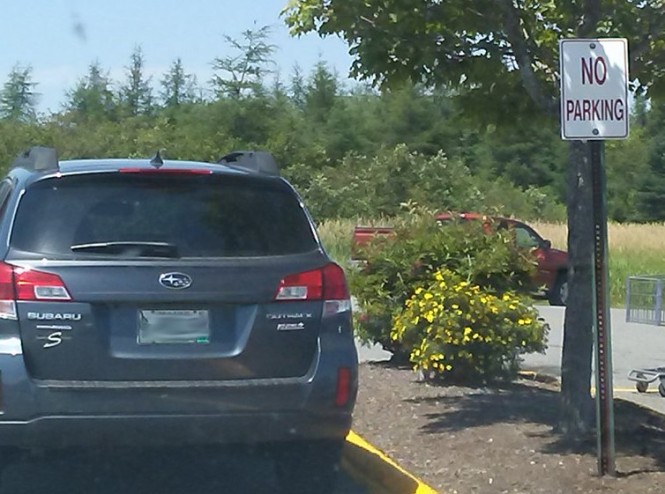
We were at the grocery store waiting for my daughter when a seemingly healthy man around 60 and wearing nice vacation clothes pulled his Subaru up to this sign. I watched as he eyed it, pondered it, then shut off his car and got out. Astonished and knowing he saw the sign, I watched as he took a bag of trash to a can at the front of the store. But he wasn’t just tossing garbage; he took a cart then went in. This wasn’t a quick trip; he was shopping.

As I blinked in confusion, I heard, “Why’d he do that?”

Yessirree Bob, you who broke the law: a 13-year-old saw you ignore legal parking spaces ALL AROUND us, and saw you instead choose to do whatever you wanted.

“That’s against the law, isn’t it? Parking where you shouldn’t?”

Think about this: how are kids supposed to become civilized adults respecting the law when they see seemingly-respectable adults deliberately ignore it?

And people wonder how seeds of anarchy are planted, how civilizations crumble. It’s this way, folks. Seriously–THIS WAY. It starts with our youth witnessing selfish arrogance, and their own begins to grow.

Except when kids have moms like me who don’t put up with that behavior.

Fuming quietly, I said, “That IS against the law, and even though he may choose to do that, we do NOT.”

Now I try very hard to always think the best story about people, to assume goodness or innocence when something seemingly bad is happening. So perhaps this man has early signs of dementia or Alzheimer’s and the sign confused him (a worrying thought since he’s driving); or maybe, because marijuana is legal in this state, he was buzzed (another worrying thought since he’s driving); or maybe he can’t read English and didn’t understand the sign (which is doubtful because he could have seen where the other dozen cars were parked and easily deduced where he should leave his Subaru).

Still, no matter what the reason, what an impressionable youth saw was an adult showing no regard for the law, or anyone else for that matter.

This is a huge problem.

I still believe in respecting the law, in treating others with kindness, and in doing what’s right even if–

No, ESPECIALLY when no one else seems to care.

So to my son I said, “Look how his car is blocking traffic, how he’s created a dangerous situation. People can’t see around him at that intersection. The sign is there to protect everyone, and he’s causing problems by his behavior.”

Don’t misbehave around me, because my duty as a mother demands that I draw attention to the behavior and teach my children what is acceptable and what is NOT.

Disrespect is exploding everywhere. I’ve written before how I’ve told my kids why I’ve “hidden” a number of adults they know on my Facebook feed because they won’t post anything civil. Name-calling, ridicule, snarkiness–none of that is ever acceptable behavior, but now it’s become a pastime.

Two days ago I came across a house listing posted on Facebook by someone with a large following. It wasn’t her house, but because she found its decor gaudy and over-the-top, she went out of her way to hold it up in a public place to mock the owner of the house. She went so far as to insinuate that certain religious groups “helped” the seller create such an “outrageous” house.

More than 80 people joined in the public derision of this innocent home owner’s pride and joy. All she was trying to do was sell her house. She didn’t deserve to be bullied, and that’s what it was: bullying.

Even more disgraceful was that many who commented were those I knew who claimed to be Christians.

It was if they forgot that Christians don’t bully one another. They don’t post snide comments about anyone–public figures, politicians, neighbors, random people they’ve never even met–no one.

And Christians certainly aren’t supposed to deliver hell to someone. My heart ached for this home owner who would undoubtedly discover how she’d become the object of ridicule simply because her decorating tastes were different than others.

This is not how grownups are supposed to behave. We should have outgrown this childishness back in 8th grade. Immaturity, selfishness, and disrespect is what causes civilizations to collapse. These seemingly-little moments of, “The rest of the world can go to hell; I’m going to do and say and write what I want” will be the downfall of us all.

Because the younger generation is watching. My kids, your kids, someone else’s kids are learning from adults, and what they’re learning is, Anything goes.

Why do adults treat others so horribly? The best I can guess is that they are arrogant yet also insecure. They can feel superior only by trying to show others to be inferior. They’re not interested in building up the world, but in tearing it down so they might have a chance to stand on top of the rubble in some position of authority.

But it won’t work. You can never increase your confidence while putting down someone else’s. Just because more people are engaging in selfishness, arrogance, and bullying doesn’t make any of it right; all of that just makes the world nastier.

There are, however, adults who do behave properly, and being a mother demands that I also point out their civility to my children.

For example, a gentleman I know–and he is a true gentleman whom I’ve award the Internet Civility Award to–is plagued almost daily by a childish adult who posts on his Facebook page why this gentleman should no longer be friends with those of a certain religion. And every day this gentleman kindly says, “Thank you for your input, but your statements don’t change my mind.”

Then his attacker–and he does attack–goes off on a furious rant against this kind man, throwing at him all kinds of vitriol as if the gentleman deserves such rancor for his willingness to befriend others from different walks of life.

The gentleman never rises to the fight, but always walks nobly away.

I watch closely other truly mature adults, men and women who encourage, instruct, and gently, kindly admonish others to live a little better, to be a little kinder, to be more Christlike. Their posts are loving, heartfelt, earnest.

And never, ever mean.

They are my heroes, the ones I also point out to my children and say, “They do this, and so should we.”

Dungeons, spiders, and kittens–what terrifies you?

My five-year-old is currently in the dungeon. Well, others might call it a “basement” but with the damp floor and that smell which permeates every inch of the concrete and rock down there, we’re calling it a dungeon.

He’s chosen to be there, because that’s where his dad’s and brothers’ Warhammer 40k figurines are set up. (I call them “hideous plastic things.”) 

Image result for warhammer 40k figurines

He’s playing with things that look like this^. I guess nothing else down there is as terrifying.

Here’s the weird part–he’s not afraid to be down there, alone, with the spider webs and damp and creepy windows . . . but he’s terrified to pick up his new 6-week-old kitten.

It’s the cutest little thing in the world, cuddly and purring, but it has those needle-like claws and THOSE freak him out. He’ll pet it, he’ll croon at it, build her shrines out of blankets and pillows when she sleeps, but the moment it comes after him and his bare feet, you’d think a mountain lion had been released because he goes RUNNING FOR THE HILLS!

2010-02-07 23.06.16

Blanket shrine to worship the cat. And we’re not even in Egypt.

On the other hand, his 13-year-old brother will love and play with the kitten endlessly, but he’s so terrified of the dungeon/basement that he LOCKS the doors going down there.

This poses a problem for the 5-year-old trying to come back upstairs, and freaks out older brother when he hears the door rattling because SOMETHING HAS COME UP FROM THE BASEMENT!


2010-02-08 20.54.08

The stairwell to the basement/dungeon/Hades.

Fear is a weird and random thing.

Sometimes it makes us run and slam the door. Other times we charge it, like my 18-year-old daughter armed with the shop vac sucking up every spider web with the extension tube. (The dungeon/basement is next, but only once she stops shivering from her last extraction triumph upstairs.)

Other times we call for help, as with my 5-year-old (the dungeon tolerator) who came from the bathroom to announce he couldn’t brush his teeth because of the “critter” in there. Turned out to be a moth in the sink. Another reason why we got a kitten, who I wanted to name “Moth Killer” as a reminder as to how she’s supposed to earn her keep.

Sometimes we’re quiet about our fears, such me pretending to know how to talk to people–especially strangers–all the while my heart rate is at 120 bpm and I’m praying I don’t pass out before the conversation is over, to my own father who I didn’t know was deathly afraid of snakes until I, as a kid, came up to him with our neighbor’s boa constrictor draped around my neck. I’ve never seen a man go gray faster than my father did, and still live.

It’s strange that what makes some people afraid has no effect on others. Birds, for example, send some people into a panic while others keep them as pets. Same with rats. And chihuahuas.

Everyone hates needles, however. I’ve asked phlebotomists about that every time I’d had blood drawn. One nurse told me, “If I met someone who LIKED having a needle jabbed into a vein, THAT would terrify me.”

What’s the point to this rambling? I’m afraid I don’t know.

“There’s nothing to fear but fear itself.” Be honest. You, like me, hear that phrase that think, “Oh yeah? What about [fill in the blank]?” There are DOZENS of things to fear, and here’s the good part: all of us fear something. All of us are cowards about something.

Openly or quietly, there’s something that worries each of us, which is good to remember. That’s not meant as a challenge to figure out someone’s fear and exploit it, but to comfort us all that we really are all the same.

Once I dropped by the house a 13-year-old when her mom wasn’t home. In a small and terrified voice, she asked me to do her a favor. Worried that I was walking into a home invasion scenario based on her solemnity, I nevertheless agreed. Moments later I felt like Wonder Woman as I went downstairs (a nice downstairs, with carpeting and lights) with tissue in hand to extract a spider that had kept this sweet girl from entering her bedroom for the past hour.

I realized then that maybe different fears exist to let all of us be heroes at one time or another. My husband is my hero whenever a live mouse or a dead animal is involved. (Bonus points to him if it’s a dead mouse he bravely disposes of.) Perhaps that’s why he moved us here, so that after a year of living apart I’d have plenty of reasons to rush into his arms and ask him to be my hero because there may have been another mouse . . .

Which now has may thinking that maybe romance is also a weird and random thing.

     When Perrin came home for dinner the tiny cat was still there. It hobbled up to him and began to climb his trousers.
     “Get it off!” he yelled, shaking his leg.
     Mahrree extracted the kitten from his knee. “Honestly. How can a grown man be so afraid of a tiny kitten?”
     “Afraid? That’s what you think I am? Afraid!”
     “Yes! Give me another reason why you run in terror from it.”
      “I don’t run.”
      “Well, you shout!”
      “That’s ridiculous!”
      “You’re shouting now!”
      “So are you! Give it to me.”
       Mahrree clutched the kitten to her chest. “What will you do?”
      “Prove you wrong,” he beckoned. “Hand it over.”
      “Don’t hurt it!”
      “I won’t hurt it. Just hand it over.”
      Reluctantly, Mahrree gave him the kitten. Perrin held it up to his face. It mewed in a manner that sounded like a whimper of fear.
      Perrin stared into its tiny eyes.
      It stared back, then looked down at the height at which it was dangling. It flailed in fright, so Perrin cradled it in his other hand, and the thing began to purr.
      “Why does it do that?” he asked, bewildered.
       Mahrree’s mouth twitched. “Because it likes you. I can’t imagine why, but it does.”
       He evaluated the creature.
       It didn’t resemble a Thorne—captain or general—in any way. It was just a tiny, helpless animal. With needle-like claws. And it made annoying sounds, although quietly.
       Still, those claws were unreasonably sharp, snagging the wool on his uniform.
       Still yet again, it was just a baby.
       “Hm,” he said eventually. “Fine. It can stay.”

~Book 4, The Falcon in the Barn, Forest at the Edge series