My Year of Living Deliberately

I don’t have enough time. Or money. Or control of my life.
And I’ve realized that’s all my fault.

For quite some time I’ve been living in survival mode. I think we all hit that sometimes, when we’re just holding on, trying to keep lives and spouses and children together, barely squeaking by month-to-month, existing with an underlying anxiousness that at any moment, something may fly off and send the precarious balance of our lives in a tailspin.

I’ve also realized that’s a stupid way to live, and I can actually do something about it.

I’ve realized I can live Deliberately. (Yes, with a capital D.)

Some weeks ago I read these words by Quentin L. Cook, and apostle in The Church of Jesus Christ of Latter-day Saints:

We need to recognize that there is a seriousness of purpose that must undergird our approach to life and all our choices. Distractions and rationalizations limit our progress.

This has become my mantra for 2015.

My life is more than halfway over.
At age 45, I suppose I’ve hit some kind of midlife crisis.
Where I work I see many people in their 60s, 70s, and 80s, and I’ve noticed two different groups.

 One group is always in survival mode, and rationalizing that way of life. “I can’t lose weight. I can’t be better. I’ve always had bad genes. I’m going back to the doctor for another prescription. I need more help. ” They whine, they complain, and they age rapidly.

The second group—and I work directly with several in this group—are living Deliberately. “I’ve given up sugar and soda, and I feel so much better. I’m exercising more now than ever. Yes, I have some aches and pains, but that’s not going to stop me from working today. I’ve got babysitting my great-grandkids today after work.” They smile, they tackle their challenges, and they’re aging hardly at all.

In Falcon in the Barn (yes, it’s still on track to come out in early spring!) Perrin is thrown into a level of depression he’s never before encountered. He no longer acts, but is acted upon. Not too give too much away, he becomes a shadow of the man he used to be, and he hates it.

At some point in editing those chapters, I realized I had fallen into the same slump as Perrin, frustrated with my feeble attempts to reduce our debt, to improve our home, to make some progress in my life. Nothing was happening as I wished, because I was letting our circumstances work on me, instead of the other way around.

I’ve observed that successful people have Deliberateness in their lives, a seriousness of purpose, an attitude of I refuse to be the victim. As Cook said, 

My concern is not only about the big tipping-point decisions but also the middle ground—the workaday world and seemingly ordinary decisions where we spend most of our time. In these areas, we need to emphasize moderation, balance, and especially wisdom. It is important to rise above rationalizations and make the best choices.

So, tired of limping along, I have decided 2015 will be my year of Deliberateness—my year of making every choice one of careful examination, and wasting nothing. I’ve distinctly felt God nudging me in this direction for the past few weeks, and I’ve learned that it’s never a good idea to ignore the promptings from the Almighty. And to hold myself accountable (because accountability is the essence of life) I’m proclaiming my goals here.

First, I’m Deliberately trying to write neater, which may not sound like much, but I haven’t been able to decipher my own penmanship for a decade now. I pulled out a leather journal given to me eight years ago which I never before dared to use, bought myself a mechanical pencil, and have already filled three pages with completely legible writing.
I had no idea I was capable of that.

Second, I’m Deliberately eating better. I have issues with gluten, and at Thanksgiving realized I needed to limit my diet again. It was either my brain, or my bread. Since I’m a bit on the zombie side, I decided BRAINS! I Deliberately chose better foods, tried some vegan dishes, and limited my intake of sweets, all in an effort to improve my health.

Something shocking happened. From Thanksgiving to New Year’s I LOST 8 pounds! The last time I lost weight over the holidays, I had to give birth to a baby. Eating healthier was SO much easier. I’ve discovered that I like cilantro, brown rice, and quinoa. (I even know how to pronounce quinoa properly, too.) At this rate, I might actually become the weight I’m supposed to be by the end of summer.
I had no idea I could do that.

Third, I’m Deliberately reducing my time in frivolousness. That means that although I’m a reading junking, I’m refusing to read every little post, link, or meme on Facebook, and I will no longer waste time on silly quizzes that tell me the color of my wind (I’m suspecting it’s brown).
Before I started writing my book series, I gave up watching TV (never miss it), gave up my magazine subscriptions (never miss those, either) and deleted Scrabble and Free Cell from my computer (the only games I ever played). Suddenly, I had enough time to pursue my real goals. I Deliberately follow only two blogs, and when I go to Pinterest, I’ve vowed it will now be ONLY to find a new vegan recipe.

I’m also now writing a tongue-in-cheek pregnancy and baby care book, and reducing my dawdling on Facebook and Pinterest gives me the time to do that as well.
I didn’t realize such a small change could make such a big difference.

I love how Cook puts this:

Sometimes it feels like we are drowning in frivolous foolishness, nonsensical noise, and continuous contention. When we turn down the volume and examine the substance, there is very little that will assist us in our eternal quest toward righteous goals. One father wisely responds to his children with their numerous requests to participate in these distractions. He simply asks them, “Will this make you a better person?”

I desperately want to be a better person.

So I’m also Deliberately going to bed earlier and Deliberately getting up the first time my alarm blares.

I’m Deliberately scheduling time to write and study, and I’m Deliberately watching my bank account every day. I will Deliberately pay an extra $5 here and there to chip away at the debt that plagues us, and will keep track to prove to myself that every little bit really does help. I may be chipping away at an iceberg with a butter knife, but it’s better than pretending that iceberg isn’t about to engulf me.

Yeah, that’s a big list. I’m going to fail at all of those points at some time or another, but so what? I’ll Deliberately begin again. And again. And again. Because at some point when I was writing about Perrin’s struggles (don’t worry—no spoilers here) I realized that if he could make some changes, certainly I could as well.

Because I’m running out of life.
I’ve got less than half of it left, and I want to be healthy enough to play with my three-year-old’s children when he eventually has them.
I want to be mentally, physically, and spiritually strong enough to help all of my nine children when they need it.
I want to write another dozen books.
I want to work long enough to drag us completely out of debt.
I want to be the one pushing that friend’s wheelchair in thirty-five years, not the one riding in it.
I want to look back on my life with few regrets, and I want to feel that I took charge of my circumstances, and lived a Deliberately full life.

When Perrin woke up, he wanted that morning to be significant, to be the day he was truly a new man. He could no longer allow himself to be consumed by himself. There were too many other people needing him, and he could no longer remain indulgently weak. . . .
What was his goal today? Not to be the kind of man the world wanted, but to be the kind of leader the Creator wanted him to be. 

~Falcon in the Barn

The nativity is wrong! And we can blame Christmas carols!

Christmas carols have been lying to us for centuries. The Nativity is WRONG!

But only because the poets who wrote the lyrics simply didn’t know any better.

You see, the image we have of a traditional nativity is merely that: a tradition. (And if you’ve read my books, you know I’m a cynic about traditions.) Most of what we set up in December to remember the birth of Jesus Christ is wildly inaccurate, yet innocently so.

The truth, however, is even more wonderful than what we’ve always thought.

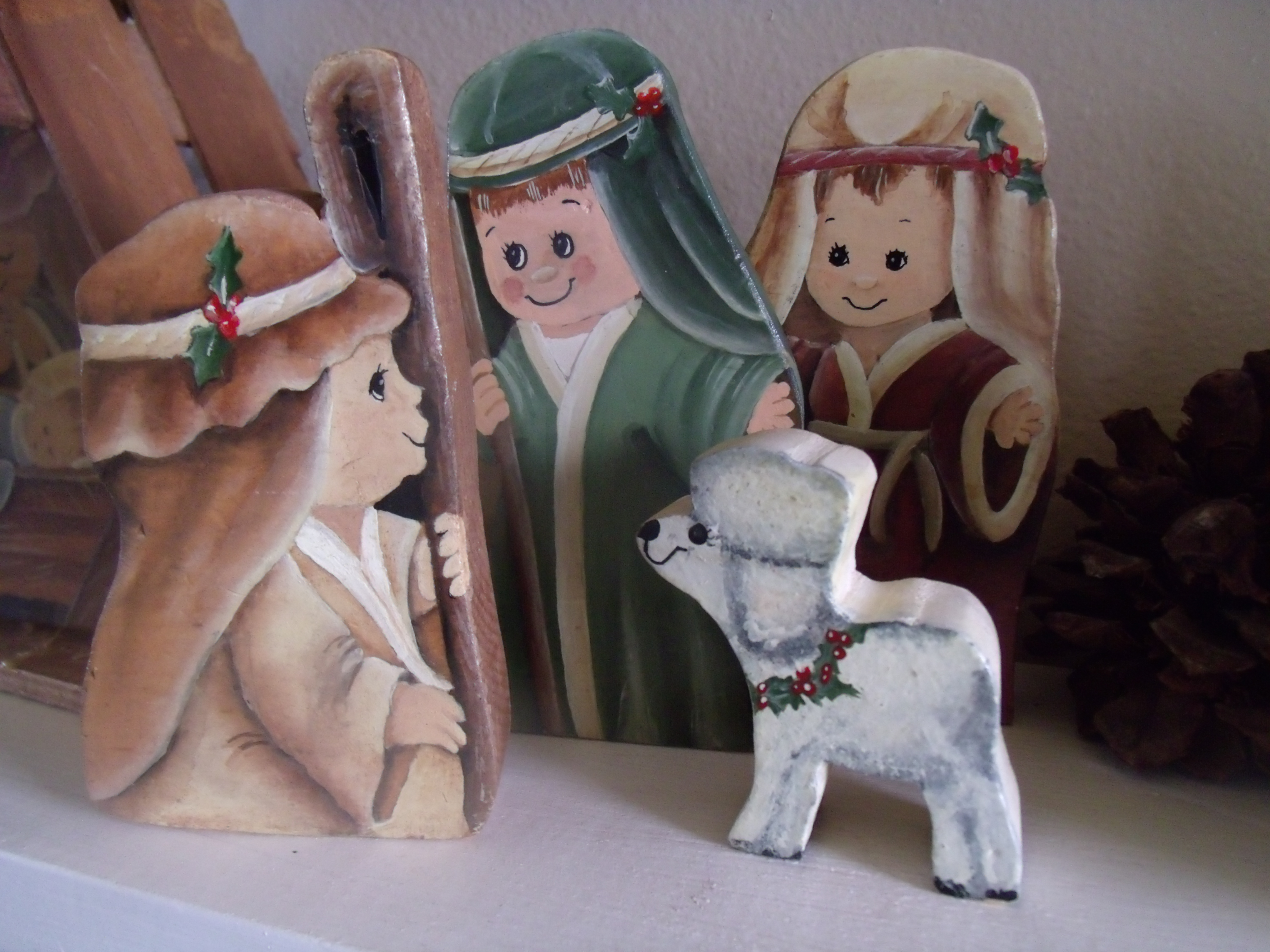
GEDSC DIGITAL CAMERA GEDSC DIGITAL CAMERA GEDSC DIGITAL CAMERAHere are scenes of a nativity I made over twenty years ago so my kids could have something to play with. (Although a few horns have been lost over the years. And a cow’s gone to pasture in the storage room.) More recently I’ve learned about Dr. Margaret Barker, a remarkable Methodist preacher and theologian who studied at Cambridge and has devoted her research to ancient Christianity. She’s written a book, Christmas: The Original Story demonstrating how we’ve messed up the story of the Nativity for so many years.

This year I’ve thought about her insights, and I’ve concluded that we can place much of the blame of incorrectness on our beautiful, meaningful, Christmas carols. My brief research shows that most of the religious songs were written during the 1600 to 1800s, in England and Europe, and reflect much more about the authors’ lives rather than the Savior’s.

Let me make it clear: I love these carols, and am happy when we sing them in church throughout December. But enjoying them doesn’t mean I don’t have to point out a few inconsistencies (because I’m just that cynical).

First, let’s look at some iconic images that really have no basis in anything except . . . well, everyone told us this is how it is.

An, old traditional icon. Creating an old–and likely incorrect–tradition.

For example, how many images do we have of Mary riding a donkey, heavily pregnant, for miles and miles on the way to Bethlehem because of taxes? The image is in movies, books, Christmas cards . . .

Now, where in the New Testament is that donkey mentioned? Yep, nowhere. (There’s an awesome talking donkey in the Old Testament, however.)

Mary likely didn’t even ride a donkey (I’ve read one suggestion that the riding of a donkey is the idea of a preacher in the 19th century who thought it would add realism to their reenactment). And who says they traveled alone? No one in the New Testament. We’ve romanticized the story. Read this fascinating blog (or watch the Youtube link) of Sandie Zimmerman, wife of Messianic Rabbi Jack Zimmerman:

If Joseph was just going to Bethlehem for administrative purposes, why would he have brought his nine-month-pregnant wife? They were told to go to their ancestral home. They lived in Nazareth, but that wasn’t Joseph’s home. Wouldn’t that be careless and irresponsible of Joseph to wait till the very last minute to take his wife?  . . . Don’t you think that Joseph would have been better prepared knowing that the Son of God was coming into the world? So, he was returning to his homeland.

 . . . Here’s what would have happened. First, the Roman census was ordered, and Joseph had to go immediately. Now, when I say immediately, I am sure they went a month or two beforehand, because if you read the passage, it says, “and while they were there, she gave birth.” So they were already there

GEDSC DIGITAL CAMERA

Sorry, donkey. You may not have been there. (And I even glued your ear back on.)

I also recently heard a suggestion that Joseph and Mary knew full well about the prophecies of where Jesus would be born, and deliberately moved to the City of David in anticipation.

And as for the image of Joseph frantically knocking on doors, because the inns were full? Zimmerman suggests that Joseph had a home there already, and it was full of family visiting because of the census (not taxes) so the home was packed. The family had no inns to go to, so Joseph devised another place for his ready-to-give-birth wife so she’d have some privacy.

 . . . Depending on what their house looked like, and let’s say they had a cave-like dwelling attached to the house, Joseph probably would have gone in there, gotten all the animals out, and cleaned it up, leaving the sukkah still standing. Then that’s where Mary gave birth to Yeshua, in something very clean, because Jewish law again would not permit her to give birth with animals around. 

While this alternative may mess with your vision of Mary and Joseph in Bethlehem, I prefer it. Joseph was planning and caring for his wife and future stepson, who would also be his future Savior. He knew what he was doing, and they were prepared.

So how do Christmas carols provide more myth than truth? Let’s examine “The First Noel,” historically also the First Offender, giving us lines such as “certain poor shepherds” and “on a cold winter’s night.” GEDSC DIGITAL CAMERA

Back in 17th century England, when these lines were penned, it likely was a cold winter’s night in Britain. But not in Israel! Forget the idea that there was snow on the ground at Jesus’s birth (there blows the credibility of a dozen Christmas cards I saw at the store). Snow in Israel is exceptionally rare. And Jesus was likely not born in winter, but in the early spring when sheep were lambing.

And about those “certain poor shepherds”? Doubtful there were as poor as our 1600-something poet liked to believe. Likely the real reason these shepherds were in the field with their flocks at night (normally they were kept safe in a sheepfold) was because the sheep were lambing, and these were no ordinary sheep. They were the paschal lambs, and the shepherds watching over them were making sure they were born healthily because they would become the sacrificial lambs in the temple. Remembering the covenant instituted by Moses–sacrificing a perfect lamb for the Passover–these priestly-shepherds would have, more than anyone else, recognized the significance of the birth of their Savior. It was to them that the angels came to announce the Final and Ultimate Lamb for the sacrifice.

GEDSC DIGITAL CAMERA

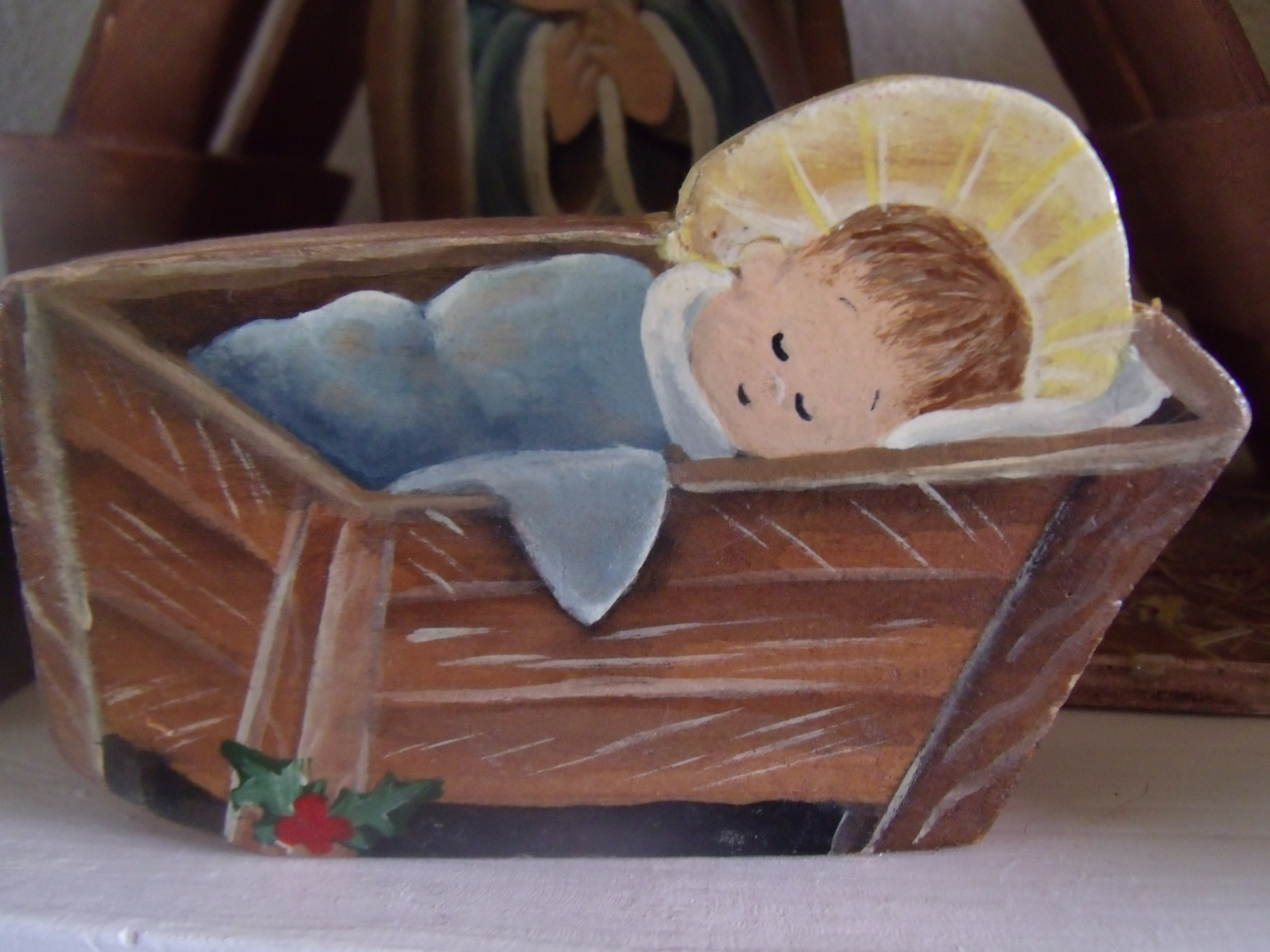
No, I don’t know why I painted him with a blue blanket. Maybe that’s what was in the Holly Babies book where I copied these pictures from.

Which leads us to “Away in a Manger,” a classic children’s carol. When the shepherds came to see the baby in the cave (get that wooden stable picture out of your head), they didn’t find baby Jesus in a “manger filled with hay.” Back in the 1880s when this song first became popular, I have no doubt every manger had straw in it. One source attributes the words to Martin Luther, who back in the 1400-1500s certainly knew about straw and mangers.

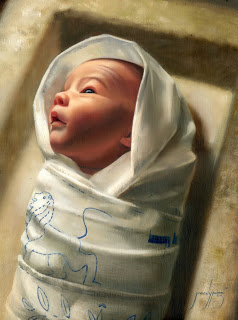
“Little Lamb,” by Jenedy Paige

However, the manger probably wasn’t made of lumber, but of stone.

Read this marvelous blog by Jenedy Paige and the accompanying painting she did of the newborn Jesus. Citing an article by Jeffrey R. Chadwick, she explains what I’ve read in a few other sources. The manger was stone.

Think about that: the manger was stone, likely for holding water (but emptied), since the animals had plenty of fresh grass around to eat. When the shepherds came to see baby Jesus, he was resting in a stone trough, like a paschal lamb sacrifice. They would recognize the symbolism, and fallen down to worship the Lamb of God.

Still, this manger with hay is surely a beloved image. In the LDS Church, we have several Christmas songs written for children to help them remember whose birthday we’re celebrating, but it’s impossible to get rid of that manger and hay.
So I’m sorry, “Once within a Lowly Stable:” Mary didn’t lay her baby in a “manger filled with hay.”
Same to “Oh, Hush Thee, My Baby.”
And to you, “The Nativity Song.” I’m so sorry . . .

Now that I’ve crushed your image of the manger, let’s discuss those swaddling bands. “While Shepherds Watched Their Flocks,” was written by Nahum Tate sometime between 1652 and 1715, and he gives the notion of swaddling cloths a bit of a negative connotation: “All meanly wrapped in swathing bands.” I’ve heard others describe swaddling cloths as evidence that Mary and Joseph were impoverished, and had only strips of cloth for their babe. Oh, the poor baby. No onesies? And it’s so cold outside! (Ah, got you—remember: no snow! Springtime.)

However, swaddling cloths were traditional, expected, and may have carried a variety of meanings. Back to Jenedy Paige and Jeffrey R. Chadwick:

. . . “swaddling bands” as scraps of fabric, [supposedly] showing the poverty of Mary and Joseph . . . were actually a big part of Israelite culture. When a young woman was betrothed she immediately began embroidering swaddling bands, which were 5-6” wide strips of linen that would be embroidered with symbols of the ancestry of the bride and groom. Thus the bands symbolized the coming together of the two families as one. 

And Dr. Barker, according to David Larsen,

“notes that ‘she wrapped him in swaddling clothes’ is literally ‘she wrapped him around.’ The important aspect of the inclusion of this detail in Luke’s story, for Barker, is that the newly born baby was clothed.  The ‘clothing’ of the ‘newly born’ high priest was an important part of the temple ritual where he became the son of God.” 

Sandie Zimmerman says that,

“Mary brought forth her firstborn son and wrapped him in swaddling clothes, back then when a baby was born, the umbilical cord was cut, the baby was salted, and then the baby was oiled with frankincense and myrrh. Even at His birth, that is a picture of His death, being anointed and being prepared.”

Consider this beautiful image as to where else the swaddling cloths may have come from. Zimmerman says,

“During the time of Sukkot, the priests were in the Temple. In the Holy of Holies, the high priest would take his linen undergarment, discard it, and lay it at the altar . . . It was traditional during Sukkot for the high priest’s garment to either be sold for money for the Temple or to be given to the poor.

We know that Joseph and Mary were poor because of the sacrifice they gave in the Temple for Yeshua’s birth, which was two turtledoves. It was required that you sacrifice a lamb and a dove, but if you were poor, they allowed two doves. Doesn’t it make sense that Mary got the wrapping from Zechariah the priest, who got it from the Temple, where it came from the high priest in the Holy of Holies? As she was wrapping her baby, she was wrapping Yeshua in high priestly garments.”

“Meanly wrapped” indeed.

The Stories Behind 12 Pieces of LDS Art

“Nativity,” by Brian Kershisnik

We also have an image of Mary alone, giving birth. Again, there’s nothing in the scriptures about that. Midwives—likely two—probably attended her. Learning about that ancient tradition always made me feel better about things. This marvelous piece by Brian Kershisnik (read full details here) shows all kind of help.

Now, about those “three kings.” We can blame John Henry Hopkins, Jr. who wrote “We Three Kings of Orient Are,” who decided 1) there were three; 2) they were kings, and 3) they were from the orient. GEDSC DIGITAL CAMERA

Nope, nope, and good gravy nope. The scripture in Matthew mentions “wise men.” Could have been two. Could have been 72. Just because they brought three gifts among them doesn’t mean there were three. Coming from the orient is also misleading. They came from “the east,”  but the idea that they are oriental, and have names–Melchior,  Caspar and  Balthazar—are, according to Dr. Barker, “the product of…fertile imaginations.” As David Larsen writes,

“Barker notes that ‘from the East’ can also mean ‘from ancient times.’ The coming of the magi could have been a sign that the ancient ways were being restored.  The gold, frankincense, and myrrh they brought were symbolic of the temple (all have important uses in the temple).”

And they didn’t visit Jesus at the stable (remember–cave). Matthew says they “came unto the house.” Jesus was a young child, no longer a “babe.” He was likely close to two-years-old, since King Herod, in his effort to destroy a future rival, kills all baby boys under age 2. Since it had been two years since the appearance of the star, it’d be very odd if Mary, Joseph, and Jesus were still hanging out in that cave/stable with/without a manger as we envision it with no hay in the stone trough. GEDSC DIGITAL CAMERA

So even though the song, “With Wondering Awe,” written in the mid 1800s in Boston, has the wise men hearing the angels singing (because that sound apparently carries for years) and seeking “the lowly manger,” that never happened. So take the wise men-who-aren’t-kings out of your nativity set. It’s a good thing they came later, because Joseph and Mary likely sold the costly gifts representative of his sacrificial death so they’d have enough supplies to hide in Egypt until Herod was nibbled to death by worms. (Thank you, Josephus, for that tidbit. Now, why don’t we have a representation of THAT in our nativities?)

Finally, the biggest lie of all in Christmas carols: the third verse of “O Little Town of Bethlehem.” Phillips Brooks, another 19th century author, clearly never was around when natural childbirth was occurring, or he never would have written, “How silently, how silently / The wondrous gift is giv’n.” As a mother who’s given birth nine times, I giggle every time I sing that line. And since I’ve shared this observation with a few friends, they now snicker in church during this hymn as well.

So back to my little Nativity scene. Years ago when I painted this set, I intended to make one for each of my children when they had kids. But I have to make a completely different one, now, with a cave, a stone trough, and a dozen wise men who somehow show up a couple years later at a house.
This will take some thought, obviously.
In the meantime, when we discuss our set on Christmas Eve, I spend an extra half hour explaining why everything is wrong, and on Sunday all of my teenage Sunday School students will hear this as well. Maybe one of them will know how I can create a stone trough in a realistic looking cave.

In the meantime, apologies if I’ve shattered your image of the Nativity and the songs we love to sing at Christmas.

But if you now see the birth of our Savior in a deeper, clearer way–you’re welcome. Frankly (or, Frankincense-ly), I now love the entire story even more.

nativity tinted2

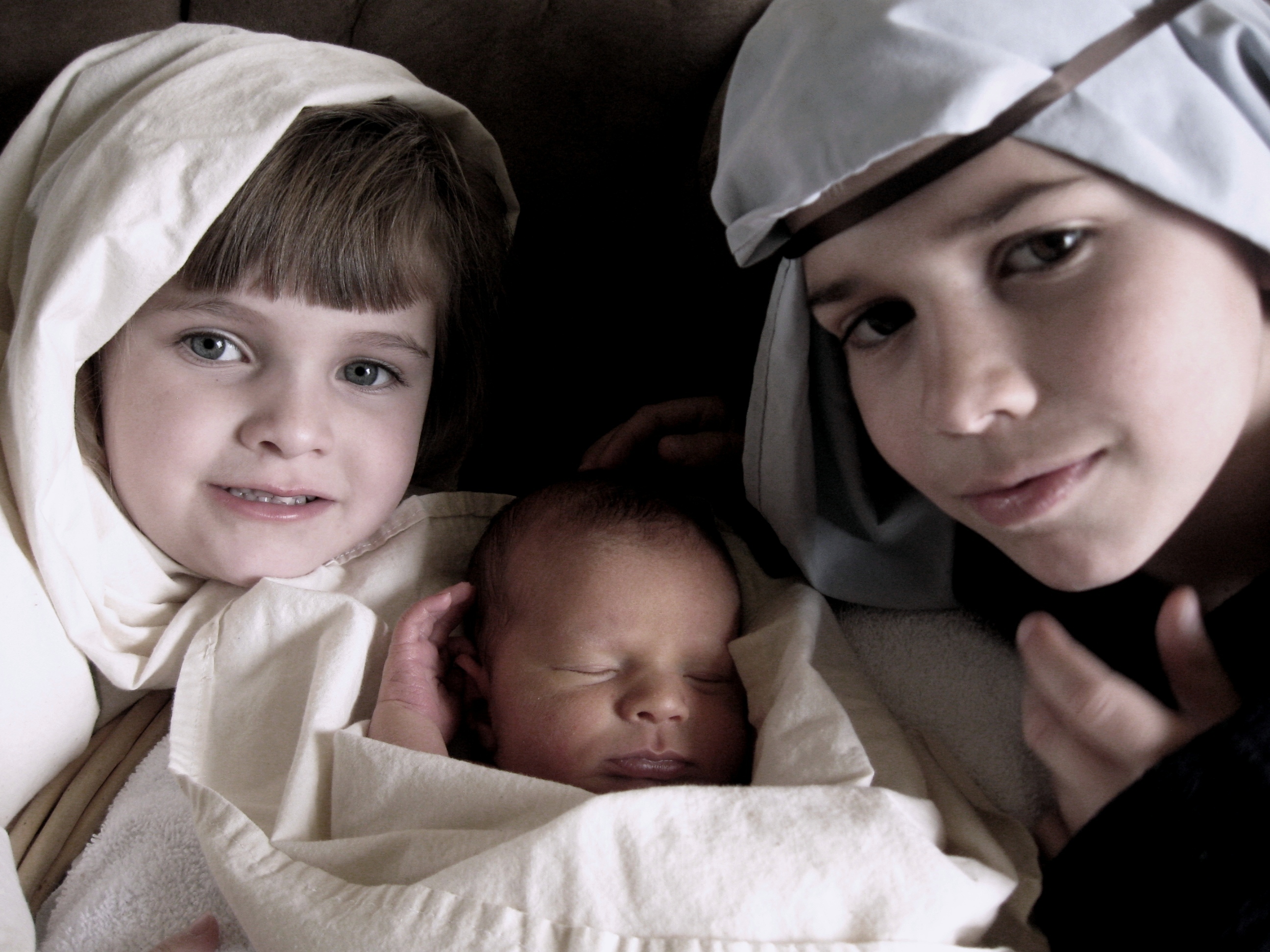
Wildly inaccurate: Mary and Joseph weren’t 4 and 8, respectively. But still a sweet representation of the Nativity.

“I don’t hold with traditions just for tradition’s  sake.” 
Relf Shin held up the call for tradition as strongly as his son did. They tried to drop it on its head as often as possible.
     ~The Forest at the Edge of the World, Book 1

Free download days: Monday and Tuesday, Dec. 1st and 2nd.

They’re here! And ALL THREE BOOKS will be available for free downloads. Click on the book title icons on the right on Monday and Tuesday to get you straight to Amazon.

Don’t have a Kindle? No problem. Download this free app to turn your computer, tablet, or smartphone into a Kindle reader. (Then you can downloads hundreds more books to read!)

What could be a better gift than three free books from yours truly?

legshaverI can think of a lot worse gifts. For example, this: an electric leg shaver.
Why is this a bad gift? Well, likely not for most people, but trust me–do NOT give this to a pre-teen, because then everyone in her family will KNOW that she has legs hairy enough to star in Planet of the Apes, and it’ll take her about 30 years to finally live it down.

(Not that I’m still dealing with feelings of humiliation, but my therapist did say it’s good to get these things out in the open.)

GIVE FREE DOWNLOADED BOOKS INSTEAD! 

Why didn’t you do anything to stop him?

“Why didn’t you do anything to stop him?”

That’s what people frequently asked my father. He immigrated to America in the 1950s, and had a subtle yet clear German accent.  “Why didn’t you stop Hitler when you noticed he was ruining everything? He completely changed Germany, and you did nothing about it!”

My dad would answer, calmly and rationally (even though some of those who asked were hardly calm or rational in their verbal attacks). “First, I was born in 1931, so I wasn’t too influential in the politics of the 1930s and 1940s. Second, what could we have done?”

That question has weighed heavily on my mind these past few years as I’ve watched facets of our government morph into something I don’t recognize as America anymore.

Now, this is NOT an Obama-is-Hitler post. But the questions asked of my father have been clanking around in my mind for some time now. “Why aren’t we doing something?”

I won’t go into details of what worries me in our government (except to whine that the ironically named Affordable Care Act isn’t affordable, doesn’t care, and is completely an act; and that the impending immigration reform via executive order [read: tyrannical mandate] would infuriate my immigrant parents who jumped through all kinds of hoops to come to America legally).

But I won’t be surprised when, in years from now, our children ask the same question: “Why didn’t you stop him when you noticed he was ruining everything? He completely changed America, and you did nothing about it!”

IMG_3277

Don’t worry; my baby girl wasn’t traumatized for too long.

Now I freely admit that not everything about Obama is bad. No one is wholly evil (even Darth Vader had a few soft spots).

Personally, we have benefited immensely from the Income Based Repayment program for student loan payments, signed into law by Obama in 2009. Without that, we’d be living in a cardboard box right now, while a huge chunk of our income went to pay off our student loans. I’m grateful for this program and pray that it lasts.

My father, too, was grateful for the Autobahn and Volkswagen, initiatives of Hitler to help the common man. And in many ways, Hitler was a man of morality. He never smoked or drank alcohol, and instituted a “Fast day” where citizens fasted for a meal and were encouraged to give the food they didn’t eat to the poor. Hitler increased education, reduced unemployment, rebuilt Germany’s infrastructure, and—contrary to popular belief and internet memes—relaxed Germany’s gun laws so that more citizens could be armed and even purchase guns at younger ages (the Jews, however, he disarmed, unsurprisingly).

In 2004, my dad was asked to speak to the fourth graders at a local school, and he told them that, “Hitler was a very convincing and inspiring speaker, and he could convert many of his listeners to his ideologies.  . . . Depression, unemployment, and poverty were rampant, and he wanted to turn things around.” And he did.

And that’s when Germans decided he wasn’t such a bad chap . . . until things started to shift.

And that’s when it was too late. Germany was becoming a country unrecognizable to its citizens. Within just twelve years, he changed everything, while Germans stared in disbelief wondering what just happened.

I worry that it’s happening here, too. The Constitution was established to keep our borders safe so that citizens could live their lives as their consciences dictated. But we’ve been drifting away from that for some time now, and considering historically that no republic has lasted intact longer than 200 years, I suppose it’s time for us to implode. As Alexis de Tocqueville wrote, “The American Republic will endure until the day Congress discovers that it can bribe the public with the public’s money.”

I’m definitely no politician, primarily because I feel my heart rate increase, along with my blood pressure, when I read what’s changing in our country. How the Constitution is disregarded. How the Supreme Court overreaches. How states’ wishes and votes are overturned by judges not even in their states. And how the president can do just about anything he wishes through an executive order, while Congress bickers and does nothing.

When Ronald Reagan said, “The scariest sentence in the English language is, ‘I’m from the government, and I’m here to help,’” he was prophetic.

It is the duty of the patriot to protect his country from its government.
~Thomas Paine

My father told the fourth graders: “At Hitler’s rallies the masses shouted, ‘Leader, command; we follow you!’ With this shout, Germans surrendered their reasoning power and forgot to think for themselves. Later we found out that actors with loud voices were interspersed in the crowd, and at the right moments they shouted this cry and the crowd repeated it.”

Are we all just going along with the crowd as well? Because a few well-placed voices are shouting that it’s ok to follow blindly, to let Common Core decide our children’s education, or that the wife of the president can declare how many calories my kids eat at lunch?

I believe there are more instances of the abridgment of the freedom of the people by the gradual and silent encroachment of those in power, than by violent and sudden usurpation.
~President James Madison

We have no excuse for doing nothing about the abridgement of freedoms we’re experiencing. Again, from my dad: “How was it that Hitler had such tight control over the whole nation? The answer lies with the Gestapo, or State Secret Police. Midnight visitors might show up and take that person in ‘protective custody,’ and they wound up in a nearby concentration camp. Smart people knew how to keep silent.”

We’re smart people (perhaps) and we don’t have to keep silent. We don’t have a Gestapo (but we do have an IRS, which Tea Party members would be happy to tell you about).

The Constitution is not an instrument for the government to restrain the people; it is an instrument for the people to restrain the government — lest it come to dominate our lives and interests.
~Patrick Henry

But we do have social media, we have forums, we have ways to complain and protest—many more than we had in the 1960s when they really knew how to protest—yet nothing’s improving. Political parties squabble uselessly, and we citizens suffer for it. Those who hold religious and moral values are increasingly persecuted for not embracing behaviors we deem against the will of God. And despite our public protests on social media, we’re losing.

If ever time should come, when vain and aspiring men shall possess the highest seats in Government, our country will stand in need of its experienced patriots to prevent its ruin.
~Samuel Adams

So how do we do prevent our country’s ruin? What would Samuel Adams do? Thomas Jefferson? I’m sincerely asking for ideas.

I also ask this since I can’t ask my father, who’s still alive at age 83, but whose mind is gone because of Alzheimer’s. Back when George Bush declared war on Iraq, Dad wrote a letter to the editor of his local newspaper stating his concerns about the action, and also wrote to the White House. He was proud of the response he received from Washington, and that his letter was published in the paper, but was discouraged that we still went to war. Twice.

Repeatedly he told me as I was growing up that we had to speak up when we thought something wasn’t right in our country. “We didn’t have that possibility in Germany, but we do in America.”

He was so proud to be an American citizen. He served in the Army, always voted, wrote many letters to politicians, and had the phone numbers for Oren Hatch’s office and the White House on his phone list. And he called them!

dad confused

Dad, and his classic, “Oh, brother . . .” look of dismay.

Later, he amended his answer when people asked him why he didn’t do anything about Hitler. “I was a child in WWII, but as an adult I make sure my opinion is heard. I became an American citizen because I love this country and believe in the pursuit of freedom for everyone. What are YOU doing to make sure this country remains free?” 

Strange as this sounds, I’m glad Dad’s awareness and memory is impaired. He’d be dismayed to see how we’ve strayed from the Constitution he dutifully studied. He’d be wringing his hands in worry that history was repeating itself, trusting a man who thought much more of himself than he should, and took upon him much more power than was ever intended.

Most of all, I still hear him saying, “Why didn’t you do anything to stop him?”

America will never be destroyed from the outside. If we falter and lose our freedoms, it will be because we destroyed ourselves.
~Abraham Lincoln

People tend to trust whoever sets themselves up as the authorities, but at some point each person needs to look at what’s claimed and test it. Is the sunset really pink, or is it more of an orange? What do you see?

Did the government deserve her trust? They acted as if they already had it, Mahrree thought cynically. As if they could just take it, not earn it. And no one was questioning that, were they? They collect our trust as easily as they collect our taxes. We wanted them to succeed so we trust them blindly. Foolishly. And they’re using that. If people stop arguing, stop thinking, and are just willing to take—to trust—whatever the authority dishes out, they’ll accept just about anything— 
~The Forest at the Edge of the World (book 1)


Free downloads for Christmas! (And yes, book 4 is coming . . .)

I know I’ve been quiet, but I’ve been working. Now that one of my jobs is over, I’ve got time to be noisy again. (My apologies in advance.)

duck dynasty

Really, America–we can do better than this for Christmas. Such as . . . free books!

I’m excited to announce that FREE KINDLE DOWNLOADS are coming back, just in time for Christmas shopping. So you can give a friend/loved one/sort-of-tolerated relative THREE books for FREE . . . and they’ll never, ever know the great deal you got.
(Unless they happen to come to my blog, read some past posts, put two and seven together and think, “Hey, wait a minute . . . !” Then they won’t feel so badly that their gift to you was a Duck Dynasty Chia Pet Head.)

I’ll post the dates for the free downloads here within the next couple of days.

As for more good news, Book 4: Falcon in the Barn, IS COMING! It should be ready early spring 2015. I’m back to editing, and once my beta readers give me the green light (green . . . green . . . my mind’s on green. Sorry, but I can’t seem to stop looking at Willie’s green beard. Think that’s what’d it look like after a week of no bathing?) Anyway, Book 4 will be out in a few months, and I’ll release it with another free book promotion.

Merry Christmas, and pass the ranch dressing, because Willie’s beard is giving me a craving for salad. GIVE FREE BOOKS INSTEAD!

The best Christmas idea in years

Normally I don’t pitch products on my website, but this time I’m making an exception, because this is a truly clever idea (one that makes you think, Daggum, why didn’t I come up with this?), and because I was asked to contribute to it.

Santa’s Red Letter is a marvelous service created by my neighbors (Craig’s an uber- talented graphic designer). How cool would it be to receive a customized letter, with a gold signature, from Santa himself?

Yeah, great idea, isn’t it? (You’re saying, Daggum! in your head, aren’t you?)

The best part is, the receivers of these letters won’t know it came from you and will be amazed to receive a lush, gorgeous message from the North Pole complete with their names and even a few personalized details.

Actually, the very best part is that $1 from each letter goes to the Toys for Tots program, so not only can you send a piece of magic for Christmas, but a needy child gets a bit of magic as well.

Toys For Tots

My neighbors and my children’s friends, the Stapleys, teaching their kids to buy presents for others. Seriously, how cute are they?

So why do I care? Because this year the Stapleys tasked me to write up the letters, and I’ll tell you, mentally putting myself in the very ample pants of Santa was quite the experience. I chanted in my head, “I’m a fat old elf, and I’m happy to write to this sweet little girl . . .” or “I’m a jolly old elf pretty ticked off with James in Centerville . . .”

Nice LettersThere are two categories of letters you can choose from. Red Letters are for Nice children and adults, and even groups. We came up with 14 different kinds, for a variety of situations. For example, how fun would it be for a school or church group to receive a letter from Santa thanking them for completing a Secret Santa project?  http://santasredletter.com/collections/red-letters/products/big-hearts.

I also thought about kids who sincerely try to do something good this season, and how delighted they’d be to realize that Santa noticed: http://santasredletter.com/collections/red-letters/products/just-like-jesus.

And if you have a child asking for a hard-to-get item this year (that maybe not even Santa might be able to find)? We came up with a letter for that, too: http://santasredletter.com/collections/red-letters/products/hard-to-find

And then . . .

Naughty LettersAnd then, I had the delicious delight to think about, What if Santa was pretty disappointed with a child or—even better—an adult? We came up with seven Black Letters (cue the ominous music), and yes, as I penned these, I thought about people I knew who deserved a tsk-tsking from Santa. Here’s my favorite:  http://santasredletter.com/collections/black-letter/products/hall-of-shame-letter Seriously, my Hall of Shame letter still makes me chuckle, and surely you know of adults who really deserves to find this in their mailboxes!

There are also letters for kids who have far too many items on their wish lists, kids who have been treading in Naughty territory and need a nudging back to the Nice side, and even congratulatory and surprise letters for adults.

No, I’m not getting any kickbacks from this website, but I do get a kick thinking about kids and adults who’ll have a fun shock from receiving a letter from Santa.
And I get an even larger kick that last year the Stapleys spent well over $200 on Toys for Tots from this project.

This Christmas, let’s make that donation even larger.
So send someone a letter (each is only $11.95). Amaze your friends and family.
Have a blast.
And start having a Merry Christmas!


What if Santa Wrote Back?

The family MUST come first

Contrary to common societal belief, as a wife and mother, I do need to put my family first. That’s why book four—The Falcon in the Barn—is a bit delayed. I’m now hoping for a January 2015 release (and that’s ambitious, too, so I apologize). I understand your frustration; I feel it too. I had planned to have Falcon ready by November but circumstances won’t let me.

Because I have a family that needs me.

Financial constraints have required me to get a part-time job. And another part-time job. One is only for 12 weeks, and requires me to grade papers at home for many hours. The other keeps me out of the house for 20 hours a week. All together, this means that the four or five hours I used to enjoy writing each day has diminished to 30 minutes (if I’m lucky) and usually late at night when I’m wiped out because I had to catch up on taking care of the house, homeschooling my kids, and figuring out why we’re out of milk again.

Writing progress is pretty grim.

On the other hand, I have enough income to keep the electricity and water on, and the car insurance up to date. Never mind that my joy of writing—along with all other hobbies—has to take a back seat for who know how long. But that’s ok, because my life’s not about me; it’s about taking care of my spouse and children.

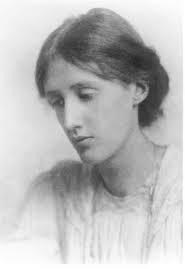
Virginia Woolf famously wrote 85 years ago that “a woman must have money and a room of her own if she is to write fiction.” If I had plenty of money, I could quit my jobs and write.

But not only do I not have money, I don’t have a room of my own. My computer is perched in the corner of my bedroom, where—just now—my 7-year-old and her friends trudged in to ask for Otter Pops (we supply the neighborhood). Of course I said yes, then skimmed what I had written to find my spot again.

Interruptions define my life, because my life is all about family. I can think of only a handful of times over the years that I actually shut my door and told my family that no one was allowed in for the next half hour. Otherwise, the carpet to my computer has been worn thin, because they know they’ll find me here, either writing, editing, or grading papers. And I will never turn them away. They have to come first. I committed myself to being their support long before I committed myself to writing a book series.

virginia woolf

She wasn’t the happiest of women, committing suicide by drowning when she was 59.

Virginia Woolf didn’t have children (but likely was bi-polar, which some may argue is just as grueling), so she didn’t understand the pull and yank between being me and being mom/wife. I know it’s counter-culture to claim that I need to be mom/wife first. (“What about your needs? What about your development?” goes the familiar crank.) But frankly, I’ve known too many women who put themselves first, and lost everything else that was important. One writer admitted to still pounding on her laptop during the labor of her baby, and was so obsessed that she devoted all her time to her book . . . and none to her marriage, which ended.

It’s popular to say, “Oh, I’ve worked so hard! I need me-time,” but I’ve discovered over the years that “me-time” can be accomplished in about thirty minutes a day, even less if secret chocolate is involved. Some women I’ve known spend hours on themselves/hobbies/pursuits to the benefit of no one, not even themselves.

Oh, I’m not perfect. I’ll confess to fantasies about everyone going away for a week or so, leaving me with a perfectly clean house, full fridge, and absolute silence so I can write nonstop and really get something accomplished. I’m jealous of friends who take vacations without husbands and children, and drool over what I could get done with so much freedom.

But I also know that after an hour of such freedom I’d get fidgety, and would be on my phone to make sure everyone was all right, that clothes were on (we have “free ranging” issues with our toddler), and that they ate something more substantial than Nutella sandwiches again.

Because honestly, I’m not entirely all right without them. Working away from home, while leaving me with desperately needed cash in our bank account, also leaves me with great anxiety that I’m not doing my duty to my family. When I come home, I’m a mixed bag of relief and disappointment; relief that my 14-year-old remembered to change the toddler’s diaper and the living room isn’t too chaotic, and disappointment that my 16-year-old reports that everything was just fine without me.

Until circumstances change, I’ll lurch and strain and struggle to fit in 135 things where there’s space only for 97. I’ll forget a few things (note: I ended up doing the dinner dishes at 11:30pm) and maybe later tonight I’ll squeak in a half hour of rearranging book four, but only after I’ve gone with my husband to an alumni event at the college, and picked some apples with my kids at a neighbor’s, and did some sewing for Halloween costumes (curse the church for having a costume party TWO WEEKS before the actual date!), and run a load of laundry, and finished dinner, and helped my daughter with homework, and my son with homework . . .

So, yes—Falcon’s coming, my friends. But while I so dearly love writing it, I need to love my family more.

Thanks for understanding. (P.S. Took me another two days to actually post this after writing it. Sigh.)

Mahrree sighed and said, “My children have me tied?”

The thought had never occurred to her. True, her life was completely different now. But caring for these little children, who she thought were funny more  often than frustrating, loving more often than loud, was an honor. It said so in The Writings, and she’d chosen to believe it from the moment she knew she was expecting her firstborn. And choosing to believe it had made all the difference in her attitude as a mother. ~Book Two: Solider at the Door

The myth of hard work and wealth

I think there’s been more harm than good done by this statement: “If you work hard enough, you’ll be wealthy.”

I recently met a man named Charles who’s a chef, been working in restaurants since he was 16-years-old, and owned his own restaurant and his own catering business. But he can’t keep up anymore—working from 4am to 11am at the restaurant, catering on the side, and getting to bed by 10pm if he’s lucky only to get up again at 3:30am. He’s stooped over, walks slowly, but still smiles, albeit wearily. He’s 68 years old and doesn’t want to retire, but needs to slow down. However, he worries about the many people who rely on him and his industry. His past generosity means he doesn’t have much saved up, either.

Sara, in her 40s, has a husband is trying to finish his college degree. To help him, she’s now working full-time as a teacher’s aid in a school, and works an additional 20 hours/week at a hotel. In the few hours in between she helps her five kids with their homework so that her husband can study. She has a college degree, but couldn’t find full-time work anywhere in her field, so she’s burning the candle on both ends. Both Charles and Sara work very hard.

How often have you heard this statement? “Get a college degree, and your earning potential will increase.”

I know of far too many people to name with college degrees, with years of experience in management, training, HR, and sales who are currently working part-time jobs–which require no degree–and offer no benefits (we won’t get into the irony of the Affordable Health Care Act right now). There simply aren’t enough full-time jobs, and while a few of these people have considered moving to find work, they’re trapped by houses with no equity in them. Every month they sink deeper into the hole. 

Then there’s my friend with degrees in a hard science and a foreign language, but works as a seamstress. She said “Professional Alterations” was the most useful course she completed in college. And then there’s the friend who finished a graduate degree widely touted as the key to success, but neither he nor the twenty others he graduated with can find work making more than $14/hour. The market’s been saturated with people graduating with that same advanced degree.

I think this one gets under my skin the most: “Work smarter, not harder.”

I read this on an acquaintance’s website. Back in college he drove twenty-year-old German luxury cars, because he vowed he’d always drive new ones in the future. He does, a new model every year, as the head of a company that peddles a “forever young tonic” to vain and aging people. A blogger on his company’s site claimed, “Some people think luck just happens. We make it happen.” Then she went on about how much money one could make selling their snake oil. But I never believed one should become rich by manipulating the vulnerable or stupid. This rouse has been around for generations. It’s not working smarter, it’s working meaner.

How about this one: “Work hard enough, and you’ll get your piece of the pie.”

Or so claims another get-rich website, which buries the actual product they sell but talks all about the vacations their marketers take. The problem with this mantra is that there is only so much pie to go around. But those sitting at the top of a pie kingdom believe in the myth of “spontaneous pie generation,” that they won’t need to share some of the pie they snagged, but if others simple worked as well as they did, another pie would magically appear for them too–and they’re willing to sell you the secret.

As the discussion of the “haves” vs. the “have-nots” comes around again, there’s a prevailing notion of, “I deserve this, and you don’t, because you’re just not good/smart/hard-working enough.”

And this notion is a lie. I’ve always suspected that, but now I’ve seen proof.

Lately my eyes have been opened to how many people in America are hard-working and are just getting by. I thought it was just us, but I suspect it’s the majority. Forget wealth; we’re just trying to cover the mortgage. Like the nearly 70-year-old woman I know who lives with her struggling sister and her family. She works 30+ hours a week in manual labor to help cover half of the very modest mortgage. Hard working? I was by her side for four hours recently, and this so-called “elderly” woman worked circles around me! I was exhausted at the end of the shift and was going home to take a nap. She was going home to bottle several bushels of peaches.

I cringe when I hear disparaging comments about the working poor. And even though what qualifies as “poor” in America is still richer than the vast majority of the rest of the world, there are still millions of good, working adults just getting by month-to-month. Try being a janitor for a week. That’s hard work.

Yes, a great man . . . but he didn’t accomplish it all on his own. No one really does.

If hard work was all it took to become wealthy, there’d be a lot more living in luxury. Take a deep, searching look at the level of hard work many people in third-world countries accomplish, day after day. No one would argue they’re wealthy. So what gives?

The fact is, a great many that have wealth didn’t get there on hard work alone. Quite often we point to Benjamin Franklin as the epitome of working one’s way to the top. But Pulitzer Prize winning biographer Gordon Wood pointed out that Mr. Franklin was the beneficiary of numerous “patronages”: wealthy Pennsylvanians who donated him funds, set him up with those of influence, even paid many of his expenses to get him started with his printing business. “In the end Franklin was never quite as self-made as he sometimes implied or as the nineteenth century made him out to be” (The Americanization of Benjamin Franklin, page 27).

Many of the “greats” have to admit they stood on the shoulders of others, got started with the seed money of friends and relatives, received an inside tip, was in the right place at the right time, even got a bit lucky. Some have attained their positions by manipulation through a product—such as my acquaintance with the anti-aging cream—or have exploited a resource that wasn’t really theirs to begin with.

I love what Brigham Young said, over 150 years ago:

“People think they are going to get rich by hard work—by working sixteen hours out of the twenty-four; but it is not so. . . .
There is any amount of property, and gold and silver in the earth and on the earth, and the Lord gives to this one and that one—the wicked as well as the righteous—to see what they will do with it, but it all belongs to him.” (emphasis added)

Think about that—God’s given more to some than to others, to see what they will do. I sincerely doubt He’s expecting those with more to indulge themselves, but instead to “. . . have mercy on the poor,” as Proverbs 14:21 suggests, for “happy is he” who does.

Now, consider this notion of hard work, from Professor Hugh Nibley, one of the greatest thinkers of the 20th Century:

“What are the qualities that make for success in the business world? Hard work, dependability, sobriety, firmness, imagination, patience, courage, loyalty, discrimination, intelligence, persistence, ingenuity, dedication, consecration—you can add to the list. But these are the same qualities necessary to make a successful athlete, artist, soldier, bank robber, musician, international jewel thief, scholar, hit man, spy, teacher, dancer, author, politician, minister, smuggler, con man, general, explorer, chef, physician, engineer, builder, astronaut, scientist, godfather, inventor.

. . . You don’t have to go into business to develop character . . . There are over one half million millionaires in the country [in 1979 when he delivered this speech]—but how many first-rate composers or writers or artists or even scientists? A tiny handful.” (emphasis added; “Gifts,” Approaching Zion, pages 102-3).

I fear that many in our society don’t hold in any esteem those who truly work hard. Instead, we’re envious of those who seem to get away with working less, yet still get more. That’s what the 1% vs. 99% protests of last year were about: people wanted the magic spell to spontaneously generate their own pie, and if given that magical pie, the cynic in me suspects it wouldn’t be shared either. That’s why we uphold the corrupt system of some getting more only because we hope to rise to that level of luxury and leisure ourselves.

But that’s not how it’s meant to be.

Giyak exhaled. “Colonel, I appreciate your sense of fairness. Very few men have that anymore. That’s what makes you an excellent commander, I’m sure. But politics is different. More delicate. Those that live in the Estates are, are . . . more achieved. More deserving of their station in life. They worked harder, are smarter . . . I don’t know. Perhaps the good doctor could explain to us the differences in achievement in one’s life . . . but you see, those who nature have favored . . . nature has favored. That’s all there is to it. We, as a political entity, must also recognize that nature has chosen some for success rather than others.”

But Perrin wasn’t convinced. “I just worry about a society that deems one person more worthy than another. I believe in the Creator, and I believe He created us all equal. To see us deferring to some and neglecting—I’m sorry, not ‘neglecting,’ but marginalizing others in order to favor another? They’ve already been ‘rewarded’ with more by their status. Is it truly fair or right that a builder of a school makes three times as much as an eggman? Don’t children need food as much as they need education? Or why should I as a colonel make more than my major? We work the same hours, at the same fort, doing each other’s job most of the time . . . If extra silver’s to be given, it should be given to him with the greater need—”   ~Book 3, The Mansions of Idumea

This isn’t the last you’ll hear from on this issue of money, sharing, and worth. Oh dear, not at all. I’m just getting started . . .

BRAG Medallion Honoree

Ahhh, thanks guys! This is cool. Look what they did to the cover of my first book–slapped a big, happy gold sticker on it! This means I’m a B.R.A.G. Medallion Honoree.

FOREST AT THE EDGE OF THE WORLD BRAG medallion cover

(There’s a sticker there. Big. Gold. Shiny. Yeah, that one.)


Indie B.R.A.G. (which stands for Book Readers Appreciation Group) will also send me some real life, actual golden stickers, presumably for my books, but I have a better plan.

My kids never knew the joy of having a teacher (be it Kindergarten or Sunday School) lick a star sticker (always with too much lick) and press it too hard on their foreheads. For some reason that fell out of fashion after the 1970s. But I always appreciated those little acknowledgements that recognized that for a few hours I was a good girl that mostly sat still in her chair and didn’t stick too many things in the ears of the boys next to her.

So when my stickers come in the mail, I’m going put a few on my forehead and proudly walk around the house and maybe even around the neighborhood.

My kids are gonna be so jealous.

Thanks, indieB.R.A.G.!

Suicide is rational–in its own mind

“I can’t understand why someone would want to kill themselves.”

Having heard this numerous times since the death of Robin Williams, allow me to shed some light. I won’t pretend to know exactly why Mr. Williams ended his life, but I can give you insight into the mind that sees death as the only option.robin williams

I’ve been there, every time I’ve been pregnant. The hormones send me to very dark, very ugly places, especially when I’m expecting a girl. Since I’ve had nine kids, as you can imagine I’ve been there frequently. This is far more personal than I’ve ever wanted to be on this blog, and I’ve rarely discussed this with even my own family.

But I haven’t been able to get this off my mind, and I want to help settle others’ minds.

Here’s my understanding of the depressed mind:

The depressed mind is in torment—literal torment. Think about the most critical, abusive person you know. Maybe it’s a relative, teacher, boss, or even “friend.” When you are around this person, you feel every muscle clench, your heart rate increase, your skin prickle. Because no matter what you’ve done or said, from this person’s mouth will come nothing but vitriol and hate. Nothing you do is good enough, or helpful enough, or worthy enough. All you want to do is escape the tirade and the screaming.

When we’re depressed, this voice is often the one in our heads—impossible to escape. It’s not our voice; it’s the voice of the world, collectively whittling away at us, pointing out our failings at every minute of every day. No matter where we go or what we do, we can’t shut it off. Alcohol and drugs can distort it for a while; sleeping pills sometimes help. But always it returns.

It’s the loudest at night, when it’s dark and quiet and nothing can stop the voice that sits back in a cozy chair with the list and recites, coldly and cruelly, how we failed that day, and how we’ll fail tomorrow.

The depressed mind despairs. And I wish there were a stronger word than “despair,” because I don’t think it can fully envelope the all-encompassing devastation the depressed mind reaches. For with that voice never shutting up, never shutting down, we begin to realize that in all of this marvelous, massive, fantastic world, there isn’t even one corner that will tolerate us. Because no matter where we go, how fast we run, how quietly we sneak away (and depressed people often try these tactics), we take our minds with us, the ones that never let us forget and never will forgive. We can’t find respite, anywhere, unless that mind is stopped.

The suicidal mind is rational . . . in its own way. Because the voice of the world in our minds tells us we’re failures, we’re useless, we’re unworthy to even breathe the free air, we begin to believe it. We also begin to notice how our despair affects our families and friends, which is akin to giving a shovel to a man in a pit; we go only further down. The mind begins to think, If I weren’t here, my family and friends wouldn’t suffer.

And then the mind dwells on this: If I weren’t here, they wouldn’t suffer. Oh, sure—they’ll feel bad about our loss for a few months, but they’ll recover. They no longer need to worry about our condition, no longer cater to our odd whims or manic moments. They can live their lives, instead of being controlled by our lack of life.

The depressed mind isn’t selfish; it sacrifices. I’ve heard many people say that suicide is selfish, and maybe they’re thinking of old movies where the heroine in despair throws herself down on the bed/sofa/forest floor to get the attention of the hero and wails, “Oh, I wished I could die!” because something didn’t go her way.

That’s not how the depressed-suicidal mind functions. In fact, contrary to the lists that state the signs of suicide, most of us who have been there will never tell anyone else that we’re contemplating that option, for one very important reason: we’re not worthy of help.

Why bother our loved ones with even more to worry about? Depression is very much an iceberg: what friends and family see is only the tip. We hide in closets and showers to weep. We rarely–if ever–reveal what we’re thinking and seeing. We put on brave faces for as long as we can. When we finally do collapse on to the bed/sofa/forest floor in agony, we’re much further gone that you’d ever expect. You may think we’re at point C, but we’re already at point X, trying to figure out how best to do Y to get to Z—the end.

We don’t want to burden you with that knowledge, nor do we believe there’s any hope. Too often, when we do dare speak up, others don’t realize just how far gone we are.

At my lowest points I spent weeks summoning the courage to tell my ob/gyns that I was struggling. My very worst time was with my fourth daughter, and when I told my doctor that I was having “mental stress,” she just shrugged me off and said, “Most pregnant women do. And you already have seven kids, so what do you expect?”

That shut me up, right there. I couldn’t go on to tell her that I was contemplating ways to die “accidentally” so that my husband could collect the insurance money that would help get our family out of financial crisis.

(In my more rational moments, I frequently thought of canceling that insurance policy just so I didn’t contemplate the scenario anymore.)

I didn’t dare tell her that I was trying to plot ways to make sure my baby survived, and that my Internet searches had been subtle to see just how old a fetus needs to be to stand a chance when the mother has succumbed.

No, that doctor thought I was at point C, and since she was already running late that day with her appointments, she never once looked me in the eyes. I started skipping my prenatal appointments, because I wasn’t worthy of being helped.

I didn’t go back for months, until I was nearly ready to deliver. The doctor never asked why.

With my last pregnancy, I knew I would be facing this same despair, so I told my doctor early on where I would be mentally at about month five. He took me seriously, and when I hit that point where I was thinking about self-destruction again—and had already once put my entire folder of writing into the recycling on my computer, a sure way to eliminate something I used to love—he prescribed me medication.

I called it “the flu pill.” The side effects were worse than any flu I’d ever had, and within two days I stopped taking them. Afraid that those drugs were my only hope, I didn’t dare say anything when I went back to my doctor. I hoped he would ask how they went, maybe offer another suggestion, but he didn’t.  He was rushed that day with an emergency c-section, and didn’t follow up.

I went home, sure there was no additional help for me.

The undepressed mind will read this and think, “How stupid! Of course there are other treatments!”

But the depressed mind does not see that. Rational in its own way, it concludes that there is no other way to silence the mind, to save the family and friends, to end the downward spiral.

I don’t think anyone wants to die. We don’t want to cut short this fantastic adventure we’ve been granted, but it’s become unbearable. Tortuous. Excruciating.

In the end, suicide becomes the only way to give those we love a better life, to remove us and our downfalls and our failing from their lives, to give them a clean start.

My maternal grandfather killed himself at age 28, when his only child—my mother—was just 11 months old. A few times my mother said she wondered if he’d at all thought about her when he held that gun to his head. She has no memories of him, but his suicide affected her the rest of her 87 years.

As I’ve pondered that question, I’ve concluded that yes—he did think of her. In whatever unstable rationale that he was dealing with, he may have seen the taking of his life as a way to make hers better.

Or maybe not. Maybe he was just a selfish git who was too embarrassed by a public shaming that he couldn’t go on anymore, and impulsively pulled the trigger. That tends to be our knee-jerk reaction to when we hear about a suicide. Foolish. Selfish. Weak.

But I don’t think so. Those dark moments when I tried to figure out how to end my life but let my baby’s continue (too difficult for me to ever figure out, thank God), I wasn’t thinking about myself.

I was thinking about my children who I failed to love and pay enough attention to, because my mind obsessed uncontrollable.

I was thinking about my husband who deserved a kinder, happier wife, and who should have a wad of insurance money to find his new bride who would be prettier and sweeter, and would love our children far better than I was.

I was thinking about the space I would leave for others to use better than I had, who needed the air more than I did, who could make a better contribution than I ever could.

I don’t know if Robin Williams had any of those thoughts going through his mind that night, but I suspect he did.

I suspect that the majority of suicidal minds only want to improve the lives of others by taking their own.

That’s not what happens, of course. Family and friends are devastated, and that loss is felt for the rest of their lives. Questions are asked, over and over, with no answers.

But maybe my insights from that side can provide maybe one or two. Yes, they did love you, far deeper than you may realize.

They offered themselves as a sacrifice hoping that your life would improve because of it.

They died because they did love you, and I believe firmly that on the other side, God will receive them with compassion, understanding, and overwhelming love.