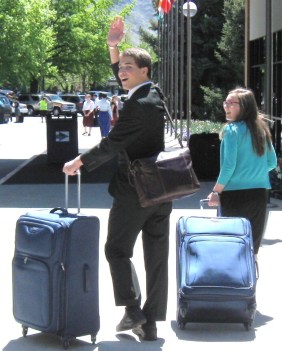
How a Pepperidge Farms cake revealed that everyone is obedient to something, if they realize it or not

My friend “Sally” has a brother who openly belittles her for being “blindly obedient” to her religion. Privately, Sally struggles to think more charitably of “John” who she thinks is a jerk.

One summer their parents invited Sally’s family and John’s family to share their condo at the beach. They agreed until they found out—too late—that each other’s family would be there. So Sally, her husband, and three kids decided to try to be cordial to Jon, his wife and two kids.

But things started off rocky, because while John and his family arrived at the condo on Saturday, Sally and her husband has responsibilities at their church and didn’t want to miss it. Normally they avoided travel on Sundays, but to keep the family peace, they left after church and arrived at the condo that evening.

It wasn’t good enough. John greeted them with, “You and that stupid church of yours. I swear, you’re so blindly obedient to it that you fear to miss even one day? Check-in to the condo was yesterday, you know. You were supposed to be here then.”

Sally was determined to be kind, even though it was silently eating her gut. She had called the condo earlier and they told her check-in started on Saturday, but they could check in at any time that week.

However, Sally gritted her teeth and said, “Thank you for getting the place for us.” She decided not to further ruin her Sabbath by getting in an argument about her “blind obedience.” Jon had quit religion when he was a teenager, and thought Sally was ridiculous for giving up her Sundays.

The next morning, Sally got up to make her kids their favorite muffins. She dumped the mixes in the bowl and proceeded to whip the contents into a froth.

“Whoa!” John exclaimed as he came in the kitchen. “That’s not how you make muffins!” He snatched the bowl out of her hands, picked up the box with instructions, and said, “Look—it clearly says, ‘Mix gently until just moistened.’ Can’t you follow directions?”

She grabbed the bowl back, trying not to feel like a twelve-year-old again. “I know what the box says, but some months ago one of my kids made muffins, overmixed the batter, and we discovered that we much prefer that texture. Whipping improves the recipe, and this is how we like it!” She purposely whipped the batter even more, just to shock her brother who stormed out of the kitchen mumbling, “She can’t ever get things right . . .”

The muffins turned out exactly how Sally and her family liked them.

That day the weather was rough, so instead of spending it at the beach, the families hit the shops. Sally and John took their kids in different directions. One store on the boardwalk was particularly aggressive in trying to get parents to buy their children an overpriced stuffed animal they “made” themselves, then paying an extra $10 for that animal to wear a t-shirt from the beach. They advertised loudly that the bears were the item to have that year, and the employees went so far as to herd families into the store.

Sally and her husband purposely steered their kids away. They had a budget for the trip, and told each of the kids how much they could spend on them. “That bear, all by itself,” Sally’s husband told their kids, “would take all of your souvenir money. One toy for all of you? But instead of a bear that wears a t-shirt, how about each of you get a t-shirt for school? The shop over there has a deal, and you could each get three shirts and still have money left over for churros.”

The decision was easily made, because churros are the best, and when they went back to the condo at dinner time they had a dozen t-shirts for the whole family. They’d stopped at the grocery store to buy supplies for dinner—grilled cheese sandwiches, carrots with dip, and a favorite cake for dessert.

Sally wasn’t surprised when they entered the condo and found John and his family already there, each of his kids with one of those bears, each with the extra $10 t-shirt.

One of Sally’s kids said to her cousins, “My parents said those were too expensive. We bought us t-shirts instead.”

As the cousins examined each other’s purchases, John smirked at Sally. “Too cheap to buy them stuffed animals?”

“Not at $50 each,” Sally scoffed. “Our kids would stick them on a shelf then never play with them. I thought it was a useless purchase for us.”

John scoffed back. “But it’s what you do at the beach! You buy them expensive souvenirs. That’s what credit cards are for.” Sally and her husband didn’t believe in using credit cards.

John also predictably made fun of their grilled cheese sandwich dinner, (“But it’s our favorite!” Sally defended) and when someone knocked at the door, John announced, “There’s our dinner from the ‘Happy Harbor’.”

John’s kids frowned as his wife paid the delivery boy. “But we hate seafood,” they complained.

“Seafood is what you eat at the beach,” John told them, and set out their elaborate dinner of shellfish on the table on the back porch, so that any passers-by at the condo could see the bags advertising the most expensive restaurant in the area.

Sally quietly made two more grilled cheese sandwiches and slipped them to John’s kids who wolfed them down before their parents announced that their seafood feast was laid out and ready.

Sally’s family sat at the table indoors, not needing to show off their sandwiches, and perfectly satisfied to not have to dig their dinner out of shells like their cousins, whose complaints could be heard from outside.

When it was time for dessert, Sally pulled out of the freezer their favorite: two frozen Pepperidge Farms cakes. John came in from the porch and frowned at the cakes she was removing from the boxes. “You’re not cutting those up frozen, are you?”

“Of course I am,” Sally said. “They taste like ice-cream cake like this.”

He grabbed the box and pointed at the words. “Look, right here. You’re supposed to defrost it in the fridge, first. Man, you can’t get anything right, can you? I’m taking my family out to the Ice Cream Shack for a proper dessert.”

“But that place is pricey!” Sally exclaimed. “One scoop of ice-cream costs more than an entire cake.”

“It’s supposed to be pricey. It’s the beach and it’s supposed to be the best! And don’t cut that cake while it’s frozen!” Enraged, he took his family—and his credit card—out for the evening.

That’s when it hit Sally, and she told me later, “I realized at that moment that John belittled me not for my ‘blind obedience’ but because I wasn’t obedient to what he thought was important. His fury at my cutting a frozen cake was only a hint at a much bigger problem:

He, too, was exceptionally obedient—to what the world expects of him.
His insistence that I follow the directions on the boxes?
Obey the boxes.
His buying those expensive bears because everyone else was?
Obey the crowds.
The ice-cream?
Obey the marketing.

“The trip became easier after that, because I finally understood my brother; he was scared of what people would think of him if it found out his sister wasn’t obedient to the world he worshiped, and he was terrified to not be seen what he thought it demanded he be doing.

“I realized that all of us are obedient—wholly devoted—to something: maybe it’s a team, or a political party, or a religious organization, or a movement, or even ourselves that we set on a pedestal and worship.

cake

That’s not necessarily wrong or bad. But it is if we don’t realize it, or if we didn’t make that choice consciously.

“John didn’t recognize how blindly he followed the trends of the world, and worried that everyone was watching to make sure he did everything he was ‘supposed’ to do at the beach. But I doubt anyone even noticed him and his family’s ‘obedience.’

“Yes, I’m obedient to my church, because I’ve researched and lived by its teachings, and have discovered for myself that it’s the best way for me to live my life. That’s how we’ve done everything, from muffin mixes to how we spend our Sundays.  There’s nothing blind about my obedience. Nothing blind at all. I’ve chosen what I’m obedient to, and it’s brought meaning and peace to my life.

“Unfortunately, I’m not sure my brother can say the same thing.”

But Jaytsy knew what she did love, and it was glorious to no longer worry about the world’s opinions. ~Book 4, The Falcon in the Barn


Why General Conference fell flat for me–I’m not in “sucking in” mode

Twice a year my church (LDS–Mormons) holds what’s called General Conference. No one goes to church, but watches on TV or the internet the broadcast from Salt Lake City. For Saturday and Sunday we get to listen to five sessions of prophets, apostles, and auxiliary presidencies teaching us how to live more spiritually in the secular world around us. Normally it’s uplifting, and even a fun time at our house to sit in the living room eating snacks and making crafts while “going to church” on TV.

Image result

Except for this year. General Conference occurred this last weekend, and it totally fell flat. The speakers weren’t engaging, the music was predictable, and I couldn’t focus on anything for long. In fact, I slept through most of the talks, only to wake up to hear something else bland and uninspiring, so I’d drift off again.

Why did I not find church interesting last weekend? What did they do wrong?

Nothing.

Church wasn’t the problem; the problem was me. I was sick. I’m on day five of fighting what I’m sure is strep throat (but I’m too cheap to go to the doctor’s to find out, so I’m trying to tough it out, which means whimpering every few minutes, “I can’t swallow.”).

(I hope this also explains why this week’s post is even more disjointed than usual.)

In my achy, miserable condition, I couldn’t pay attention, couldn’t feel the spirit, couldn’t become engaged in what I normally enjoy.

The problem wasn’t the source; it was me. This happens a lot, I’m afraid to admit.

For example, I remember reading The Scarlet Letter as a high school junior. I found it dull and strange—why was this minister carving into his own chest? Why couldn’t these people just be nice to this poor, unmarried mother? Like, whatever, dudes . . .

Then, some years later as a senior in college, I read it again for a class. This time I was married and expecting my first child, and the book made me weep. I ached for Hester Prynne, for Arthur Dimmesdale, even for Roger Chillingworth. I could scarcely write my essay about it because the story panged me so deeply.

Why the difference in responses? The book hadn’t changed, I had. My thoughts, my experiences, my heart were all much more prepared to take in what Nathaniel Hawthorne was trying to convey. (Pregnancy hormones likely played a part in amplifying the narrative in my head.)

I’ve seen people come away from movies, books, and speeches with a wide range of responses. “That was wonderful!” “That was stupid.” “That was dull.” “That was inspiring!” They all experienced the same thing, so why the different reactions?

More and more I’m convinced that people’s reactions say far more about themselves than about the activity they just completed.

This is one of the many reasons why I don’t rely too much on reviews about anything, or I read about a dozen reviews before I decide to take a chance on something. Objectivity is pretty much impossible for us biased, human creatures. And the more we insist that we are objective, it seems the more we demonstrate that we aren’t. We should just admit it: we react emotionally to everything around us because we aren’t robots.

During the past few days I’ve seen my friends put up posts of what they enjoyed most about General Conference, and I’m a bit jealous that I missed it all. The talks are available online, and once I’m finally over this gunk, I’ll rewatch or read them.

But this experience has made me understand something painful: if I’m not open-minded and open-hearted, I will miss things. Not just activities or fun stuff, but important emotional things.

Victor Weisskopf, a professor of physics, said this: “People cannot learn by having information pressed into their brains. Knowledge must be sucked into the brain, not pushed in.”

If I want to be uplifted, I need to prepare my mind for that “sucking in” experience. Conversely, if I’m not in the correct mindset, nothing—no matter how marvelous and majestic the experience—will let me see anything more than I’m willing to.

I’m reminded of the city-dweller who was used to vacationing at the beach. One year his wife dragged him instead to Yellowstone. When asked about the magnificent landscapes, the volcanic wonders, the plethora of wild animals, he said, still resentful about missing out on eating seafood and playing mini golf, “There were too many bison and I couldn’t get any wi-fi.”

His mind and heart weren’t in the correct “sucking in” mode.

This weekend has made me wonder how often I’m not in proper “sucking in” mode.

How often do I come to a situation with the “ailing” mindset of cynicism, resentment, unrealistic expectations, or just plain callousness?

How often has my head been acting as if it’s on too much DayQuil—too fogged to pay attention to the important details?

How often am I too light-headed to sink into deep thoughts?

How often do I sleep through moments that would astonish me?

Maybe the most important thing I learned from General Conference this year is to make sure my head’s always in “sucking in” mode. That doesn’t make for a great meme, I know. I tried:

blogging-when-sick

I can’t wait to get better, to escape this oppressive fog, and to once again “suck in” the world more clearly.

(My apologies–no matter how many times I write it, “suck in” just doesn’t sound right, so I’m going to go lay down now . . .)

“She thinks she’s got something relevant from her books for her blog this week?” Mahrree asked Perrin in surprise. “What are we supposed to say?”

He just looked at her with furrowed brows. “What’s DayQuil?”

~Book #nothing, The Writer Needs to Take a Nap

Four reasons why change is the best, crappiest thing that can happen to you.

I hate and love change.

Sometimes change is most welcome: when you finally get a new job; when you finally move into that better place, and when that baby finally decides to be born. There are times when change is desired, sought after, even prayed and begged for.
The change that cancer is in remission.
The change that you are no longer in debt.
The change that you get to throw away your “fat” clothes.

But change is also a nasty beast. When life is floating merrily along, change is the white water rapids which you didn’t expect to throw everyone out of the boat.
Chronic illness.
Loss of job and/or house.
Death.

It’s when God whispers, “Plot Twist” in your ear, and you know nothing will ever, ever be quite the same again. And often, it’s a huge battle in our minds to decide if this latest plot twist is a good one or not.

But change has to happen, for these terrible, marvelous reasons:

1. It’d be horrible for things to stay the same. Don’t believe me? Think about this: What if your baby really did stay little forever? Never learning to speak, or walk, or play? After a while, you’d grow annoyed, even dissatisfied with this creature who does nothing but leaches off of you, year after year, whining and crying and demanding you carry it around. While it’s sad to see our little one outgrow those newborn clothes, it’s also thrilling to hear their first laughs, see them figure out how to toddle, and watch their personalities grow.

We don’t really want things to stay the same. We’re excited when that baby is old enough to catch a ball, when we can take him camping, or to the movies. While one stage quietly fades away, a new, even better stage takes its place. Progress is exciting.

2. We’re not mean to be stable. It’s the one thing in life most of us crave—stability. Maybe we crave it because it’s so elusive. I cringe whenever I read articles about money management and budgeting, because our income is rarely the same each month. And our family life is always changing; kids never have the same schedules year to year, and someone is always doing something new, somewhere else, with someone else. They go to different schools, go to college or the army, and find significant others, once again changing the dynamics of our family.

And thank goodness. Because, honestly, I find I get bored with predictability. While we crave stability, I think a lot of us also crave adventure. That’s why we go on vacations, take up new hobbies, write books, take classes, take on new challenges. We need to be shaken up every now and then. Snow globes aren’t interesting until after they’ve been tumbled around.

life as a snow globe

3. What would we miss if we didn’t change? Years ago we built our dream house, with a huge yard, and plans that we’d stay there forever. It’d be where our grandkids came to visit us.

Four short years later, we lost that home and had to move two thousand miles away. I was bitter that we lost our dream.

After two more moves, we settled in rural Virginia, and our kids had adventures we never could have had otherwise. We traveled and learned and had a great time.

Not long ago we had the opportunity to drive by our old “dream house.” I was startled to hear myself say out loud, “I’m so glad we didn’t stay here.”

Because staying would have been terrible . . . for me. I realized then, as I looked at our old house, who I would have been had we never left. I would have been narrow-minded, fearful, and quite prideful, I’m ashamed to admit, had I stayed in my small town, with my small ideas, and with my small ambitions. I needed to change, in order to help my nine children who have so many different challenges. Our change changed everything, and I liked who I had become because I was forced to change.

4. The only way to grow is through change. And I’m not just talking about our children. I’m talking about us—adults. We’re not done improving simply because we hit a certain age, although some may think we are.

I once met a woman who lived in the same house she was born in. She never traveled out of her little town, except occasionally down to the “big city” ninety miles away, which she found a terrifying place. She married and raised her family and lived to be quite aged, all staying in the same neighborhood, and only occasionally crossing the state line to visit a grandson in another rural community.

At first, I envied her. She had a place that was home. At the time, we were moving around a lot, and all I wanted was a place to consider a permanent home.

But I was struck by a strange sense of stagnancy. Of dullness. Of fear. Of entrapment as I chatted with her. She’d never seen the ocean. The “distant” states of Colorado and California were evil and horrible places. When she heard of all the states we’d lived in, she literally pulled back, almost as if she feared I was contagious. She promptly turned to the person next to her—a long-time neighbor—and started up a new, safer, more predictable conversation.

I didn’t feel as nearly as contaminated as my acquaintance thought I was. Moving to new states, starting new jobs, beginning new projects are—initially—terrifying, but eventually invigorating. I think about how much I’ve changed over the years, and I like what I’ve picked up along the way.

This poor, dear woman, however, never felt she could leave. Her great-grandparents settled the area as pioneers, and she felt duty-bound to stay where they had landed.

I always wondered if it ever occurred to her that her ancestors once started somewhere else, and made a lot of changes in their lives to get where they finally ended? That perhaps they appreciated the changes they experienced, and maybe were sad that she never encountered any?

The purpose of life is growth through change, and that thought is simultaneously terrifying and thrilling.

Last month I was harvesting berries in our yard which, after eight years of work, is nearly exactly the way we want it. Our neighborhood is wonderful, the valley picturesque. We’re conveniently situated to all our children and the colleges they want to attend, and we love where we live . . .
Then God whispered into my ear those two words which terrify and thrill me: PLOT TWIST.

“No!” I nearly cried out. We’ve finally got some stability! Predictability! . . . Wait.

Have I become complacent? Narrow-minded? Or, even worse, stagnant?

Within a handful of short days, my husband was recruited, interviewed, and invited to take his dream job . . . thousands of miles away.

Change, coming again. I handled it in the most mature manner possible: I wept every day for three weeks.

Then God started trickling into my mind the reminders I listed above, knowing that while I’d “kick against the pricks” for a while, eventually I’d become intrigued. He patiently ignored my protestations, just like I do when I pat my children on the head as they whine about something they don’t want to do, but later will realize they really wanted all the time.

God’s smirking at me right now—yes, He does smirk. Because He also knows just how much I love a good plot twist.

But usually not while I’m in the very long middle of it, where I can’t see the outcome. While we’re trying to figure out if this change is temporary or permanent, who will join Dad and when, do we rent our old house, keep it, or sell it, then what will we move into, once we finally join Dad in several months . . .

Change.
I hate it.
I love it.
Right now, however, I just hate it. Mostly. (I have to confess, the coast of Maine is intriguing . . .)

Stay tuned. Plots change every day.

Crud and hallelujah.

Eventually Mahrree whispered, “I never wanted to leave this house . . . Every good memory is in this house.”

The woman answered just as softly. “And you take every good memory with you. Your life isn’t the house. Your life is your family. Things don’t matter. People do.”
Book 4, The Falcon in the Barn

(And thanks to eBookDaily, who today just featured me! Ebookdaily125)

If you don’t like “their game,” then for everyone’s sake, just leave it!

Today I’m going to tell you the secret to everlasting happiness: you don’t have to respond to everything that flashes your way, especially if it’s “not your game.”

Do you remember this rule from your childhood: “If you don’t like our rules, then you don’t have to play”?

Now, that may sound harsh—and it was usually uttered in a nasty tone whenever I heard it in elementary school—but nevertheless, the principle has some merit.

We tend to think that all ideas, actions, and behaviors should reflect everything we believe, and if someone is contrary in any way, we call foul, or are “shocked,” or “offended”.

But here’s something to consider: the world wasn’t made for you. Or for me. Or for any specific individual. It was made for all of us, and at times, we’re going to step on each other’s toes.

When that happens, don’t throw a fit, don’t get angry, don’t criticize—just move your toes.

For example, I follow a lot of Facebook groups, a few which I probably shouldn’t. One is a group of southern women who are romance writers. I don’t write romance, and I don’t live in the south. I know I’m not fully “one of them,” and I can’t play by all of their rules.

Not long ago they had a discussion about “What’s your favorite coffee for editing?”

I don’t drink coffee.

But I didn’t go on and comment about that. I didn’t say anything. I followed the thread for all of five seconds before realizing that everything I know about coffee comes from watching “Frasier” on Netflix.

Instead of announcing I couldn’t play because they were breaking my “personal rules,” or announcing haughtily that I felt left out, I did something astonishing:

I just moved on.

No judgment, no statements of “I don’t think this is appropriate,” no nothing. Just moved on. (Same thing when they had a discussion about wine, and I realized, once again, that all I know about wine comes from “Frasier.” This Mormon girl can say “chardonnay,” but I haven’t the slightest idea as to what it refers.)

I followed that group later again, when they had a discussion about drafting timelines. That was a game I could play and learn from.

I do the same thing with blogs I follow. Not all of them conform to my “personal rules” of what’s appropriate and what isn’t.

For instance, one collective blog filled with excellent insights on character and plot development references a lot of shows and movies I know nothing about, nor would ever watch. (Everything I know about “Game of Thrones” I’ve learned from these bloggers.) Quite often their language becomes coarse, even vulgar. Sometimes their descriptions are rougher than my tender eyes want to witness.

But I’ve never commented about those so-called offenses. I’ve never complained.

Because this is their game. Their rules. If I want to play, I’ll play. Otherwise I sit on the sidelines and wait for the moment when I feel it’s safe to jump in.

It would be highly inappropriate of me to comment that I occasionally find them going too far, or citing too many R-rated works, because this game isn’t for me. It’s theirs. I asked to join, because when these guys nail it, they really nail it, and I appreciate their candor and insights.

They let me be part of their game on the assumption that I’d let them play their game their way. So I do.

I could always leave them, if I find their game no longer fit my needs. I’ve quit following many blogs and Facebook groups for that reason.

And when I do leave, I do so quietly. I make no fuss. I don’t proclaim in a loud and angry post why I’m leaving the group. I don’t lambaste the blog owner, or the members of the group, or say anything at all . . . because it’s not my game. It’s theirs.

I simply tap the “unfollow” button, or the “unsubscribe” button, and go find something else that works for me.

(Yes, I’m boasting here about my elevated attitudes, because guess what? This my blog, and I get to set my rules. If you don’t want to play this game today, you may move on as well.)

I’ve walked out of performances, I’ve left gatherings early, I’ve even quit a job once because “their game” just wasn’t working for me. I never drew attention to myself, just slipped quietly out the door in search of a game whose rules fit my attitudes better.

And, unsurprisingly, I’ve found myself far happier as a result. It’s exhausting to pretend you’re one thing when you’re another, or to try to force yourself into a group where you really don’t belong.

There comes a time to be honest with yourself and those around you, to recognize that you’re playing their game wrong, and that you should go in search of a game more fitting to your needs.

How did I learn this? From a very brave woman. She grew up with my husband, married a very nice man, had several children, then everything fell apart. Her husband developed a mental illness for which he refused treatment, and after several years of anguish and violence, she divorced him. I know this only from personal conversations, because she didn’t deride or complain or advertise her pain online.

She simply, quietly, changed her status and last name when the divorce occurred, and moved on to begin her own game.

A few months later, she decided that there were too many hard memories for her in the LDS/Mormon church, and she and her children left it. Again, she did so quietly, without any fuss or public exclamations about doing so, nor did she deride those who choose to stay with it. The only way I knew they had found a new church was that she began posting sermon snippets from her new preacher, and advertising for their retreats and youth groups. She found a game that was more suited to how she wants to play this life.

There is no railing about her past, no criticisms of the groups and extended family that she left–she and her children just moved on.

So here’s my challenge: if you don’t feel comfortable with a situation—be it on Facebook or Twitter or any other social media platform, walk away from it. Don’t waste your time complaining, or antagonizing, or even dispensing what you perceive may be your very righteous judgment.

Just walk away.

This goes for larger issues, too. I’m astonished with many people who are angry at a political organization, or a religious group, or a long-time set of friends, or a difficult job, or painful family, and want to leave . . . yet never do.

Instead, they sit and harp and make everyone else around them miserable, intent on dragging everyone down with them, when they could instead get up and leave and find a group more in line with their philosophies.

To those who won’t make that clean break, but insist on venting like a self-centered teenager that the world’s not exactly as they want it, here’s my plea: Don’t waste everyone’s time getting mad at those playing the game you no longer like.

Go find your own game! Make it, if you must!

There are MILLIONS out there–go get one!

Create your own group, or blog, or even your own political/religious/grassroots movement!
Do something constructive, instead of going back to the same old stuff you don’t like, and being destructive there.

Be constructive, not destructive

Who knows—maybe you’ll change the world with your new game.

At least you’ll no longer be unfairly burdening those whose games you no longer care for.


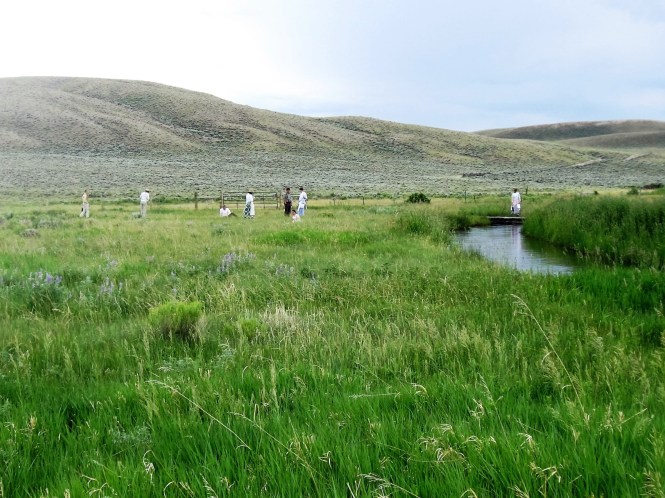
Why would normally sane people take teenagers out into the wilderness of Wyoming to walk for 18 miles?

My husband and I just returned from rough camping for three days and two nights with a bunch of teenagers, and it’s called “Trek.”

We weren’t the only ones, either, to take on this insanity.

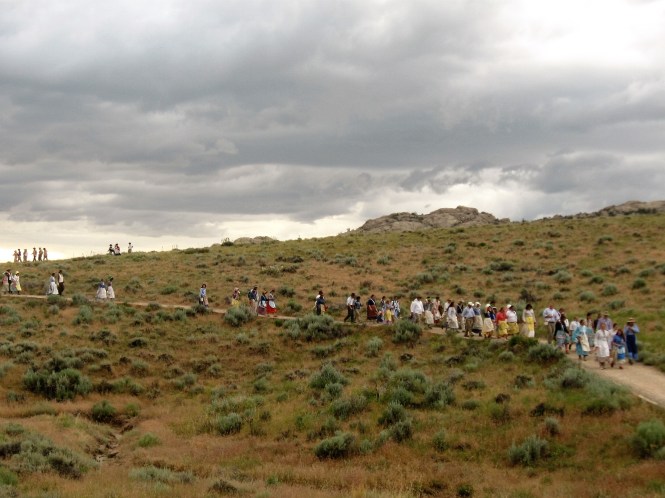
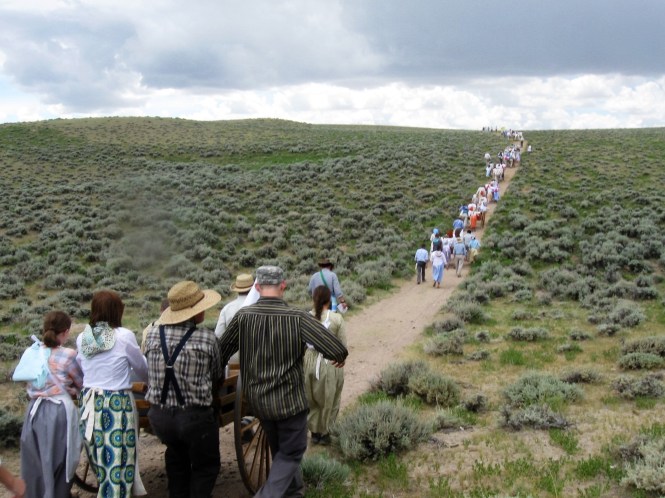
While Dave and I were responsible for eight teenagers, 13-17 years old, three other married couples from our ward (or congregation) accompanied us with their groups of eight kids (our two teenagers among them), along with nine other groups from our stake (about the size of a diocese).  We were “Pa” and “Ma” and they are our trek “kids.” All total, there were nearly 500 of us on this adventure.

IMG_1193

The Hyrum 12th Ward Trekkers

IMG_0870

Dave and my trek “kids,” before our “family” got too dusty and dirty.

At 6 am on Thursday, nearly 400 of us piled into ancient school buses with dubious safety features (about 100 followed in chase vehicles with our gear and food), drove for 6 hours on uncomfortable seats with no A/C, and spent the weekend pretending to be 19th century pioneers.

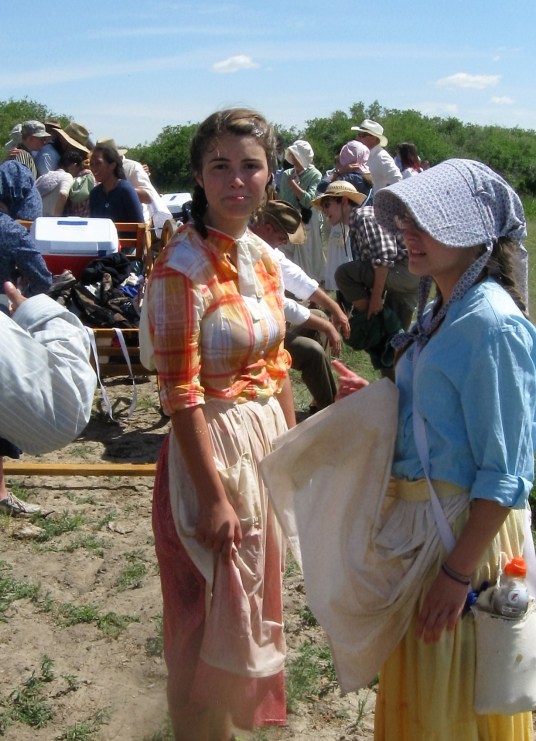
Yes, that means wearing dresses, aprons, and bonnets for girls. Because not all of our participants can sew, I made eight skirts, seven bonnets, seven aprons, and one relatively authentic pioneer shirt for my cute husband. The boys wore suspenders, long-sleeve shirts, long pants, no jeans, and bandannas. (But modern shoes, thank goodness.)

IMG_1156

Dave and I and two of our “real” kids. (The males in our family do know how to smile. Just not for cameras.)

Why would we go to so much effort, and drive for so long, just to walk around in the wilds of Wyoming?

Because our teenagers deserved it.

Not to suffer—which they did, but only mildly. But to discover incredible, amazing things about themselves.

Now I know I recently wrote about why the most dangerous words are “I deserve,” but here’s one thing all people everywhere deserve: perspective.

We all also deserve to discover a few things about ourselves. For instance . . .

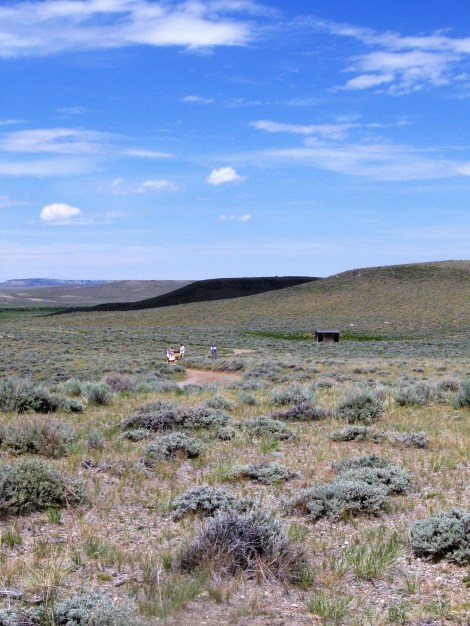
Our teenagers deserve to discover their strength. Our kids are typical: they love their electronics, their games, their music, their cars . . . and they had none of those on trek. No, not even cell phones. (There really isn’t coverage out there, anyway.)

IMG_0995

See any cell phone towers?

All of this means that our teenagers were, overall, soft. (So were most of us adults, to be fair.) While we’ve been trying to prepare these kids since March for this adventure—encouraging them to go walking, and even taking them out ourselves—I think only a handful were fully prepared for the experience.

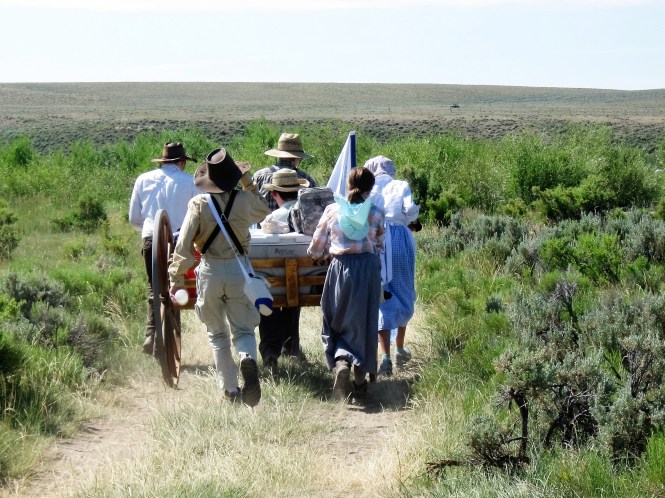
The second day of trek required 10 miles of hiking (later, we learned it was actually 12, but the senior citizen missionaries leading us initially said only 10, so that they kids didn’t lose heart). The terrain was varied and beautiful, but dusty and difficult, especially pulling and pushing a 19th century handcart through the sand.

IMG_1081

(Knowing how much I love epic-looking clouds, God generously provided some for our photos.)

The kids grew tired, despite the water and Powerade and Jolly Ranchers and hoagie sandwiches and bags of Milano cookies. (No, we didn’t eat like pioneers—that’s for sure.)

But they persevered. We “Trek Parents” were always by their sides to encourage and help, but we didn’t need to do much because the kids helped each other. They told stories. They made up song lyrics. They cheered when boys tried to sneak off subtly into the bushes to relieve themselves, and returned victorious from watering the shrubs despite threats to sensitive body parts from mosquitoes.

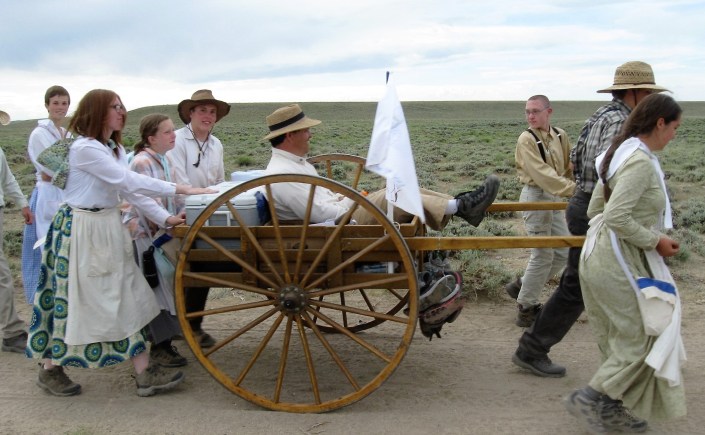
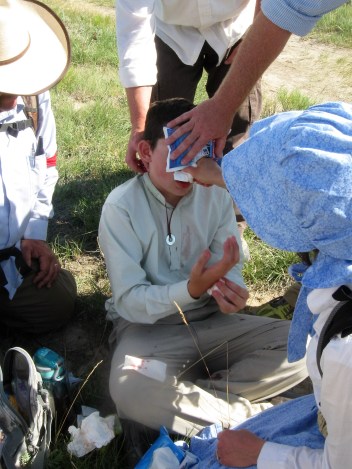
When one of our trek sons developed the most epic nosebleed ever, and the EMT and nurse who accompanied our group of one hundred finally got the bleeding stopped, they recommended that he ride for a time, seeing how pale he was.

IMG_1046

Our kids hastily made room in the handcart, helped in their “brother” get in, then, without any complaint about the added weight, cheerfully pulled him to the river where we crossed, pioneer-like, three times in the rushing water, pulling their brother.

IMG_1050

IMG_1068

Our teens deserve to discover their strength, and their compassion, and their fortitude.

IMG_1070

IMG_1059

Trek isn’t some exercise in futility—walking in enormous circles without running water or bathrooms. (And the porta-potties were few and far between. At one point, I took matters into my own hands by holding up a tarp and letting girls hide in front of me to relieve themselves on the Oregon trail. Quite literally on the trail. That’s why we brought lots of flushable wipes with us.)

IMG_1105

The disparity of porty potties. We taught the men they were allowed to water the bushes. Leave the potties to those of us wrestling with skirts, aprons, and bloomers.

Trek is an exercise in perspective, which our teenagers deserve to understand.

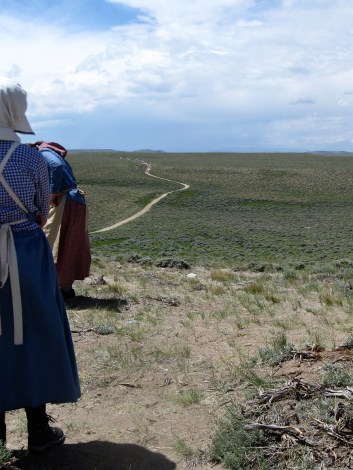
It think few people realize this, but over half a million people used the Oregon/California/Mormon Trail over a span of 25 years—from 1843 to 1869. The trail was so well-used that the original wagon ruts are still quite visible, nearly 150 years after the last wagons used them.

IMG_1120

These are the actual wagon ruts, from 150 years ago, caused by 500,000 pioneers. The distance, astonishing. The vista, immense. The trees and water, non-existent.

Among the 500,000 who trekked west were 60,000 Mormons, fleeing the persecution and mobs of Missouri and Illinois. In fact, they frequently trekked on the other side of the rivers, away from other pioneers who still saw them as targets for persecution and theft. The Mormons figured no one would bother them in the wild west (part of which eventually became Utah), so they took to wagons, and later handcarts, to get there. Most traveled safely, with their mortality rates similar to that of the rest of the country.

IMG_1119

Except for two groups of poor immigrants from England, Sweden, and Denmark. They arrived in America with very little money, had to build handcarts, and got a late start from Iowa City (now Omaha, Nebraska). The Martin handcart company had 665 immigrants, the Willie company around 500. They didn’t leave until August, when they should have been arriving in Salt Lake City, 930 miles away. (You can read more in detail about these companies here.)

Wyoming weather is unpredictable, and 1856 was brutal. In early October, snowstorms hit the beleaguered handcart companies, covering the poorly-dressed and running-out-of-food immigrants with over a foot of snow. It was impossible for them to progress, and they’d been crossing rivers with chunks of ice floating in it. Freezing, without proper clothing or shoes, and surviving on only half a cup of flour a day, the handcart companies were doomed. One group, the Martin Company, eventually took shelter in a cove which protected them from the Wyoming winds, but not the snows.

IMG_0982

Martin’s Cove, Wyoming

It was here that we first took our teenagers, and explained to them that it was sacred and hallowed ground, for not only did the handcart pioneers take shelter there, over 50 died and were buried in unmarked graves. President Gordon B. Hinckley also stated some years ago that the Savior walked there, making it akin to a temple.

Here the Martin Company waited for rescue parties, which Brigham Young had sent from Salt Lake City, over 350 miles away. Sixteen supply wagons and many healthy men headed out immediately, but traveling by wagon on unimproved roads with snows flying meant their progress would also be hampered. (Eventually 250 wagon teams were dispatched.) Many of these rescuers also suffered from hunger, illness, and exposure because they went to help.

When they found the Martin Handcart company, the immigrants were beyond frail, many of them dying, and couldn’t cross another freezing river to get to the cove for shelter. About 15 men, most of them young men and older teens—like those we had brought with us last week—carried the several hundred people across the waist-high river, over and over again, all day long in the bitter cold and snow. Miraculously, all of the young men rescuers survived, although they suffered from the effects of their heroic deeds for the rest of their lives.

IMG_0949

One of three statues commemorating the rescuers who carried pioneers through the icy rivers to the shelter of Martin’s Cove.

This was what our teenagers deserve to see and learn; to recognize their own strength, to see what others had done. Some of our kids had ancestors who were among the immigrants or the rescuers. As they walked the three miles of the cove, they did so in silence. Imagine that—over a hundred teenagers, hiking quietly recognizing the strength and faith of those who had gone before, and the willingness of other teenagers to sacrifice to save others. They deserve to learn reverence.

Our teens also deserve to discover they can do hard things. That evening we drove on our buses an hour west to where the Willie handcart company was discovered by the rescuers. What took us only an hour to drive took the rescuers several days to accomplish in snow and wagons. Here we camped, ate far better than the pioneers did (taco salad and pudding cups, anyone?) and spent the next day hiking that 12 miles I mentioned earlier.

IMG_1091


At one point in our trek, all of the men and boys were sent on ahead, recreating the fact that many of the pioneers were women who traveled alone with their children. The men were gone because many had been recruited to join the Mormon Battalion; other men had died along the way, giving their last rations to their wives and children. Still other men went on ahead to prepare the way for their families to follow.

IMG_1121

Preparing for the “Women’s Pull” and watching our men and boys walk away.

IMG_1122

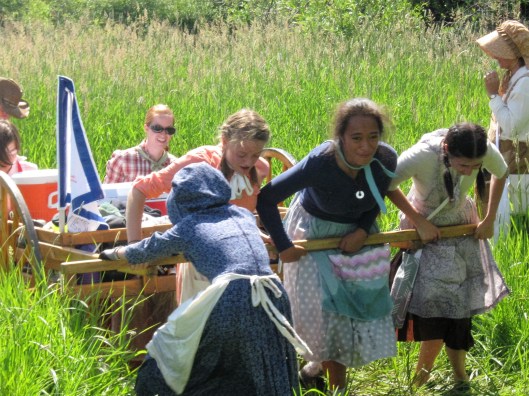
On the other side of the valley, the boys were taught for a few minutes about their responsibilities to their families, God, and community, while on our side the girls were taught about their strength and ability to do hard things.

Then the girls and Mas pushed the handcarts, by ourselves, ¾ of a mile to where the Pas and boys were waiting and watching. They weren’t allowed to come help, but just observe as we struggled through the sand to get the carts up the hill.

IMG_1123.JPG

One of my older (real) sons, who did trek four years ago, said that was the hardest moment—seeing the girls struggle and knowing that he couldn’t help.

However, another recreation we did was that of a Danish wife whose husband became too ill to continue. He told her to go on without him, but she dragged him into the cart and hauled him herself for two weeks until he improved.

On our trek, we had a Ma and Pa act that out, with us at the top of a hill watching as the small wife half a mile away struggled to heave her very tall husband into the cart, then start pulling it all by herself. Even though it wasn’t “real,” still I couldn’t take any more pictures because I was too teary-eyed, watching my friend try to get her husband up that sandy hill.

IMG_1110.JPG

After a minute, one of our leaders said, “Any of the young men here want to go help?”

They did, four of them, eagerly jogging down the hillside to rush to her aid and help her push and pull her husband to the top of the hill. I have no pictures of it, because it was a sacred moment. None of us need photos to remember that.

Our teens deserve to discover that there’s nothing more important than family. Ten miles into that hike, our group paused at Willie’s Meadow, where the handcart company of 500 finally had to stop, out of food and facing too deep of snows. The rescuers found them, too, and got them over Rocky Ridge, 16 miles away to where the supply wagons had stopped, unable to go farther. After that ridge, another 13 people died, and after they were buried, two of the men who buried them also died.

It was in the meadow, where the kids were told about the Willie company, that we handed each teenager a letter, written some weeks ago by their parents. One hundred teens then went off on their own to sit in silence and read their letters, and spend a few minutes writing in their journals.

IMG_1152

IMG_1151

All of Dave’s and my trek “kids.”

Again, complete silence. Dave and I quietly took pictures, and felt that even our whispering was too loud as we watched our trek kids, our own two teenagers, and about 90 more read, contemplate, and even meditate in an area of complete peace and tranquility.

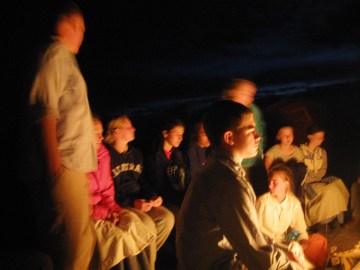
That evening our ward group—about 50 of us—sat around a campfire and talked about our impressions of the two days, of what we learned.

IMG_1171

Teenager after teenager stood up and expressed their thoughts, talked about their love for their families, their ancestors, and those who were there that day helping them to learn.

That night the sky was astonishing—no moon, no light pollution, and no clouds meant that our kids could stare up into a sky crowded with stars and the Milky Way, and feel the universe come down and touch them. Even after such an exhausting and long day, no one wanted to go to their tents just yet. And so Dave and I stood with our eight adopted trek kids, after our “family” prayer and a group hug (which was more of a scrum), and gazed at the heavens which gazed back at us.

Finally, at midnight, we sent them off to bed, reminding them we had camp to take down in the morning, and visit Rock Creek to see where the rescue wagons had been, before the long drive home.

At Rock Creek, where the 15 of the Willie Company had died, we saw their burial area, and sat down on wooden planks for a devotional. That’s when the storm came, an isolated thunder shower, dumping cold rain and even hail upon us as our stake president tried to talk to us about the sacrifices and faith of the pioneers.

IMG_1220

We see the storm coming, and realized that we packed in another vehicle all of our jackets and ponchos. There was nothing we could do but wait to be hit.

We shivered. We froze. And, because it was before our lunch of more sandwiches, grapes, and even soda and more Milano cookies (there’s a Pepperidge Farm factory in our valley–lucky us), we were hungry.

For ten minutes we experienced a tiny fraction what the pioneers did, and it was utterly miserable. One of our leaders said that he had prayed we would have the weather we needed. Apparently, we needed to feel a little bit of discomfort in our very comfortable lives.

After the storm passed, we were able to take shelter in those buses which seemed to be as luxurious as a hotel. (Ok, not quite, but you see where I’m going with this.)

IMG_1203

Even though the school buses were miserable, they were far better and much faster than wagons, or handcarts.

IMG_1246

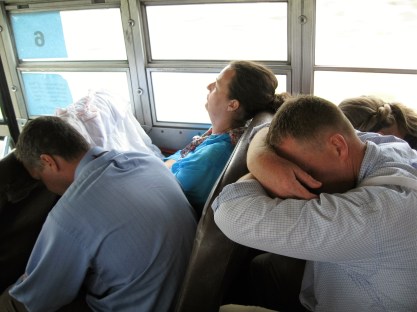
Exhausted fellow Mas and Pas, trying to sleep.


IMG_1245

(Wait–this means I’m the only responsible adult awake on the bus?!)

It’s now been a few days since we’ve returned, and I’ve finally got all the laundry washed and put away, the tents swept out, the Dutch ovens reseasoned, and the many supplies we gathered and purchased stowed away. The mosquito bites are healing, and last night I saw all of my trek daughters again, along with several of their mothers.

Would they say that trek was “fun”? Parts of it definitely were, especially for my 17-year-old daughter who was the only one who took a bath for three days, because the swift current of the Sweetwater River pulled her under briefly.

IMG_1079

But “fun” wasn’t the point. Over and over the parents of my kids said, “She said it was the best experience of her life,” and “He even broke down as he said how great it was,” and “She said it was a lot harder than she expected, which meant it was even better than we hoped for,” and “It changed him.”

So why did we drag these kids in pioneer gear out to the wilderness and walk them near to death (or so some claimed)?

Because they deserved it. Everyone did.

IMG_1161

(Pa Mercer wore the right boots, but not the right socks, which left him with many blisters. However, riding on the handcart proved more uncomfortable than walking, so his ride lasted about 50 yards. He bailed out when he saw the first major dip in the trail coming, to the relief of our kids.)

IMG_1022

(And I deserve to see my #6 child smile.)

Are you going to let the latest tragedy make you harder, or softer?

It’s happened yet again. Another horrific event/accident/terrorism incident, and in the comments of the articles and in social media we see blaming of the victim: If only they’d watched their child better, or If only they hadn’t been at that place at that time, or If only they’d been more careful, less stupid.

If only they’d been better. Like me.

I’ll admit these thoughts have occasionally hurtled through my brain when I’ve read about the latest tragedies, trying to think frantically how I would have avoided it, how I wouldn’t have let such a horrific thing happen to those I love, or to myself.

As if my placing blame on the victim will somehow ensure I’m never such a victim.

But that’s not how it works.

Everyone—even, and especially, the most innocent—can be a victim.

It’s high time we stop piling inappropriate guilt on to those who desperately need our empathy and help.

Admit it—we’ve all done things that we’ve been eternally relieved had no lasting consequences. Perhaps it’s involved our children. I’ll admit that I’ve accidentally left a child at a store/gas station, had a non-swimming child fall into a pool, and also into a lake. (In my case, this was all the same child, and I know the angels have been running full speed to ensure she’s made it to age 17.)

We’ve all had moments of distraction when driving, and nearly caused—or perhaps did cause—an accident. (I’ve been the victim of that.)

We’ve all had moments of pain and distress or anger where we’ve said something inappropriate, or set off a series of events we regret, perhaps for the rest of our lives. (I won’t go into details of when I did that. Let’s just say there’s a list.)

It’s because we’re human, and while the Savior’s statement of “He that is without sin, let him first cast a stone” was meant to humble the Pharisees who wanted to condemn an adulterous woman, I also see this phrase as a comforting reminder: We all screw up. None of us are without sin.

However, that’s not what scares us the most about tragedies. What scares us to our core is that even those utterly innocent of any wrong-doing can suffer in horrific ways.

What shocks us is that we can be very good people, and still have very bad things happen to us. No matter how much we try to blame and shame that, it doesn’t change the truth: all of us can become a victim.

For example, it’s easy to blame lung cancer patients for their misery. “Smoking causes cancer,” is something we all know. But did you know that 10-15% of all lung cancer occurs in people who have never smoked?

Sometimes, bad things just happen.

Or take the story of Michelle Williams, a pregnant mom riding in a car with her family, who was struck and killed, along with two of her children and her unborn baby, by a teenaged drunk driver. What did she do wrong to deserve that tragedy? Nothing.

That’s what really terrifies us: becoming an innocent victim.

And that’s where the real test begins: How do we react when we are innocent victims, or when we see others become victims?

This entire life is one long test: of our attitudes, our criticism, our compassion, our hearts. Every day, every moment, every event large or small, is designed to see what kind of person we’re becoming.

Sometimes, the tragedy strikes us personally. That’s the most heart-ripping moments of our lives. How we respond is the real test.

Michelle Williams, the expecting mom who died, left behind a husband and additional children. How Chris Williams responded to the deaths is nothing less than astonishing: He forgave, that very night, the teenager who killed his family. Interestingly, when Chris Williams was a teenager, a boy darted out in front of his car, and was killed by Chris. He knew what it felt like to be on the other side of the tragedy, helping to cause it. He forgave, because he needed and received forgiveness himself.

But more frequently, we’re bystanders to the tragedy, and with the internet, we’re afforded a gory front-row view to everything that happens in the world.

Perhaps here is the bigger challenge: how do we regard the suffering of others, especially when we’re presented with it every day?

It’s easy to grow cynical. “Oh, another shooting. Well, nothing good happens in a bar at 2 am anyway. Big surprise.”

It’s also easy to say, “They deserved that. What did that family think would happen to them, living in Syria?”

And it’s supremely easy to proclaim, “I’d never let my kids wander off, or be snatched out of my firm grip by a measly old alligator.”

Because it’s so much harder to accept that such a fate could hit us too. We like to cling to the idea that we’re special, we’re above pain. Nothing awful should–or would dare–happen to us.

But hardening ourselves to the suffering of others isn’t the answer. Becoming callous and finger-pointers, especially when we point at the victims, doesn’t save us; it condemns us.

I love these words from an ancient king named Benjamin, in 124 BC:

 “Succor those that stand in need of your succor . . . Perhaps thou shalt say: The man has brought upon himself this misery; therefore I will stay my hand . . . for his punishments are just—

“But I say unto you, O man, whosoever doeth this the same hath great cause to repent . .  For behold, are we not all beggars? Do we not all depend upon the same Being, even God . . .?”

Why don’t we show a charitable heart and attitude to those who suffer? Perhaps we’re afraid of becoming soft, of feeling too much for them, or of being dragged into their misery.

But I think feeling empathy for those who suffer, and even stepping up to help when we can, does far more for us than remaining callous. When we grieve with the victims, we process our own fears, and become more attuned to those around us. We become more Godlike. The ancient prophet Enoch saw God weeping over the children of the world. “Wherefore should not the heavens weep, seeing these shall suffer?”

I remember when the Sandy Hook elementary shootings occurred in 2012, where 20 children were gunned down. When I went to drop off my daughter to school, I saw many parents giving their kids extra hugs as they left, because none of us know when the last time may be the very last time.

That’s the attitude we need to take in the wake of every tragedy: Rather than blaming the victims (and yes, even in the Sandy Hook shooting I saw plenty of fingers pointing at the innocent) we instead need to cherish who and what we still have.

There are many theories and beliefs as to why bad things happen, but perhaps this is the easiest to grasp: To remind us to never take anything or anyone for granted.

With every scene of horror and terror, we can be reminded, daily, of how precious life is. How everyone deserves our love and attention, every day. How we can’t afford to hold on to pettiness, to self-righteousness, to old anger and wounds, because the purpose of this life isn’t to make us harder.

The purpose of this life is to make us soft. 

make us soft

“And you think being soft is a bad thing? Oh, no. Softness is vital. Softness is life. The Creator Himself is soft. No greater compliment could be given to you.”

~Book 5, Safety Assured Leaving East of Medicetti. Now available at Amazon and Smashwords and here

Are you sure you’re happy? 12 Traits of Happy People

Despite the world’s best efforts, it’s not impossible to be happy.

That was the premise I began with as I stared at another dismal news day. Instead of ranting here about what’s wrong in the world, as usual, I decided instead to spend a few days observing how people remain happy, especially when all around is misery. I’ve been surprised and intrigued by what I’ve noticed.
Here are the results of my very unscientific observations:

1) Happy people have not lived trouble-free lives. Contrary to what you may think, happy people frequently have waded through a great deal of grief. Illness, financial woes, death, homelessness, divorce: some of the happiest people have been handed some of the roughest ordeals. But they’ve learned to cope, to adapt, and to fiercely—insistently—find the joy in their trials. They choose to find joy. Probably because of this . . .

2)  Happy people are generous. They will give their time, their love, their talents, even their money to ease the burdens of others. They’ve discovered that one of the many ways happiness comes is by giving it to someone else.

3) Happy people live for others. They’re not focused on themselves, which they’ve discovered is the surest way to become miserable. The happiest people are those who volunteer their time, who take care of those who can’t give anything back to them, and who rarely think of themselves.

4) Happy people are humble. They don’t boast about their accomplishments, or who they know, or what they own. In fact, you’d be surprised by just how much they’ve done with their lives, if ever you were to find out, because they don’t advertise it.

5) Happy people rarely talk about themselves. In conversations, they’ll focus all of their attention on you. When they ask about your day, they really want to know. When you leave their presence, you’ll feel like the most important person in the world, and only later will you realize you heard very little about them.

6) Happy people are respectful. They will not ridicule, mock, or deride you. They may gently tease, but are careful to never drag you down, like crabs in a bucket. They respect your decisions, even if you don’t respect theirs.

7) Happy people are content. They are satisfied with the choices they’ve made in their lives, so they have no issues with the choices you make in yours. They may make suggestions because they’re concerned about your happiness, but they’ll never force you to accept their way of doing things. They will let you live your life, your way.

8) Happy people smile. When you see happy people, you know it. By their eyes, which radiate joy, their smiles, which are genuine, and their body position, which is open and inviting. They have nothing to hide, nothing to guard, and everything to share.

9) Happy people are kind. To everyone and everything. They smile at children, give a weary parent a nod of approval, assist the elderly, and even pick up items that have fallen off of shelves at the store, because they want to make some employee’s day just that much easier. Happy people are those who gently shoo away bugs instead of squashing them, and who will politely ask the stray dog to not befoul their gardens.

10) Happy people are honest. About you, about themselves, about the world around them. They don’t deceive, and they don’t cover up the truth, especially about themselves. If they are at fault, or if they have caused harm, they will ask forgiveness and actively seek to make restitution.  Happy people take full responsibility for their behavior and consequences, because they don’t want to cause unhappiness in others.

11) Happy people don’t take offense. Even if it’s intended. They just let the words roll off their backs, like water off a duck, and generously decide that the potential offender has merely had a bad day. Happy people think the best of people in all circumstances, not the worst. In fact, it may be hard to convince a happy person that someone is truly bad. They just don’t want to believe it.

12) Happy people are at peace.  That doesn’t mean the world which they inhabit is peaceful. Indeed, some of the happiest people I’ve observed have been calm in the most chaotic of situations. But they are at peace with themselves, with their choices, with who they are becoming, and most importantly, they are at peace with God, whose peace surpasses all understanding.

A quote from President Dieter F. Uchtdorf, “He created us to have joy,” on an orange watercolor background.

I see happy people everywhere, when I bother to look for them. Each of the items I’ve listed above I’ve noticed a happy person doing. (It was my dad who would politely ask dogs to leave our yard; he was the most peaceful man I’ve ever known. And yes, the dogs would leave, every time. He’d thank them, too.)

So how do we all become such happy people? I’m still working on that. It’s the old chicken-and-the-egg question, I suppose. But one thing I’ve noticed in myself is when I do my best to have these happy traits–if I “feel” it or not–my happiness level automatically increases.

This is what I’ve discovered:

happiness is a choice

Watch for them, the happy people. Tell me what other traits you observe in them, in yourself.

Notice when you feel joy. It may be more frequently than you realize.
Most importantly, share that joy with others. We all need more happy people in our world.

There’d always be pain, and always suffering, Perrin knew–

“And also always relief, and also always joy. That’s the trial of life, son, and it all works for our good. But it will always end in joy, Perrin.”
~Book 5,
Safety Assured Leaving East of Medicetti

My kids are high school dropouts, and I couldn’t be happier about it

My 17-year-old daughter has been awarded an academic scholarship to the university she’s attending this fall.

But she wasn’t mentioned in the assembly the high school held last week honoring scholarship recipients.

She’s leaving high school with a 3.9 GPA, but she won’t receive any honors.

She quietly walked away from school yesterday, and didn’t even attend graduation (she was working at Little Caesar’s to earn money for housing in September).

Why?

Because she’s not a senior in high school; she’s only a junior. And, like her two older sisters, she’s decided she’s done with the drama and tension of high school life. She’s skipping her senior year and heading straight for college.

Without a high school diploma, without even a GED.

And I love seeing the look of shock on the faces of our friends and neighbors when they hear that I now have five—FIVE—high school dropouts.

“But . . . but . . . they HAVE to have a diploma!”

No, they don’t.

“But . . . but . . . if they don’t graduate, they can’t get into college!”

Not a single university of the four that my kids have applied to has asked for a high school diploma. None of them.

“But . . . but . . .  they need transcripts showing they completed four years of schooling! How do you get around that?”

Easily. Our kids are part home-schooled, part public-schooled. I make transcripts for my children based on what they’ve studied since 9th grade, couple that with the grades they get from their high school courses, and send that to the universities. The admissions offices accept the documents, no questions.

“But . . . but . . . isn’t that illegal?”

Teaching my kids at home? Recording their scores? Nope. And there’s nothing illegal about dropping out of school.

“But . . . but . . . how do colleges accept them?”

Three little letters: ACT.

That test is designed to demonstrate how well a student may succeed in college. Four of my five kids scored in the high 20s and low 30s on their ACTs, and that was good enough for college. One child, who has struggled with some learning disabilities, didn’t score as well, but he’s been accepted to two state schools anyway.

Because college isn’t that hard to get into.

Seriously.

Every state has university systems with “open enrollment.” Essentially it means that if you have a heartbeat and a bank account, you can try a year of college. Having taught at these schools, I realized that this prevailing notion is a good one: maybe someone wasn’t top of his class in high school, but maturity, focus, and time works in favor for a lot of people. Just give them a shot at college. If they don’t succeed after a year, they’re put on probation, but most likely drop out on their own to pursue something else.

Several years ago, my oldest daughter scored the magic number on her ACT to be accepted into Brigham Young University in Provo, Utah. She had taken the test early as a 15-year-old, only so that we could gauge where her homeschooling had taken her.

I stared in shock at her score, then was surprised even more when she said, “Can’t I just go to college now? What’s the point of doing more high school?”

I had no answer for her except, “I guess you could go early . . .” She started her freshman year of college when she should have been at her senior year of high school.

My second daughter, not to be outdone by her sister in anything ever, also took the ACT early, and to her delight scored one point higher. She was attending our local high school part-time, and when her guidance counselor brought her in to choose courses for the next year, she told her, “I’m not coming back; I’m heading to college instead.”

The guidance counselor called me that day. “I don’t think that’s a good idea for your daughter to skip her final year. Most kids aren’t mature enough to move away to college at 17. Most kids really struggle.”

I answered, “Most kids aren’t my kids. I evaluate each individually, and my daughter is ready to leave, just as her older sister, who has a 4.0 at BYU right now.”

Where are my two daughters now? My oldest is completing her master’s degree in archaeology. She’s been published a few times, was the head TA for anthropology for many years, directing 20+ TAs who taught freshman anthropology, and is completing her thesis, despite having a toddler at home and another baby on the way.

my kids are high school dropouts

As my oldest daughter, Madison, received announcements of high school graduations, complete with dramatic photos, we decided to do our own photo shoot of her dropping out. (She’s holding a root beer bottle, by the way). Four years later she graduated as valedictorian of her class at BYU-Provo. Now she’s married, a mom, and finishing her master’s thesis. Not bad for a “dropout.”


My second daughter earned her associates’ degree with a 3.95, went on an LDS mission to Edmonton, Canada for eighteen months, and now is finishing her first year at BYU’s very competitive nursing program. She hopes to become a labor-and-delivery nurse, and eventually a certified midwife.

I think they were mature enough to leave high school, just as their little sister is.

Now, if you’ve done the math you’ll see I said FIVE high school dropouts, and I’ve mentioned only three so far.

I have two sons who also dropped out, but they went through their senior years. Almost.

My oldest son, who has learning disabilities and struggled like his dad to learn to read and write, took schooling slower and finished his high school courses with a 3.8 GPA. Seeing him earn As in English astonished me. Then he quit school, without a diploma.

Then he went to the oil fields of North Dakota.

Then he went on a LDS mission to Pittsburgh, PA for two years.

Then he went into the army reserves and trained in petroleum testing, where he was honored for earning the highest scores. IMG_5690

And now he’s going to college. He’s starting later than most freshmen, but with a wealth of maturity and experience behind him, and with eagerness that a lot of college freshmen, who are burned out from high school, don’t possess. 

I’ve had a few acquaintances surprised by this, too.

“But . . . but . . . he’s getting kind of late start, isn’t he?”

No. He’s only 22. I used to teach evening courses at a community college where half of my students were older than me. It’s never too late to start.

“But . . . but . . . students will be younger than him.”

So what? We’ve been programmed by our many years of public schooling to think that everyone should be the same age in the same grade. But once you get to college, you realize that your classes–if you’re lucky–are populated by a microcosm of the world: people of all ages and backgrounds and even countries.

My son’s starting college in a very smart way: with no debt. He knows he’s not getting scholarships like his sisters, but the army’s helping him pay for school, and he’ll eventually leave with money in the bank, not debts to his name. He’s learned from his parents that student loan debt is a killer.

And what about my other son? He dropped out a little bit early. He left before his third trimester of school. 050

Yep, right in the middle of it all, he waved good-bye and walked away.

He figured, what more could he get out of high school in one more trimester? Nothing, really. He wanted to get to serving as a missionary for the LDS church.

While the LDS church wants its missionaries to complete high school and graduate (the minimum age to serve for boys is 18), I pointed out to our local leadership that none of my kids graduated because they are home-schooled, and my son had been 18 since the beginning of the school year.

Our congregational bishop, a teacher at the high school who had my sons in his classes, scratched his head at my argument. Then, knowing me and our family too well, said, “All right. I guess we can submit his papers and see that the church says.”

By April of his senior year, my son was already serving an LDS mission in Oklahoma City, Oklahoma. He missed all the graduation parties, just like his sister has, but he doesn’t care. He’s already moved on to real life.

I have four more children who will also likely make me proud by being high school dropouts. I’m not proud that they “dropped out,” but that they made decisions for themselves as to what they wanted to do with their lives.

My husband and I haven’t told any of them what we expect of them. I have, however, told them I want them to try at least one year of college, just to see if it’s for them. I want them to have that experience of learning from various people—even the liberally-minded, to help challenge and strengthen our conservative beliefs. When they do that year of college, and where, and how, is entirely up to them.

Back to my latest high school dropout. When she came home from high school for the last time, I asked her, “Any regrets? I heard your friends saying how much they’ll miss you next year, how they wished you’d stay.”

GEDSC DIGITAL CAMERA

All of my kids do things differently, like making a prom dress skirt out of storm trooper fabric.

Oh, if you could have seen her eyes rolling. Like planets falling out of orbit.

“No!” she declared. “I am done! Let’s get on to real life!” Then she pulled out her tablet, with yet another recipe on it, and headed to the kitchen where she’s been experimenting with meals she can make after a day of college classes.

She’s moving on when she’s ready to, not when some random bureaucrat declares her “mature enough.”

She, like my other children, is making choices for her life, based upon her needs.

I love having a house of rebels.

“Let’s hope there are still a few rebellious ‘teenaged’ souls out there,” Mahrree whispered to Perrin.

“Besides us, I mean.”  

~Book 2, Soldier at the Door

(Book 5 is published and available! Get Safety Assured Leaving East of Medicetti at Amazon, Smashwords, or here on “Start reading the books!“)

Book 5 teaser–Refuse to see the shining light

High Polish Tatra mountains

They will also refuse to acknowledge the darkness, even as they crash around blindly. 

The ancient Israelite prophet Isaiah wrote:

Woe unto them that call evil good, and good evil; that put darkness for light, and light for darkness; that put bitter for sweet, and sweet for bitter! (Isaiah 5:20)

I can’t bear to list all the ways the world is spinning in the dark right now (Obama’s recent declaration that all restrooms and locker rooms–even and especially in public schools–be “gender neutral” has me too nauseated to write about it).

However, even though our governments and our so-called leaders may be waaaay off the mark on many issues, we as individuals don’t need to follow. We each have our ability to think, to ponder, to declare that we will continue to see the light, that we will recognize the darkness, and that we will not–no matter how many times everyone tells us otherwise–we will NOT see that the sky is merely blue.

Take a good, hard look at it. Today, the tiny section I see out my window is blue, but when I get up and view the entire sky, in the distance there are huge clouds, billowing and approaching.

See the entire sky, and the entire world, for what it really is. Identify the light. Recognize the darkness, and don’t let anyone with power, or money, or charisma convince you that you see otherwise.

Three years ago I wrote about the strange habit we have of thinking that “the sky is blue.”

It isn’t.

My first book, The Forest at the Edge of the World makes the argument that while everyone thinks the sky is blue, that’s only an illusion. It’s actually black. (So quit telling your kids it’s blue.)

We have to be brave enough to take a good, hard look at the world, and to make a judgment about what we see. Oh, how we’re so afraid to do that! We’re so afraid of offending the world that cares nothing for us. In the meantime, we offend our Heavenly Father, who truly loves us.

We need to not be afraid to declare, “No, this is wrong. I will not agree, I will not give in, and I will not refuse to see the light.”

I won’t guarantee there won’t be repercussions for going against the world. You will be knocked down, likely not by some high government official, but probably by your social media “friends.” I’ve taken to hiding in my closet on a regular basis when I, once again, write up something that, as the comments and railings pour in, I regret . . . but only for a moment. Every time I think, “Oh, why did I put that out there? Look at the conflict it’s generating! I hate that!”

I hate fighting. I hate arguing. I hate thinking that people don’t like me. (I’m such a 7th grader sometimes.)

But I hate more seeing the good in the world being labeled as evil, the bitter replacing the sweet, the darkness trying to smother the light.

Here’s the great thing about our world right now: all of us can find a forum where we can stand up and declare where the light really is, and what the dark’s trying to do. Most of us won’t shine too brightly. I know I’ve personally got the illuminating power of a penlight on aging batteries, but that’s ok. I borrow strength from the many brave bloggers and writers and religious leaders of many faiths who boldly shine their brighter lights on the darkness.

And here’s the awesome thing: light, shining together, gets brighter together.

And here’s the even more awesome thing: it takes only one light to dispel absolute darkness.

How to cancel your Mother’s Day Guilt Trip with “Moments of Perfection”

The following was written by my mother,  Yvonne Neufeldt Strebel, in 1984. She delivered this talk in church on Mother’s Day.  I found this speech in my dad’s journal, and reproduced it here, to show that fear of not measuring up as a mom has been around for at least 32 years.

“Mother’s Day”—the very word awakens feeling of appreciation, gratitude, and love, and rightfully so. I am grateful to be a wife and a mother and to have a good family.

Yet Mother’s Day in our home is known as “Guilt Sunday,” the date for my annual guilt trip.

Beautifully rendered Mother’s Day speeches have left me with a depressing feeling of inadequacy. I have often asked myself, “Could it be possible that my family is succeeding in spite of me?”

I do not measure up to the ideal motherhood, the Supermom. I know that, because I have tried to be Supermom and failed. I am not alone in my plight. Actually, I am in very good company. There are other mothers who have expressed the same sentiments concerning Mother’s Day and Supermom. 

Supermom—you know the type. She gets up very early, every single morning. Go, call on her between 5 and 6 a.m. She will greet you with a radiant smile and will be beautifully dressed, perfectly groomed, unhurried—yet lively—although she has been up for hours.

She has exercised, written in her journal, perhaps even composed music or written poetry.

She in now preparing not only a nutritious, but also an appetizing breakfast, which she will serve on an elegantly set table. No lumpy oatmeal or cold cereal for her family.

Supermom never ever loses her temper, and if she is in pain, she hides it. She always sings while doing chores. She loves and supports her family 100%, does her church and community work exceptionally well—better than anybody else—and never tires. Evening meals, always served punctually, are gourmet delights.

At night, when the day is done, Supermom lovingly turns to her husband and with a brilliant smile, accompanied by a demure sigh, says, “Darling, I love all my challenges. I only wish I could have more.”

I identify with Supermom in only three categories:

  1. I am, by my Prussian nature, punctual: dinner is always served on time, or else we eat out.
  2. Church and community work are very important to me. I love both. But I, unlike Supermom, do get exhausted.
  3. Most importantly, I love my husband, children, in-laws, and grandchildren with all my heart and I support them to the very best of my ability. Although my very best could not ever match that of Supermom.

Other than that, I do not qualify. And I had to come to terms with that. (I also had to prepare this talk.)

Does Supermom really exist, or is she the sum total of imaginations of many kind Mother’s Day speakers?

If she exists, could she perhaps step forward and tell me how she does it?

I suspect Supermom is a myth. I am no longer willing to compare myself to a myth.

supermom myth

In the 1984 April General Conference, Elder Marvin J. Ashton pointed out that,

“comparison is another tool of Satan. Many [mothers] seem to put too much pressure on themselves to be a Supermom or Superwoman . . . A good woman is any woman who moves in the right direction.”

The foundation of motherhood is nurturing love. If we keep this in mind, we need not compete in the motherhood Olympics in order to find the perfect mother.

We are all on the road to perfection. Along the way, we gather what I would like to call “moments of perfection.” These are occasions when we do well and achieve, usually in quiet ways. There are no headlines, no fanfares, but Heavenly Father approves.

When my own children were small, they would bring me the most beautiful bouquets of dandelions. It was better than their previous practice of beheading our neighbor’s prized tulips. When I treated these dandelions as a bouquet of roses, then this, in a small way, was a “moment of perfection.”

I made myself a questionnaire befitting my own situation:

  • Do the women I come in contact with know that I am not their critic? That I will not give unsolicited advice?
  • Do they know that I accept them and their uniqueness as I hope they accept mine?
  • In admiring another woman’s accomplishments, can I do so generously and from the heart, without making it awkward by adding, “You’re so gifted! I could never do that. You have all the talent, and I don’t.” If I can be positive, then I can gather another “moment of perfection.”
  • When receiving a compliment, can I thank graciously without belittling myself? “Oh, it’s really nothing, just something I shipped up quickly,” although in reality I have slaved over it for hours by the sweat of my brow.
  • In serving others, do I do so out of a good desire and because it is needed?

These could all be “moments of perfection.”

If I am not motivated by guilt or fear of what others might think or say, then I have created another “moment of perfection.”

When reporting back to my Heavenly Father at night, I may have had a disastrous day, in part caused by my own weaknesses. But when I repent and ask forgiveness, and I can feel the comfort of the spirit, I know that my repentance has been acceptable to the Lord and I express my gratitude to Him. This then is a very good “moment of perfection.”

“Moments of perfection” can be gather by us all, regardless of whether we are parents or not.

In the final analysis, as I understand it, that which is really crucial to my being a good mother can be summarize in three points:

  1. My obedient to the laws and ordinances of the gospel. I need to keep my covenants faithfully. This makes a closeness to Heavenly Father possible, a closeness I desire.
  2. My nurturing love for my family. I need to learn and practice unconditional love.
  3. My integrity toward myself and others, which I must learn to perfect.

With this in mind, I can learn to eliminate fruitless comparison and cancel my guilt trips.

True personal liberation can only be achieved through genuine gospel living. Heavenly Father lives and loves us all, and recognizes our honest efforts.

1969 Yvonne and Trish, 1969 (2)

My mother and me, 1969 (I’m the small one.)

Yvonne Neufeldt Strebel was born in 1927 in Neisse, Prussia, Germany (now Poland). She endured WWII as a child, losing many of her family to the war, then escaped alone as a refugee fleeing from the Soviet army when she was 17 years old in 1944. She eventually met Rudolf Strebel in Munich, and in 1954 they immigrated to America and married, settling in Utah until their deaths. Yvonne passed away in 2014, at the age of 86. She had four children, 23 grandchildren, and many more great-grandchildren.