“When she was young, she thought sarcasm was the sign of true wit.”

“But as she aged, she realized that sarcasm was just easy and lazy, and more damaging than enlightening.”

I’ve been thinking a lot about sarcasm lately, since it’s been such a dear friend of mine over the years.
–See that? Putting such in italics? I can even write in sarcasm! irony mark
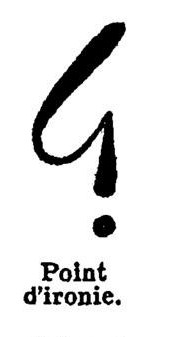
(Back in the 19th century they even experimented with a sarcasm/irony mark as above. Can’t find it on my keyboard, though.)

Sarcasm is everywhere, and in meme form, it’s a virtual epidemic. (Just try searching on Pinterest for Sarcasm, then stand back and shield yourself!)
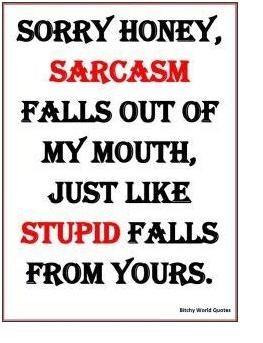
sarcasm2

Then . . . I heard the sentiment above, that sarcasm is just easy and lazy and damaging.

And I thought . . . Oops.

Good old Wikipedia gave me more insight (and I mean that sincerely—I DO like Wikipedia, no snark intended). Look at the meaning:
The word comes from the Greek σαρκασμός (sarkasmos) which is taken from the word σαρκάζειν meaning “to tear flesh, bite the lip in rage, sneer”.  (http://en.wikipedia.org/wiki/Sarcasm)

Tear the flesh?! No, I don’t mean to do that! I just mean to be a bit snarky, but validate it by saying I was only being sarcastic . . .

“Sarcasm I now see to be, in general, the language of the devil; for which reason I have long since as good as renounced it.”
That’s from Thomas Carlyle.
That’s piercing me to the core.

Language of the devil? Uh . . . maybe. Consider all of those angry cat memes. There’s definitely a connection. (I heard this cat’s name is Beelzebub . . .)
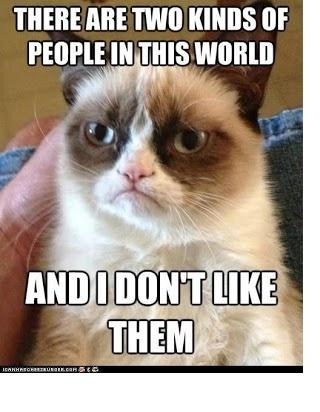
angry cat

(And I hate myself for sniggering at this. Funny, but . . .)

But is sarcasm really that awful? I mean, come on. People bug us, so we MUST retaliate, right?
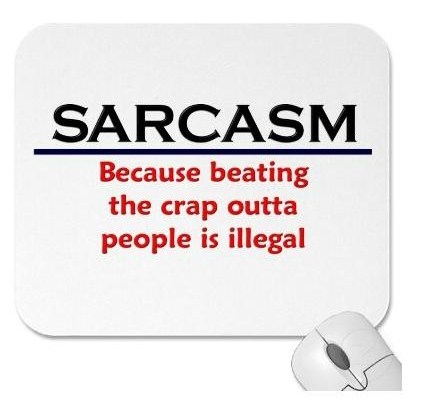
sarcasm

Then I read this article about “No Corrupt Communication,” (read it here) by Jennifer Grace Jones: “Not all sarcasm is intentionally sinister, but it has a hypocritical edge because it requires us to say the opposite of what we mean. Some use it for humor, but it often damages our relationships.”

I’ve known families that communicate only in sarcasm, and there’s very little genuine love expressed. In fact, there’s very little expressed at all, except thinly veiled contempt, when I suspect they actually feel much, much more. But they’ve never learned to speak in any other way.

In another article I found this painful little nugget: “Sarcasm . . . is usually based on inordinate pride and is usually aimed at some person or group thought to be inferior.”

Erg. Yes. I may be guilty of this . . .

All right, I am. And I know it, because when I employ a little snarky jab, or laugh at yet another sarcastic meme, I always feel a twinge of regret later, as if I just ate the last of the cookies and told my kids I didn’t know what happened to them.
Initially, I enjoyed gorging myself, then afterwards I remind myself I could have done something much better.

The words of a fantastic and inspired sweet old man, gone now from this world, put it like this:
“Everywhere is heard the snide remark, the sarcastic gibe, the cutting down of associates. Sadly, these are too often the essence of our conversation. In our homes, wives weep and children finally give up under the barrage of criticism leveled by husbands and fathers. Criticism is the forerunner of divorce, the cultivator of rebellion, sometimes a catalyst that leads to failure.”
~Gordon B. Hinckley

Hickley 1

Look at that face. That’s a man who never uttered a sarcastic word in his life. I want a face like that. (Except female. And a bit younger, and . . . but you know what I mean. And the hat–the hat’s awesome!)

But then I found this nugget by Dostoyevsky and, like any person forced to make a life in Russia, he sees things a bit darker, a bit harder: “Sarcasm is usually the last refuge of modest and chaste-souled people when the privacy of their soul is coarsely and intrusively invaded.”

Is there a place for sarcasm? It’s not always hurtful; occasionally we use it in our family in what I think are gentle, teasing ways . . . until my 5-year-old says, with sad eyes, “I don’t like it when you tease me. I feel confused.”

Ooh. Sorry.

Maybe sarcasm is ok only in limited circumstances, when the only other option is violence or rage.
Maybe it’s the only way to deal with disappointment.
I find myself leaning on it as a crutch when I deal with toddlers. For example, when I found my 19-month-old had colored again on the walls with “washable” markers (Crayola and I need to have a talk about the definition of “washable”), I looked into his big proud eyes and said, with all the sincerity of heart I could muster, “Why thank you. You know, when I was hugely pregnant with you and painted each one of these a nice pale blue in anticipation of your arrival, I hadn’t expected that you would want to augment the color with purple, brown, and pink. It’s just . . . lovely.”

Either that, or rage at the poor little guy even though it was my fault for thinking I had secured the markers, but failed to hide every chair in the house to keep them out of reach.  Sarcasm saved my little guy, calmed my frustration, and made me chuckle at myself as I uselessly scrubbed.

No, my soul wasn’t exactly “coarsely . . . invaded,” but something inside of me was pinged, and sarcasm saved us all.

But I think these are rare circumstances. Consider this meme:
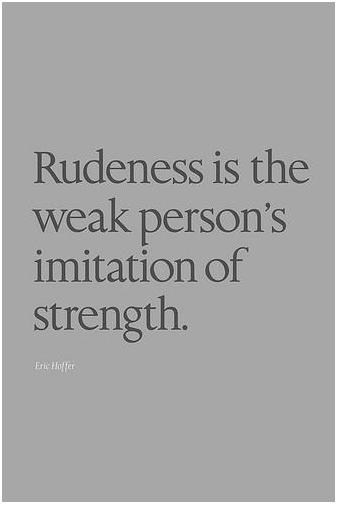
rude

Sarcasm, at its heart, is simply sheer rudeness to those we feel we’re superior to.

All of us are better than that, surely!

Again from Jones’s article: “I’ve noted that those who use [sarcasm] tend to underestimate its negative effects because they assume that what they say is humorous instead of hurtful. People who use sarcasm often think their targets are too sensitive or naïve when feelings get hurt. “She just can’t take a joke,” they say. In more disturbing cases, sarcasm communicates contempt for others and gives people the “dishonest opportunity to wound without looking like they’re wounding.”

I want to be better than that, so I’m attempting to put myself on a sarcasm diet. I’m going to parcel out my servings of sarcasm, or indulgences of snarkiness, as judiciously as I should be eating cookies. Sparingly, appropriately, and avoiding it as often as possible.

Another gem from that sweet old man, Gordon B. Hinckely: “I’m asking that we look a little deeper for the good, that we still our voices of insult and sarcasm, that we more generously compliment virtue and effort.”
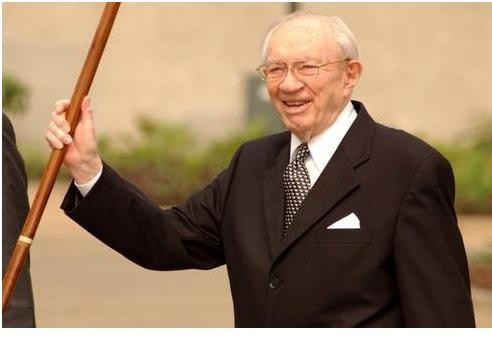
Hinckley 2

Sarcasm is easy, lazy, and “the imitation of strength.”

I want to be stronger—truly stronger. And not eat so many cookies.

Of all the lists we make . . .

I sat once next to a man in his seventies at the doctor’s office who was making a list. In bold letters written in a blue Sharpie, impossible not to see on the yellow legal pad, were the words: WHAT I STILL WANT.

As I glanced at the title of his page, I smiled and randomly thought of students I’ve had in the past. The most interesting were the ones coming back to college, also wanting something.

First I thought of the middle aged mom with seven children at home who wanted to support her family. She told me the first day of class that she wouldn’t be there too often, but she’d always have a teenager there to take notes and turn in her homework, and would that be all right? She worked full time at the hospital as an LPN, and was also going to school full time to earn her RN, because a couple of years ago her husband—the family’s wage-earner until recently—was struck with Multiple Sclerosis and was now confined to a wheelchair.

Yes, I could work with her to get her what she wanted, because I found myself wanting to be that selfless, devoted, and driven.

Then there was the recently widowed grandmother who, for her 65th birthday, decided she’d give herself a present and go back to school, starting with taking my business writing class. She was more prepared each day than I was, and spanked the class with her grades. I wanted one of her in every class I taught, for all the depth of thought she brought to the discussions.
Then I remembered the 40-something Mexican immigrant, who, although he had a good job, wanted to prove to his daughters that an education was important, so he was coming back to school to earn an associate’s degree. He was also a part-time actor, with an over-the-top personality, and was the loudest and most entertaining student I could’ve ever wanted.

And then there was the 50-something entrepreneur who apologized that he’d miss a few days because he frequently flew to Europe for work. I later learned it was in his private jet, and when I saw an article in the newspaper about him, realized he was a self-made millionaire several times over. But he always regretted dropping out of college and was “treating” himself to a degree in his spare time. He emailed me his writing assignments when he was over the Atlantic, and I wanted all of my students to take their educations as seriously as he did.

There were dozens of other students I’ve had over the years, with interesting lives and goals they never finished and regrets they were trying to reverse, and I remembered a great deal of them as I sat in the doctor’s office waiting, and I hoped they all got what they wanted.

“Wanna see it?” the old man next to me beamed, and I was relieved he was holding up his paper instead of the odd growth on his arm.

“Looks interesting.”

“It’s what I still want in life,” he explained unnecessarily and pointed to the list more than fifty items long and growing.

I took it obligingly and expected to be amazed.

I was.

Not in a good way.

The list didn’t read like a bucket list of sorts, or a wish list for his descendants, or pearls of wisdom he wanted to share.

I felt instead as if I was reading my 10-year-old’s Christmas list, a boy who was deliberately clueless to the needs of anyone else, and seemed to think we could generate money simply by buying fewer vegetables.

Some items on the old man’s list were amusing.

#4—a decent set of nose clips that don’t come off when I dive in the pool.

But, as I glanced sidelong at the hefty man whose breathing was a bit labored, I wondered just how many years it’d been since he dived into anything deeper than a bowl of pudding.

I began to squirm as I read other items.

#12 Cruise to Alaska—with the seafood buffets (because Sterling’s grandkids gave him that, and I have more grandkids than he does)

#27  Someone to remodel the bathroom. (Preferably one of those TV shows, not my sons because they don’t do as fine as work, and their wives will want to paint it again.)

#48 New taller vinyl fence in the yard (so I don’t have to see the tops of the neighbor kids’ heads when they’re outside)

And so the list went on, and I realized the very definition of Crotchety Old Goat was sitting next to me.

But when I came to the end of the list, I began to have just a glimmer of hope.

#56  A plain wooden coffin.

Until I saw:

(Except if someone will spend a few thousand dollars to give me proper send-off, I want one of those highly painted caskets—always thought that’d be a classy way to go).

I slid the page back over to him, disappointed. For someone of his age, and according to the old faded tattoo on his arm, someone who served in Viet Nam and knew about hardship and sacrifice and serving others, I’d expected something a little less . . . childish.

And I wondered snarkily for a moment what this man did with his social security payments taken from my paycheck.

I also thought about my former students who found a deeper purpose in life than just planning to get more stuff than “Sterling” had by the end.  (Whoever Sterling was, I hoped for his sake this old guy lived far, far away from him, but I suspected Sterling was his brother.)

I also remembered the verse in Proverbs that says, “ . . . with all they getting, get understanding.” I looked into the eyes of the man next to me, and there was something hard and cold in them. He was obsessed with the getting, but in all the years he’d been on the earth, he’d tragically missed the understanding.

“So what happens if you don’t get all of that on your list?” I cautiously asked.

He blinked rapidly as if that thought had never crossed his mind. “Well, I’ll be giving a copy of that list to all my kids and grandkids. They usually give me useless stuff for Christmas and birthdays. Just how many pictures of children and by children can one man use, right? Can’t keep any of them straight, anyway, even when they label the pictures. No, I’ll get all of this,” he said confidently as he slipped the yellow page into a folder. “My wife says I’m nuts, but at this stage in my life I deserve to get what I want.”

Fortunately at that moment the person I was waiting for was ready to leave. I nodded politely to the old man as I left, and wondered if his descendants knew that he saw them only as objects to boost his getting, rather than as people to treasure. I rather suspected they did, and wouldn’t be weeping too much over his simple wooden casket.

I promised myself that day that if ever I got that old and felt the need to make a list, it’d better be of stuff I planned to give, not take.

Even if the coffin was one of those glossily painted numbers that looks like it was designed for a departing Vegas showgirl, nothing I took from the world would fit in it anyway. All that remains is what we give.

“Make your decisions as to what to embrace, but let me embrace my belief.”

In 1836 a prophetic man wrote the following words which we still need today: “We claim the privilege of worshiping Almighty God according to the dictates of our own conscience, and allow all men the same privilege: let them worship how, where, or what they may.” (emphasis added)

The idea of allowing all people to “worship how . . . they may” is vanishing. The definition of worship, like so many words today, has shifted to mean: whatever you spend your time, money, and thoughts pursuing. The implications reach even beyond worshiping Deity (although an argument can readily be made that just about anything can become one’s “god”).

The quote above is a declaration that each person should choose how they will live and who they will follow. Many cultures believe in a judgment day that will eventually evaluate the correctness of one’s life. But we mere mortals don’t make that final judgment. Nor should anyone force another to live a life that feels dishonest.

I’ve written this book series to speculate what may happen to a society when beliefs and ideals are eliminated to allow for only one point of view, and where people are restricted to only one location. Forcing a belief or behavior works, albeit only temporarily, as fallen political regimes—and rebellious teenagers—have demonstrated throughout millennia. A person’s individual belief is an intimate and even sacred thing. It’s also vulnerable, subject to enlightenment as well as destruction.

Beliefs can strengthen and unite us, but they don’t necessarily have to divide us. You don’t need to agree with all of my beliefs, nor do I have to agree with yours for us to still value each other.

You may not believe in a god, or you may believe in a different manifestation of Deity, while I believe in a Heavenly Father and his son Jesus Christ and the Holy Ghost.
But we can still talk together.

You may believe in redefining the definition of marriage, while I feel that only God can do that.
But we can still be Facebook friends.

You may disagree with me on gun rights, or trends in schooling, or the nature of the family, or evolution, or which chocolate chip is better—Nestle’s or Hershey’s.
But we can still eat cookies together.

We don’t have to agree on everything, but we must agree to respect each other.
And we can.

In fact, I grow when you challenge my ideals, and I appreciate the opportunity to evaluate further what I think I already know.

I’ve worked with people who were diametrically opposed to so many of my beliefs that it was difficult to find common ground, but we found it. And worked together effectively.
And even called each other friends at the end.
Because we respected each other.

Then again, that was about 20 years ago.

Our world doesn’t seem to want to embrace mutual respect anymore. We used to call it “tolerance,” but even the definition of that word has been skewed to mean, “If you don’t agree with me, it means you hate me, therefore I get to call you names and bully you.”

This all-encompassing preoccupation with the self, instead of concern for others, creates a me-above-the-world mindset that promotes the individual before anyone else.
And that creates tyranny.

All the “great” dictators of the world started as bullies, or were bullied. But we all learned back in grade school that once you allow the bullies to get power, no one feels safe.

The bullies are winning now, in much larger venues and with much higher stakes. Incivility has become acceptable and even trendy, and it’s forcing people to retreat to different sides and take up arms.
But when did an all-out war ever really resolve anything, except to prove who’s the better bully?

Now, I readily concede that what I attempt to paint as a clear picture of mutual tolerance becomes murky when one person’s belief begins to affect the life of another. What I strive to maintain in my life may infringe on what you believe, and likewise your ideals may harm me.

But it’s also a very large world, with a great diversity of cultures, ideals, and peoples.
The point is, there is room for everyone. There’s no need to force every person into the same spot, the same box, the same belief system.
There’s room to explore, to change, to grow, to move.

Diversity is good. Diversity makes us think and reevaluate. Diversity reinforces our beliefs, or it can even lead us to a better, higher ideal.

Even the topography of the world is vastly diverse. How dull would the earth be if we had no deserts, no forests, no plains, but only ocean? The oceans never invade deserts, and forests stop so that plains can exist.

People are even more varied than topography. I don’t see that as a problem, but as a solution. The ocean doesn’t insist the desert changes for it; it simply resides where oceans reside best. Nor do the beliefs of others need to invade the corner of the world I inhabit, forcing me to change. Allow me to live how and where I choose, and I promise I won’t try to transform your section either. We can even visit and learn about each other, and there may even be some shifting of minds and hearts.

But there’s no reason to angrily insist that all the ocean water needs to go, or that all of the sand needs to vanish. We need both deserts and oceans—there’s room for all of the earth’s diversity, and room for all of our diversity, too.

We can still allow everyone to coexist, without choosing to feel threatened that others are different. I appreciate the sentiment of the coexist bumper sticker, symbols of differing ideals combining together to create a diverse whole.

coexist

Having met earnest believers of other religions, I’ve felt myself enlightened by their depth of soul and sincerity of heart. Goodness, like cookies, comes in a variety of sizes, colors, and flavors. I’ve learned to not label individuals with the slurs of generalizations. That’s what bullies do—shove individuals into groups, then attack the whole to promote only themselves. Some days it already feels that the world is out to get us, because the bullies are winning.

Sometimes it’d be nice to retreat to the very edge of the world, where few people rarely venture. But now’s not the time to run away, but to take a stand and ask, “Why does civility, equality, and freedom mean you have to destroy me?”

I started writing this book series four years ago, and have been grimly surprised to see elements I worried and wrote about initially are manifesting in society today. Books seven and eight will describe a world which frankly terrifies me, and it seems we’re running headlong towards that end in real life.

I also decided some time ago that I can just drift with the current like an apathetic fish and float to whatever dismal end there is at the end of the river, or I can swim against the current and insist on staying right where I choose to be.

I’ve chosen to fight the current, and to live at the Forest at the Edge where I can still speak my mind and follow my heart.

You’re more than welcome to join me.

IMG_5601edit   Trish Mercer

“An author is speaking clearly and silently in your head, directly to you.”

Until I read this beautiful quote from Carl Sagan (thank you, Grammarly), I didn’t know how to articulate the sensation I’ve felt that I’ve snuck into a writer’s mind, and was welcomed there. But as I thought about it, I realized I’ve “experienced” a variety of authors in such a manner. Tell me if you’ve had similar impressions with these or other authors:

Plato: I approached his writing hesitantly, researching background about ancient civilizations, when about two paragraphs into the chapter I felt as if Plato himself had come into the room to have a chat. In my mind he was a small, narrow-bodied man wearing a white tunic and sitting on plain stool. He smiled as if glad to see someone else was coming “in” for a visit, and he wanted to help. He pointed out sections, waved for me to skip other parts, and cheerfully gestured to a chapter he knew I’d particularly enjoy. Then he sat back and smiled as I read, waiting to answer questions he’s known the answers to for thousands of years.

 J.K. Rowling: Reading her feels like a group activity, a sense of sitting on the floor on comfy cushions (a la the Room of Requirement) with about a dozen others of all ages and sizes—and no one cares that we seem too old to do this—while our friend Jo sits on a soft chair, but at the very edge of it, reading to us her stories and getting all of the voices just right.

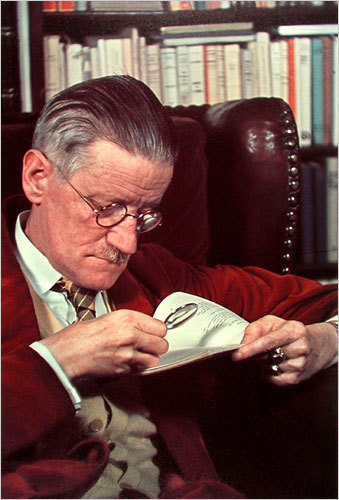
James Joyce: I’ve wandered a few times into Mrs. Dalloway to find Mr. Joyce sitting in the corner rattling on and on, only distantly recognizing I was there as he gestured to the wall and talked to the ceiling, until I quietly slinked out again and closed the door. I don’t think he ever noticed.

Hugh Nibley: This scholar and philosopher stands at a podium in a lecture hall, while I sit near the back frantically taking notes as he reads his words at break-neck speed. But I have a remote control, and every minute I zap him to pause his lecture, rewind, listen, then flip to the extensive footnotes while Professor Nibley waits, just on this side of patient. I bite my lip as I read the footnote, realize it introduces yet more names and archaic traditions I’ve never heard before, so I shrug, occasionally write down a reference to Google later, then hit “play” again, pretending all the while that even though I just sit on the surface of his topic, I understand the depths to which he’s diving. We both know I can barely tread water.

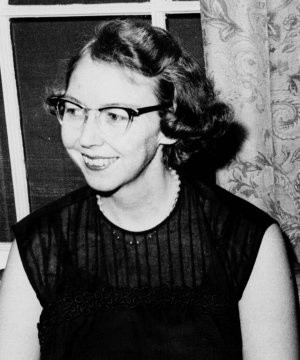
Flannery O’Connor: She tells me her stories as we wash dishes in the back kitchen of a large southern plantation home, and we snigger when the ladies with fancy hats walk past the window.

Shannon Hale: She tells me her stories as we drove up through the canyons in a big SUV to take the teenage girls from our church on a camping trip, because I met her at a book signing where she told me she also loves Terry Pratchett, and I knew right then we could be great friends.

J.R.R. Tolkien: He sits behind a grand desk, leaning back leisurely and gestures to maps on his walls and charts on the desk, while talking in an oddly lilting monotone about details and histories and peoples I’m not quite following until I fall asleep. Guiltily I shake myself awake a moment later, only to realize he never noticed I nodded off—he’s enjoying himself far too much. My daughters, however, glare at me in disgust.

Stephen King: Because he starts his stories by turning out all the lights, then shining a flashlight in his face, I slam shut the book just as he opens his mouth to speak, and I move on.

Lao Tzu: He’s a sweet, gentle man, forcing me to sit in an expanse of sand while he teaches me his verses of philosophy. Much like Oogway in “Kung Fu Panda,” he speaks slowly and repeats himself until he sees a light of understanding come in my eyes. Then he hands me a peach, and recites me another couplet about war, and fighting, and peace, and knowing.

Jane Austen: We sit primly in her parlor, with arms folded just so and skirts adjusted in just this way, and glance furtively at the door for someone wonderful or dreadful to come through it, while she tells me all the news of the town as quickly as she can before either of our mothers can interrupt us.

Jessica Day George: We sit in the back of some dull meeting gossiping quietly and giggling, hoping no one hears us, but knowing the speaker is glaring right at us.

Orson Scott Card: I actually sat in two meetings with him! At a small private college in Virginia! But I never spoke to him! And he never noticed me! And when I finally read Ender’s Game, I felt as if I was huddled in the corner of that classroom with his book, and he was watching me out of the corner of his eye as if to say, “It’s about time.”

PHOTO MISSING,

TO PROTECT THESE  NEXT TWO AUTHORS FROM SCORN                               

(because I’m sure they’re both just as lovely as can be, but create utter drivel)

Authors who will remain anonymous, but have a fondness for writing about males that turn into animals and woo silly teenage females: I gritted my teeth and cringed through these authors first books, as if I was stuck on a long bus ride behind two chatting women telling each other far too many details about their fantasy love lives. I closed my eyes periodically hoping to avoid gooey passages, only to run into other sections that not only made my eyes roll but caused me involuntary gagging. I got off the bus at the earliest possible moment.

Terry Pratchett: My all-time favorite author who I visit frequently. He lets me right into his mind, which is most intimidating and most marvelous. Every time I want to turn left, he shifts me to go right; I look down, he points me up, and I sigh and wish I could think of such turns. He takes characters, sets them in front of me, then describes them in such terms that I despair, because I’ll never come close to writing like that. But he just chuckles, grabs my arm, and drags me to yet another amazing place until suddenly I stop and say, “I just had an idea . . .” To which he smiles and waves good-bye until I come back again, because it’s not about being better than him, or even as good as him, but about discovering what I want to say.

“She knew that in a very real way, she controlled the world. At least, she controlled the way her students would see it.”

“That’s right, sweety—that’s a dog. Doggies are bad. They will always bite you, even if they look nice. Keep walking . . .”

That was the conversation I overheard between a mom and her three-year-old daughter yesterday. I was pushing my son in a stroller past them, and glanced over at the evil beast behind a massive fence.
It was a small, fluffy mixed breed dog, panting happily, not snapping at all.

Not that I’m a huge fan of dogs—I tolerate them, at best—but I worry when an adult passes along their fears, irrational or not, to their children.

I cringed, but the damage had been done.
The child shuddered obediently and gripped her mother’s hand as they rushed home. The girl had been indoctrinated.

The thing is, we all indoctrinate our children, in good ways and bad.
I’ve heard some adults argue that “religious nuts” brainwash their kids into believing in their faith, but it’s still propaganda when adults persuade children to not believe in anything at all.

As parents we literally present the world to our children—a view which they then spend the rest of their lives believing or disproving, or talking to a therapist about.
A difficult question then is, What view of the world have I given to my children?

My mother was a classic case of paranoia run amok. Suffering in Germany as a child during WWII, losing her parents, her grandmother, and several cousins to the war, seeing some of her family interred in concentration camps, then escaping from her home (now a part of Poland) to the west by herself as a 16-year-old, just one day ahead of the invading Russians, is going to leave some scars.

Unfortunately, she refused to have those scars looked at, insisting every time we tried to get her treatment for her Post Traumatic Stress Disorder that she had things under control.
She didn’t.
She feared the world. She was afraid of people in uniforms (she hated the Boy Scouts—just like Hitler Youth, she claimed), people in stores (you never know why they’re looking at you), and people just chatting in the halls at church (she knew they were gossiping about her). Every person was a potential threat to her happiness, as it were.

Sometimes she was fine, going for months being cheerful and even joining in the conversations with other women in our neighborhood.
Then suddenly something would snap again—we never knew what the trigger was—and for many months and even years she was sure everyone hated her for her German accent, and that someone was coming to get her.

All of that rubs off on a kid, and even though I learned to distance myself from her delusions and paranoia as a teenager, I still feel my chest tighten when I see a group of women and I think I’m supposed to talk to them.
But rhetoric courses I took in college demonstrated how each person views the world in a different way and, most importantly, those views can change.

In my mom’s later years, her paranoia blossomed—one of the lesser-common side effects of Parkinson’s disease is hallucinations. And she did them magnificently.

My 40th birthday will always be memorable because she called to wish me a happy birthday, then said, “Well, your father’s all but out of the family now since I discovered he’s been having affairs.” The man was 78 at the time. My mom also complained about the listening devices in the house, the person living in the attic demanding sugar, and the horrible statue garden my brother and his wife had put up in the backyard.

My older sister called me two hours later to say, “I just had Mom committed to the mental hospital to stabilize her. How’s that for a birthday present?”

Now, four years later, my mother barely knows where she is or who she is. As her life slips away, I mourn for her that she never fully knew just how wonderful it could be. The world held her hostage since she was a little girl. She never knew how to change her view of the world, nor did she fully realize that for the past sixty-plus years she had a very easy life. All she could focus on was her fear.

That’s why I cringed when I heard that mother yesterday telling her daughter to be afraid of dogs. Undoubtedly she’s had some trauma in her past that she never got over, but to pass those fears on to someone innocent?
To taint an entire collection of creatures with just one ugly color because of a bias?
To assume that we as adults truly know how everything is, and that we’re completely correct in all our assumptions?

I don’t know whether to call that prejudice, or arrogance, or ignorance.
Whatever it is, it needs to be resolved to give our kids a fair and fighting chance.
And that’s probably the toughest thing for a parent to do.

“Meme-fail” The world’s worst advice, available everywhere.

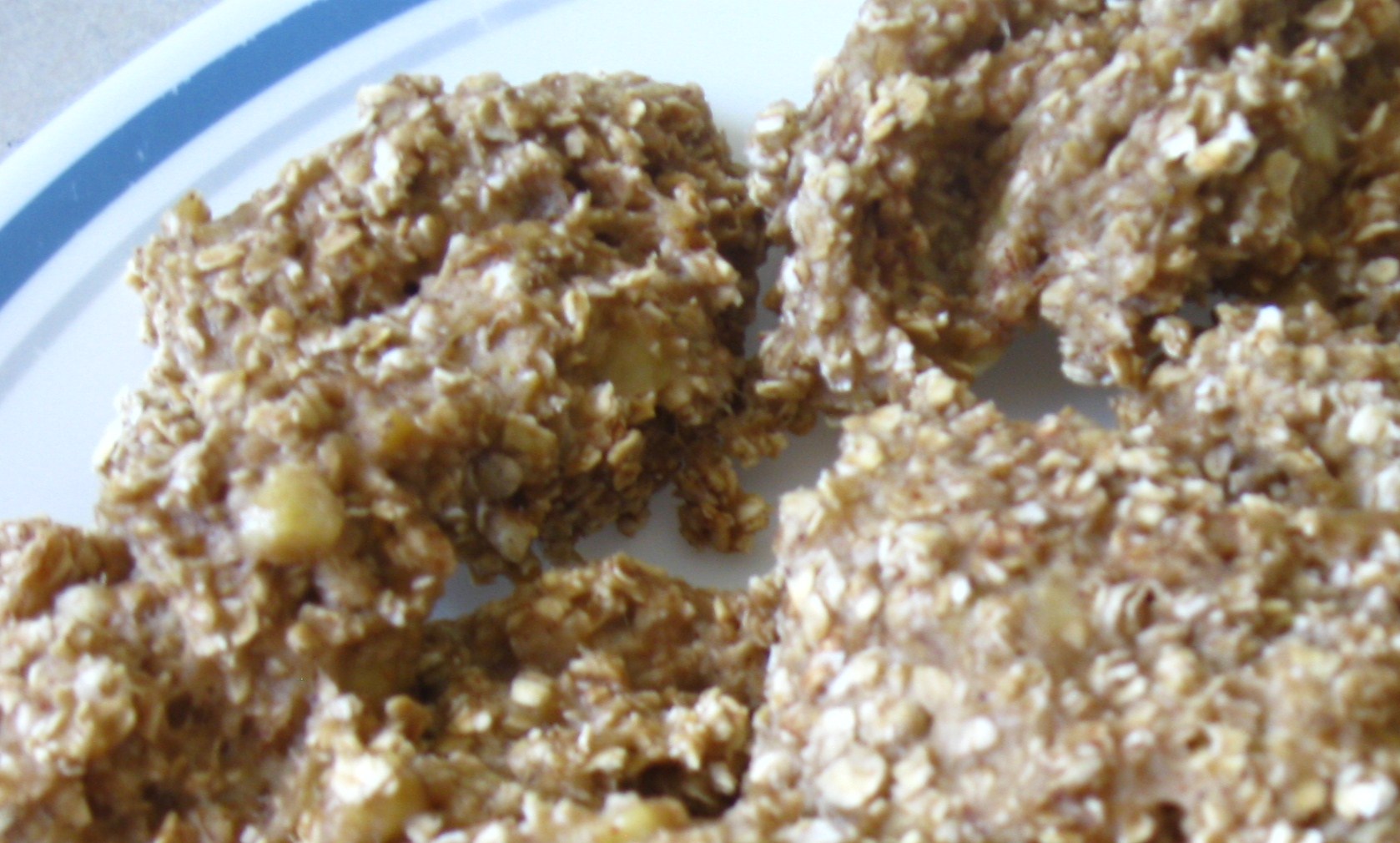
You’ve heard of “Pinfail”?  Pinterest items that look oh so good, but work out oh so bad? That’s because everyone has a fancy camera and access to photoshop. Check out my experience this morning. On the left is what these banana oatmeal cookies are supposed to look like (since when does baked banana look yellow?!). I purposely left off the recipe to keep you from making the same mistake that I did–believing a photo and text.

On the right is what I came up with. They taste much worse than they look. too. I was suckered, but no more.

banana pin fail002

I’ve decided we also need to acknowledge “Meme-fail”—those moving quotes and self-affirmation in cutesy fonts over photos that, when you really think about it, are some of the worst bits of advice out there. Unfortunately we get suckered into believing trite bits of philosophy and squishy motivations.

Memes are addicting, I know. I’ve tried my hand at a few just for fun, and something empowering happens when you see text on photos.

Suddenly it seems real, official, sanctioned, stamped-of-approval, God likes it so it MUST be true!

The problem is, nearly any idiot can create them (I submit, for your consideration, me. If I can figure it out, anyone can). Many of these idiots don’t understand punctuation or spelling, thus propagating the myth that they aren’t necessary because these “real, official, sanctioned” nuggets of crapology don’t use them correctly, therefore we don’t need to bother with grammar either.

But that’s a rant for another day. Today I present just a few of the memes I’ve collected that fail to be worth the space they hoard on Facebook and Pinterest. Not only are they potentially dangerous, they’re potentially stupid-fying.

The “Unrealistic Expectations” category

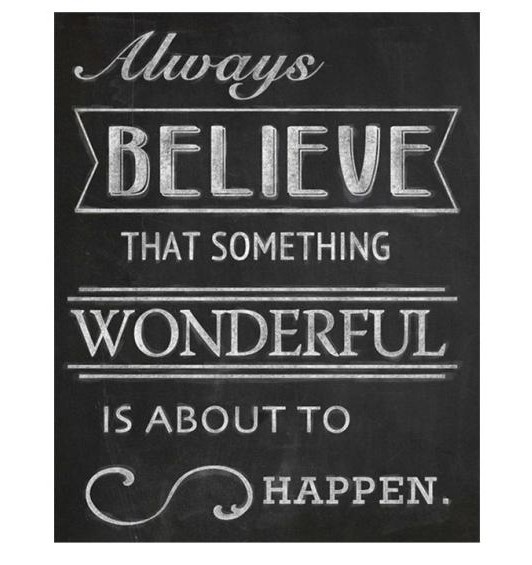
bad meme 1

The cool fake-chalk writing aside, what this really means is, “Always set yourself up to expect far too much.”

What kind of “wonderful” should I believe will happen when I go grocery shopping? That someone ahead of me will pick up my $150 tab? And when that doesn’t happen, how do I face the rest of the day?

Something “wonderful” should happen when I changed a dirty diaper? When I cook dinner? When I pull weeds? If I’m expecting something “wonderful” to happen at any moment, I’m going to be hopelessly depressed at the end of what was probably a very ordinary and perfectly lovely day.

I don’t need to throw myself into despondency, thank you. Memes in the category below do that already for me.

The “Look at me!” category, for those who never quite outgrew grade school affirmations.

bad meme 2

Ugh—the very definition of narcissism. This must have been taken from the t-shirt of a self-absorbed teenager. If you have a friend who posts this, run far away. While I can think of several ulterior meanings to this, the implication is: I’m really quite perfect as I am. You should love me for my amazingness. What, you don’t feel perfect right now? Oh dear, must be hard to feel like you have to improve yourself . . .

The “I have no idea what life is really like” category.

bad meme 4

I once had a freshman student from Japan. On the second day of school he informed me he was withdrawing and going back home. Why? Our small private liberal arts college was nothing like the American movies he saw in Japan. He truly expected life would be a party.

People who believe this are also the same depressed ones who think something “wonderful” is about to happen just down the road. No wonder many people start drinking in college . . .

The “Dangerous thinking” category

bad meme 5

Uh, but what if something needs to be fixed? Attended to? Resolved? Pondered over? Just let it go, dude?

Why do I picture a hippie with smoke rising faintly from different orifices when I read this?

The “Pointless philosophy” category

bad meme 6I still haven’t the foggiest thing as to what this is supposed to mean. And I don’t have smoke rising from any orifices, either. Some memes are just that . . . what they are at the end of the day.

The “Worst love advice” category

I have two for this one, because there are so, so many of these. Likely based on sappy love songs that never quite make any sense, the first is so schmaltzy it isn’t worth the post-it note it allegedly was written on.

bad meme 3

This second one–well, you just know she owns a t-shirt that claims she loves who she’s becoming. I doubt with this much self-love there’s little room for anyone else.

bad meme 7To be honest, I hadn’t the foggiest idea who Carrie Bradshaw is. So I Googled her. Turns out she’s been googled, along with a few other strange things, because she’s a “Sex and the City” character. I can’t think of a worse place to get one’s love advice.

Memes–the scary part of these is that people perceive these bits of advice to be true. Reality and thought don’t even enter in. We see a clever font, a charming photo, and we assume that equates TRUTH (yes, capital letters, because so many memes like those, too). This deception of text combined with image likely explains why my five-year-old loved this one:

bad lincoln meme(Sorry the image is small. It says, “The trouble with quotes on the internet is that you never know whether or not they are genuine.)
“That’s Abraham Lincoln!” my daughter squealed. “We learned about him in kindergarten! He’s a good guy. That’s why he likes Star Wars.”

Now I fear that Abraham Lincoln and Star Wars will be forever connected in her little mind, all because a meme told her so.

Got any memes that make you scratch your head? Send them to me. I still have so many, I’ll be doing another post of them, and I’d love to add yours. Remember–a meme is a terrible thing to waste.

Reading is bad for you.

Shockingly, it’s not.

Reading is a waste of time. Hazards of reading. Drawbacks of reading.

I  Googled these phrases and many others, trying to see prove reading is a bad thing. I’ve been feeling guilty lately about how much time I spend reading, and writing stuff to read, and reading about people reading, and reading about people writing . . .

(Fortunately I have an internal switch that goes off at 4:30pm and says, “Where are your children? Have you thought about dinner?” And I momentarily think, Wait—I have other responsibilities? That switch also goes off at about 11:30pm telling me to go to bed. Sometimes I get it confused with the buzzing sound my keyboard makes when I’m drooling on it.)

But I couldn’t find anything serious or thoughtful that warned against reading.

So you know what that means? There’s nothing guilty about the “guilty pleasure” of being stuck in a book!

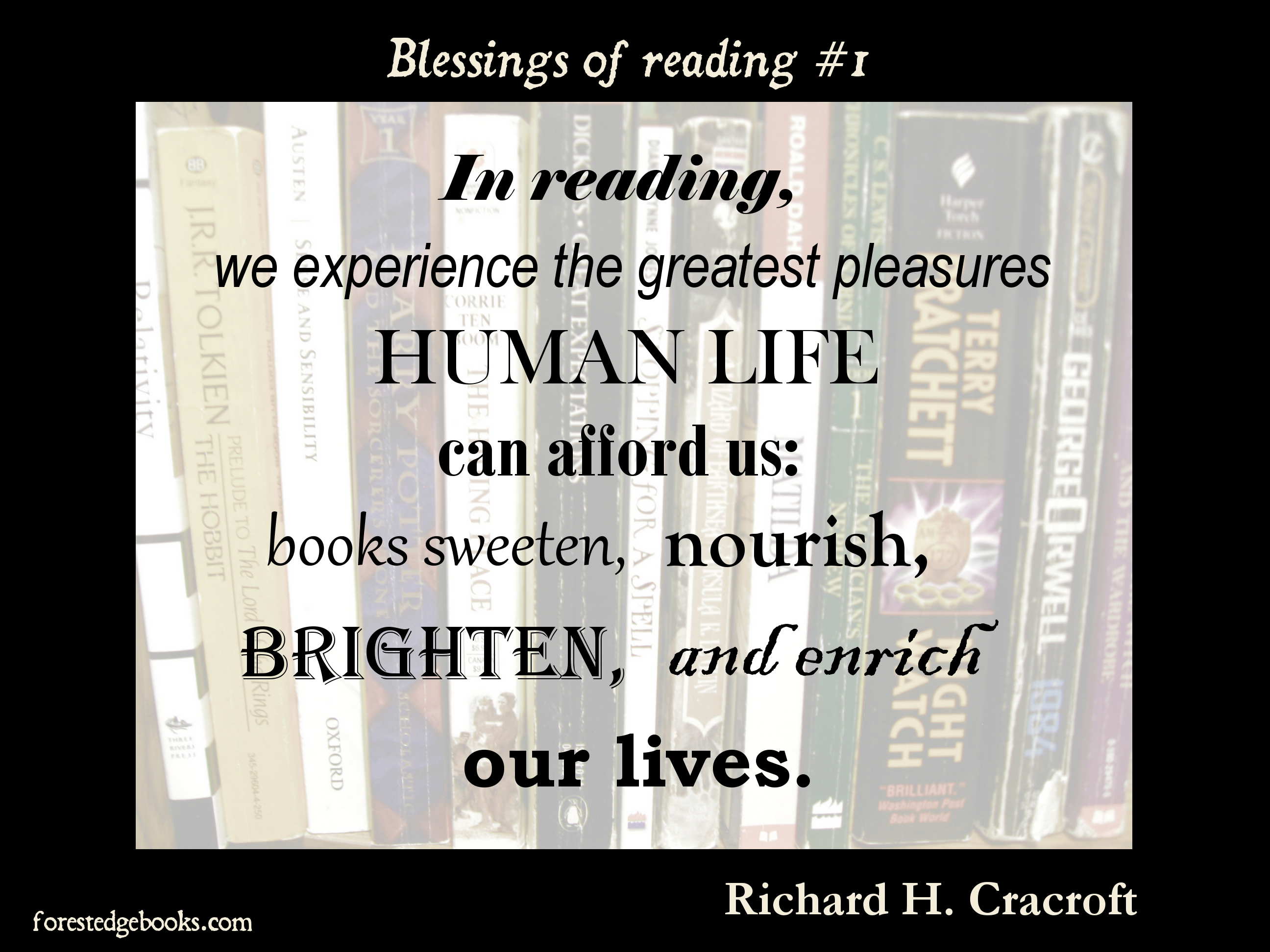
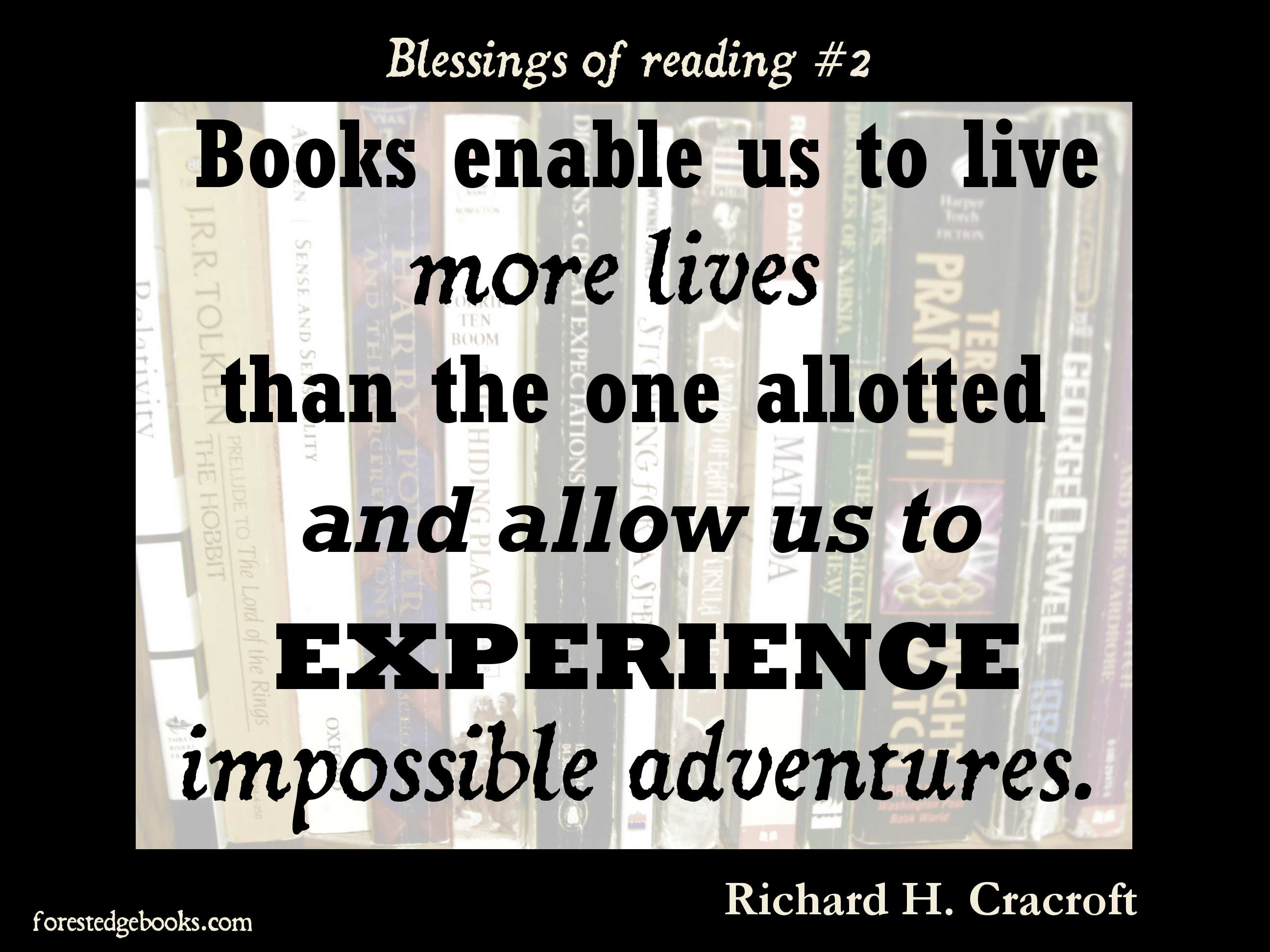
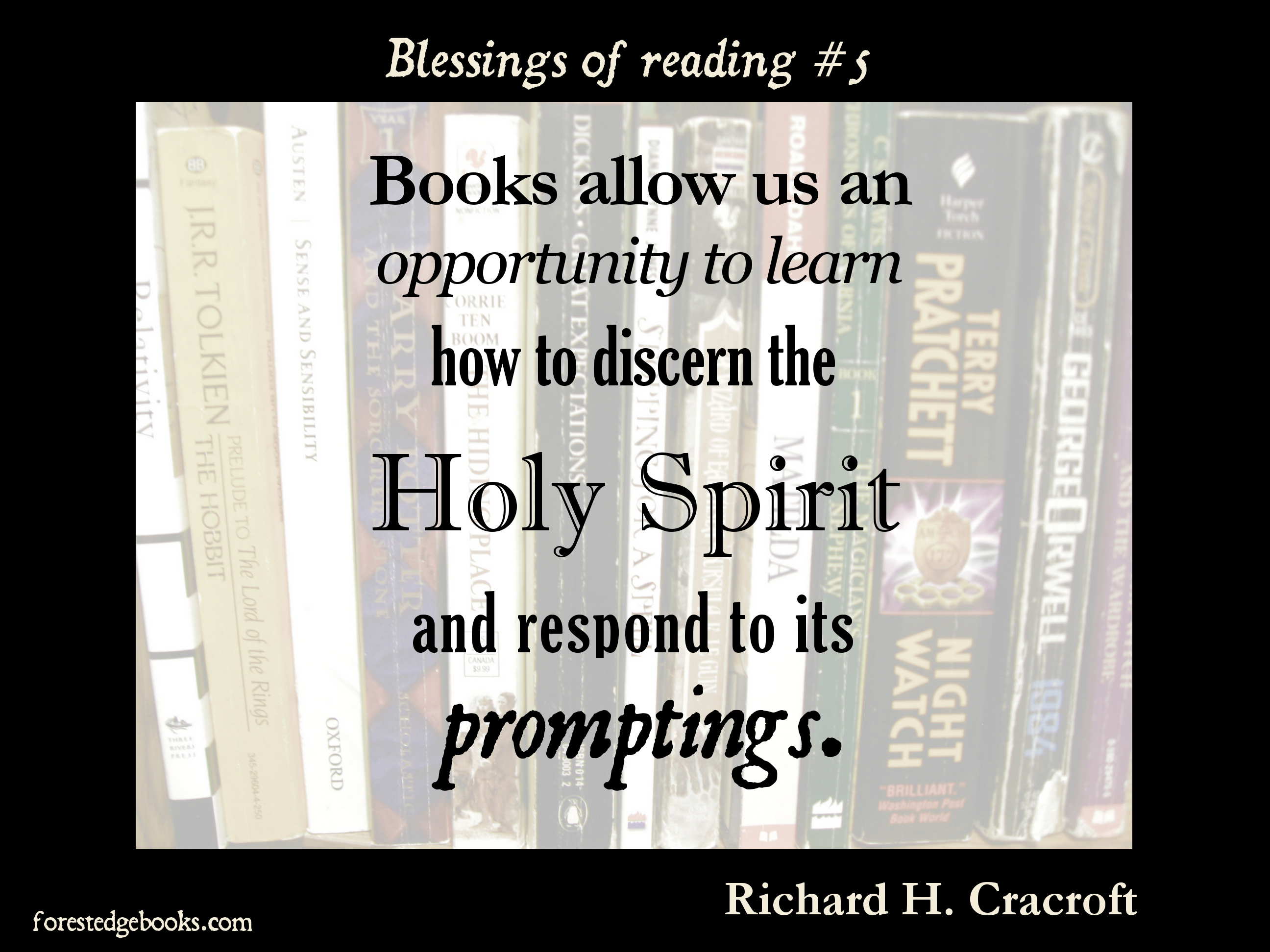
I stumbled across this wonderful piece by former BYU professor Richard H. Cracroft, giving all of us book-nerds more reasons to be anti-social. He lists 5 blessings that come from reading, so the next time you feel guilty about reading or writing, remember—you’re just getting blessings.

cracroft 1


cracroft 2


cracroft 3


cracroft 4


cracroft 5

There’s no job too tedious that can’t turn terrifying when a toddler tries to help.

toddler quote

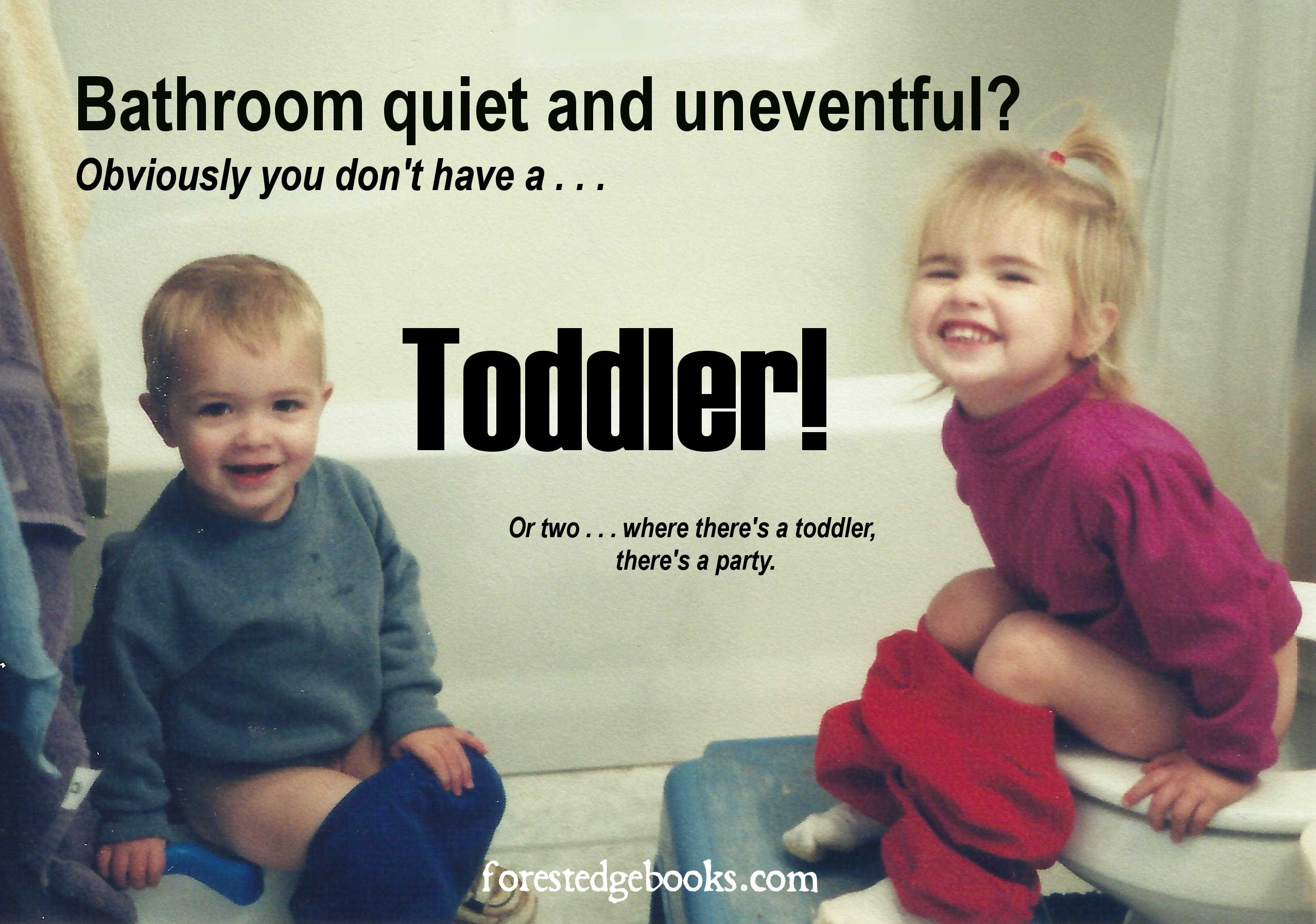
Nothing is as frightening as a toddler running with a pair of scissors . . . unless he’s running with a wet toilet plunger. And you know why it’s wet.

potty babies

I’ve come to realize that toddlers are the true terrors of the world. Sweet, hilarious, and darling, they can turn any ordinary event into something unpredictable, and anything somewhat challenging into a true trial. (Think: tents and campfires and forests and Yellowstone National Park and . . . toddlers. My heart rate’s already up, and we’re not going until August.)

tess tractor

I call my current toddler “The Motivator.” If any of my older children are slow to get a job done, I release The Motivator. He can find the butcher knife in the open dishwasher in two seconds flat, can dump a laundry basket in three seconds, and what he’s able to accomplish with an overflowing garbage can in four seconds is Al Qaida worthy. When my kids see him coming, they know they better work FAST.

dalton cabinets

I should rent him out to those who think their lives are dull. After half an hour, they’ll be cured.

teagan dryer

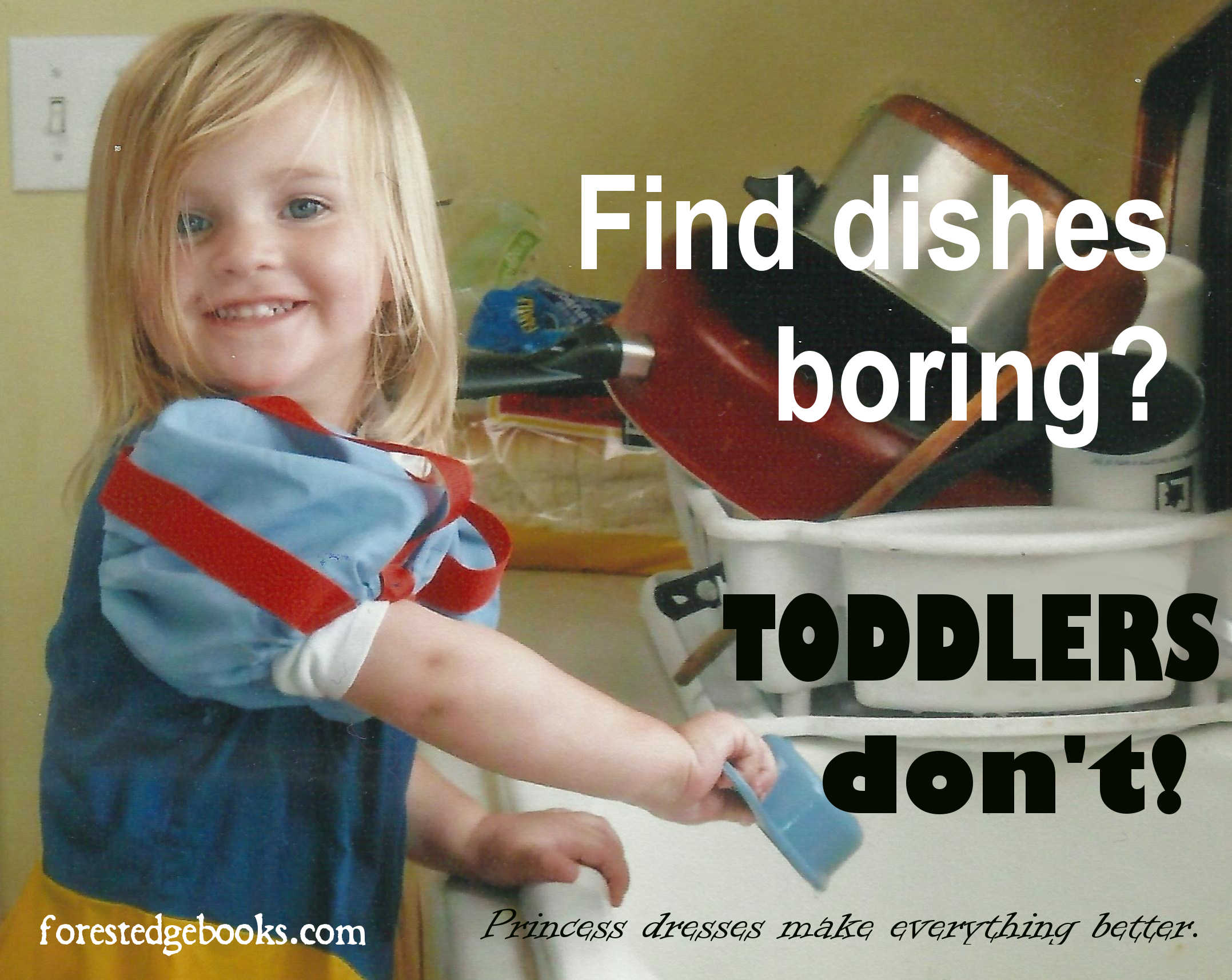
Do you find replacing bathroom plumbing boring? I have a remedy for that. Painting a bedroom? Fixing the starter motor in your car? Reorganizing a cabinet? Simply sweeping the floor? Oh, I have the motivation to make all of those jobs far more exciting.

zoe dishes1

And if you have a kitty litter box, you’ll really wished you didn’t.

And if you have a sewing box, you won’t much longer.

bubba bath

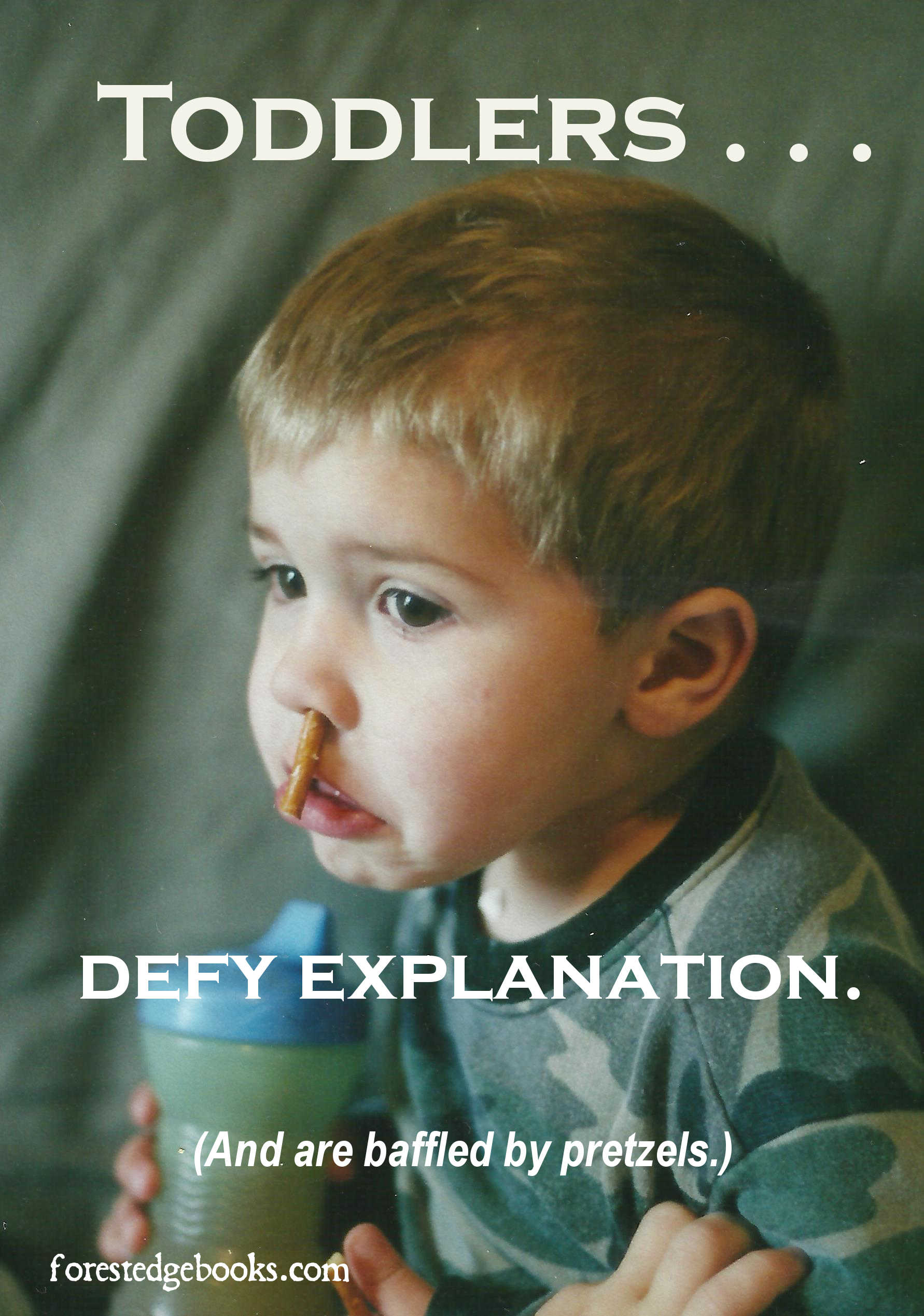
I write a bit about toddlers in my book, and I visited memories of my own nine children as toddlers (my last is 18 months old) for realism, because as Utah’s Poet Laureate Lance E. Larsen has said, “Writing is often more a matter of collecting and eavesdropping than inventing.”  I discovered there’s no way I could “invent” toddlers. They’re just far too inexplicable.

dalton pretzel nose

I adore toddlers. They’re the most exciting, terrifying, adorable, terrifying, kissable, terrifying creatures on earth. That’s why I’ve taken so many pictures of them over the years, and why I say a prayer of thanks each time they drop off to sleep.

“Just tell them that underneath it all, despite what they may see, the sky really is blue and they can count upon that fact.”

There’s no creature quite so arrogant and simultaneously so insecure as an 11-year-old. I learned this many years ago when I was asked to drive a group of 11-year-olds for a church group because I owned a station wagon. (Yes, I owned a station wagon at age 25, and was proud of it! I also owned one at 16, but that’s another post.)

So, with a carload of boys I didn’t know, I set off to deliver the group. Soon one very loud, very authoritative kid with unruly hair and far too many freckles announced, “Hey—here’s a riddle. What color is the sky?”

001Obedient, and bored, the other boys looked outside—

“HA!” shouted Hairy Freckles, “Got ya! Everyone knows the sky is blue! Suckers . . .” He added that last part with the same disdain I’d heard from his 14-year-old brother, who likely pulled the same trick on Hairy Freckles.

The other boys embarrassedly looked down at their hands. But I glared in the rearview mirror.

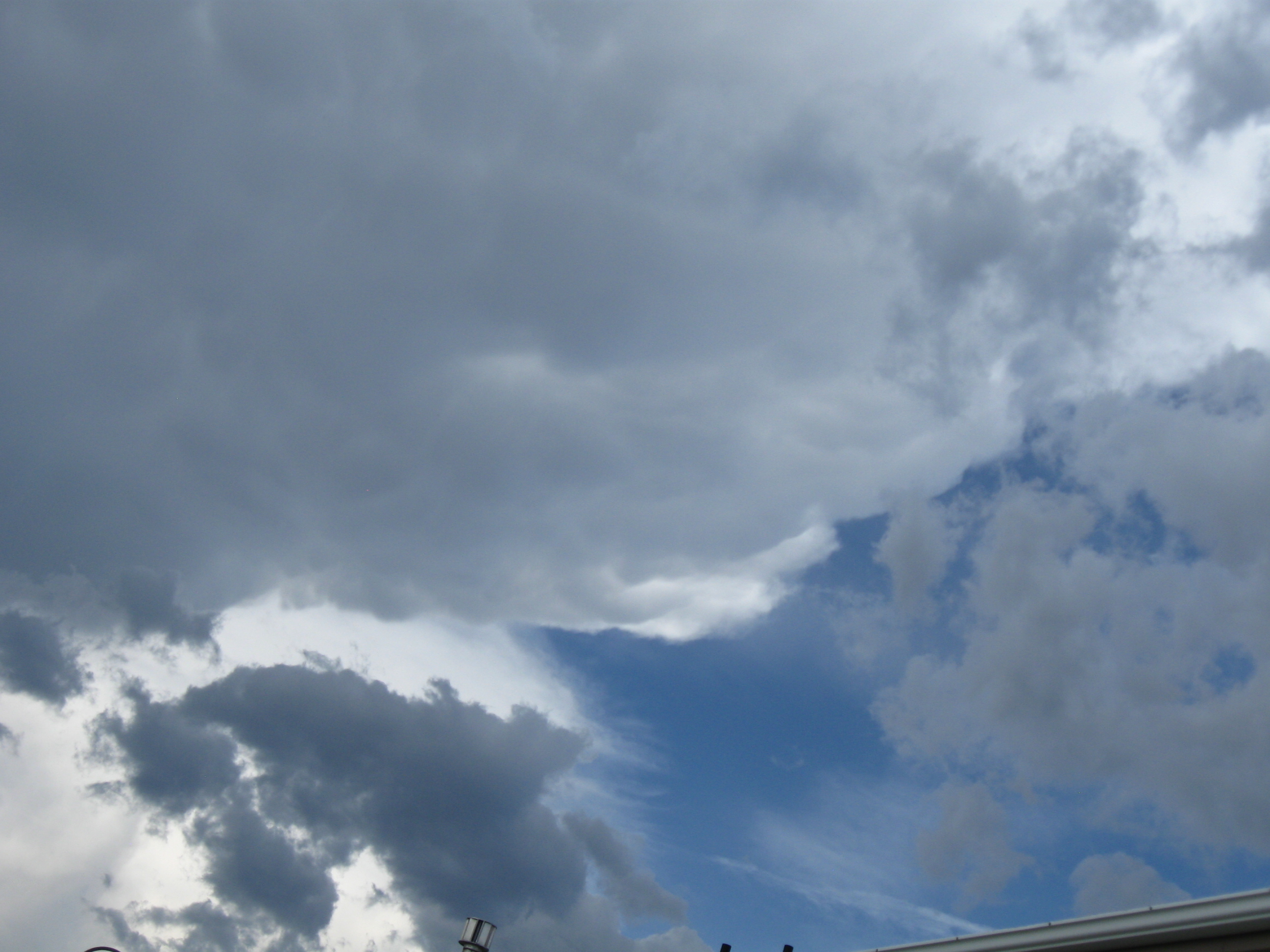
029“That’s not true,” I said plainly. “That bit—right there? That’s white.”

Hairy Freckles scowled and looked out the window, which he hadn’t done since he’d entered the car. “That’s a cloud!”

“And it’s not blue,” I nodded.

A couple of the boys, previously shamed, now hesitantly smiled.

006“That doesn’t count!” Hairy Freckles declared and gave me a look that said, If you were my mother, I’d have you put into a home.

“And that, right there,” I pointed out the window, ignoring him, “that gray bit with some red? Also not blue.”

“That’s a plane!”

“And it’s in the sky, part of it, and it’s not blue,” I said.

005Now all of the boys were smirking at their friend. Nothing’s worse than being put into your place by a know-it-all 25-year-old college student. Who’s female.

“Now, when the sun sets, ooh—definitely not blue,” I continued.

019 (3)“And what about night?!” another boy finally felt brave enough to contribute. “There’s definitely no blue then!”

The rest of the boys howled as if that was the funniest joke in the world, while Hairy Freckles glared at me through the rearview mirror.

“And then there’s that big bright ball of white,” I went on.

002“That’s the sun!” Hairy Freckles pointed out. “And it’s yellow!”

“No, it’s not,” I said easily. “It’s white. They just make you use yellow crayons in school to color it because your paper is already white.”

None of the boys knew what to do with that, even though they peered at it to make sure, then blinked away the fact that they just scorched their retinas.

“Hey, I just got Donkey Kong—” and just like that, the conversation turned. Because hey, these were 11-year-olds.

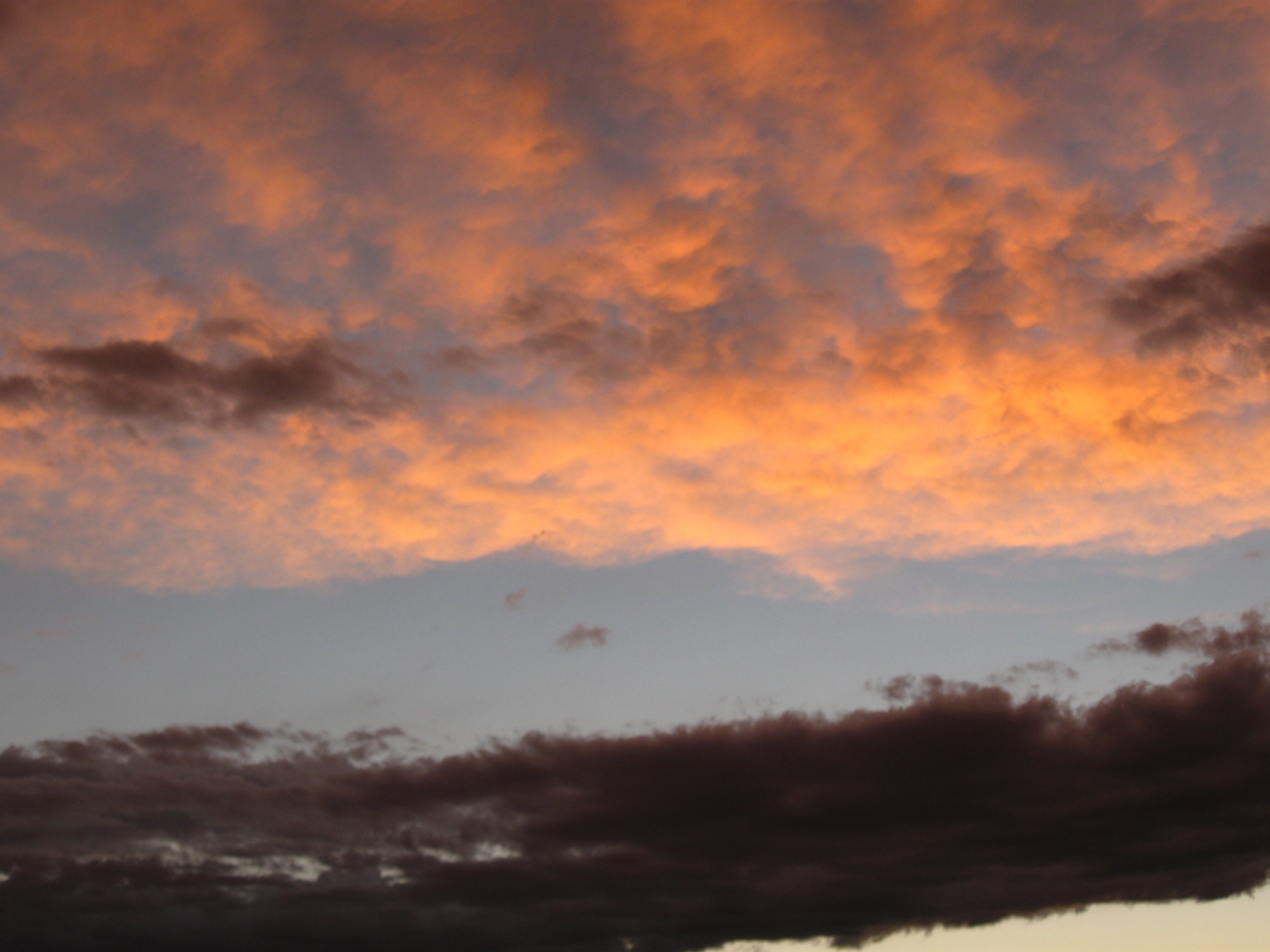
I’ve always been obsessed with clouds and sunsets, and since then I’ve taken dozens of pictures as evidence that they sky is NOT only blue. Yet I never cease to be amazed at the amount of children’s books, TV shows, movies, and even textbooks that simplify the complexity of the sky to declare, “The sky is blue . . .” when anyone  can tell that it’s much, much more.

011 (2)We do this with so many things, just like the middle school textbook my oldest daughter had in science one year that said, “Ocean water is made up of two things—salt, and water.”

“Rubbish!” my 13-year-old had declared, and asked to be homeschooled.

And I wonder, why? Why do we oversimplify the world, even to the point of telling lies about it—if you want to get that direct—to our children and ourselves? Why do we ignore the multiple colors and shapes in the sky and insist that it’s one color, especially when that color is actually just an optical illusion, produced by the sun’s light rays bouncing back blue?

More importantly, what do we miss when we assume we already know the nature of something, and don’t even look out the window to see if our assumptions are correct?

I suspect we miss the true nature of the entire world.

004


“All our ideas were just as pitifully inaccurate as four year-olds arguing over what kind of baby snake a worm is. “

There are a few conversations you don’t want to hear your children having in your backyard.

“Ooh! Look at all the baby snakes!”

Yeah, that’s on top of the list.

I was in my kitchen when I heard my three-year-old son and his friend in the backyard squeal in fascination. Our house was new, the yard unfinished and bordered on a canal, which bordered on a field, which apparently bordered on the edges of Snake Heaven. And that Heaven was invading.

(It’s just a photo–calm down.)

“Those are pythons. I know. My grandpa showed me baby pythons last week,” the friend said with great authority.

I gulped and quickly made my way to the back porch to investigate the terror. Now, I’m fine with snakes—as long as they’re in a zoo, in the wild, and far, far away from my house and my children.

“I don’t know,” my son, who knows nothing of snakes, said. “I’m thinking boa ’stricker.”

Bravely I marched to where the two little boys were crouched and poking with a stick.

Please let there not be rattling! No rattling!

“Pythons. Definitely.”

I put on an overly happy face—more for my benefit than for theirs—and said with forced cheeriness, “What do we have here?”

The beamed up at me, stepped away, and—

It was NOT baby snakes.

It was FAR worse.

Worms!

(I know, I know–you should have seen me convulsing as I sorted through the images looking for this . . .)

Yes, all right—worms terrify me far more than snakes. The massive earthworms they had uncovered were far more disgusting, slimy, and smelly—yes, they smell!—than snakes.

Oh, how I wished for a hole of rattlers right then.

I took a step backwards.

“Cool, right Mom?” my son said happily. “Strickers, right?”

“No,” I said, fighting back the urge to wretch. “Just worms, boys.”

Worms.

The friend shook his head. “Nope. My grandpa showed me baby snakes just like these last week in his garden. Snakes,” he promised.

I knew grandfathers like that. They misrepresent the world to their grandchildren as a one-sided joke, then wonder why when their grandchildren are teenagers they never want to talk to them.

“No, those are worms. I know. I had to dissect those in 8th grade.” The most traumatic year of my life. Not as if junior high isn’t bad enough, but let’s throw in a handful of worms and make you cut them up!

And people wonder why teenage girls are so moody.

Worms.

I backed away slowly, advising the little boys to leave the snake/worms alone and come in for a popsicle (popsicles are the end-all, be-all of distraction and reward).

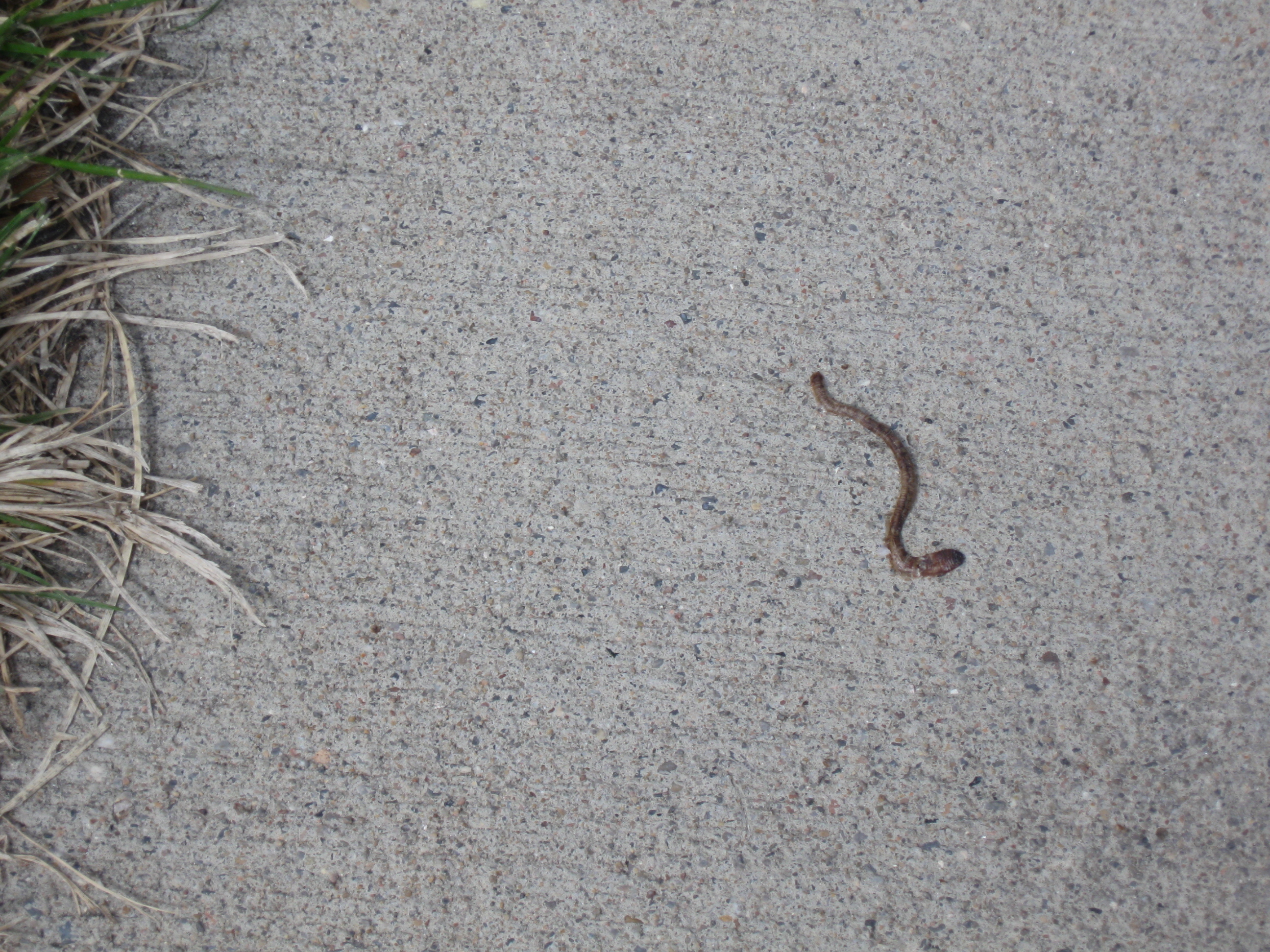
Back in the kitchen I tried to fight down the urge to throw up and tried not to think about the many dried up worms that must have been on the driveway. It had rained that morning. That means all cement becomes a horror show, with dried up bits that aren’t Chinese noodles. (When I see bowlfuls of those on salad bars, I feel like screaming, “Dried up worms! Everyone, run away! Dried up worms!)

Image

(Not a Chinese noodle, unfortunately.)

The odd thing is, I was more worried about worms—reportedly useful in gardens, but scientists lie all the time—than I was about the possibility of two little boys messing with a snake nursery. My own bias set me up to ignore a real danger. Snakes were seen in our backyard later in the season. Some may have even been dangerous. But I only recoiled when I saw the worms.

Now, sixteen years later, I encountered not-Chinese-noodles on the ground and again found myself doing the ooky tip-toe dance of “Don’t squish them!”

There are far greater hazards in the world, and I wonder, do I spend more time on things that don’t matter, that aren’t real threats, than I do on the things that are?