Covers, exclamation points, and angelic fist-bumps!

If anyone in my house saw me holding my fists in the air today and whisper-shouting, “Yes! YES!” they didn’t say anything. I think my family has learned that odd things happen when I’m at my computer.

Today was a day of rejoicing, of fighting a battle that only I knew I was in, and that only I knew I’d won.

The great demon that I’d exorcised from me? I’d finally figured out how to do that cool little trick I did almost a year ago on GIMP.

Yeah, that’s all: a little bit of formatting for my COVER! YES!  (Fists in the air! Waiting for my angel to fist-bump me back! Thank You!!)
(Sorry—residual joy, leaking out of me.)

book 3 coverAA

I’m sharing this sneak peek with you, my friends, because I’m so stoked! (Yes, I did actually write “stoked” there. And yes, I know how it dates me, but I don’t care because I’m so . . . stoked.)

No one in my home knew that for a week I’d tinkered with my cover off and on, trying to do this one thing and that other thing that any other semi-savvy person could have figured out in 15 minutes.
No one knew that I uttered inane little prayers along the lines of, “Dear Lord, I realize there are far, far greater problems in the universe, but for the life of me I can’t get a shadow on this text. If You’ve got someone up there who could flick me on the side of the head to figure it out, that’d be great, but only if a butterfly doesn’t need saving first . . .”

I got flicked. A few times. AWESOME! THANK YOU! (Fists are still in the air, still waiting for my angelic fist-bump. My angel’s blinking at me, either unaware of this earthly custom, or smirking at my silliness.)
(That darn joy, leaking again . . .)

David o McKayI wonder how many of us have these private triumphs—and private tragedies. In the Olympics we saw the public joy and humiliation of athletes, but I’m convinced that David O. McKay is right, that probably 99.99% of all our jubilation and sorrow occurs silently in our heads, or in private cheers to the ceiling and Those beyond, or in the shower with the door locked and crying in the water so that even we don’t know how many tears we shed.

Because for as often as we are among others, critical moments in our lives are usually exceptionally private. (Except for a few families on TV with no boundaries, and we all send up additional prayers of gratitude that we’re not them.)

And every once in a while I think it’s ok to share an awesome moment, and even a few sad ones. (Hey, what’s Facebook for, right? Middle-aged women nattering?)

So here’s to a private triumph, shared with you. I FINISHED THE COVER TO BOOK THREE!!!
That means I’m on track to RELEASING BOOK THREE in APRIL!!! The Mansions of Idumea is coming!!!
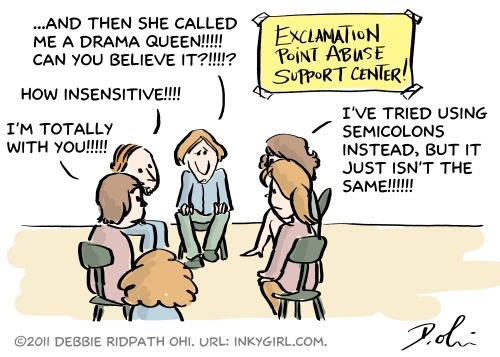
(Man, all those exclamation points are exhausting.)
(But here are a few more, just because I’m in such an awesome mood!!!!!!)
(Now I feel like a fourth grader. Forgive me.)
(!!!!!)

So here’s also to hoping we all have very few private sorrows. Because I think that’s where my fist-bumping angel went: to sit with someone who thinks they’re alone, but they’re not.

Wishing each of you a good day of triumph–and a legitimate reason to use exclamation points–very, very soon.


Book 3 is coming! (And so is some other great stuff, but you have to read to the end to find out)

Book 3: The Mansions of Idumea is in its final editing stages (meaning, I’m going through it when I’m not grading students’ essays, or taking children to lacrosse practice, or cleaning the toddler’s jello mess, or helping another child with homework . . .)

I’m hoping to release it by the end of April (yes, of this year, and that clarification is pointed to a wonderful but annoying friend; you know who you are, so don’t act all innocent).

Thanks so much for asking, for prodding, for rolling your eyes at me when I promise that it IS coming, but I want to get it as good as I possibly can, and that takes time.

You see, I’m a fast and sloppy writer; I actually have the entire 8-book series fully drafted and waiting in my computer, and I completed the saga in just over 14 months. 

But oh, is it messy!  “Fast and sloppy” also means “rather crappy.” I never claimed to be a good writer. But I am a decent editor, if not slow. And since I don’t notice issues on the first edit—or even on the thirtieth (and honestly, that’s about how many times I go through each book, cleaning it up, tweaking the language, improving the pacing, clarifying the dialogue, etc.) it takes me a bit of time to make it readable. And even then, once I have the paper copy in my hands, I find about a dozen minor proofreading errors that eluded me each pass. (That’s what revised editions are for, correct?)

Self-published authors don’t have the luxury of professional editors (well, they could if they shelled out the big bucks, which I don’t currently don’t have) so we rely on marvelous friends who are generous with their time and help go through our drafts.

And we also rely on understanding readers who embrace the story and overlook teeny tiny errors that they’re sure will be fixed on the next release.

For some more exciting news (aren’t you glad you read this far?) I’m currently turning Book One: The Forest at the Edge of the World into an audio book (and as I read it I circle those nagging typos to correct later this year). Once it’s ready, it’ll be available as FREE DOWNLOADS from podiocast.com.

So no, my friends, I haven’t been sitting around doing nothing since I released the first two books, and there’s still a great deal more to come!

Don’t read this, don’t write that

Like every indie writer, I’m hoping that my efforts to self-publish will someday be enough that I can pay a bill or two. I have no fantasies of big J.K. Rowling bucks (ok, not realistic fantasies), but I’m always looking for ways to knock down my car loan a bit. 

So when an indie publishing company sent me YouTube testimonials from their best-selling authors, I eagerly watched to see what the grand secret is to making money.

Turns out, it’s writing smut.

Now, to be fair, I didn’t watch every last testimonial, but after the third one I began to see a distinct pattern, and it made me very uncomfortable.

The videos were well done, predictably following around the authors as they walked in grass, or along a beach, and maybe sniffed a flower or two, while the voice-over discussed how frustrating their former lives were (interestingly, most were school teachers) and how after independently publishing they had enough cash flowing in each month to not only take care of their children and pay their bills, but to quit their former jobs and take exotic vacations.

At some point I began to feel like I was watching an infomercial, so I wrote down the authors’ names and looked them up.

And my jaw dropped. 

Women’s porn.
That was what each of them was writing (one even with her husband; I wasn’t sure if that made things better or worse). Now, I realize that genre of books goes under tamer titles, such as “graphic romance” or “erotica,” but the snippets I read in the previews—before I looked away after only a few lines—fit my definition of porn.

Not only did the subject matter shock and disappoint me, so did the books themselves. Many weren’t even 50 pages long and priced at over $5 for the e-book, which is hardly a bargain.

There were dozens of titles from the authors, all on the same themes of lonely women finding unrealistic men who are obsessed with, well . . . you know.
And the reviews were also disturbingly the same. I’ll spare you the details, but it was obvious by the hundreds of reviews that not one of the gushers cared about literary merit. 

Occasionally I ran across a one-star review, and it was filled with dismay. “What a piece of trash! I can’t believe people are writing—and buying—this crap that reads like the notes we passed in 7th grade. Write the word ‘boobies’ and everyone gets all in a titter. Is no one noticing this?! What’s happening to books?”

I don’t know, but I agree—literature is taking a nosedive.  I’m sorry—I shouldn’t even call this literature. Let’s stick with “smut.”

These books are in the same vein as Fifty Shades of Gray, which is all about a woman repeatedly “achieving” something, and sold more copies than the Harry Potter series.

Really.

Our society is fond of believing that reading is good. Hey, it’s better than (fill in the blank yourself). In fact, it’s quite difficult to find anything that encourages against reading (I know—I’ve been looking). Because . . .

Reading is empowering!
Reading let’s you escape!
Reading improves your mind!

Not always.

What you read changes you, for good or bad. And novel reading hasn’t always been held in great esteem. For many generations, calling someone a “bookworm” was an insult; you should be out working, laboring for your family, instead of lazing about the house with your nose in a book.

We’re all influenced by the books we read, some more than others. I can tell what kind of stories my children are reading based on their behavior that day. It’s not rocket science; it’s human nature. If we weren’t influenced by what we read, why would we bother?

There is something sacred, I think, about a great library because it represents the preservation of the wisdom, the learning, the pondering, of men and women of all the ages accumulated together under one roof to which we can have access as our needs require.  ~Gordon B. Hinckley (emphasis added)

Books can uplift and motivate us, but they can also send our thoughts into despair and fear, and everywhere else in between. There’s a certain magic there; but according to every fantasy book out there, magic is temperamental, and can go in any direction.

I’m anxious when I see how many sexually explicit and graphic books are now being written by women and for women. I can’t help but wonder, what does such an adolescent fixation on sex do to a person’s psyche and relationships? 

There’s been truckloads of research done on the negative effects of porn on men, but I’m beginning to think we need to start evaluating women as well. According to the book reviews I marveled at,  some of these readers do little else than indulge in these pubescent stories. I personally know of two marriages that suffered when the wives became too obsessed with a particular book series dealing with vampires and werewolves; so what’s happening in the lives of those who read books that are far more explicit and unrealistic?

Now, I’m sure there are those who will say I shouldn’t judge books and their contents. But to that I say, why not? Look at the reviews for any item on Amazon—those are judgments. Any time you think about reading a book or going to a movie, you ask for other people’s opinions (judgments) about it.

But what those who play the “don’t judge” card really mean is, Hey—you’re hitting a bit too close to home, and I don’t want to think about that right now. I’ve got another novelette about fat girls and their “achievements” to read.
The “don’t judge” argument is usually a front for, “stop making me feel guilty.”

This post is certainly not to say that all indie writers fall into this hole of smut. I’m acquainted with many self-published authors who create marvelous pieces of fiction and fantasy, who enjoy controlling their own work, and have written books that earn the title of “literature.”

In fact, I’m writing this rant in defense of the rest of us indie writers—the majority of us laboring to develop stories with character and purpose—to demonstrate we’re not all out to make a buck off of “low-achieving” women.

Our books are as different from these smut-o-grams as homemade, hand-breaded chicken fingers are from Chicken McNuggets. They may have similar names, but one is carefully prepared, finely balanced, and tastes marvelous, while the other is nasty chicken sludge boiled in oil.

That’s why I promise, right here and right now, that I will never make nasty chicken sludge, or write smut just to pay the bills. Some time ago a beta reader suggested that if I made my books more “interesting” (i.e. add some salacious details in the first chapters), I could really “make something of myself.”

That left a horrible taste in my mouth, and I told the reader I didn’t need them as a reader anymore.

Because how you feel after consuming something I created is far more important to me than my paying off my student loan debt. (And if you knew how big that is, you’d be even more impressed.)

Quit complaining–it’s free!

Once again I’ve been astonished and overwhelmed by the generosity of complete strangers. The world is a marvelous, sharing community, via the Internet.

No, I don’t mean that sarcastically, even though my close friends know what a grumpy cynic I am. I mean it sincerely.

Yes, there are individuals who are greedy—hoaxsters, thievers of data and identities, takers of what they don’t create, manipulators of the trusting, purveyors of dubious knowledge, and creators of questionable websites—

But there’s enough written about them so I don’t need to add to the complaints. And we don’t need to spend any time describing how governments are selfish and greedy.

Because I’ve discovered that individuals are not.  

I want to praise the rest of the community: those who upload useful (and silly) videos to Youtube; those who explain difficult ideas in almost plain English on Wikipedia (and allow me to adjust the grammar of those explanations); those who write blogs that uplift, inform, that share successes and failures that the rest of us can use (occasionally in our own blogs).

It’s truly remarkable, this fantastic sharing of ideas, applications, programs—all for free. Never in the history of the world has so much richness been offered for nothing.

Don’t believe me? Tally in your head how many times you’ve benefitted from someone’s generosity. Honestly evaluate just how much you’ve taken from others via the Internet, and how much others have offered up freely. 

Here’s my list from just the past few weeks: 

    • Downloaded two programs for recording and manipulating audio;
    • watched hours of Youtube videos teaching how to record audiobooks;
    • copied links from a dozen websites for understanding grammar (for my online composition course);
    • gathered countless clever memes and quotes from additional websites to share with high school students to make the course more entertaining;
    • pinned recipes for gluten free cooking;
    • researched strategies for teaching autistic kids history;
    • sought advice on specifics of writing novels;
    • looked up dozens of details about things I don’t really know: from breeds of horses, to how sedation works, to how the ancients made black powder (writers have worrisome search histories);
    • read five newspapers and online magazines a day.

I also joined two online communities where I post naïve newbie questions and am given remarkably kind and helpful responses back.

In the past I’ve asked cooks, parents, writers, carpenters, decorators, and techie types for advice, and these people—who I’ve never met and never will—graciously take a few minutes to offer their ideas and solutions. It’s absolutely remarkable how we can enter nearly any online community or respond to a blog post and are treated like colleagues worthy of attention.

Twenty years ago none of this existed. We have a hard time remembering that.

I love that I found this on Google.
For free.

When I worked on my master’s thesis, I took up second residence in the library trying to track down obscure documents that some other grad student was hoarding.

Just today my daughter, herself in a graduate program, called to say she was doing background reading on Wikipedia to learn about an obscure concept, and found in the footnotes a link to a publication she’d been looking for for weeks.

It’s almost like cheating.

My teenage son, whose computer has developed some issues, chatted with more experienced programmers in various parts of the world, and is now fixing his computer. And none of these experts are charging for their expertise.

It’s almost like stealing.

But it isn’t. It’s offered in the pure spirit of cooperation.

Now, I’m not stupid. I know full well there are many out there not nearly so altruistic, but instead parasitic. But this post isn’t about them. 

It’s about the 99% who don’t fit that profile. I also refuse to listen to the cynics who may roll their eyes and offer me a lecture about how we’ve become a “detached society” more interested in our online relationships than we are our face-to-face ones.

I admit there’s a bit of a distraction there, but likely because we now have entered into a fascinating global community and have discovered that we are not alone in our worries and problems, and that there’s enormous satisfaction in helping someone else along with the solutions we’ve discovered.

With a little discipline we can bring back our awe-struck attention to those physically in front of us, but I think we can also be forgiven for being just a little amazed by it all.

It’s that ease of connection that’s so staggering. I’m tickled when someone messages me on Facebook or via my website asking for suggestions on something I know a little bit about. Quite often I’ve never met these people, or knew them once only a long time ago, but here we are–communicating. I feel an extraordinary sense of satisfaction by being able to help someone else, even if I barely know them.

Such a fluidic society of ideas and sharing has never before existed, although Plato and Sir Thomas Moore wrote about or imagined smaller, idyllic utopian societies where everything was shared communally. The scholar Hugh Nibley researched and wrote extensively about the ancient City of Enoch, and has described how beautifully such a society could function, eliminating the vast majority of problems we experience now.

I’ve also researched attempts of communal sharing and living in more modern times (Brigham Young tried to get 19th century Mormons to establish Zion, and in some ways it was quite successful, until the good old vices of jealousy and pride undermined it). Yet I believe we’re heading in the direction that Gene Roddenberry tried to demonstrate in Star Trek—a community that’s more concerned with sharing knowledge than it is in acquiring money for that knowledge.

Some time ago I read how programming junkies realized they produced better work when they weren’t given a paycheck for their efforts, but instead were going to make that work available for free on the Internet. Working under their own names, instead of a corporation, and knowing the project rested solely on them propelled them to generate far better applications.

I find it interesting that the current trend of so many books and movies is to show a dystopian society, while this utopia of sorts has developed on the web. More interestingly, this sharing movement has been individual-run, not government-inspired.

I’m being more optimistic than this today.
(And again I love that I found this on the Internet.
For free.)

Each person decides on his or her own to start a blog, become a mentor, contribute to a project, or make a video. In fact, it seems that all great social movements begin on a personal level, never a bureaucratic one.

Perhaps it’s fitting, though: this utopian nature on the web just may create a dystopia for government as we know it. (Hey, I can hope.)

The true beauty of this free-for-all attitude is that it’s infectious: I don’t see the trend reducing but growing. I don’t know if there’s any data on this, but I believe that creativity is exploding. More people develop, write, photograph, cook, renovate, recycle, and innovate than ever before. On the Internet we find a forum and a community that we can influence.

On second thought, it’s not infectious—it’s magic!

So much so freely shared encourages others to share as well. Because I’ve benefitted so much from others, I also offer what I have for free as well. While my books are for sale on Amazon, I will always have free downloads on my website, and hope to add free audiobooks via Podiobooks in the next few months as well.

This utopian-style of sharing is a marvelous notion, but certainly not without its drawbacks. Problems with these freebies exist. Directions aren’t always correct, products aren’t always the best, mistakes are made (see the various pinterest-fail sites for evidence) . . . But I think overwhelmingly people are sincerely just trying to help each other.

And they do, in far greater ways than any corporation, government, or agency could ever hope to accomplish.

So I’m disappointed when I hear people complain about changes on Pinterest, Facebook, and other social media sites, or when people whine (yes, whine!) that a program is occasionally glitchy or a download wasn’t quite what they expected. To hear them go on and on, you’d think they’d been bilked for thousands of dollars and then handed a flaming bag of excrement.

I want to shake them by the shoulders and ask, “And how much did you pay for that service? That product?”

Nothing.

That’s absolutely incredible.

Whose children are those?

“[T]he children belong to all of us.”
~Paul Reville, former Massachusetts secretary of education, Common Core enthusiast, and Harvard professor

Mr. Paul Reville.
(And some of the kids that apparently belong to him.)

Mr. Reville (and I’m trying very hard not pronounce his name as “revile” in my head) recently stated the above about who the children of America belong to (read an excellent discussion in Forbes about this here), and as a mother of nine, I’m baffled.

What, exactly, does this mean: my children belong to the country? The government?

So you will now change my toddler’s diapers? Drive my daughter to lacrosse practice? Take my son to his doctor appointments? Why, thank you!

Will you now make their meals, help with their school work, and take them shoe shopping, one of the most horrible experiences a mother and child can endure?

Yes, I’m being facetious; you—whoever this nebulous “you” is that constitutes “all of us”—certainly don’t want the daily grind of parenthood.

So why does Mr. Reville and others claim to have part possession of my children?

This question has weighed on me for years now, and I think I have a few answers.

The short answer is, because they want the capital my child may potentially make.

That’s all it is: money. How much might my child be worth someday. Yes, I realize this sounds crass and simplistic, but I’m afraid it’s true. As a citizen who’s watched the progress of education since I was an education major in college 25 years ago (I gave that up to become a college instructor instead, at the urging of some of my professors), I’ve tracked the changes in theories, especially as they applied to my children.

I’ve come away with one discouraging conclusion: Public education is not about improving the humanity of our citizens; public education is about producing the best workers to make the most money for our country and our leadership. You see, good workers make more money, which brings in higher taxes, which means those with a stake in product development (i.e. Bill Gates, et al.) and government (primarily the federal) make more money.

The children belong to “all of us” because the children are needed to make those in power more powerful.

The End.
Yeah, dismal story.

And while it’s a true story, I refuse to let it be the story my children will be forced into.

Mr. Reville, and Melissa Harris-Perry who also believes that “we have to break through our kind of private idea that kids belong to their parents or kids belong to their families, and recognize that kids belong to their communities,” you’re wrong.

You see, we are faced with an ideological split, here; I believe in God (yes, here it comes—I already see you rolling your eyes, but there are still a few of us God-nuts around, so you better learn to deal with us civilly), and I believe that God has sent my children to my husband and I. And I also believe that He has given us responsibility to raise them.

As a bold proclamation on families states, “Parents have a sacred duty to rear their children in love and righteousness, to provide for their physical and spiritual needs, and to teach them to love and serve one another.”

Ah, there’s a sticky word: responsibility. You see, Mr. Reville, children are not possessions, they are not future capital, and they certainly are not to use for your own means.

They are personalities, ancient and precious, sent here to embark on a most remarkable experience: mortality. The purpose of mortality is to test their will, develop their understanding, and see what choices they will make in the face of trials and temptations.

You happen to be in the exact same situation—you, too, are an old soul trying on a new body and seeing how well you do in this remarkable Test.

But Mr. Revill, you do not own my children. I don’t even own them. They are my stewardship, which is a very different thing than ownership.

Stewardship requires an accounting to be made to Him who gave you responsibility in the first place. Mr. Reville, I fear that the only person you and others with your mindset think you are accountable to are yourselves. That makes you akin to your own god, and I can’t think of a single human that was ever a worthy god.

You may claim that my children belong to you, to the state, but I will not give them up without a fight, I assure you. Already I’m showing these arguments and theories to my children and telling them how “all of us” is trying to control their education and futures.

Yes, everyone, I freely admit it: I’m indoctrinating my children to what I believe is most accurate and correct. I call that “teaching.”

And public education, especially the kind that Mr. Reville is promoting, is also its own brand of indoctrination.

So my friends, we have a battle brewing—one that’s actually been around for thousands of years. Education and who “owns” the children is just its front; the real battle is about who has the power, and how much we’re willing to let happen until we begin to fight back against that power.

“Education is a weapon, whose effect depends on who holds it in his hands, and at whom it is aimed.” ~Joseph Stalin (Yes, the bad guy in the Soviet Union)

Every revolt, every revolution, every call to arms has always been about power. And this time, the battle is beginning in our very homes and schools, by those laying claim to our children, and those of us refusing to let them go.

Lew Rockwell, a politician with whom I don’t always agree (I’m currently a political agnostic: I don’t really believe in any political party) nevertheless makes this excellent point:

“It isn’t a coincidence that governments everywhere want to educate children. Government education, in turn, is supposed to be evidence of the state’s goodness and its concern for our well-being. The real explanation is less flattering. If the government’s propaganda can take root as children grow up, these kids will be no threat to the state apparatus. They’ll fasten the chains to their own ankles.”

No, Mr. Reville; my children do not belong to you. I hope that someday their humanity, knowledge, work ethic, and values will benefit you and their communities, but those benefits will come because their parents were concerned first with raising people who respect God and feel a sense of stewardship to take care of the world and each other. Their purpose in life is to become warm, thoughtful, loving humans, not obedient worker bees. And Mr. Reville, I’m sure that in your old age, you’ll hope you’re surrounded by the former and not the latter.

In the meantime, please leave my children out of whatever schemes you’re devising, because frankly, I have no faith in you or in others that clomp around to the same dull drummer.

Consider these two thoughts  from another celebrated university professor, C. S. Lewis:

Education without values, as useful as it is, seems rather to make man a more clever devil.

Of all tyrannies, a tyranny sincerely exercised for the good of its victims may be the most oppressive.

Parents–hold tight to your children. I used to think I only had to worry about shady characters driving slowly down my street holding out candy to my kids. Now, we have all kinds of folks trying to take possession of something none of us truly own.

     Perrin turned to his wife. “This morning I told you our most precious possessions were safe with Zenos. But they aren’t—”
     “Our babies AREN’T safe?!” Mahrree squealed, twisting absurdly to look behind her as if she could see her children sobbing from miles away.
     “Mahrree, Mahrree,” he chuckled, “I mean, they aren’t our possessions.
       Mahrree breathed deeply and patted her chest to catch her breath.
      “Sorry,” he kissed her on the cheek. “Zenos is fine with them, I’m sure of it.” His face grew solemn. “But it’s been pressing deep into my mind, ever since I called them our possessions. It’s just that . . . Mahrree, we’re told in Command School about the duties of soldiers and citizens. One thing we had to recite was that sending children to school was the citizens’ responsibility to the government.”
      Mahrree blinked at the odd phrase. “Our duty to the government? To hand over our children to their care?”
     “That was one of King Querul the Second’s statements, and the Administrators never abolished it. After all, citizens earn money which is then taxed and given to the government. In a way, the government—and it doesn’t matter whose—sees themselves as owning the people. They don’t serve us,” he whispered harshly, “but instead, we work for them. Without our taxes, they’re nothing. They’re especially interested in the children, because if they’re successful, then so will be the government. Or perhaps I should say ‘wealthy,’ instead of ‘successful,’” he grumbled in annoyance. “It all comes down to riches and power.”

         ~Soldier at the Door, Book 2

Grammar Snobs

I’ve had acquaintances confess they fear writing to me because they worry I’ll be like this:

But I’m not. As a long-time college writing instructor and occasional professional editor (and occasional maker of mistakes myself), I assure my friends that I never correct one’s grammar unless they’re paying me. Because I refuse to be a Grammar Snob.

grammar

I’m not.
I promise.

Oh, I’m so glad you asked what a Grammar Snob is!

First, a disclaimer: as a teacher I will point out every last error I see in a paper, and will even lecture on the finer points of language usage.

But as a friend I would never correct another person outright or even in my mind, because if I did, that would turn me into the most wretched of self-righteous creatures, the Grammar Snob (or grammatical superbia).
(Did you see the snobby thing I just did there? Converted it into Latin? With the help of a website. Because I’m just faking a knowledge of Latin here.)

Grammar Snobs hunt for errors like a vulture for a corpse. When a friend emails about the heartache of discovering her husband has been cheating on her, Grammar Snobs can’t help but snigger that she wrote “udderly devastated.”

When a young couple continually writes “Greatful” in their blog about how wonderful the hospital care was for their infant with RSV, Grammar Snobs roll their eyes and mentally cross out all occurrences of the offensive mistake.

Discworld Quote by Sir Terry Pratchett. By Kim White.

Thank you, Terry Pratchett

When a teenager gushes about her acceptance into highly selective college, Grammar Snobs chuckle mirthlessly at her usage of more exclamation marks than should be allowed on one Facebook page.

Now, I may be taking things a bit far here, but I happen to know of some colleagues who fit this behavior, and I worry that our linguistical superiority is turning us into heartless buffoons.

We cringe when others with sense of heightened knowledge and a desire to demonstrate said knowledge barge into our personal spheres. Think about the fashion aficionado who gives your outfit the once over, then the twice over, then the long drawn-out sigh.

Or the neighbor with the personal gym in his garage who eyes you as you mow your lawn and shakes his head in time with your belly.

Or the political pundit who expresses outrage–yes, outrage!–that you have no idea what bill Congress is threatening to pass.

Don’t we hate all those people who point out we’re not on the same level as them?

Yet somehow Grammar Snobs don’t see themselves in that category. Perhaps it’s because many of us have appointed ourselves Champions of the English Language (or vindicem linguae anglicus—that Google translate is the bomb, baby). And in an attempt to preserve her purity, we feel the duty to point out when anyone attempts to heinously ravish our beloved mother tongue. 

But I think it’s something a bit less noble than that.

I think we simply like believing we know something more than the next guy, and we want to prove it.

In my undergrad work I had a professor who told our language usage class that he went to college as an eighteen-year-old full of ambition and promise, and was mortified to realize just how deplorable his command of the English language was. He spoke like the rest of his family—Idaho potato farmers—and quickly discovered the definition of the word “hick.”

Because he had dreams of becoming a university professor, he set out to improve his pronunciation and grammar. When he went home at Christmas he promptly showed off his new knowledge by correcting all of his family members, beginning with their ubiquitous “we was.”

The visit did not go well, as you can imagine.

Shortly before he was to head back to the big city, his grandfather pulled him aside and said, “You may know how to talk good, but you shore don’t know how to make people feel good. That’s more important.”

My professor told us that over the next few years he learned how to cultivate his “university tongue” but also easily reverted back to “farmer tongue” whenever he went home to visit. He could mangle verb tenses and drop incomplete sentences as easily as his uncles.

Now, correct grammar certainly has its place: in correspondence with those you don’t know, in formal situations, and in emails to those who have position over you.

(Note to parents of future college students: Please tell your children that sending an email to their professors with language such as “so umm like i was wundering if this is gonna be like a hard class or not lol?” is NOT the way to make a good first impression. Such emails violate all three of the above rules, and instructors remember these students. Oh, do we remember these students . . .) So true.

And yes, there are times to correct others in their grammatical missteps, but it really should be in private.

I know a woman who takes perverse delight in correcting her husband’s slight mispronunciations in public. She may think she comes across as educated, but what we’re all thinking is, “The poor guy. If that witch treats him this badly in public, what’s she doing to him in private?” My insides squirm whenever I see this couple approaching, and over the years I’ve noticed he says less and less, which is unfortunate because he usually had wonderful things to say. Even more unfortunately, his wife now gabbles endlessly, proving that she’s not nearly as educated as she pretends to be.

I’ve learned to train myself to not be hypersensitive to the tiny errors—and really, mixing up there/they’re/there are minor errors—when I read my friends’ posts and blogs. If I’m too fixated on their mistakes (which fixation is my problem, not theirs) then I miss the message they’re trying to communicate. Well, that's one way around the problem.

Grading freshman essays for twenty years has taught to me to focus on the ideas, not on the surface errors. That’s something graduate schools try to teach their composition TAs: surface errors shouldn’t account for more than 10% of an essay’s grade. More important are the deeper issues: organization, thesis, development of thought, logical fallacies, etc. In my grad school days there were a handful of TAs that would have red-inked an otherwise excellent paper into the depths of F-dom merely because the students struggled with then/than.

Grammar Snobs seem far more interested in demonstrating their grasp of linguistic trivia (or linguae minutiis; Google translate—where have you been all my life?) rather than trying to understand what’s being communicated. Just read the comments on posts to Grammarly.com’s Facebook page to see the Battle of the Grammar Snobs.
It’s embarrassing, it really is.
I put a wince on my face before I even start reading, just to save time.

So Grammar Snobs, may I issue this injunction: Be kind to your friends, your family, your social networks. Don’t miss the message because the writer doesn’t understand the importance of the Oxford comma.

When we obsess over the minutiae, we may miss the marvelous.
(Ooh—quick; someone make that a meme, will you? Nam cum obsiderent minutias super nos mira careat—It even looks good in Latin.)

Because the only thing more uncomfortable than a Grammar Snob is a Latin Wanna-be Snob. (Finite Incantatem.)

Punctuation

The Economy of Enough

I’m writing this blog in an attempt to exorcise my desire for an IKEA kitchen.

ikea kitchen

Yep. Just like this one. Sigh.

Mahrree squirmed.
To find herself so immediately gripped with envy and desire surprised her.                  ~ Soldier at the Door

I suffer from this desire every few months, and I don’t even watch HGTV anymore—the channel that usually made me unsatisfied with everything in my house. I let my subscription to “Better Homes and Gardens” expire because I didn’t need to see any more examples of rooms I’d never have.

Because I’m satisfied with what I have.
(Let me chant that to myself a few more times . . .)

This is my current kitchen, exactly how I saw it when the realtor showed it to us over five years ago. A bit outdated, the appliances are 15 years old, but it’s functional.

IMG_3502

(I went so far back in time, because only under the previous owners was the kitchen ever so clean. And I haven’t been able to update anything anyway.)

The kitchen’s small.
Really small.
Especially for a family of 10.
But it was all we could afford, in a nice neighborhood, and so I just sighed sadly and decided, “I’ll make it do.”

And I have, for five years, but still I’m plagued by daydreams of IKEA kitchens.

“This is hardly the way to impress others.”

Mahrree shrugged, never having been much concerned about Mrs. Hili’s opinions. “I’m not worried about impressing others. I don’t even know who I should worry about.” ~Soldier at the Door

virginia house

Cute, in the right light, and from the right distance.
(We won’t discuss the ever-present smell of decay, though. Or the smell of skunks, who lived in the crawl space.)

But here’s the thing: I had vowed back in 2001 that I would ALWAYS be happy with a modern kitchen–no matter its size–because for five months I didn’t have one. When we first moved to Virginia we lived in a house condemned to be demolished. When it rained, the water poured in from a dozen points. There were vines growing on the inside of the house, and the kitchen—

Ugh, the kitchen.
One sink, with no hot water.
One cabinet, no drawers.
Old stove/oven which had two temperatures—off and broil.
The fridge was less than 15 years old, but the carpet had been put in decades before. (Yes, very old carpet in the kitchen. You can smell it, can’t you?)
There was a pantry, along with several mouse traps.
Of course there wasn’t a dishwasher, we supplied our own microwave, along with a dresser drawer for utensils and a small table to act as a counter.

virginia kitchen

Bottom right corner you can see the edge of the stove/incinerator, and behind me is the fridge. And that’s everything. Really.

And I made that work, for five months, for a family of eight. That autumn we moved into a brand new house with beautiful oak cabinets and 150 square feet for the kitchen–and enjoyed it for almost six years–but I remembered the condemned house and realized I could deal with just about anything.

So why do I keep forgetting that when I look at my current kitchen?

“Does this mean you’re no longer satisfied with what the Creator has chosen to bless us with?”  ~Soldier at the Door

Why can’t I look at what I’ve made functional for five years and realize I don’t need any more?

“But if we don’t need more—”
“Everybody needs more, Mrs. Shin!”  ~Soldier at the Door

Maybe it’s just human nature, to look upon something and want to improve it.

Or maybe it’s just plain selfishness, wanting to pamper ourselves. I still can’t figure out why it’s so darn hard to buy into Alina Adams‘s philosophy, a Ukrainian immigrant and now a columnist about frugality in New York:

Coming from childhood poverty and a one-room apartment where she only had one dress to wear affects how she views her budget and what she actually needs.
“When you realize how little you need,” she said, “it is difficult to spend money on things you know you can do without.”

Years ago I read about a movement in Japan where people became minimalists, possessing only the barest of essentials. For one chef, that meant she gave up her rice cooker (shocking her neighbors) because she already had one pot. She eventually downsized so much that all she owned could be packed into the back of her Toyota.

But maybe it’s something else.

“What I’m trying to get at,” Mahrree tried to explain, “is that we’re simply not worried about impressing people. We’re more concerned about what the Creator thinks of us.”

Mrs. Hili shifted her gaze to Mahrree’s deliberately sweet expression.“Yes, yes of course. Although I think you’re completely wrong, Miss Mahrree. I mean yes, we worry about the Creator’s opinion, but we live in the world. We have to impress the world.”

“Why?” Mahrree genuinely wanted to know. 

Perhaps that’s still the root of my obsession with an IKEA kitchen. The few times neighbors have come into my house, I’m genuinely anxious that they’ll see my kitchen, and then . . . what will they think?

But that’s just vanity, I know. Years ago I thought I eradicated that fear of “What will others think?” I’ve done quite well in many aspects, but when it comes to my kitchen? Sigh.

Maybe it’s bigger than that, though. Our very economy is based on the premise that we’re never satisfied, that the notion of “enough” means, What I have, plus a little bit more, ensuring that we continue to be obsessed with getting more and spending more, and never reaching that elusive state of satisfaction.

Now, I don’t have thousands of dollars to throw on luxury, but daggumit, I want to make something beautiful! I want to add color! A new design! Improvement to my environment!

So despite all I’ve just written, I’ve decided I’m going to spend money on my kitchen, because my soul is hankering for something just for me!

I’m going to make a drastic change to my kitchen, and it will cost around $5.
I’m going to put up a photo–just one photo: the picture above of my daughter standing in the kitchen of the condemned house in Virginia.
Now every time I’m plagued with fantasies of IKEA kitchens, I’m going to stare at that picture.
Then, when I look at my current kitchen, in comparison it’ll be fantastic!
Because it truly is enough, and I will choose to be satisfied.

(Especially since I won’t let in the neighbors anymore.)

Don’t Play the World’s Games

Perrin didn’t feel like playing any games tonight, and he wasn’t interested in establishing himself in the colonel pecking order. He never was one for my-brass-is-shinier-than-your-brass. 
~Mansions of Idumea, 
Book Three: Forest at the Edge Series

I’m not a gamer.
Some games I really despise, like Monopoly. 
I HATE Monopoly.

Maybe it’s because I inherently detest spending money, real or otherwise, but something about that game brings out the worst in me, and so whenever the board comes out, I walk away.
Instead I’ll read a book or even clean the bathroom, but I’ll refuse to get involved in something that I know will make me clench my fists.

I Don’t Play the Game.

Years ago I realized I could walk away from any “Game” that makes me less than I what I really want to be. I no longer make New Year’s Resolutions (another annoying Game), but instead I remind myself what Games I will stay away from.

For example, at Christmas I won’t play the Family Letter Game called “No One’s Year Was Busier or Harder Than Mine Was, and Here’s the Evidence” followed by paragraphs of perfectly mundane things that everyone goes through but apparently seems to overwhelm the writer. I do send out Christmas letters, but make sure all of us come off sounding slightly stupid (not too hard to pull off) because I don’t want anyone to feel like we’re playing the “Don’t We Sound More Amazing/Challenged Than Your Family?” Game. 

Years ago I also quit the Home Decorating Game because after hours of watching HGTV and reading Better Homes and Gardens I decided my home and garden were definitely not better, far too shabby, and not anywhere chic. My normally satisfied disposition became quite disenchanted with all I had been blessed with. Giving up my so-called “hobby” of home decorating (which was becoming an unhealthy and self-serving obsession) made me happier than if I’d won any Best of Home Sweepstakes.

When I quit playing those Games, life became better.

And I’m not the only one. I’ve heard of lots of ways people Don’t Play The Game (DPTG), whatever Game it is that riles them. For example,

–One man quit listening to talk radio because that Game caused him to growl like a rabid bear whenever he drove home, and his nerves were frayed by the time he walked in the door to greet his children.

–One woman refuses to sign up for Facebook not because she doesn’t have anyone she wants to catch up with, but because she knows that Game would draw her too far into the gossip, the self-righteous selfies (her words, which I love) and the need to know everything about everyone.

–Another friend refused to go on to Pinterest, because that Game will only increase her hobby addictions, not restrain them.

–And another friend deleted his “commenting accounts,” as he referred to them, because that Game of “Making The Most Voted-On Comment” in three different newspapers took up to five hours a day, just to feed his ego.

Not Playing that Game—whatever Game it is—will change your life, I promise. When you see a trigger that normally sets you off in a direction that eventually leaves you miserable, walk away before getting started.
Let this year be the one where you no longer play that Game, the one that makes you crazy.

Stop reading the articles about actresses and their bodies and hair and clothes. Don’t play their “You’re Not Good Enough” Game.

Step away from the groups—online or at-home—that started meeting for a good cause, but now just get together to belittle and complain. Don’t play that “Let’s Decide Who’s Worse Than Us” Game.

Excuse yourself when the Game of “Listen to How Great My Job/New Car/Vacation/Kids/House” begins. Don’t one-up the other players, don’t belittle them, don’t play that Game at all. No one will win.

Can’t leave the Game? Then change the rules!

That “Listen to How Much Better (or Worse!) My Life is Than Yours” Game? Next time, agree with them! That’ll totally throw them off their Game.

“Wow–you’re right. Your mother-in-law really is more neglectful than anyone else’s.”

“Yes, yes–that boat is worth every penny you’ve sacrificed for it; don’t listen to your wife.”

“I agree–your son probably is the most hopeless nineteen-year-old I’ve ever heard of. Good luck with that.”

Really, they won’t know how to play that Game, and will likely quit (until they figure out your new rules).

Neighbors that aren’t really neighborly? Kill them with kindness; toss them cookies instead of throwing their animal’s poop back over the fence.

Family members that press your buttons? Move around those buttons and prepare responses that will completely confuse them.

Coworkers that consistently let you down? Work circles around them until they get dizzy.

Just don’t play that Game anymore.
Walk away.
Find something better.

I’m not guaranteeing it will all work. You’ll still likely get sucked into arguments you didn’t want, tasks that shouldn’t be yours, and feelings you thought you had conquered.

But you will have fewer of them, and when you realize that the world is full of Games, one that you can choose to play or leave at your will, suddenly life becomes much more manageable.

Snyd gave up and slapped his desk almost cheerfully. If the other man wasn’t even going to play who’s-got-the-bigger-brass, it was as good as a win.
He didn’t notice Perrin didn’t even care.

17 Rules of Pregnancy for Husbands (updated)

Updated for a friend who’s wife is, well, confusing him . . .

In Forest at the Edge of the World Joriana Shin sends her son a list of how he should behave when his wife is pregnant. A few points are mentioned in the book, but some readers have asked me to post the full list.

Having been pregnant nine times, I feel I have a bit of experience with the topic. I will hand the list below to my own sons and son-in-laws so that they won’t accidentally destroy themselves with their own ineptitude.
(Heaven knows my husband could have had a list like this. I don’t think I’ll ever get over #3. Neither will he.)

15 17 Rules of pregnancy for husbands 

1. She will become irrationally testy at the most unexpected moments. Let her.  Remember, the reason she’s expecting a baby is, after all, your fault.
2. Remind her how beautiful she looks carrying your child. And be grateful you’re not the one that’s expecting, because you’d look ridiculous.

3. Never, ever use the “f” word; don’t even think the “f” word in her presence. If you say “fat,” is should be only in reference to something on your steak. (Also never say something such as, “Speaking of walruses . . .” when you see her roll over.)

4. Her vocabulary may change, including words you’ve never heard from her before, such as “weensy,” and “sweetadorableness” and “thatisthecutestthingever.”

5. When she can’t sleep, don’t attempt to give her any advice such as, “Just close your eyes and relax.” Instead kiss her on the cheek, tell her you’re so sorry, and then make yourself comfortable on the couch. For the next five months.

6. Do not attempt to bounce anything off her belly, even if you’re sure the pebbles would sail an impressive distance.

7. Accept the blame for everything. Everything.

8. Remember to look her in the eyes every now and then, before evaluating her bulging belly. And whatever you do, do not let your eyes bulge in surprise. Those changes are, after all, your fault.

9. No matter how tempting, do not use her belly as a shelf.

10. She will feel the need to reorganize everything. Help her. Remember: your fault.

11. Near the end of the pregnancy, don’t tell her it will all end, because she won’t believe you and may try to harm you.

12. Don’t try to poke her belly button back in.

13. If you absolutely feel you must say, “Whoa, is that normal?” do so in the kindest, most helpful tone possible. And try not to flinch at her answer.

14. When she goes into labor, do your best to comfort her: rub her back, massage her feet, tell her she’ll be just fine. She’ll likely be aggravated by every attempt you make, but still try. And don’t take it personally when she shrieks that you will never be allowed within twenty feet of her again. She’ll change her mind in a few months.

15. After the baby comes, she will cry and cry and cry. Your wife, that is. If she doesn’t stop in a few weeks, call her doctor. Carry her in to the office, if you must. She’ll thank you later, in a few months.

16. Early on, remember: food, your house, and especially you do NOT smell as bad as she claims. Probably. After the first three months her nose will recalibrate, and then she’s going to make up for everything she’s missed out on. Until then, shower frequently, carry mints, and don’t even THINK about fish.

17. Morning sickness (afternoon, evening . . .) is NOT in her head. It’s caused by massive surges in hormones. And so is anger, so if you dare suggest her illness is in her head–well, you’ve been warned.

What else should be on the list?

Four solutions to Christmas shopping

Because I read that blogs should have lists, I’ve written one about how to get your last-minute Christmas shopping done WITHOUT shopping. (Which is more appropriate than “Four ways to unclog the mess in the toilet,” because I have only three so far.)

So how do you finish shopping? With FREE Kindle DOWNLOADS!
(CAPS and bolding–classic advertising techniques. Yeah, I’ve got this.) Here are the top four solutions to typical holiday shopping problems, most experienced by me (and I’m still trying to get over #2).

4. ‘Tis the last Saturday before Christmas, Dec. 21, and all through the parking lots, not a space is open, not even if you idle your car in the middle of an aisle waiting, grumbling and cursing merrily, hoping for someone to get into their car.
But they don’t, because according to the Universal Law of Waiting, you’ve chosen the wrong row. Cars are moving on the other rows, but not on yours until mid February.

The Universal Law of Cars in the Parking Lot is that you will always forget what yours looks like.

“Crud,” you think. “I hate shopping as it is, and this isn’t even the parking lot for the mall, or Target, or Wal-Mart. No, this is the parking lot for Dollar Tree, and I’m not getting in here either!” That’s when you remember that there are FREE Kindle book downloads today: both of my books are available on Kindle, and it won’t cost you a dime or the last shreds of your temper. So drive home now and download Forest at the Edge of the World and Soldier at the Door for everyone you can think of, because you can also read them on your PC and cell phone. And today, the books even cheaper than plastic from Dollar Tree.

Let’s see–Mom says she always carries a black handbag.

3. It’s Christmas Eve, and you find out that your Great Aunt Martha is coming for Christmas! And you’re not even sure which one of these women she is!
And your budget is shot, because while you had those Kohl’s bucks burning a hole in your wallet, you spent them on your teenage son getting him a sweater the cat will likely use more than him.
So you need something for the sweet old woman (whichever she is) and you realize that a book with adventure, soldiers, a bit of romance, a bit of politics, and even a big drooling dog just might fit the bill. Besides, you know her son bought her a Kindle last year, and while she still tries to turn it on with her remote control (a device she learned to use two Christmases ago) you know she’ll enjoy an escape into a new and intriguing world.

And Grandpa, it didn’t help that you told her you tried it out first.

2. It’s Christmas Day, and your daughter got a new Kindle for Christmas. (Thanks, Grandpa. Much better than last year when you bought the poor 13-year-old an electric shaver. She’s still traumatized that you think she has legs like a male Bulgarian weight-lifter, but at least this is a step in the right direction.)
But now, what to put on the Kindle? Free books! And yes, both of my books will be available today as well, giving your daughter something insightful to read without vampires, werewolves, or broody teenagers (well, ok—there are one or two in there).
And while you’re at it, get a copy for Grandpa, too, because there are swords and fighting and what’s Christmas without a bit of violence?

It may actually have something to do with boxes.

1. Dec. 26th–It’s Boxing Day! Yeah, I’m not sure what that tradition entails either, but in honor of my first UK sale (UK is “England” and “a few other places” to the rest of us), I’m celebrating Britain’s Boxing Day by having my last free download day on Dec. 26. Jolly good and tally-ho and Top Gear. Boxing Day has something to do with rich people giving poor people stuff, but poor people can give other poor people stuff too. And if you didn’t get what you wanted for Christmas, get yourself two free books.

So have a great holiday season, on me! (By that I mean, given by me to you for free; I don’t exactly mean “have a party on top of me,” because I’m rather lumpy so the table would wobble.)