Farewell to a beta reader: my life preserver and sinking anchor

Writers need beta readers because they are a mixture of life preservers and anchors; on the one hand they point out the little things we can do to fix the draft, and their enthusiasm keeps us buoyant. But on the other hand they drop anchors on us, comments that can sink us into editing despair, such as, “I really hated what you did to so-and-so. Are you sure that’s the direction you want to go?”

Well, seeing as how the next three books depend on that plot development . . . no?

Drat.

Writers value their beta readers because they do an enormous task for literally nothing: they read through our drafts which we think are near to perfection, point out how far from perfection they really are, then we thank them for their hours of work only by mentioning them in the back of the book and sending them a bookmark and a magnet or two.

But we couldn’t do it without them. I’ve burned through a few beta readers in the past years because it’s a demanding task “grading” someone’s 180,000-word essay. I understand when they say they can’t help this time around. But I’ve never lost one completely before, until last week.

Debbie Beier was an unusual beta reader because she could see things sideways, and I’d been looking for someone like that. I feel that’s how I’ve always seen the world—from odd angles. This was particularly frustrating in English classes where everyone would read a story/poem, begin to discuss it, and I’d be completely confused as to what they thought was “important.” While they were discussing the meaning of ‘walking in the wilderness,’ I’d wonder why the author kept referring to his yellow cat. In every class I’d search for that other sideways thinker who thought the reading was potentially absurd, while everyone else fixated on its deliberateness. (Seriously, I didn’t understand half the jargon I encountered in college. Still I graduated. That should give every college freshman hope.) 

But Debbie was the sideways thinker who also saw the proverbial yellow cat, and would notice that its whiskers were burnt off, and would then speculate as to what kind of mischief the animal got into. Maybe it was because she was a scientist—a geologist who loved rocks and observing nature. She liked to turn things on their sides, figuratively and literally, to see what was really going on.

I first met Debbie in Virginia about 14 years ago, where we were neighbors and I was her visiting teacher, assigned by our ward (church) to check up on her each month. That’s when she first developed breast cancer, and I brought her meals. But I don’t remember that. She did, however, and a few years ago when I put out the request for beta readers, she eagerly volunteered in order to pay me back for those meals I totally forgot about. Talk about a lopsided investment. I was returned far more than I put in.

Debbie was diligent and incredibly thorough. She commented, she corrected, she caught my proofing errors, and she gave feedback that both buoyed me up and dragged me down, in necessary ways.

Cancer came back to her with a vengeance two years ago, but still she carried on reading and editing for me. But by last autumn, it was getting to be too much. “Send me book 5,” she wrote me. “Even though its unpolished. I need a distraction from the pain and boredom of cancer. Plus, I want to know what happens.” So I did. Even in her exhaustion and pain, she took the time to royally roast me. In particular, she was upset with what the future of a minor character. “Don’t do it,” she begged. “It’s all wrong!”

In defense, I wrote up a synopsis of books 6, 7, and 8 so she could see how the series would end, and how that minor character played a significant role. But she wrote back that while she could see where I was going, and thanks for the entire series in a nutshell, still I was wrong. Fix it.

To be honest, I was a bit surprised at that. The poor woman was literally dying of cancer, and here I thought she’d write me back a “That was so wonderful, thank you for sharing” message. Something pleasant as an exit.

Nope, not Debbie. She was too pragmatic and honest for cloying niceties. I never knew her to be conventional in anything. Dying from cancer only meant that she had to be more diligent, and, if need be, even harsher.

In November she posted on Facebook that her end was coming, and in typical Debbie fashion she wrote, that “I’ll be dying sometime or other” and that she didn’t want to be hit with faith promoting rumors or wild ideas of going to foreign countries to be healed. She accepted her fate, and accepted our prayers.

I wrote to her the following:

Debbie, I hate to see you go, but you’re going on to a marvelous adventure. You’ve done great things here, and your graduation from this life to the next will be astonishing and wonderful, I have no doubt. I’ll pray that you’ll not feel pain, but that you and your family will feel peace.

And when you’re on the other side, I hope one of the first things you find out about is dinosaurs. Exactly when did they live? For how long? What, really, went on with them and the fossil records?!

Oh, the mysteries you’ll get to re-learn! The questions that will be answered! So many people you’ll get to re-meet and re-remember! I’m so sorry this is a physically painful experience, but when it’s over–ah, it will be amazing for you.

I’ll miss you–you’ve been a wonderful help and so supportive of my writing. Friends like you are rare. But I’m also just a bit jealous of what you’ll get to see next. If at all possible, come by some time and whisper just how amazing it is, and what I’m missing.

Thank you for your friendship. Until we meet again . . .

She passed away last Monday, in Oregon. Her funeral was here in Utah last Saturday, 100 miles away from my home. As I drove down to it, I thought, “Debbie, now that you’re not in pain anymore, about that ending for book 5. You’ve had some time to think about it . . . do I really need to redo everything with that character?”

I could picture her shrugging and saying, “I said what I said. It’s your book, but that’s what I think.”

Drat. Major rewrite coming.

1008151701

Debbie’s ever kind and perennial cheerful husband Mike drove her down from Oregon to Utah to visit some friends last fall, after she learned she wasn’t going to beat cancer this time. We met at a Wendy’s, shared Frostys, talked about Virginia, and family, and dying, and shared a few laughs and tears. I took this picture from my car as they slowly walked back to theirs. But first, Debbie inspected the gravel at the bottom of this photo, found a rock that looked like a heart, and picked it up for her granddaughter. I was a bit disappointed there wasn’t a pile of rocks on her coffin. Maybe they were inside, with her books.

Thank you, Debbie, for never pulling your punches, and for being utterly true and honest to the end. I’ll not only miss you as a beta reader, but also as a friend.

And if at all possible, come by and whisper what you found out about the fossil record. But don’t use your geologist words—dumb it down for me a bit. You know how I think.

The “Thank you for Being a Grown-up” campaign

Enough of hearing about people who act like children. Let’s start recognizing people who act like grown-ups!

Recently I wrote about being a better Grown-up (yes, with a capital G), and that got me thinking: there are people who I look up to and admire, and it’s time that they know that.

These are folks who take responsibility for their lives—no excuses; they do the right thing, especially when it’s hard; they make their corner of the world better for everyone in it.

These are the people I want my children to emulate, and who I hope to be like when I fully Grow up.

So I’m instituting a campaign, and you’re welcome to participate. Each week identify someone who displays Grown-upness, and show them gratitude by copying and pasting the sign below on their Facebook or Twitter feed. 
Thank you for being a grownup

(Suitable for printing out and taping onto a refrigerator.)

This could be for:

  • the friend who tried to right a wrong, or admitted they had made a mistake;
  • an acquaintance who defended a belief with with kindness and civility;
  • the teacher/coach/tutor who goes the extra mile with your child;
  • the teenager/neighbor who shoveled your walk without being asked, and without being paid;
  • the relative who’s always been a source of strength for you;
  • a coworker, mentor, or former teacher who inspires you.

You get the idea.

Maybe you want to tell this person what they did to earn your appreciation, or maybe you want to keep their deeds a secret. It’s up to you.

We need to draw attention to positive behavior, for the sake of our rising generation.  Our kids need to know who they can look up to: REAL people. (Not famous twits.)

There are lots of real Grown-ups out there, but they don’t get enough attention.

(Hint–real Grown-ups don’t take offense at every little thing, they don’t complain endlessly, they don’t expect others to rescue them from their poor choices, and don’t need someone else to police their every action.)

So let’s give them the attention they deserve! Let’s emphasize positive behavior, give others hope, and show our kids how real Grown-ups behave. (No, you don’t have to have kids to participate.)

It doesn’t cost you a thing, but may reward everyone in ways we can never count.

Thank you for being a grownup

(Go ahead–copy and paste wherever you wish. I’ve got millions of these.)

12 reasons why I want to be a better Grown-up

A young mother who was recently put into leadership of our church women’s group told me she was worried that she didn’t “adult” properly on her first Sunday in charge, but I assured her that she displayed a great deal of “adultery” at church. (She’s still hesitant to speak to me.)

I was proud of her worry, though. She understands that being an adult, or a “Grown-up,” is a good thing, and she wanted to do it right. Too many people, however, are content to remain “Children”: they don’t want responsibility, they expect to be handed everything as if they were still babies, and they’re easily offended if the world doesn’t go their way. 

But being a Grown-up is a great thing. Here are 12 ways that Grown-ups make the world a better place, and why I’m resolving to be a better one. First, some definitions:

“Grown-ups” can be any age, and they’ve discovered that life isn’t about satisfying themselves: it’s about serving others. And when you take care of others, most of your problems take care of themselves.

“Children” are adults of any age who still think life is about getting all they can for themselves, and whose single-minded selfishness causes frustration to just about everyone they come in contact with.

Here’s why being a Grown-up is better:

  1. Grown-ups are modest. While they’re proud of their spouses and family’s accomplishments, they aren’t Children who brag incessantly about perfect grades, or post college acceptance letters online, or post a hundred photos of their latest and expensive vacation. Grown-ups will discreetly mention a promotion or a child going to college to let friends know that a change is occurring, but they also know that many of their friends are struggling, and that boasting about successes frequently make others feel inadequate and discouraged about their own failures.
  2. Grown-ups are discreet. They’re careful with what they reveal, especially on social media. While Children air out all of their dirty laundry about family, work, or awkward personal problems, Grown-ups think before posting, pause before venting, and consider if they really want the entire world knowing their troubles. Grown-ups realize that most people don’t want to know, and that unloading your troubles to only a couple of people who can really help resolves their problems much faster.
  3. Grown-ups build up others. They are concerned about making everyone around them feel comfortable and loved, and when they ask how someone’s doing, they really want to know. Children, on the other hand, are concerned only that everyone notices they are in the room. And they want to be The Most Important Person, too, so they frequently insult or tear down others, then claim they are only “teasing” when they go too far. Grown-ups, however, go out of their way to lift those who are flailing, encourage those who are discouraged, and be genuinely kind to everyone, everywhere. It’s rare when someone notices that a Grown-up has a problem; they won’t advertise it or draw any attention to themselves.
  4. Grown-ups are secure. They don’t need expensive cars, fancy clothes, remodeled homes, or any other status symbol because they are confident in who they are. Children, however, are easy to spot because they make sure you see they have the latest, biggest, and most expensive of everything, because that’s how they feel important. They excessively post selfies of themselves desperately searching for praise and approval. Their possessions define them, whereas Grown-ups are defined by what they know, who they love, and what causes they worry about. Grown-ups never create drama, but Children always do. Children crave drama, and never realize that everyone else hates it. 
  5. Grown-ups are selfless. They care more about others than themselves. Among Grown-ups is the company president who stays after the holiday party to vacuum so the janitorial staff doesn’t have too much extra work; the grandmother who’s absent from the big family party because she’s in a back bedroom with an overwhelmed four-year-old, reading him a book; the popular teenager who decides each day at lunch to sit with the loner kid because he needs a friend. Children, on the other hand, steer every conversation to themselves, don’t listen to anyone else, and sulk when not enough attention is given them. A Child may be the grandfather who pouts because he thinks he’s been disrespected by a clueless grandchild, the employee who feels her accomplishments should have been publicly acknowledged at the boss’s luncheon, and the college student who complains no one is his friend when he does nothing but play games on his computer all day.
  6. Grown-ups make life easier. They step in when a problem arises. They clean up the messes, they offer the jobs, they pick up your kids, and they spend their Saturdays helping you move. Children cause problems, and when their family/coworkers/friends see them coming, people tense up and tell each other to brace themselves. But when the Grown-ups arrive, people relax, smile, and know that everything’s going to work out. 
  7. Grown-ups are responsible. They pay the bills, balance the checkbook, clean up the house, cook the meals, go to work on time, and check the air pressure in the tires, even when—especially when—they don’t want to. Grown-ups work first and play later. Children reverse that, and as a result their lives are more chaotic than they need be. Children have to be prodded and nagged to do nearly everything, and are resentful when someone doesn’t swoop in and rescue them from their consistently poor choices. When a financial windfall comes to Children, they blow it on vacations and toys. When Grown-ups come into money, they pay off debts, donate some to charity, save the rest, and blow maybe only a hundred bucks on dinner out for the family.
  8. Grown-ups are generally happy. That doesn’t mean they don’t have problems. But because they are mature, they seek solutions to their problems and humbly change their behavior when they see their faults. They realize that everyone has struggles, and they don’t see that as something to resent, but to transcend. Problems become challenges, which become triumphs. Children, on the other hand, are generally miserable. Because they expect the world to conform to their desires, they are frequently disappointed and rarely see that they are the root of their problems. Children demand others make them happy, without realizing that happiness is cultivated from within. 
  9. Grown-ups are tolerant. They don’t feel threatened by others’ ideas, but allow all people to make their own choices and believe what they want to. Grown-ups don’t need everyone to approve of them, nor do they need constant reassurance that what they do or want is perfect. Grown-ups are content with themselves and with who they are, so they aren’t easily brought down by dissenting opinions or nasty barbs. Children, however, feel threatened by everyone and everything, if insults are intended or not, because they have no sense of self outside of public approval. They demand everyone to conform to their views and desires, and feel terrified of the world at large because it doesn’t acknowledge them as the center of it.
  10. Grown-ups take care of themselves. They get proper amounts of sleep and exercise, they pick up new skills, they learn how to use new technology, they read books and newspapers, and they pay attention to their health. Grown-ups realize that hot dogs and soda hasn’t been an acceptable lunch since they were eleven years old, and that their physical and emotional health is something they can—and should—take control of. But Children want to follow every impulse, and balk when someone suggests they eat better, or exercise more, or go to bed at a reasonable hour. They want to live like irresponsible teenagers as long as they can, but then are resentful when they need a handful of pills each day just to function. Children rationalize and whine they have no control over their situations, that genetics or family expectations hold them back, but Grown-ups accept that nothing, really, is out of one’s control.

    Image result for ron swanson eating a banana gif

    Ron Swanson eats the occasional banana, although he hates it, because he’s doing it for his wife and children. Ron’s a Grown-up.

  11. Grown-ups ‘fess up. They are honest—with themselves and with others. When they make a mistake, they own up to it, apologize, and try to make amends. But Children will rarely admit their errors, and will pretend, in the face of all evidence, that they didn’t do anything wrong. They’ll even try to shift the blame to someone else, even when everyone else can see they are at fault. Children think that admitting faults makes them smaller, but in reality confessing mistakes and rectifying them like a Grown-up is what earns people’s respect.
  12. 23 Times Ron Swanson Was Inarguably Right About The World

And finally,

  1. Grown-ups sacrifice, without telling you the cost. They will give you their time, their money, and their love without ever letting you know how much it may inconvenience them. They give whole-heartedly, because they’re more concerned about you than themselves. Children may give those same things, but they’ll remind you—even years later—about the cost of their sacrifice. Their concern is not with your well-being, but with getting acknowledgement for their service, which then is no service whatsoever.

People love and admire Grown-ups.
They barely tolerate Adult Children.
I want to be a better Grown-up.

   “Perrin, I don’t know of another family that would give up as much as you have. Shem told me that you and Mahrree had amassed a fortune in your cellar. You were by far the richest family in all of Edge.”
   “Wait,” Peto frowned, “we were even richer than Trum?!”
   Mahrree waved him off, but shrugged. “Well, I suppose . . .”
   “When you saw people in need,” Gleace continued, ignoring Peto’s slack-jaw and Jaytsy’s rapid blinking, “you gave every last slip of gold and silver, along with the jewelry you inherited, to pay off everyone’s losses in Edge. You also took that caravan of supplies from Idumea, despite the fact that you could have lost your position in the army, because you felt it the correct thing to do. You and Mahrree don’t care for possessions or status, but for people. Already you understand.”
   “How much did all of that cost?” Peto demanded, still shocked to realize his parents had given away a true fortune.
   “We never counted the cost,” Perrin said. “Never count the cost.”

~ Book 5 (releasing in 2016) Safety Assured Leaving East of Medicetti

Christmas–it’s not what you may think it is.

Despite the many “feel-good”—and “feel-crappy”—movies and TV shows out there with a holiday theme, Christmas is not about families (or anti-depressant medication).

Despite the numerous sightings in stores and malls, Christmas is not about Santa, or even children, as noble and sweet as that sentiment sounds.

Despite the Obamas’ introduction to the 50th airing of Charlie Brown Christmas special (one of the very few shows that blatantly states what Christmas is about), Christmas is not about “tiny trees” that “need a little love.”

It’s also not about getting the best deal-of-the-year on TVs, cars, movie tie-ins, clothes, furniture, or bacon flavored anything.

It’s not even entirely about a tiny baby born in Bethlehem, although that’s the start.

nativity

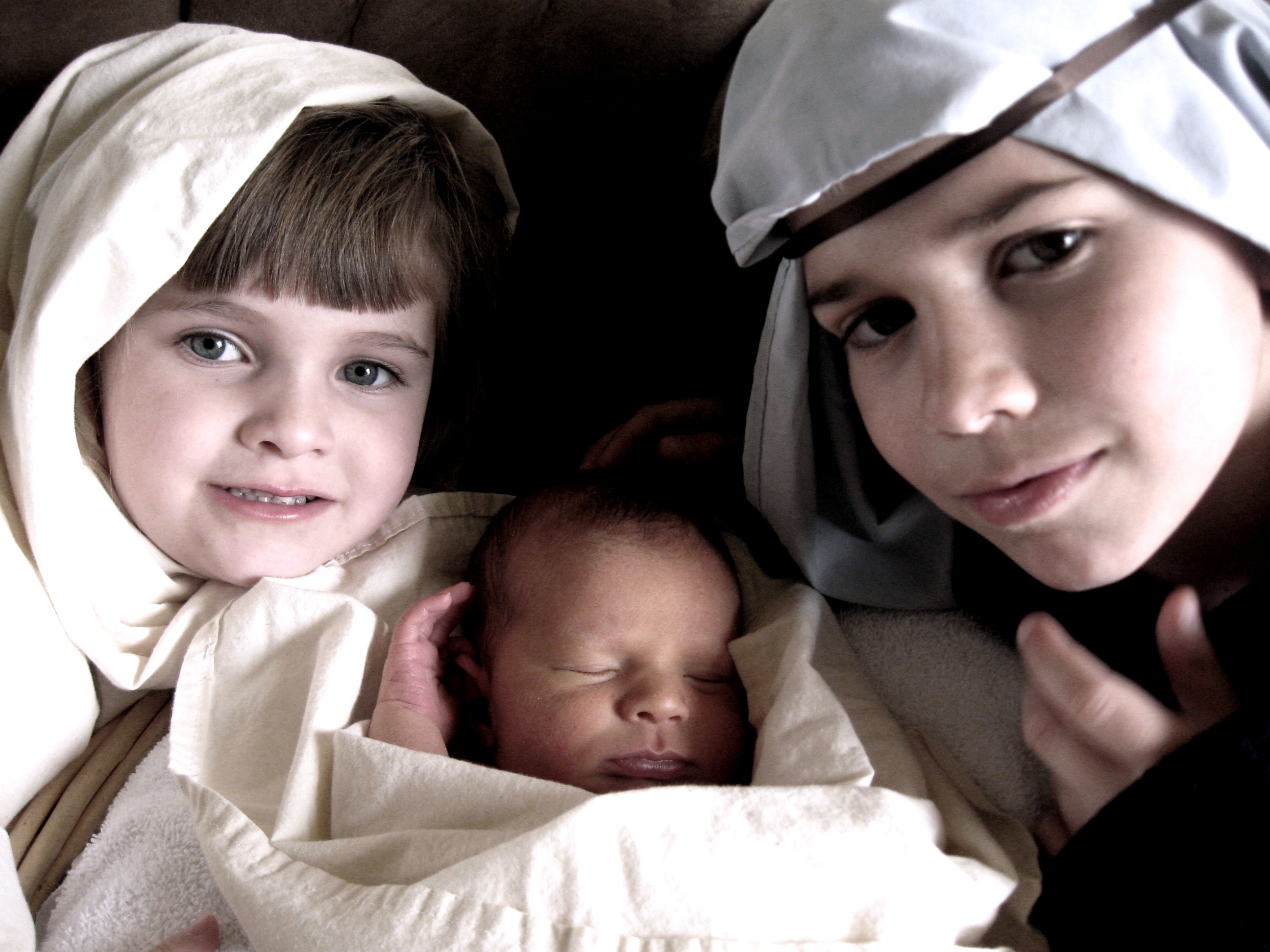
(Four years ago my ninth–and last–baby was born. I staged this photo of him with #7 and #8 children. This became our Christmas card that year, my favorite one so far.)

Christmas is about Christ, about his inauspicious birth in a cave, about his utterly selfless life and example which culminated in his laying down his life for his friends—us—and then his astonishing resurrection three days later.  Luke 2:6–7, The holy family

Christmas—along with Easter—is a reminder that death is temporary, and that life can be eternal.

It’s a reminder that our big brother Jesus Christ understands our pain, our struggles, and our despondency because he also experienced it all so that he would know how to comfort us. John 20:3–18, Mary hears Christ while looking for Him at the tomb

It’s a reminder that he took upon us all of our sins, and that if we do our part and repent, he can do so much more for us; he can take away our sin and leave us clean and new and whole again. Mentally, spiritually, and physically.

It’s a reminder that we can be renewed, and that every person who ever walked the earth will one day be resurrected with a glorified, perfected body, and that all pain will be taken away and replaced with such joy that we mere mortals can never imagine.

It’s about granting us the ultimate desire people have dreamed of since the dawn of time: immortality.

John 20:3–18, Mary Magdalene speaks with the resurrected Christ

Talk about the greatest gift in the world!
Christmas . . . it’s all about Christ.

(Thank you, lds.org, for the photos.)

Thanks, Etsy shoppers, for my inability to sleep!

Last year we were dragging ourselves out of a financial mess. After many months of being severely underemployed, our situation was slowing improving with new jobs. But we didn’t yet have any funds for Christmas. I wondered if I could generate a few dollars to provide Christmas for our family of eleven—nine children, plus an in-law and a grandchild. We’ve never spent a lot at Christmas—about $50 a person—but our budget by October was literally nothing. (Writing novels and giving them away for free doesn’t produce much income; go figure.)

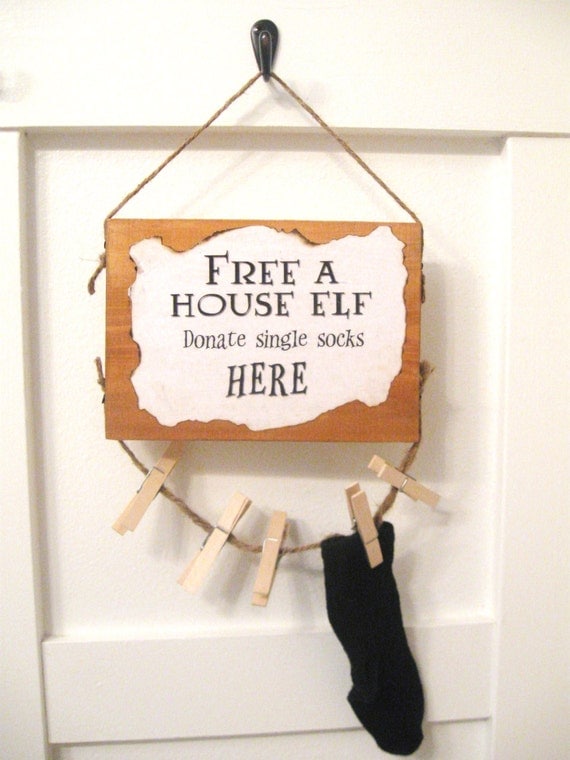
I’ve always been crafty, had read about successes on Etsy, and wondered if I any success could be mine. So after several prototypes and a few failures, I came up with this:

House Elf (Dobby) Laundry Room Sign--A fun place to store those single socks

I liked it, wanted one, and hoped maybe someone else would, too. Nervously I put it up for sale.

About a week later someone bravely took a chance on my new shop and . . .

 . . . bought one!

In my head I thought, “That’s enough profit to buy one paperback for a child!”
Then another one sold.
“I can buy a used DVD!”
Then another, and another.
“A handful of matchbox cars! A Minion t-shirt!”

And then the avalanche hit, mid-November. One week, the payment that went into my bank account on Monday was in the triple digits—over $100.

I was ecstatic. And stunned. And overwhelmed. I needed to get cutting more wood and painting and packaging, quick! Get the kids to help—it’s their Christmas we’re buying, after all.

The avalanche grew, and by the second week of December I realized something astonishing: we had earned enough to have a regular Christmas.

I was both humbled and thrilled. My faith in the free market system was also restored as I realized that people all over America were buying my little sock holder, and giving my family a Christmas.

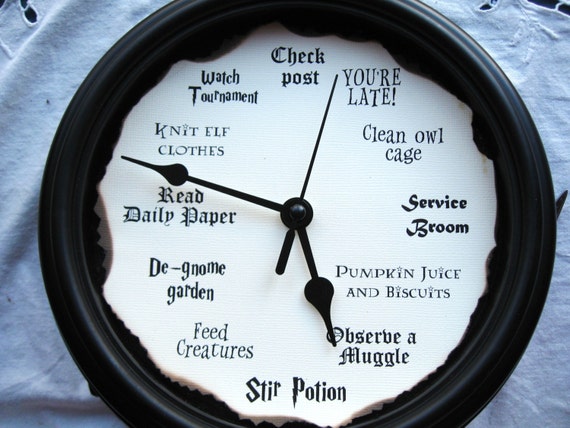
My oldest daughter, whose birthday was in December, said, “Mom, years ago you tried making a Harry Potter/Mrs. Weasly clock. I think you should try it again. I really want one for my birthday.”

I hesitated. What I had made as prototypes were beautiful, but since there were out of solid wood they were heavy, bulky, and ridiculously expensive.

“So try something else,” my daughter was persistent. (Oldest children tend to be the naggiest.) “See what’s out there now. I really want a Harry Potter clock for my apartment.”

My husband and I searched all the hobby stores looking for ideas, but nothing that was reasonably priced. Finally I decided to try a trick I’d done years ago for Mother’s Day gifts: I purchased a clock, dismantled it, made a new face, and reassembled it again. I showed the prototype to my daughter who said, “Very good. Now start selling these on Etsy.”

Harry Potter Clock, 8.75 inches

Why would anyone want this? I mean, I loved, loved coming up with the fonts, designing the face, creating the sayings, but would anyone want it?

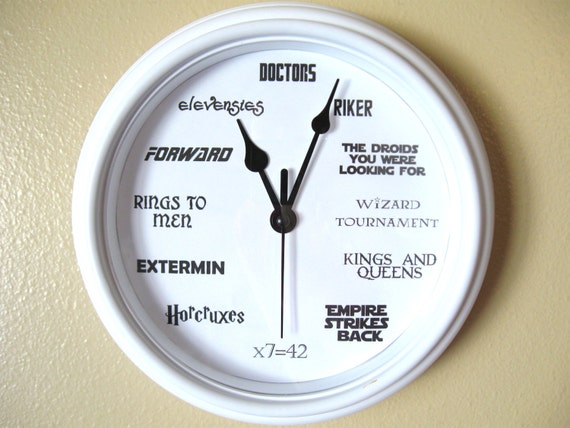
I also made the Geek/Nerd clock for fun. For years I’d thought such a clock needed to exist, so I designed it and listed it just in case.

Geek Nerd Clock, 8.75 inches

I got an order here, another one there. But it was January, and things were normally slow. I ran into shipping problems, packaging problems, other worries, and stressed about my ability to make something consistently good enough. I almost, almost pulled the clocks from Etsy.

Why was I so arrogant as to assume someone would find my tinkering worth $21?

Someone was, in Australia. Would I ship a Harry Potter clock internationally? Uh, I guess I could . . . and I realized that international shipping wasn’t that tough.

I also hadn’t understood before the power of websites like Buzzfeed and ThinkGeek and other sites that stroll around the web looking for something mildly interesting, then posting about it.

Someone thought my Harry Potter clock was mildly interesting, put it on a piece about decorating with Harry Potter decor, and within one day I was sold out. An avalanche of orders and requests came, half of them internationally. Gee, people still love Harry Potter as much as we did?

The next month that happened again, with my Geek/Nerd clocks. Several websites picked those up, and in one day I had over 50 requests for those clocks. And the next day, and the next. Every time I opened my email I cringed in worry about how many more requests there would be. It took me three weeks to catch up to the demand. I’d never been afraid of my email before.

etsyshop header

(I realize the name of the shop isn’t too representative of what I sell. I initially was going to sell something completely different, for which the name made sense, but that didn’t pan out. With no idea of what else to name my shop, and not thinking I’d sell more than 30 items, I just kept the old name. In a way, it works. At least, that’s what I tell myself.)

Overwhelmed, I stared at my Etsy stats as they reached numbers I’d never seen before. And when a weekly payments went into my bank account that month sporting four figures, I could do nothing but stare at it.

The timing (ha!) was perfect. We had some major financial needs to fill, and the sales—and my working about 40 hours a week to make all of the products—filled it.

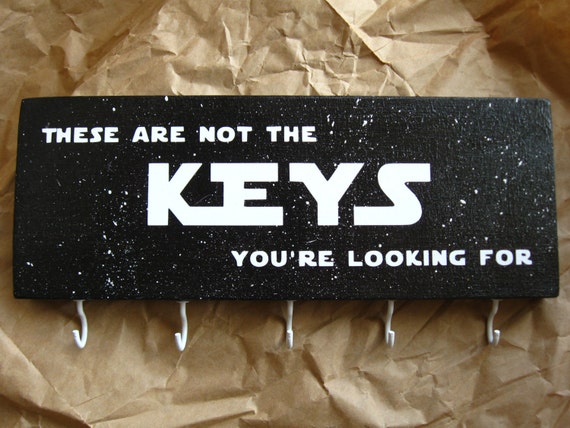
Then another website posted about my sock signs, and someone found out I made Star Wars key signs. More avalanches.

Star Wars key holder

By June my sales had leveled off, but I realized I could quit my part-time job and work from home, never leaving the house to earn money, but always being available for my kids. Another welcomed, wonderful miracle. Etsy buyers were consistently paying for our groceries each month. And for a family of eight, that’s a few dollars. I’ve added a Disc World clock (my personal favorite), a Lord of the Rings clock, a Disney Princess activity clock, and two Star Wars clocks–Light Side and Dark Side, whatever your preference may be.

Have I ever mentioned before that we’re a bit geeky at our house?

Now, a little over a year since I started, I’m once again overwhelmed—happily—with orders for Christmas. There’s no time to work on my books, or keep my blog updated (except for this). Our Christmas is already paid for this year, and now we’re hoping to pay for someone else’s. This bounty is also letting me donate $1 from every DiscWorld/Terry Pratchett clock I sell to the Alzheimer’s Association, and much of our proceeds from last week and this week will be donated to help the Syrian refugees via the LDS Church’s humanitarian organization.

002

It’s tough to be three years old and see giant rolls of bubble wrap in your mom’s room, just waiting to be used. Even tougher when you sneak in her room and start popping the rolls when you think she can’t see you. Amazing how she still hears it, though . . .

A year ago, I never would have suspected I’d sell over one thousand products, a number I hit a week or so ago. I realize that for a lot of Etsy sellers that’s not a big number. But I’m not used to success. This feels huge! I’ve sold to every state in the union, and sent orders to a dozen other countries. My kids enjoy seeing the places where our little ditties fly off to.

But there are some disadvantages to working from home. Try this: go to your place of work or business, get your pillow and blanket, then have a good night’s sleep there.

Yeah, not too easy, is it? My storage and packaging room is also my bedroom. We have a small house and a large family, and while we’re down to only 5/6 kids (depending who’s home from college/army), every room is filled with kids, so my bedroom is also where I keep my orders chart, my shipping boxes, etc. When I lay down at night, I stare at the shelves crammed with work that needs to go out in the morning. Not the most restful.

Nor can I get away from it. When you work out of the house, you can leave your job and relax at home. But even as I sit here happily typing away and “relaxing”, I see out of the corner of my eye the stack of shipping labels that will be taped to packages tomorrow, and while I never work on Sundays (I desperately need a day of rest and renewal) my job sits there, watching me, waiting for early Monday morning . . .

But that’s ok—I don’t mind. I’m fine losing a bit of sleep because of success.
It’s a lot tougher to lose sleep because of failures.
I’ve been down that road.
This one’s a lot better. Thank you for this sleepless journey!

A thought as we enter the Christmas season . . .

As Christmas approaches, we’ll be inundated with ways we can spend our few dollars.

For some reason this year, my heart is particularly tender as I see how many people in the world–nearby and half-way around it–are suffering. I’m reminded of these attitudes, and I pray that I’ll maintain the correct one:

god and tragedies


What you should say to people who offend you

At a neighborhood dinner I sat by a woman whose daughter had just gotten married. Since my oldest was planning her wedding, the conversation naturally turned to expenses. I told her we were investing in buying decorations since we’d have more weddings in the future, and were trying to keep down costs by doing everything ourselves.

“Well, you have to do that,” she told me, with what seemed to be a haughty glance, “since you have so many children. I, however, have only one daughter, so my husband and I decided to show her just how important she is to us. We’ve gone into sizable debt for her wedding, but she’s worth it. When you have only one, you treasure her all the more.”

I was stunned silent. Was she insinuating that I didn’t treasure my four daughters? That I had too many kids to show proper attention to? That I was cheap?

Fortunately for both of us, more people joined our table, and the conversation mercifully shifted. I didn’t know how to respond to her insults.

Recently a friend asked how another of my daughters was doing, and I told her she was thrilled to have found a major in college that she truly loved. I said that she’d been struggling to “find” herself, and another woman who was listening in said, rather dismissively, “All of us struggle to find ourselves.” Her attitude of So your daughter isn’t anything special or important, hung thickly in the air.

Again, my inability to respond when I’m surprised kicked in, and I was silent. Fortunately.

As I’ve reflected on those exchanges–and many others when I perceived I or my family was being slighted–I’ve thought about what I should have said.

And always it’s the same.

Nothing.
When someone offends you, say nothing.

Because over the years I’ve discovered that when someone goes on the offensive, it’s because they’re feeling defensive. As I’ve written before, no one who is happy or content in their lives purposely go about offending people. And most of the time, offenses aren’t intended; they’re accidental.

But when a slight is intended, I’ve discovered that it’s caused by pain. Something about a situation triggers pain (or fear, or anxiety) and the reaction is to defend one’s self with a deliberate offense. A pre-emptive strike, if you will.

While I heard the snideness in the remarks, I also heard the pain lurking underneath.

For example, the woman who suggested I didn’t spoil my daughter enough always wanted six children, mostly girls. That had been her dream since she was a little.

She got one daughter, and two sons, after a lot of costly medical intervention.

The fact that I had four daughters, and that I inadvertently reminded her that I effortlessly achieved the dream she never could awakened her pain.

Same with the woman who flippantly dismissed my daughter’s found happiness, because her own daughter had tried to “find” herself, and found drugs instead, then found herself in jail.
While my daughter found herself admitted to a competitive college program.

I heard that woman’s pain. I heard her undertones of, “It’s not fair.”

I agree, it’s not. Not that I live an enchanted life by any means. I could have countered with claims about our family’s anxiety and depression issues, or our financial stresses, or any number of other trials to prove that yes, I feel pain too!

But trying to trump someone else’s pain with detailed claims of your own never works. You can’t conquer pain with more pain. There are no winners in the “my experience is worse than yours!” battle.

Over the years I’ve tried to listen for the pain, or fear, or quiet whimper of, “It’s so unfair!” when I hear a remark that could be considered offensive. It’s always there, in the background.

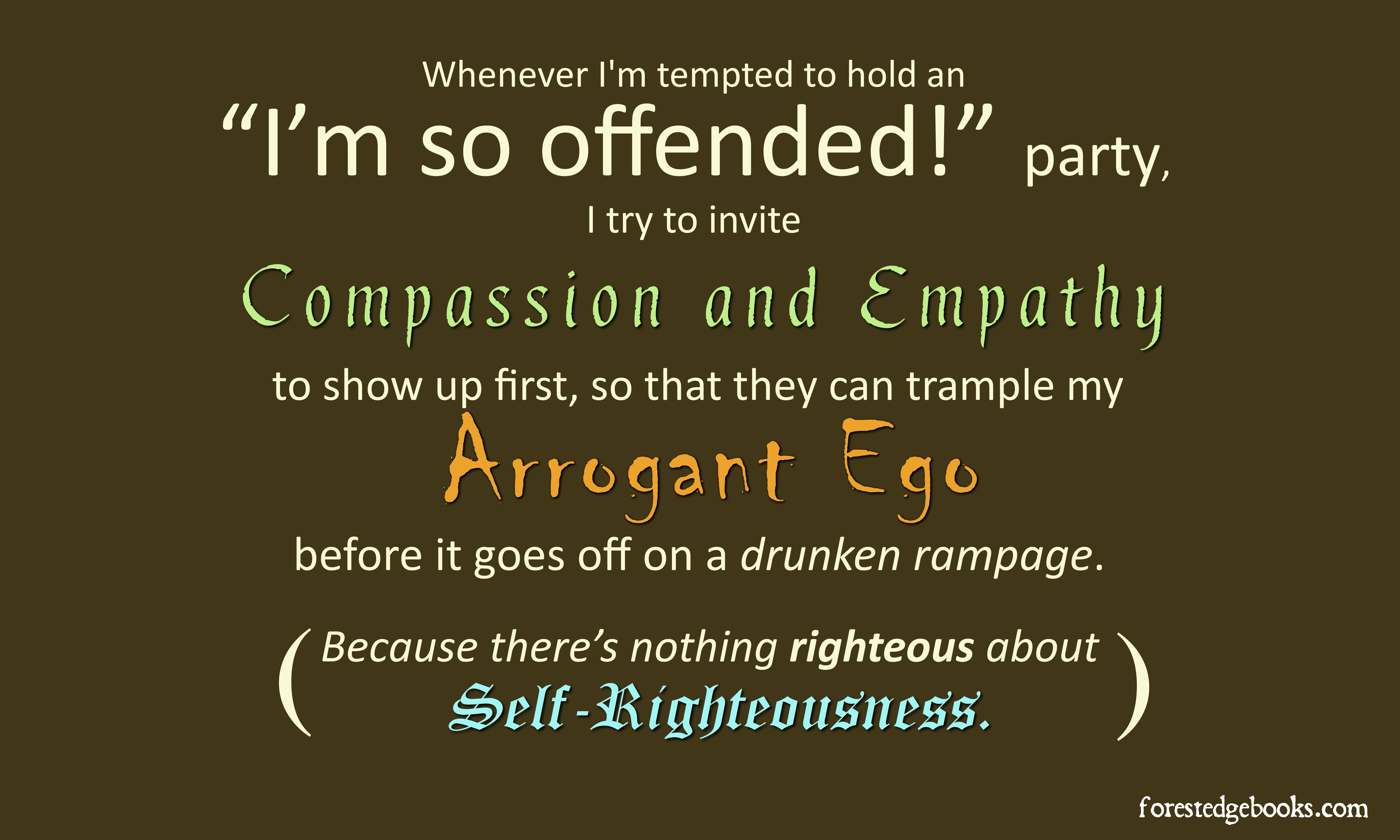
Whenever I’m tempted to hold a “I’m so offended!” party, I try to invite Compassion and Empathy to show up first, so that they can trample my Arrogant Ego before it goes off on a drunken rampage. Because despite the term, there’s nothing “righteous” about Self-Righteousness.

offended party

This past week I’ve analyzed “offenses” in the news and social media, and looked for the pain or fear beneath it. From the silly (think Starbucks) to the severe (think terrorism strikes, everywhere), folks are “offended” that we’re not doing things right: not worshipping enough, or worshipping too much; not empathizing enough, or empathizing with too few sufferers; not caring about others, or caring too much . . .

Everyone chooses to be offended. There’s nothing we can do about that, except choose not to take offense ourselves, and listen instead for the pain hiding underneath.

Yung squeezed her again. “If you’re worried that I’ll be offended by his reactions, don’t be.  Nothing offends me.”
~The Falcon in the Barn, Book 4

Why I made all my books free (and title release for book 5!)

If you go to Amazon/Smashwords/and-the-like you’ll see that my four books are now all available as FREE DOWNLOADS, and this is a PERMANENT change. (The paperbacks still cost money, because I’m unable to give those away, but I adjusted the prices so that I make nothing from them. Literally nothing.)

Why the heck did I do that?!

Because I felt, intensely and undeniably, that I should.
Because as I’ve stated elsewhere in my blog that I didn’t come up with this story; it was gifted to me.
Because when you’ve been given a gift, freely, you don’t then go around charging other people for it.

I’ve spent thousands of hours trying to improve these “gifts,” these stories. I started the series five years ago and spend an unconscionable amount of time developing them to the point that they’re just this side of readable. And while it’s been an enormous undertaking–I’ve never worked harder or longer on any other project besides motherhood–I’ve enjoyed it immensely, and felt incredibly blessed.
It’s been my therapy, when my sister and parents were ill and dying.
It’s been my escape, when we were severely underemployed and struggling.
It’s been my motivation to study deeply some theories, philosophy, and writings I normally wouldn’t.

It’s been a complete joy, a pure blessing. A true gift from God.

And I need to give that gift away.

It’s not like I ever made big bucks from this series anyway. I barely paid off my computer from the proceeds one year.

But something I read just the other day affirmed what I’ve been feeling for a long time now. Those words come from the Book of Mormon (yes, I’m a Mormon–a practicing Christian, as I’ve confessed before). When I read the following in my studies the other day, I felt a cosmic slap upside the head:

 29 He commandeth that there shall be no priestcrafts; for, behold, priestcrafts are that men preach and set themselves up for a light unto the world, that they may get gain and praise of the world; but they seek not the welfare of Zion.

 30 Behold, the Lord hath forbidden this thing;  . . .

 31 But the laborer in Zion shall labor for Zion; for if they labor for money they shall perish.

~2 Nephi 26: 29-31 (emphasis added)

As I’ve stated here in my bio, I believe in the concept of Zion—a group of people that are of one heart and one mind, where individuals choose (unlike socialism and communism) to share all things freely so that there are no poor among them, and are focused on improving their minds and increasing their knowledge, not their possessions. And I also believe creating this kind of society is doable in our future.

That’s why I’m writing. That’s why I’m so excited–and anxious–to get out Book 5, titled Safety Assured Leaving East of Medicetti (the enigmatic nature of the title is explained in the book; here’s a hint–it’s a code). I still hope to release in Spring of 2016. I had planned all along to make Book 5 permanently free, and held on to the idea that I can make a buck-fifty on the other books, no problem.

No. No, I need to be as open with all of my books.

Safety Assured book 5 PreCover

This isn’t the OFFICIAL cover yet. But this was the magnificent sunrise only this morning, and I realized it’d be a perfect background for Book 5 in the meantime.

To be honest, I was hoping to make some money because we’re crushed by an enormous student loan debt which we have no hope of paying off. I should be a brain surgeon with a debt like that. (Fortunately for all people requiring surgery, I’m not.)

But I’ve decided to have faith that if/when God wants me to pay off that debt, He’ll provide us with the right opportunities. Selling the inspiration He’s given me is NOT the way, however.

I have three other books kicking around in my head completely unrelated to Forest at the Edge, and maybe through one or all of those we’ll finally come into the money that will allow us to get out of the debt.

So today I happily announce that my series–which people either LOVE! or HATE! based upon the feedback I’ve been getting online and privately–will always be permanently free.

Enjoy! (Or bash, whatever.)

Do writers have agendas? Well, duh . . .

Recently I was accused of having “an agenda” in my books.

My very mature response to that was, “Well, DUH!”

Writers ALWAYS write with an agenda—a purpose. It’s WHY we write!

If you ever took a composition course in college, the first chapter in the textbook is all about “Writing With Purpose.” If you hated your English 1010 course, it was because you didn’t care; you didn’t want to write, you just wanted a grade.

But writers? We care. A LOT. That’s why we write. We don’t care about a grade; we care about getting out the word.

So when I was accused of having “an agenda,” I scratched my head a bit and thought, “Well, yeah!”

Doesn’t everyone?

Suzanne Collins didn’t crank The Hunger Games during a weekend because she was bored.
J.K. Rolling didn’t handwrite the Harry Potter series only because she was out of work and had nothing better to do.
E. L. James didn’t write 50 Shades of Grey because . . . You know, I really don’t want to go there. Scratch that.

My point is, EVERYONE who writes, creates, composes, produces, directs, sings—whatever, EVERYONE has an agenda. Creating art—especially a book series—takes months, but more likely years. We don’t do it because it’s only for fun. We do it because we want to make A STATEMENT.

Subtle or obvious; outrageous or timid; traditional or unconventional. I don’t care what writers or artists may say, we ALL have an agenda behind our work, which is the impetus that shoves us to create. writer agenda

You may not like certain entertainment because that “agenda” or “statement” doesn’t fit your mindset. I personally don’t like horror movies, hard rock music, or romance novels. None of them fit my mindset. But that doesn’t mean they’re wrong. They’re just not my cup of cocoa (because I don’t like tea, either).

Which leads to the next puzzler about my critic: they didn’t like my “agenda” for one of my characters. This character is a young woman who rejects an overbearing potential suitor in order to spend time with a young man she admires. They work together, they  fall in love, and they get married. They continue to work side-by-side in their business, and are thrilled when they discover they are expecting a baby.

Yeah, brutal stuff.

The critic stated that this wasn’t something they’d want their daughter to read.

Uh-huh.

Still scratching my head about that one.

For the world these characters inhabit, their behavior is completely acceptable and timely. [WARNING–POTENTIAL SPOILERS AHEAD!] If my agenda-fearing-complainer is worried that the characters are young, the character’s parents were 28 years old when they married. It’s all balanced.

  • But maybe it’s because the young woman is still a teenager, but a very mature one who cares nothing about the world’s trends and fashions, but has been through hardship, knows her mind, and demonstrates that quite well.  (How many teenage girls in our world fit this description? Not enough, yet.)
  • Maybe it’s because her belief in the Creator, and her devotion to The Writings, help her deal with the disappointments she’s experienced. (God? Scriptures? In a novel? Isn’t that illegal or something?)
  • Maybe it’s because she, with her love interest, runs a farm and dairy which, again in the culture of the book, is a respectable and important job.  (I kind of thought growing food was a noble occupation in our world as well, but maybe not?)
  • Maybe it’s because the idea of having children makes her happy, because in the book’s culture women are allowed only two children and they are treasured. (Believe it or not, there are still people in our world who want to have babies, and nothing’s “wrong” with them.)

Really, all of THIS is “an agenda”?

Love and marriage and family and religion and working together are all somehow . . . wrong?

Well then, yes: I have an agenda. As I’ve stated before (especially here), I believe in love.
I believe in marriage between a man and a woman.
I believe in growing together as a family, in having children, in working and learning together.
I believe all these things are good and important, and I’m not going to apologize or back down.

Instead, I sit here shaking my head in astonishment that the world has gotten to a point that I have to defend such a radical way of life. And I always will, trust me.

In the meantime, here’s an abbreviated passage from late in Book 4, The Falcon in the Barn, which was likely deemed so offensive. (I’ve tried to eliminate spoilers, leaving instead only “hinters”.)

“I guess I’m just surprised,” Mahrree murmured as another two women whose children she used to teach took a circular route around her. “This has always been such a nice village—”

“A nice village?!” Jaytsy nearly wailed.

A dozen people trying to get around them moved even faster.

Mahrree stared at her daughter in surprise.

“A nice village!” Jaytsy announced sarcastically, glaring at a few more dozen who stopped in their tracks to see what Shin was erupting this time.

“That’s what my mother just declared: Edge has always been such a nice village. And I wonder,” Jaytsy said, her voice booming as far as her father’s as she addressed everyone who had ears, “exactly what village is Mahrree Shin remembering?”

People leaked out of market fronts to cluster in whispering groups.

Now Mahrree knew how her family must have felt when she stood up at the amphitheater: complete dread.

“Jaytsy, I really don’t think—”

Mrs. Briter gently but firmly brushed her mother’s hand away. “Surely Mahrree Shin remembers this village before it turned on itself to steal goods from those who died from the pox! Surely she remembers a village that appreciated its commander—”

Mahrree bit her lower lip and took a step back from her daughter. She’d seen that look before, in Perrin’s face. Jaytsy Shin Briter had something to say, and everyone was going to hear it.

Mahrree hadn’t realized before how much Jaytsy favored Perrin. Her dark brown eyes were wide with fury and her voice developed an authoritative quality that insisted everyone stop what they were doing and listen. Jaytsy carried the blood of the greatest officers the world had ever seen. Couple that with the fact that the generals’ descendant was also in the throes of expecting a baby, and it was a very dangerous combination indeed.

Mahrree took another protective step back. “Oh, dear . . .”

“—A commander who, on more occasions than you will ever know, put his life on the line to defend each one of you!” Jaytsy bellowed to the rapt and growing audience.

A few women broke away from the crowd and trotted purposefully down an alley.

Mahrree noticed, but Jaytsy didn’t, or she didn’t care.

“And this is how you repay the Shins for their years of sacrifice and dedication? By ignoring them? . . . A nice village? I’m looking but I’m just   . . . not . . . seeing . . . it!

Mahrree’s fists were clutched near her face in nervous fascination. . . . [As Jaytsy continued her rant, Mahrree kept] an eye on the growing crowd that was stunned silent. Villagers had subtly rearranged themselves, men in some groups, women in others. A few more women had slinked away and now Mahrree saw why: Chief Barnie was being reluctantly led to the market by a gaggle of outraged women. . . .

“Jaytsy, well said,” Mahrree hinted. “I think you’re done—”

Mrs. Briter’s chest heaved furiously as she turned her glare on Chief Barnie. Two women were pushing him into the open space, and his stuttering steps made it obvious he would rather have been anywhere else in the world right then.

“Mrs. Briter?” He cleared his throat and firmed his stance.

Jaytsy folded her arms defiantly in a Perrin-like manner, and Mahrree massaged her cheeks. If she weren’t so worried as to what might happen next she would’ve been bursting with pride.

“Yes?” Jaytsy said with so much malice that Mahrree marveled how Barnie still stood erect.

“Do we have a problem?” Barnie timidly asked.

“She’s debating!” a woman shouted from the concealing safety of the crowd. “There’s laws against that!”

Mahrree watched her daughter, praying her response would be appropriate.

Jaytsy’s hands moved to her hips. “A debate?” she shouted. “Barnie, do you see anyone challenging me? Talking back?”

The crowd couldn’t get any flatter as Barnie obediently glanced around. He shook his head.

“That’s right. Two people are needed for a debate. I’m just . . . delivering a free history lesson!”

That did it. Mahrree couldn’t hold it in anymore. She burst into a grin which she quickly covered with her hand.

None of the villagers dared move a muscle. Even the angry knot of women glanced at each other hoping one of them could think of what to say next.

“Now,” Jaytsy began as she bent down to pick up her bread bag from the ground. She didn’t move like an expecting woman but more like a general retrieving his dropped sword. “My mother and I will be shopping here twice a week when the shops open, and if anyone here has a problem with that, I suggest you arrive after we leave. Mother? We need to start dinner.”

DISCLAIMER~ This very offensive, agenda-laden excerpt is from Book 4, The Falcon in the Barn. Read at your own risk.

What do we think about?

Over the years I’ve become more judicious in what I read, watch, and listen to. Everything I take in effects my thoughts, which in turn alters my behavior. 

Maybe it’s because in the past few years my parents and sister died, and a dear friend is losing her battle to cancer, that I’m acutely aware that life is short.

I don’t have time–nor do I want to have time–to waste. Every day needs to be focused on improving my mind and my heart.

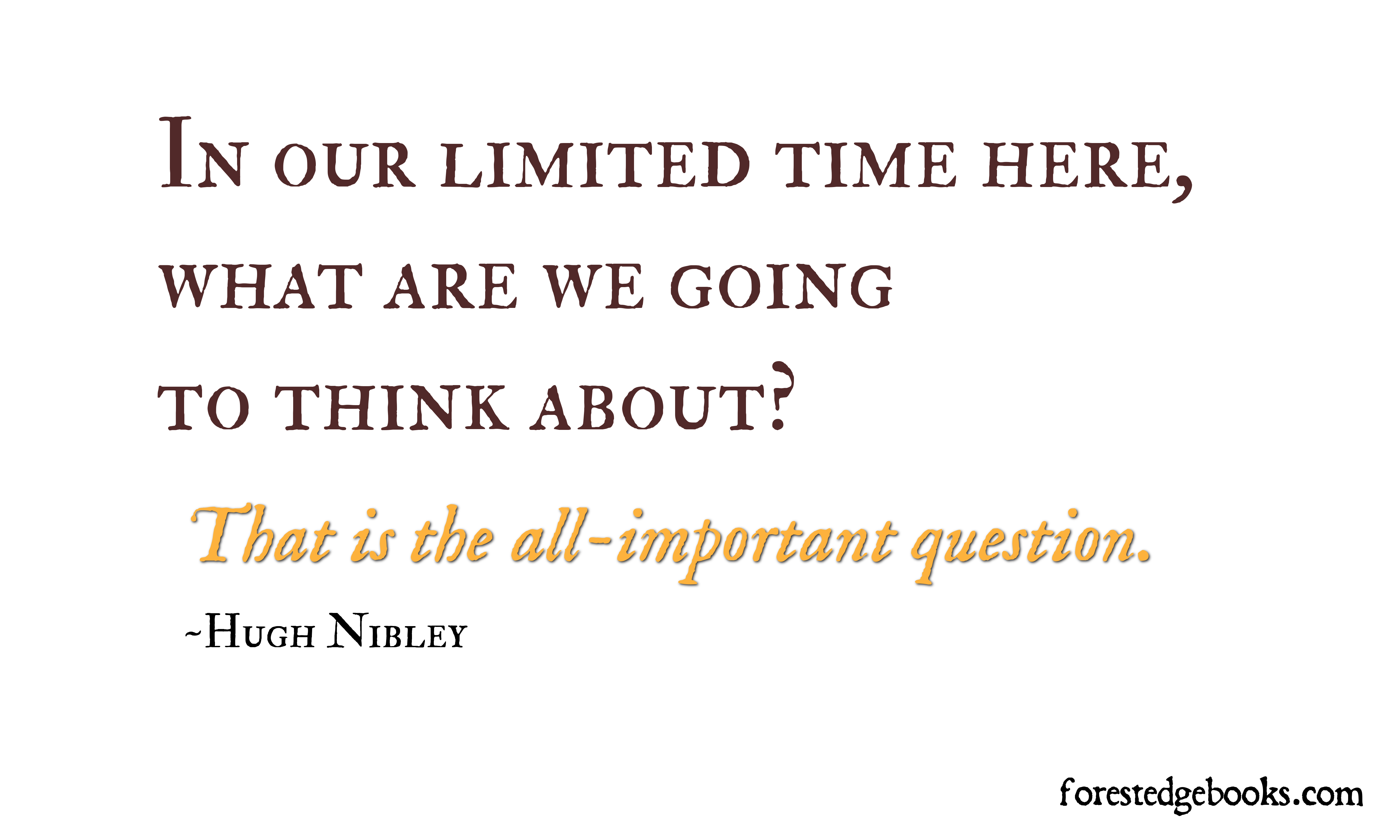
Hugh Nibley, in “Zeal without Knowledge,” summed it up best:

what do we think about

The more I’ve decluttered my mind (as I’ve been doing with my house) the simpler everything is. There really is time and space for the important stuff.

No men who Jaytsy cared about were interested in fashion or the theater. It was all fake and contrived, and unappealing.
But she knew what she did love, and it was glorious to no longer worry about the world’s opinions. She loved real things. Dirt on her hands and under her fingernails. Flicking insects off the corn. Filling wagons with potatoes. Braiding the greens of onions together. Measuring milk yields. Churning butter. Sampling cheeses. Looking into cows’ eyes.
~Book 4, The Falcon in the Barn