They may do that, but we do NOT

It’s getting harder to teach my children civility when they see mature adults deliberately flouting the law.

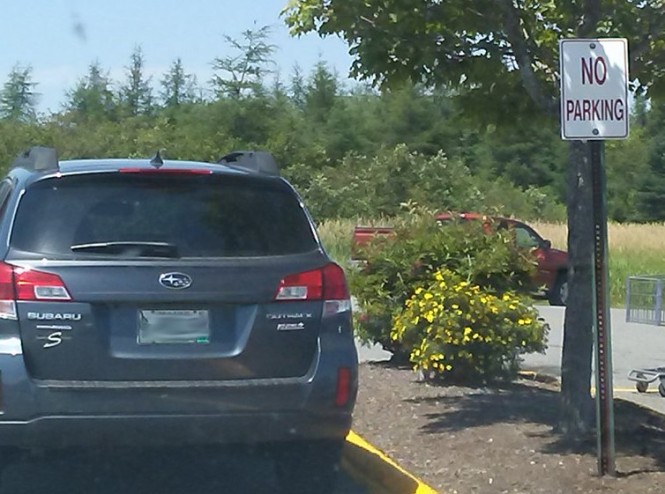
Like right here:
20136454_10210049208490985_797276505_n

We were at the grocery store waiting for my daughter when a seemingly healthy man around 60 and wearing nice vacation clothes pulled his Subaru up to this sign. I watched as he eyed it, pondered it, then shut off his car and got out. Astonished and knowing he saw the sign, I watched as he took a bag of trash to a can at the front of the store. But he wasn’t just tossing garbage; he took a cart then went in. This wasn’t a quick trip; he was shopping.

As I blinked in confusion, I heard, “Why’d he do that?”

Yessirree Bob, you who broke the law: a 13-year-old saw you ignore legal parking spaces ALL AROUND us, and saw you instead choose to do whatever you wanted.

“That’s against the law, isn’t it? Parking where you shouldn’t?”

Think about this: how are kids supposed to become civilized adults respecting the law when they see seemingly-respectable adults deliberately ignore it?

And people wonder how seeds of anarchy are planted, how civilizations crumble. It’s this way, folks. Seriously–THIS WAY. It starts with our youth witnessing selfish arrogance, and their own begins to grow.

Except when kids have moms like me who don’t put up with that behavior.

Fuming quietly, I said, “That IS against the law, and even though he may choose to do that, we do NOT.”

Now I try very hard to always think the best story about people, to assume goodness or innocence when something seemingly bad is happening. So perhaps this man has early signs of dementia or Alzheimer’s and the sign confused him (a worrying thought since he’s driving); or maybe, because marijuana is legal in this state, he was buzzed (another worrying thought since he’s driving); or maybe he can’t read English and didn’t understand the sign (which is doubtful because he could have seen where the other dozen cars were parked and easily deduced where he should leave his Subaru).

Still, no matter what the reason, what an impressionable youth saw was an adult showing no regard for the law, or anyone else for that matter.

This is a huge problem.

I still believe in respecting the law, in treating others with kindness, and in doing what’s right even if–

No, ESPECIALLY when no one else seems to care.

So to my son I said, “Look how his car is blocking traffic, how he’s created a dangerous situation. People can’t see around him at that intersection. The sign is there to protect everyone, and he’s causing problems by his behavior.”

Don’t misbehave around me, because my duty as a mother demands that I draw attention to the behavior and teach my children what is acceptable and what is NOT.

Disrespect is exploding everywhere. I’ve written before how I’ve told my kids why I’ve “hidden” a number of adults they know on my Facebook feed because they won’t post anything civil. Name-calling, ridicule, snarkiness–none of that is ever acceptable behavior, but now it’s become a pastime.

Two days ago I came across a house listing posted on Facebook by someone with a large following. It wasn’t her house, but because she found its decor gaudy and over-the-top, she went out of her way to hold it up in a public place to mock the owner of the house. She went so far as to insinuate that certain religious groups “helped” the seller create such an “outrageous” house.

More than 80 people joined in the public derision of this innocent home owner’s pride and joy. All she was trying to do was sell her house. She didn’t deserve to be bullied, and that’s what it was: bullying.

Even more disgraceful was that many who commented were those I knew who claimed to be Christians.

It was if they forgot that Christians don’t bully one another. They don’t post snide comments about anyone–public figures, politicians, neighbors, random people they’ve never even met–no one.

And Christians certainly aren’t supposed to deliver hell to someone. My heart ached for this home owner who would undoubtedly discover how she’d become the object of ridicule simply because her decorating tastes were different than others.

This is not how grownups are supposed to behave. We should have outgrown this childishness back in 8th grade. Immaturity, selfishness, and disrespect is what causes civilizations to collapse. These seemingly-little moments of, “The rest of the world can go to hell; I’m going to do and say and write what I want” will be the downfall of us all.

Because the younger generation is watching. My kids, your kids, someone else’s kids are learning from adults, and what they’re learning is, Anything goes.

Why do adults treat others so horribly? The best I can guess is that they are arrogant yet also insecure. They can feel superior only by trying to show others to be inferior. They’re not interested in building up the world, but in tearing it down so they might have a chance to stand on top of the rubble in some position of authority.

But it won’t work. You can never increase your confidence while putting down someone else’s. Just because more people are engaging in selfishness, arrogance, and bullying doesn’t make any of it right; all of that just makes the world nastier.

There are, however, adults who do behave properly, and being a mother demands that I also point out their civility to my children.

For example, a gentleman I know–and he is a true gentleman whom I’ve award the Internet Civility Award to–is plagued almost daily by a childish adult who posts on his Facebook page why this gentleman should no longer be friends with those of a certain religion. And every day this gentleman kindly says, “Thank you for your input, but your statements don’t change my mind.”

Then his attacker–and he does attack–goes off on a furious rant against this kind man, throwing at him all kinds of vitriol as if the gentleman deserves such rancor for his willingness to befriend others from different walks of life.

The gentleman never rises to the fight, but always walks nobly away.

I watch closely other truly mature adults, men and women who encourage, instruct, and gently, kindly admonish others to live a little better, to be a little kinder, to be more Christlike. Their posts are loving, heartfelt, earnest.

And never, ever mean.

They are my heroes, the ones I also point out to my children and say, “They do this, and so should we.”
Dungeons, spiders, and kittens–what terrifies you?

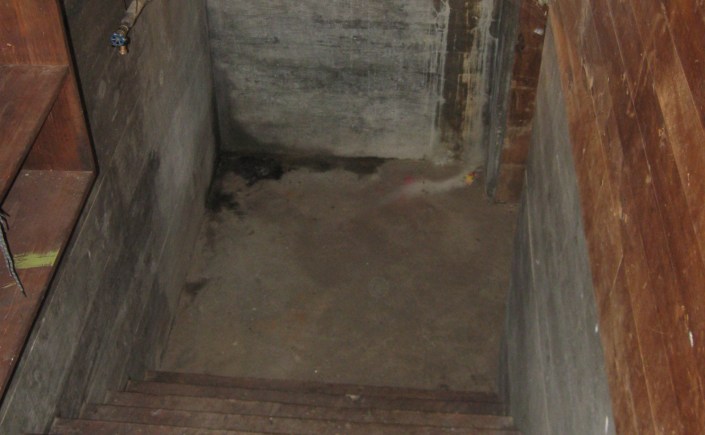
My five-year-old is currently in the dungeon. Well, others might call it a “basement” but with the damp floor and that smell which permeates every inch of the concrete and rock down there, we’re calling it a dungeon.

He’s chosen to be there, because that’s where his dad’s and brothers’ Warhammer 40k figurines are set up. (I call them “hideous plastic things.”) 

Image result for warhammer 40k figurines

He’s playing with things that look like this^. I guess nothing else down there is as terrifying.

Here’s the weird part–he’s not afraid to be down there, alone, with the spider webs and damp and creepy windows . . . but he’s terrified to pick up his new 6-week-old kitten.

It’s the cutest little thing in the world, cuddly and purring, but it has those needle-like claws and THOSE freak him out. He’ll pet it, he’ll croon at it, build her shrines out of blankets and pillows when she sleeps, but the moment it comes after him and his bare feet, you’d think a mountain lion had been released because he goes RUNNING FOR THE HILLS!

2010-02-07 23.06.16

Blanket shrine to worship the cat. And we’re not even in Egypt.

On the other hand, his 13-year-old brother will love and play with the kitten endlessly, but he’s so terrified of the dungeon/basement that he LOCKS the doors going down there.

This poses a problem for the 5-year-old trying to come back upstairs, and freaks out older brother when he hears the door rattling because SOMETHING HAS COME UP FROM THE BASEMENT!


2010-02-08 20.54.08

The stairwell to the basement/dungeon/Hades.

Fear is a weird and random thing.

Sometimes it makes us run and slam the door. Other times we charge it, like my 18-year-old daughter armed with the shop vac sucking up every spider web with the extension tube. (The dungeon/basement is next, but only once she stops shivering from her last extraction triumph upstairs.)

Other times we call for help, as with my 5-year-old (the dungeon tolerator) who came from the bathroom to announce he couldn’t brush his teeth because of the “critter” in there. Turned out to be a moth in the sink. Another reason why we got a kitten, who I wanted to name “Moth Killer” as a reminder as to how she’s supposed to earn her keep.

Sometimes we’re quiet about our fears, such me pretending to know how to talk to people–especially strangers–all the while my heart rate is at 120 bpm and I’m praying I don’t pass out before the conversation is over, to my own father who I didn’t know was deathly afraid of snakes until I, as a kid, came up to him with our neighbor’s boa constrictor draped around my neck. I’ve never seen a man go gray faster than my father did, and still live.

It’s strange that what makes some people afraid has no effect on others. Birds, for example, send some people into a panic while others keep them as pets. Same with rats. And chihuahuas.

Everyone hates needles, however. I’ve asked phlebotomists about that every time I’d had blood drawn. One nurse told me, “If I met someone who LIKED having a needle jabbed into a vein, THAT would terrify me.”

What’s the point to this rambling? I’m afraid I don’t know.

“There’s nothing to fear but fear itself.” Be honest. You, like me, hear that phrase that think, “Oh yeah? What about [fill in the blank]?” There are DOZENS of things to fear, and here’s the good part: all of us fear something. All of us are cowards about something.

Openly or quietly, there’s something that worries each of us, which is good to remember. That’s not meant as a challenge to figure out someone’s fear and exploit it, but to comfort us all that we really are all the same.

Once I dropped by the house a 13-year-old when her mom wasn’t home. In a small and terrified voice, she asked me to do her a favor. Worried that I was walking into a home invasion scenario based on her solemnity, I nevertheless agreed. Moments later I felt like Wonder Woman as I went downstairs (a nice downstairs, with carpeting and lights) with tissue in hand to extract a spider that had kept this sweet girl from entering her bedroom for the past hour.

I realized then that maybe different fears exist to let all of us be heroes at one time or another. My husband is my hero whenever a live mouse or a dead animal is involved. (Bonus points to him if it’s a dead mouse he bravely disposes of.) Perhaps that’s why he moved us here, so that after a year of living apart I’d have plenty of reasons to rush into his arms and ask him to be my hero because there may have been another mouse . . .

Which now has may thinking that maybe romance is also a weird and random thing.

     When Perrin came home for dinner the tiny cat was still there. It hobbled up to him and began to climb his trousers.
     “Get it off!” he yelled, shaking his leg.
     Mahrree extracted the kitten from his knee. “Honestly. How can a grown man be so afraid of a tiny kitten?”
     “Afraid? That’s what you think I am? Afraid!”
     “Yes! Give me another reason why you run in terror from it.”
      “I don’t run.”
      “Well, you shout!”
      “That’s ridiculous!”
      “You’re shouting now!”
      “So are you! Give it to me.”
       Mahrree clutched the kitten to her chest. “What will you do?”
      “Prove you wrong,” he beckoned. “Hand it over.”
      “Don’t hurt it!”
      “I won’t hurt it. Just hand it over.”
      Reluctantly, Mahrree gave him the kitten. Perrin held it up to his face. It mewed in a manner that sounded like a whimper of fear.
      Perrin stared into its tiny eyes.
      It stared back, then looked down at the height at which it was dangling. It flailed in fright, so Perrin cradled it in his other hand, and the thing began to purr.
      “Why does it do that?” he asked, bewildered.
       Mahrree’s mouth twitched. “Because it likes you. I can’t imagine why, but it does.”
       He evaluated the creature.
       It didn’t resemble a Thorne—captain or general—in any way. It was just a tiny, helpless animal. With needle-like claws. And it made annoying sounds, although quietly.
       Still, those claws were unreasonably sharp, snagging the wool on his uniform.
       Still yet again, it was just a baby.
       “Hm,” he said eventually. “Fine. It can stay.”

~Book 4, The Falcon in the Barn, Forest at the Edge series

Don’t care what the world thinks: 7 steps in the pursuit of peace!

In a quest for a more peaceful existence (I really wish I could live in the world of Books 5 and 6 of my series), I’ve been eliminating that which causes undue stress. No, I’m not abandoning my house or nine children, but I’ve been thinking about my dad, how he was the most calm, pleasant, peaceful man I knew.

IMG_0529

My dad, Rudy Strebel, in 2007, holding a granddaughter.

Not that his life was easy—he suffered as a child in WWII Germany, then had a wife he dearly loved but who had frequent and violent bouts with PTSD from her traumatic life as a refugee. In their 50+ years of marriage, I never knew him to lose his temper with her but did his best to soothe her paranoia and terror, every time. And I can count on three fingers the amount of time he slightly raised his voice at me.

He chose to be peaceful, and he was also very careful as to what he let into his life. He didn’t read, watch, or listen to anything that could harm his spirit or drag him down.

He wasn’t ignorant of the world, but he purposely distanced himself  from it to remain unspotted as it splashed in filthy waters.

Lately I’ve been trying to pursue peace as he did, and have implemented ways to limit what weighs down my mind and soul. I’ve incorporated a number of minimalist ideas, and I’m finding greater calm in my life by doing the following:

  1. Unsubscribe! To those emails that entice you to see what’s on sale, what the latest thing is, what you “really don’t want to miss!”

Miss it anyway. Don’t be lured in, don’t be tricked into buying something simply because it’s a great deal, and don’t waste time reading what can’t elevate you. It’s all distracting, even just deleting it, having to swat it away like a pesky mosquito. Get rid of them altogether. I’ve been opening, scrolling down, and unsubscribing from dozens of emails–even from places where I still buy something once or twice a year–and my feeds are cleaner, sleeker, and calmer. All that remains now is that which is really important for me to consider.

2. Unfollow! Here’s an awesome feature on Facebook: stay friends, but stop seeing every little thing they do.

Image result for unfollow facebook

I’ve realized that I care only about my family (we have a secret group just for us), and some neighbors and friends who consistently demonstrate insight and humor–qualities I value.

The other hundreds of “friends”? I’ve unfollowed them. I can always check on them every few months if I feel the need (if I remember who they are).

In the meantime, I’ve cut out a mind-cluttering stream of whining, bragging, complaining, and comparing. It’s been like leaving junior high all over again–sweet relief!

Now I have a feed of primarily funny, inspiring, and heartfelt posts.

Twitter, Instagram, all those others? I don’t even go there, but you can also pare those down significantly to refine your life.

3. Tune out! I quit listening to the radio years ago and felt my blood pressure in the car normalize instantly. We never watch TV news, I skim the newspaper for only important news, and I’ve quit following nearly every online news outlet.

The result? The world keeps on churning but I don’t have to swim in that muck. I know what’s going on, but I observe only from a distance. Getting angry over the world doesn’t fix it. Stepping away from it, however, allows me to continue raising my family with peace of mind.

4. Ignore trends! Years ago, I quit following trends in home décor, clothing, and etc. by eliminating magazines and TV shows that told me what I had was out of date. How much more I love my house and wardrobe now that I’m not worried what the world thinks of it! And I’ve saved a lot of money, too.

And no one, ever, has said anything about me not being trendy enough. It’s like no one really cares.

5. Don’t participate! Like my dad, I’ve chosen to not listen to music that degrades or is “hard.” I listen to soundtracks and trailer albums instead. I read only books that satisfy and uplift; one summer, I sent back nearly a dozen library books after their first chapters because they were smutty, suggestive, or crude. I don’t watch rated-R movies or anything excessively violent, vulgar, or profane. All of that introduces anger and angst to my soul, qualities I’m purposely ushering out.

Yes, it’s sometimes hard to find something current to watch or read, but there are also a lot of classics out there waiting to be discovered. I’m also taking up my dad’s habit to read more biographies of truly great people, and more doctrinal works that teach me deeper about the nature of God.

6. Choose kindness! This one can be tough, especially for me because I inherited my mother’s cynical mind and tongue (when she was well, she was acerbic and hilarious). My father, however, while full of dad-jokes (he invented them all), was also unfailingly kind, even to his end. He suffered from Alzheimer’s, but the staff at his assisted living center said that while many in his condition became angry or violent, my dad never did. It was as if his mind had been choosing for so long to be kind that it simply didn’t understand rudeness.

Kindness softens the soul, and when I’m kind to people, especially strangers, sweet peace comes. As an introvert, I don’t like talking to people and tend to be abrupt with strangers, especially when I’m checking out with my groceries. I need this t-shirt:

Introverts t-shirt

But I’m trying harder to smile genuinely, thank sincerely, and respond to their questions with more than two-word answers.

I’m also trying to consider everyone with a kinder heart, and a more generous attitude. Even just thinking kindly brings peace.

7. Be quiet! No, not “kindly shut up,” but I mean, take time to be quiet and disconnect. Yesterday it was 85 degrees, so I took my 5-year-old son to a splash pad. I watched him for 45 minutes racing the sprays and screaming when the water went up his nose. He dried off for ten minutes and we watched a front-loader moving dirt the whole time, seeing how much dirt he dropped as he drove.

It was “quiet” in that I wasn’t listening to music, or playing on my phone, nor was I even reading. I was simply enjoying the water splashing, the boy yelling (happily), and the truck moving dirt. Purely peaceful, purely disconnected from the bigger world. I could focus on the most important part of the world, right in front of me. 

I am finding greater quiet and calm in my life in a world that’s increasingly not, and I’m always looking for new strategies. What works for you? How do you eliminate the world and its nonsense, and find peace and serenity instead?

“We don’t care about what the world thinks of us, Young Pere. You know that. We left it behind and have never regretted it.”

Peto realized there were many pure men and women, but they couldn’t exist in the polluted world.

~ Book 6, Flight of the Wounded Falcon      

I don’t understand why people like lighthouses and lobster boats—a plea for enlightenment!

In a few weeks I’m moving to the coast of Maine, and I have a problem. I don’t understand something vital to the culture: the appeal of lighthouses and lobster boats.

I need some serious education here because these are iconic symbols. But when I see a lighthouse I think, “What a rickety old building. I guess it’s clever to build it round, but why didn’t they build it into a square shape? And why is it still here?”

Image result for maryland lighthouses

Umm, ok. So it’s a round tower. Why should I like this?

I went through a lighthouse on the mid-Atlantic coast with some relatives a few years ago, and as we left the falling-apart, mildewy structure, I commented, “Someone should just knock this down and improve the view.”

You would have thought that I suggested cutting up the Declaration of Independence to use it as toilet paper.

That “ruining the view” attitude is also my problem when it comes to lobster boats. They’re rusty, look perpetually 60 years old, and get in the way of seeing the water and trees around. But there’s some romantic mystique that I’m missing, because people have photos and paintings of lobster boats everywhere, and some folks even decorate with buoys and lobster traps.

Image result for lobster boats in maine

I can’t see the scenery for the boats!

I feel like Ben Wyatt in “Parks and Rec,” discovering that everyone in Pawnee is enamored with a miniature horse named Lil’ Sebastian. But he doesn’t get it. “It’s just a small horse,” he points out, and everyone glares at him.

Image result for ben wyatt lil sebastian

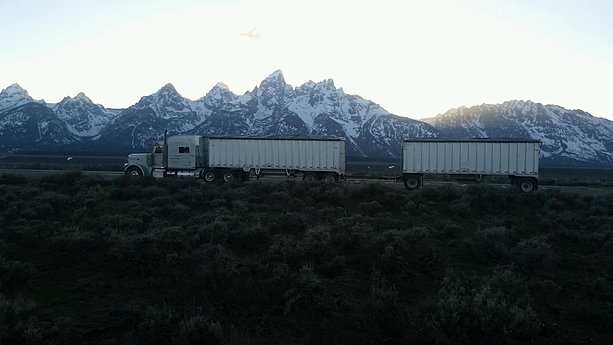
To me, the lobster boats would be like seeing a long-haul vehicle in front of the majestic Tetons. Get that vehicle out of the shot!

Image result for tetons long haul truck

Or visiting a lighthouse is like going to tour a motor home instead of looking at the Rocky Mountains behind it. Why are we looking at this?

Image result for mobile home rocky mountains

We value what our culture trains us to value, which is why I love the mountains and Yellowstone and the rugged, wild west. A relative from the east coast, however, once went through Yellowstone and came back with this shocking evaluation: “Three days of just bison, hot water, and no TV? I’ve had enough of that dullness to last me a lifetime.”

Oh! Blasphemy!

Then again, this was the person who took me through the lighthouse and thought it was the greatest thing for a hundred miles around.

And I thought it was . . . dull.

You can see that I have a problem—the coast isn’t my culture and I don’t yet know how to appreciate it. I’ve tried researching this, but the assumption is that everyone already knows why lighthouses and lobster boats are appealing.

I want to learn. My parents learned how to embrace their new culture of the wild west after they immigrated from Germany. They learned to love barbecues, pioneers, deserts, and even said “Howdy” on occasion, and meant it!

So I’m issuing a plea: Explain to me the charm, lore, and love of lighthouses and lobster boats. Why are they appealing? Why should I get excited when my dear husband says we’re going to visit them?

Teach me to love the culture of my new home.

If I’m doing the wrong thing, TELL ME!

English was my mother’s second language, and she had a good command of it except for one word: she pronounced “crazy” as if it began with a g—“grazy.”

As a teenager, that drove me grazy-crazy, and finally one day I told her that.

“What?!” she exclaimed. “I’ve been saying it wrong all these years, and NO ONE TOLD ME?”

“I didn’t want to hurt your feelings,” I said meekly.

“But I sounded like a fool in the meantime and looked like an idiot. You should have told me sooner!”

I’ve thought of her anger and humiliation (she was studying Shakespeare at the time, just for fun, and usually beat me in Scrabble) and realized that I didn’t do her any favors by not correcting her errors.

I’ve seen a spate of postings and blogs lately about “loving” people and not correcting them when they stumble, because that’s “judging.”

Love=good.

Judging=bad.

But what about correction?

When a child writes the letters in their name backwards, or a teen driver crosses the double yellow line, or they punch in 10 minutes instead of 1 minute on the microwave, we CORRECT them: show them the mistake and help them fix it. That’s not judging or condemnation or shaming. That’s HELPING them get things right.

If ever I’m on the wrong track with something—an idea, a philosophy, a belief—please, TELL ME!

Don’t let me wander off some literal or proverbial cliff because you’re worried about “offending me.” Maybe you’re wrong, maybe I’m wrong, but let’s get it figured out.

People are quick to pull out the “God loves me anyway” argument, in all its various forms, but conveniently forget this in Proverbs 3:

11 My son, despise not the chastening of the Lord; neither be weary of his correction:

12 For whom the Lord loveth he correcteth; even as a father the son in whom he delighteth.

Love=correction.

Here’s love in action:

Young Pere said to his grandmother, “How about, you love me enough to let me go?”

Mahrree stared at him before saying, slowly, “If I love you enough, I will allow you to do something that I believe is potentially damaging to your soul?”

“Yes.”

“Young Pere, you were more logical when you were eight! What kind of nonsense is that? If you love me enough. I love you enough! I love you so much that I’ll refuse to let you do such a thing without a better reason, even if you throw a fit and declare you’ll never speak to me again! That’s how much I love you, you ridiculous boy.” (Book 6, Flight of the Wounded Falcon)

Friends and family, love me enough to tell me when you think I’m making a mistake. Correct me, even if you think it may offend me.
How else will I know what the right thing is to do?

Because I want to avoid this:

Mahrree was worried about whose side she was really on. The only way someone could be “surprised” would be because they were sure they were on the Creator’s side, but weren’t.

What if they were already on the wrong side and didn’t recognize it?  (Book 2, Soldier at the Door)

By this same token, be warned that I will tell you if I think you’re doing the wrong thing.
You may become offended, that’s fine with me.
You may unfriend me. Again, that’s ok.
But I love you enough to tell you the hard truth, as I see it, to correct you if I worry you’re heading down the wrong lane.

I may be wrong (it’s happened quite frequently), but know that I will speak up because I don’t want you making bad choices, and I expect you to do the same for me.

I don’t want any of us to go grazy.

Book 6 Cover: Flight of the Wounded Falcon, coming in May!

A few tweaks and edits still need to occur, and the back cover needs some adjusting, but I simply couldn’t wait any longer to show you the cover!

Book 6 front cover

Finding a model stand-in for an older Perrin Shin was, I was sure, going to be difficult. I needed a tall man with whitening hair and a presence.  I mentioned my quest to my oldest daughter, and Madison immediately begin sending me links to professors she’s worked with during her undergrad and graduate school years at Brigham Young University in Provo, Utah. I felt quite awkward “analyzing” these professors for Perrin-like qualities, as if on some kind of bizarre dating ritual. (I apologized in my head to their wives, and to my own husband, as I carefully scrutinized each candidate who had no idea he was part of this evaluation.)

Among the profiles was Dr. David Crandall. In fact, he was the first recommendation that my daughter blurted out. Madison has been his head TA for some years now, and when I saw his picture, I gasped.

Perrin Shin is an Oxford-trained anthropologist?!

I asked Madison what he’d think about standing in as a model, and she said, “He lives among the Himba in Africa every summer. You’re not going to find a more chill man anywhere. I’m sure he’ll do it!”

So I wrote an email, then rewrote it and rewrote it, a lengthy message trying to explain to him the book series, the character, what I hoped he’d be willing to do (dress up, walk around in trees, wrangle little boys), and I sent it off, holding my breath.

My daughter asked to see my email after the fact, and then she sighed. “Mom, he’ll read only the top line and skim the rest. He’s a busy man!”

But I’d already sent it, had oversold it, and my doom was sealed.

Until he responded a couple days later with, “Sure, why not? When?”

Uh . . . ok! I made costumes, I checked calendars for travel (I don’t exactly live near BYU), and found an afternoon he was available.

On the day of the photo shoot I became anxious and nervous, and during the two-hour drive I kept thinking, I’m asking a grown man–a stranger–to dress up so I can take pictures of him. Who does this sort of thing?! I don’t always do well with real live people. But I couldn’t back out now, as my teenage son frequently reminded me in the car when I’d start to hyperventilate again.

My entourage and I met him at the duck pond on BYU campus, where mature trees grow up a hillside. Dr. Crandall smiled amiably—yep, very Perrin-like—and strolled over to greet Madison, his right-hand woman in managing his dozen freshmen courses and teaching assistants. Intimidated by his height and presence, and that I was about to order him to do my bidding, I handed him the shirt I wanted him to wear. He put it on, looked around cheerfully, and said, “Now, what exactly are we doing again?”

I nearly snorted. Madison was right—he hadn’t read my explanations (there had been follow-up emails where I wrote him short stories, and he responded with a short sentence). I was struck by the notion that he didn’t have time to read my emails, but because he appreciated my daughter’s work, he willingly gave up half an hour to help Madison’s mother with whatever she was up to.

Feeling flustered as I always am when I try to tell people what I do (I’m horrible at marketing myself), I gave him the exceptionally condensed version of the Forest at the Edge series, and explained the set-up for the shots we’d be taking.

He nodded benignly and said, “All right, tell me where to walk.” He was so laid-back, so easy-going, I could have led him into Hades and I think he would have merely looked around and said, “Interesting architecture.”

Instead, I did the next worst thing: I released upon him a five-year-old and a two-year-old. Then I said, “Just try to walk with them, while I go far, far away up this hillside and take pictures. Boys, stay with Dr. Crandall,” knowing full well that wasn’t going to happen.

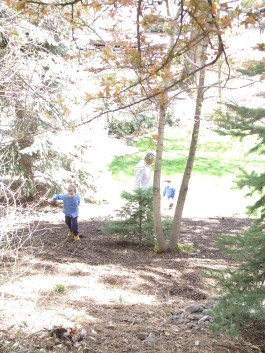
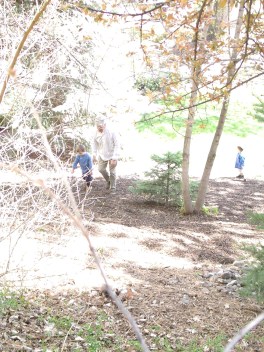
For the next half hour Dr. Crandall gamely tried to keep up with, drag along, or find the two preschoolers as they wandered off, got distracted, or got excited. [When you read the book, you’ll see how fitting the whole scenario was.]

GEDSC DIGITAL CAMERA

“Dr. Crandall, we’re losing one . . .”

GEDSC DIGITAL CAMERA

“Now we’ve lost the other one . . .”

In the meantime, my son-in-law Austin Pearce and I took photo after photo, hoping that something might work since we’re not experienced action-shot photographers.

Eventually, we decided we had enough shots. Dr. Crandall took off the shirt I gave him and said, teasingly, “And a star is born! Good luck with your book.”

“I’ll let you know how it goes,” I said bashfully. “It’s part of a series. Umm, I’ve got a couple of readers. Actually, the series has been downloaded about thirty thousand times, so yeah—you just might become famous!”

See how I’m such a goober with real, live people? This is why I write, so I can hide behind a computer and not face anyone and babble goofily at them. In his field, Dr. Crandall is already famous. (His own book, The Place of Stunted Ironwood Trees is cited in this recent article.)

Once I looked at the pictures on my laptop, none were what I was hoping for. Initially I had hoped to capture profiles or sharp, distant images of Dr. Crandall, nothing too close or detailed, because I want readers to picture the characters as they wish, without cover art over-influencing or taking too much away. But none of those shots had worked.

Slightly discouraged, I remembered that none of my book covers have been what I originally wanted, but have turned out in surprising ways. I began to fiddle with half a dozen photos, when this emerged.

Book 6 front cover

And suddenly, it was perfect. Dr. Crandall gripping the two-year-old’s hand while earnestly watching the steep terrain he was leading him up (does he have perfect hair or what?), the curious/cautious expression on the littlest boy’s face, the other boy working to maintain balance—suddenly it was representative of many aspects of Flight of the Wounded Falcon, metaphorical bits I hadn’t anticipated but were manifesting subtly, and I knew I had my cover. The trees, the background, the angles, the motion—I never would have been able to stage that purposely.

I contacted Dr. Crandall’s secretary recently so that I could send him a thank you gift, and found out that he’s already in Africa again, hanging out with the Himba and a bunch of students for the summer. How chill is that? (Did I use that word “chill” properly? Shows how un-chill I am. Is “un-chill” a word?)

So chill, my friends–Book 6 will be coming soon in May (after a few more tweaks, a few more edits, and a proof or two). I can hardly wait to share it with you.


The Internet Civility Award (TICA): Who will you award it to?

The other day something astonishing happened on my Facebook page.
Friend #1 posted his feelings about government spending, and Friend #2 chimed in with an opposing viewpoint.
Friend #1 presented more evidence.
Friend #2 countered and began to escalate.
This is the astonishing part: Friend #1 explained his beliefs, then APOLOGIZED if he stepped on Friend #2’s toes.
Even weirder, Friend #2 responded by saying no apology was necessary and that SHE was sorry for getting emotional.

AND THAT WAS IT. CIVILITY! Kindness! Respect!
They remained friends, and everyone went merrily on.

I, however, messaged both of them and told them I believed they each earned The Internet Civility Award (TICA). Since there wasn’t one yet, I couldn’t give it. But here it is now. (Yes, I just made this up.)

TICA The Internet Civility Award

Copy and paste this on anyone’s social media page to recognize them for kindness and respect.

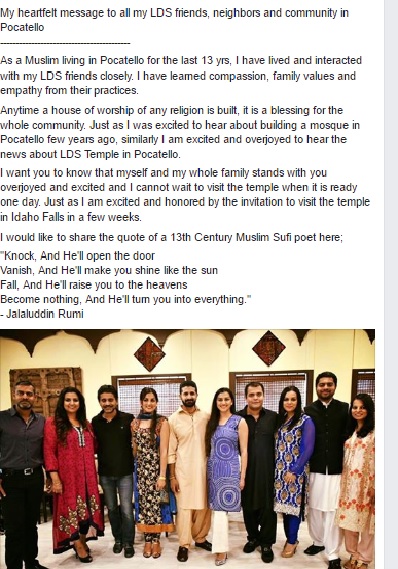
I’ve written about civility before, but lately I’ve been watching for it, and it’s out there. For example, the LDS Church (Mormons) recently announced plans to build a temple in Pocatello, ID, and a Muslim family who lives there posted publicly on Facebook that they were happy for their LDS friends.

Muslims and Mormons

CIVILITY! Kindness! Respect!

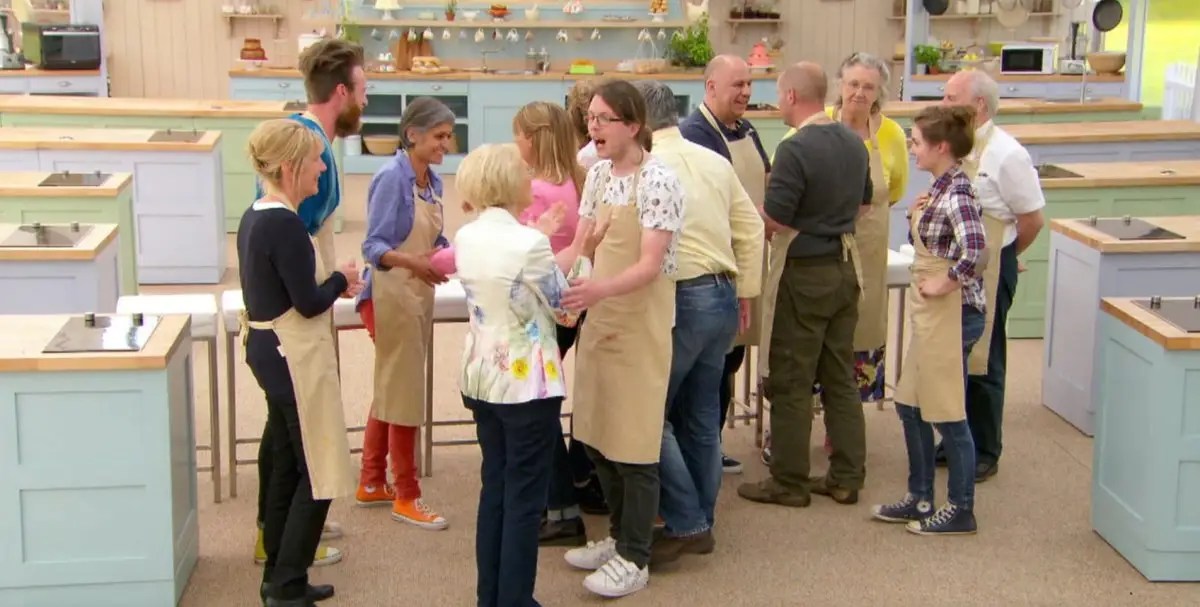
In looking for examples of civility to share with my children, we recently became addicted to “The Great British Baking Show,” not because we’re any good at baking, but because we love watching the contestants. It’s a competition, with each week a Star Baker identified, and someone sent home.

The amazing thing is watching these contestants HELP each other, GIVE each other advice, and when one of them wins, they CHEER their fellow competitor. And when someone gets sent home, they WEEP genuine tears for their loss.

Image result for the great british baking show hugging  Image result for the great british baking show hugging

CIVILITY! Kindness! Respect!

I realized the need to point out good behavior to my children during last year’s presidential election. My kids read over my shoulder when I’m on Facebook, looking for movie trailers and videos of screaming goats. My 9-year-old was stunned to see the posts of supposedly “mature” adults she knew, calling candidates names and behaving very uncivilly.

My 4th grader said, “That person’s a GROWN-UP! Why isn’t he acting like one?”

That great question led to a discussion about kindness and respect for all people, if we like them or not. Everyone deserves kindness. Everyone.

She agreed with me that we should unfollow this person, along with a few others, who didn’t demonstrate “grown-up” behavior online.

But I want to reward those who act like mature and civil adults (even if they’re still kids), so I will be awarding TICA  TICA The Internet Civility Awardto those who demonstrate excellent behavior in the face of rudeness, intolerance, and anger, and I’d love for you to join me.
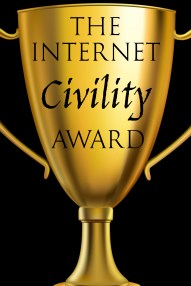
When you see someone approach a conflict with grace and dignity, with kindness and respect, paste this image to them and let the world know that here’s a person who still knows how to behave.

TICA The Internet Civility Award

Maybe if we point out civil behavior more often, more of it might occur.

“That’s the way to respond! With respect like that, you’re already two weeks ahead of everyone else.”

~Book 6, The Flight of the Wounded Falcon, coming May 2017

Book 6 Teaser: Toss that past! (Or, how I finally let go of bad 30-year-old paintings and other junk that holds me back)

There’s one huge advantage to moving cross-country: knowing that everything you own has to fit in one truck, or it gets left behind. The “There’s no going back for that,” mentality has forced me to evaluate what can be released. Web and Facebook pages of minimalist strategies has helped me to see the clutter I no longer want to.

It’s also allowed me to give up things from my past that I should have shed decades ago.

Such as my oil paintings from high school. My father kindly framed them, my mother generously displayed them, but aside from some decent technique here and there, the paintings were unremarkable. So much so that for thirty years—30!—I’ve kept them in a bulky box and carted them from home to home, across the country twice, and finally, last month donated them to a recycling store. Someone else can paint over the canvas.

IMG_2351

While this won first place in a school district competition, it’s an EXACT replica of a very common 1980s poster. What’s the point of replicating a $3 poster?!

I held on to the mediocre art, not even fit for a motel room, because it represented something: my teenage dream to someday be a wildlife artist. I’m “artistic” in that I’ve remodeled homes, made many designs for my Etsy shop, created my book covers, but I never painted that one great work of art.

IMG_2350

The best thing about this cougar was the head, which my art teacher did to get me started. Notice my “happy little trees“? Yes, I was a Bob Ross watcher.

Finally I accepted that I don’t have to fulfill a dream I randomly pulled out of the air when I was 16. I may someday pick up fine art painting again, and if I do, would I really want these old paintings haunting me with bad proportions, inconsistencies, and random highlights and shadows? No!

So I did what I’d wanted to do two decades ago, but didn’t dare: I sent them on their way, grateful for what I learned, and ready to look forward, not backward.

I’ve done this with many objects: clothes I’ve held on to for too many years, books I’ll never read again, dishes and collectibles and Christmas décor and fabric I’ve kept out of obligation. All of it is gloriously gone, at least half a moving truck full.

I keep putting aside those things that hold me back, that remind me of what I used to be, and the old dreams that I no longer care about. Unfinished stitching projects, untouched wood crafts that went out of fashion in the 1990s, old stencils I used for a bathroom two houses and fifteen years ago.

When I let those go, I get to look forward. I get to plan for what I want to become now, where I hope to go in the future.

Gone, too, is a lot of regret, a lot of “Oh, I should have kept pursuing this, although I had no time or resources or desire.” I’m able to think, “It seemed like a worthy pursuit at the time, and it’s had its moment which is now over. I get to pursue something new.”

Solidly in middle age, I’m finding the satisfaction of releasing my younger self. I no longer collect teddy bears or snowmen . . . or anything, really. Once I thought collections were necessary. Now each week I make sure my extra garbage can is brim full of stuff that previously held me back. To the donation store goes tablecloths I never used, to the neighbors go canning jars and vases I won’t fill, and to the dump goes the sofas I can no longer repair.

No more hauling around old expectations and obligations, or feeling guilty about dreams that were never feasible or necessary anyway.

Onward, I get to go freely.

While Peto knew the satisfaction of harping about the past, he also knew that satisfaction was short-lived, soon to be replaced with renewed feelings of anger about a life that couldn’t be changed, words that couldn’t be unsaid, and events that couldn’t be erased. The past was to be occasionally remembered, but not lived in.

There’s too much to do today to dwell on yesterday.

~Book 6, Flight of the Wounded Falcon, coming May 2017

book 6 teaser THE PAST


Don’t kill The Beast! I love “Beauty and the Beast” (even though as a conservative Christian I’ve been told to shun it)

I wasn’t going to see the new “Beauty and the Beast,” although I’d been looking forward to it ever since it was announced two years ago, because of that “gay factor.”

But then I decided to go anyway, because I remembered something: People are not always worth listening to.

So here’s this very conservative Christian’s take on it: I LOVED IT!

Oh, it was bigger than life! Visually gorgeous, with additions to the story that made it so much richer than the 1991 cartoon. The music and the characters all had greater depth, the story deeper meaning, and “those scenes”? Can we say, much ado about nothing?

I’d been betrayed.
Deceived.
Thrown into angst over really nothing.
In fact, I found myself quite liking the “gay” character LeFou. He was never as evil or nasty as some reviewers had suggested, and became the voice of reason toward the end, making some excellent choices. His orientation (which he’s not entirely sure about himself) had no bearing upon his improving character. (And yes, I caught all the verbal references, and I thought they were pertinent and hilarious.)

Indeed, I found myself rather ticked off that I’d ever considered boycotting the movie because of the raging on both sides of the issue. The “This is our first gay character and we’re proud!” was merely PR blustering, because once I saw the movie I was left thinking, “Sheesh. THAT’S gay? Gimme a break.” Then there was the “Oh, horrible Disney! It’s all over and the world will end with this movie!” blustering on the other side which now makes me roll my eyes. (And as for the old argument that the movie promotes bestiality? Those worriers don’t know what bestiality is. Belle clearly is attracted to the beast’s humanity, such as his knowledge of literature.)

All of which had me pondering as I drove home from the movie, “Does something have to be perfect—‘perfect’ according to my very particular standards and sensibilities—in order to be ‘good enough’ for me to enjoy?”

No. Nothing needs to be ‘perfect’ because why in the world should I expect the world to meet my peculiar sense of perfect? Or anyone else’s idea of “perfect”?

Another movie example: I finally saw “Moana,” and I’d heard criticisms of Dwayne ‘The Rock’ Johnson’s singing in “You’re Welcome.” Cringing in worry when he started, I soon relaxed, because you know what? He sang great! Better than me, that’s for sure. (And that’s not hard, either. Is there anything dear Dwayne can’t do?*) (Listen for yourself, and I defy you to not have this earworm stuck in your head for the rest of forever.)

Too many critics, too many snarky folks insisting that this wasn’t perfect in the movie, or that could have been better, kept me from watching “Moana” until this past weekend. And you know what? I LOVED IT! I’m getting the music to add to my walking repertoire.

I find myself scratching my head more and more frequently at the immense criticism flying around about every last little thing, and finding that very little of it is actually deserved. I need to stop listening to people, at least the critical ones. And at times it seems nearly everyone is a critic, for the worst of reasons.

It’s as if we’re finding power and authority in dragging someone else down.
As if we think we’re something special because we can nitpick someone else.
As if we can’t accept something unless it’s our perception of perfect.

Here’s the thing: NO ONE and NOTHING is perfect! (Not even “Rogue One,” which some of my Star Wars crazed children believe IS PERFECT, even though I LOVED IT!)

Ask yourself this: why should my definition of perfect be met by others? Why should I expect writers and actors and politicians and music and entertainment and stores and products and every last little thing in the world pander to what I believe is perfect?

How utterly self-centered and childish.

Here’s the other thing, the more important thing: God doesn’t demand that we’re perfect, either. He loves and appreciates us as we are.

Now, He tells us to strive for perfection, which, according to the scriptures, actually means becoming one with God the Father. Jesus himself didn’t declare himself perfect until after he was resurrected and was one with the Father, which tells me that perfection is impossible in life.

However, perfection is the goal, because it has to be. Nothing less, really, will do. As the great football coach Vince Lombardi said, “We strive for perfection, knowing we’ll never get it, but achieve excellence as we do so.”

Ah, EXCELLENCE! THAT’S the mark! Perfection is impossible; for you, for me, for anything we experience.

But excellence? That’s everywhere! I can create lists of truly excellent movies, music, people, books, art, national parks—and I’d probably never find an end to them.

“Beauty and the Beast” was excellent. So was “Moana,” and “Rogue One.” So are thousands and millions of other things.

Enjoy that excellence! See how someone else did something well, and let it inspire you to try to make something excellent in return. There’s no reason—no decent, good, honest reason whatsoever—to demean and denounce and degrade something minor in something that is excellent.

Because isn’t it wonderful that something can be marvelous, but the minor smudges left by the very human people who created it remain, and still it’s excellent?

So instead of harping upon these flaws, these perceived slights to our overly sensitive sensibilities, forgive them. Accept them. Take heart in them, that excellence abounds despite small failures.

Excellence abounds even in us, despite all of our failures. Maybe we need to be more accepting of ourselves to be more appreciative of the wondrous success of others around us. We’re not competing with them; we’re being inspired by them!

That’s why I’m not listening to the critical voices anymore, because think of the most critical people you know, those who are never satisfied, those who can always find even the smallest imperfection and shine a magnifying spotlight on it. Aren’t those also the most miserable people you know? Aren’t the most self-righteous also the least righteous?Image result for monuments to critics quotes

No one likes the critic. There’s nothing noble in criticism. Never has been. I’m beginning to suspect the most critical people are also those who never attempt to do anything themselves, so that they never are subjected to critics like themselves. Perhaps it’s jealousy that drives them to pick at others, or immense insecurity. Or fear of their own failure.

Criticism doesn’t bring joy. It doesn’t bring improvement. It doesn’t fix anything, either.

But appreciating someone’s efforts does. Identifying and acknowledging their successes. Learning from what they’ve learned. Rejoicing in their excellence, and taking from it that nudge to make something more excellent yourself—there, THERE is joy!

This world and people who make stuff in it are fantastic. Once we quit criticizing every potentially offensive item, we’ll discover what an amazing place we live in.

(And if you can’t, I’ll simply quit listening to you.)

Mahrree’s heart sank to her knees as she watched the three darling girls who she loved so much do their best, their eyes darting over to her as they read their lines, anxious for her approval, and likely fearing her criticism.

They had done their best. Who was Mahrree to point out anything else?

~Book 6, Flight of the Wounded Falcon, coming May 2017

book 6 teaser Critics

(*Totally unrelated to anything here, but an epiphany I had the other day–for those who have read my books, Perrin Shin is about 20% Dwayne Johnson. The other parts of him are Yun-Fat Chow, Colin Firth, Manu Bennett, and my husband, the cute man there in the corner.)Dave smiling

You don’t have to agree with me for us to be friends

I was 19 and terrified to realize that my supervisor for the summer was an openly gay man. It was the late 1980s, and I was from a sheltered community where “such people” were rare. Realizing that me, Molly Mormon, would have to interact with Flamboyant Paul made me think I’d made a mistake in taking that mall job on the east coast.

My suspicions were confirmed when I met my coworkers who immediately jumped in with predictable knocks on my religion when they heard I was from Utah. The fact that I didn’t join in on their drinking party as we unloaded the new freight didn’t help much. I was an easy target. My work environment was initially very uncomfortable, but since it was for only three months, I decided to grit my teeth and bear it.

I frequently noticed Paul watching me, and only much later did I realize that he must have understood what it felt like to be the object of scorn. One afternoon, when the store was quiet and I was dutifully putting away stock while Paul sat at the register with paperwork, he suddenly blurted, “Dogs!”

I looked up, surprised.

“Do you like dogs?” Paul asked.

Confused by the random question, I said, “I grew up with a small, white mutt named Fluffy.”

“Tell me about it.”

“We had him since I was a toddler. When I moved away to college, he’d grown very old and smelly and was going blind. He wandered off shortly after I left. My mom was devastated and my parents searched everywhere, but no one ever saw him again. As if when I left, he knew he should die.”

When I saw how aghast Paul was, I wondered why I’d chosen to relate such a depressing story.

But then Paul burst out with, “That is the SADDEST dog story I’ve ever heard! But I LOVE IT! I love sad dog stories! Ok, I’ve got one—listen to this!” And he went on to relate an even sadder dog story. I have no idea what it was anymore, but I found myself smiling and sniffling at the same time.

I realized Paul had been looking for something to talk about with the quiet, awkward Mormon girl who worked in his store, and finally we connected on dogs.

He told me all about the Great Dane puppy he and his boyfriend were raising, and we spent the whole afternoon talking dogs.

The next day I hesitantly mentioned, “Right now, I have a fish tank.”

Paul clapped his hands and said, “And WE want to get a fish tank! Tell me all about yours!”

For the rest of the summer we chatted every day, and when I left, I hugged Paul with genuine tears in my eyes while Paul sobbed, because we had become friends.

Paul demonstrated that I can still be friends with someone even if I don’t agree with their beliefs or behavior. Our relationship was based on what we had in common, and after three months, that was quite a lot.

About ten years later I was teaching a college writing class where the main project was a 15-page persuasive research paper. I had a very cocky and confident student who I’ll call Doug. I brought articles to class to analyze different points of view, and Doug made it point to quiz me on what leanings I had toward the issues, then launched in to argue against me. While I found him rather boorish, he certainly did liven up the class.

Soon he was meeting with me after class to dig deeper into a certain issue which I suspected was for his paper. He even took notes about my position. Sure enough, when he turned in the project, the little stinker had taken a position the polar opposite of mine. In fact, he argued against me, point-by-point.

When I handed back the papers a few weeks later, cocky Doug appeared worried, for once. He hastily thumbed to the last page, looked at his grade, and gasped.

His peers, who had been reading through his drafts—and warning him, too, about not directly writing against me—leaned over to see his grade. They, too, gasped, and one of them said, because Doug was speechless, “You gave him a 98%? But he argued against you!” (He had a few grammar issues, after all, to warrant losing a few points.)

“I know,” I said, “and marvelously, too. He almost persuaded me to his line of thinking.”

When Doug finally looked up at me, he was grinning. “I thought you’d hate it!”

“I did,” I told him, grinning back. “Because you made such darned good arguments.”

When the semester ended a couple days later, he gave me a quick hug as thanks, and we parted as friends with mutual respect. We didn’t have to agree with each other to appreciate each other.

Over the years I’ve discovered different kinds of people who I appreciate. For example, I’d never become Amish, but I wholly admire the life they live and how they remain mostly untouched by the outside world. I don’t want to convert to Judaism, but I deeply respect their culture, tenacity, and temerity. While I’ll never be a Muslim, I’ve gained greater understanding for them, primarily through chatting with a sweet Muslim family at a university dinner, and discovering how much we had in common.

I have many friends who, while not of my faith, still show support for what we do. On occasion I post pictures and stories about my children who are serving as LDS missionaries, and among those who comment kindly and like the posts are Lutherans, Baptists, and even a “recuperating atheist.” None of them are likely to join my church, but they’re happy to see the experiences of my children, as I am to see the successes of theirs.

We call this kind of appreciation and behavior “civility.” 

And despite what the news and social media would have us believe, it’s still a widely-held virtue, at least among many people I am blessed to associate with.

I have acquaintances who put up with my quirks and ideas without agreeing with them. One friend, who knows I’m trying to go vegetarian, delights in telling me how much meat she consumed that week. It’s friendly teasing, and I barb her back because we know we are safe with each other; we respect each other’s differences.

If I insisted that the only friends I’d have would be those who believed as I do in every last thing, I’d have no friends. I wouldn’t even be married, because there are number of issues on which my husband and I will never agree. Still, we manage around those, as we have for twenty-eight years, roll our eyes at each on occasion, then simply move on to one of many other things wherein we do agree.

No one in my family has precisely the same views on politics, music, literature, food, or education as I do. Yet still I love and appreciate all of them.

Indeed, if we all believed the same about everything, we’d be instantly bored with each other.

We need each other’s differences to challenge us, open us, expand us, and make us take second and third looks at what we thought we knew. We really don’t want homogeneity; we really need variety!

I’ve noticed that people tend to get fixated on rightness and wrongness. It’s been my experience that for a few key issues, usually dealing with life and death and personal agency, there are clear rights and wrongs.

But for the millions of other things we can bicker about, it really doesn’t matter. (I’ve heard people argue vehemently if cookies should be crunchy or chewy, of all stupid things.)*

Many dissimilar approaches can all be “right.” For example, what the “right” dress or music or meal may be for my adult daughters will not be the “right” one for me.

And I think there are times when all of us may be “wrong,” so what does “rightness” matter except to make more enemies in an argument where no winners can exist?

Civility doesn’t worry about who’s right. Civility chooses to exist despite its surroundings.

civility

My gay friend Paul never approached the topic of religion, nor did I approach the nature of his sexuality, except to ask where he found such a gorgeous man who could have been cast as Superman. We avoided the topics we knew might cause a rift, because we wanted to be friends.

Friendships can form even between people who spent an entire semester debating opposites sides, because of mutual respect for the other’s opinions. It’s been nearly 20 years, but I still think fondly of Doug.

I refuse to believe these incidents, or that civility itself, are from a past era, because I still see civility occurring among thoughtful, intelligent people all around me. Civility does not ...mean the mere outward gentleness of speech cultivated for the occasion, but an inborn gentleness and desire to do the opponent good. - Mahatma Gandhi

I see acts of kindness despite idiosyncrasies, and patience with others’ peculiarities. I frequently witness joy in differences. And if you want to be my friend even though I’ve got some strange ideas, I’d love to be friends with you, as long as you promise to keep me on my toes.

Let’s make civility fashionable again.

*Chewy.

“When people govern themselves honestly, there’s little need for mediation. ”
~Book 5, Safety Assured Leaving East of Medicetti