I predict that this Christmas will be different for you in some way. Either it’ll mark a “last time” of some sort, or a “first time” of another. Perhaps this year someone significant is missing—either gone for a time or have passed away—or maybe someone new has joined your circle of family and friends. New baby, new marriage, departed grandparents or children . . .
But one thing’s for sure: this Christmas won’t be like ones in the past.
How do I know this? Because over the years I’ve discovered that it’s rare to have a “typical” or “traditional” Christmas. While each holiday tends to be happy, there are moments of sadness: sudden, unexpected, poignant sadness when you realize nothing will ever be quite the same.
And here’s how I recommend you deal with happy-sad Christmas moments: let them happen. Let the tears trickle as you remember how things can never happen again. Mourn the difference, remember how you wished it could be again, think about what a “proper” Christmas is supposed to look like (we all have those unrealistic images in our heads, don’t we?).
AND THENmove on and embrace what’s new and good, and realize that maybe these should be considered sad-happy moments.
I was filled with these mournful/joyful thoughts as two of my sons attempted to put lights on the house the other evening. My oldest son, who’s 22, eagerly rooted through the Christmas bins and discovered several light strands I wasn’t going to use.
“Then I’m taking these outside!” he declared. I’d forgotten that he loved to put lights on the house, because the last time he did was five long years ago, before the army, before his LDS mission and his stint working the oil fields of North Dakota.
But this year—THIS year—he was home to make my house glow.
And I was overwhelmed with happy sadness by that, because I know that next year—NEXT year—he won’t be putting lights on my house. He’ll be married in a few months, and then we’ll be moving 2700 miles away from him.
But today, I held on to the happy part. He dragged his reluctant 16-year-old brother to help him as the sun set and the cold grew to get lights on top of the snowy house. “Come on. Outside with you,” he ordered his brother away from his computer game.
Age 16, grumbling as he put on his snow pants, said, “Why am I doing this?”
“Because,” age 22 told him, “it’ll teach you to be a man!” (Since he’s been in the army, age 22 has decided that everything unpleasant teaches you to be a man.)
“But this isn’t necessary,” age 16 countered.
“Yes, it is,” insisted age 22. “We have to prove our house is better than the neighbors! Up the ladder, now.”
I grabbed my camera, knowing that this would likely never happen again, my two sons squabbling as they put up lights for the first time together, for the last time together.
(Another reason he didn’t enjoy being up there was because I was taking pictures.)
Nearly every Christmas has been something different. I realized some time ago that we don’t know how to have a “proper” Christmas. A cursory count has revealed that we have:
Celebrated Christmas in 12 different houses over the past 28 years;
Once had Christmas at the beach (that felt so wrong);
Twice celebrated Christmas a full week AFTER the 25th, because some family was working in other states (yes, the presents just stayed under the tree until the 31st, and I got all the Christmas candy on sale);
Once celebrated Christmas a full week BEFORE the 25th, because we’d be out of town during the holiday (yes, we opened everything very early);
Three times have had newborns at Christmas (ok, one came four days later; and yes, fully 1/3 of our nine children have been born in December. I have no sense of planning whatsoever.)
Three times had our lives in boxes during Christmas, and had to search a storage unit for a bin of decorations to make the temporary home feel like ours again;
Three times had in-laws staying with us;
And this year, we will have a teenage Chinese national staying with us to experience a crowded, noisy Christian Christmas (not intending to traumatize the boy, but it’ll likely happen anyway).
“Traditional” and “proper” don’t really show up to our Christmases. One of the years when we had postponed Christmas, I was hospitalized with hemorrhaging on the 28th of December. The nurse treating me said it was a good thing the emergency happened after Christmas, and I told her that we still hadn’t celebrated yet; we would open all our presents in two days. Then she gave me morphine for the pain, and I died right after that because no one knew I had a deadly reaction to morphine, and the ER staff kindly revived me again, and I spent our postponed Christmas laying on the couch at home eating steak to try to rebuild my depleted iron stores.
Not all Christmas activities are worth making into annual traditions.
We start new traditions and forget old ones, bring in new family, and say farewell to others. Bid goodbye to beloved houses, set up the tree in new places. And that’s all ok.
I took these photos eight years ago at an extended family Christmas gathering, and knew then that it’d be the last one. My sister, mother, and father in these photos have all since passed away.
Even as I reviewed the photos that night, I began to weep, knowing that was one of the last times our family would all be together, and that Christmas would look different in the future.
Occasionally I envy some friends and neighbors whose Christmases are the same every year. They always visit grandparents, or have a cousins gathering, or spend the day with extended family doing the same things. Solid, reliable traditions . . .
But not us. One year, we skyped with my husband who was in three states away as we opened half our presents. It was like having Christmas with an Artificial Intelligence unit in the house.
This year we’ll hurry through opening presents in the morning, then drive two hours down to our daughter’s church to attend the service with them, and have a chili dinner at their apartment afterward. We’ll never do all of that again, either, because we’re all parting ways next year, I have no idea when I’ll celebrate Christmas with my two grandchildren again. We haven’t been grandparents long enough to establish any traditions that our moves can destroy. Happy-sad.
The other night as my sons called me to come outside for inspection, I looked up and smiled at this new tradition that would happen only once: brothers lighting the roof together. They plugged in the lights, and there was a minor Clark Griswold moment when age 22’s section over the porch didn’t come on. But age 16 smugly announced, “Yet all of my lights are working, thank you very much.”
As he descended the ladder, loudly muttering that none of this was necessary, and age 22 went back to inspecting his dark half strand, I thought to myself, “Yes, all of this was necessary . . . for me.” Only moms know how vital it is to see our kids working together, creating a brief yet deeply felt memory that maybe only mom will remember.
After only a minute of working on his disobedient strand, age 22 got the rest of his lights on, and I cheered.
Some traditions happen only once.
This year, remember that there’s no such thing as a “traditional” or “typical” Christmas. When you find your celebration taking an unexpected or sad turn, embrace it and feel through it. The entire reason we celebrate Christmas is to remember that Christ came as “a man of sorrows, and acquainted with grief.” He understands our joys and our sorrows, and he came to wipe away all our tears.
Let him. That’s really the only proper way to celebrate Christmas.
“In the meantime, enjoy the tradition.” ~Book 5, Safety Assured Leaving East of Medicetti
The most horrible sounds to wake up to are someone vomiting, something shattering, some cat hacking, or some water running. Early yesterday morning, I was awakened by the last item. I was planning to publish a piece here about my sons putting up Christmas lights, but I didn’t get to finishing it because at 4 a.m. I woke up to hear that doomsday sound of water trickling. As I put my feet on the floor, I immediately felt the squelch, and realized my carpet was soaked through. Frantically, I jumped to the bathroom to find the toilet was overflowing, and likely had been for about five hours.
As I was desperately trying to mop up the mess on the floor with all of the towels, my 16-year-old son came upstairs. “It’s happening in my room, too.”
Not sure what that cryptic, drowsy message was, but knowing it wasn’t good, I rushed downstairs to hear the nauseating sound of pouring water. Apparently the heat duct in the bathroom had served as overflow and channeled the water into the ceiling, closet, and carpeting of my son’s bedroom.
By 5 a.m. every towel we owned was wet and in the dryer, and I sent my son back to bed (or rather, the couch) because there was nothing more we could do.
By 7 a.m. I was slightly despondent as I tried again to start drying the mess, realizing that everything would have to come out of my bedroom/office in order to pull up enough carpet to dry it.
(My thirteen-year-old thinks my flooded bedroom is worth dancing about. He’s not my favorite child today.)
At 9 a.m. I borrowed a wet vac from my neighbor and started sucking up the water, knowing already that it was far more than I could handle. Still, I was determined to try to solve this problem on my own.
But by 10 a.m. I sat down, exhausted, on the floor in my son’s room only to realize my bottom was wet (like my feet, my knees, and my arms) because the water had leaked much further than I’d expected.
That’s when my eyes started leaking. I hate crying. But having had only five hours of sleep, and realizing that not only would my bedroom have to be evacuated, but so too would this bedroom and its heavy loft beds, all I could do was weep.
My husband called then to check on the situation (I had Facebook messaged him at 5 a.m. with the news because I had nothing else I could do) and I said, sniffling, “I think I’m a little overwhelmed.”
He knows I rarely cry, and I think that’s why he took to the computer. Because he’s nearly three thousand miles away, he did all that he could: he messaged one of our neighbors, who called his wife, who called another neighbor, who called our ward’s bishop (similar to a pastor or rector), who came by at noon on his lunch break and said, “I heard you have a little water problem?”
I wasn’t going to cry in front of him, but I knew it wasn’t just the water; it was all the furniture I had to move, and all the work that faced me repairing the damage. While insurance will help, we have a very high deductible. By then I was feeling more than a little overwhelmed. Bishop Stevenson took a look at my mushy bedroom, went downstairs to evaluate my sons’ room, and poked around in the rafters looking for more problems, then said, “Well, the hard part is over.”
I scoffed at him. “It’s just started!”
“No, it’s ended. Now you have help. I’ll be back at three when I get off of work, with some movers.”
“No, Bishop, I think we can handle it . . .”
Fortunately he didn’t believe my lies.
At 3 p.m. two young husbands and a teenage boy arrived with him to help my sons and me move everything to dry ground. Another neighbor brought more fans, another retrieved my youngest from preschool, and while I talked on the phone with the insurance company, everything got moved and placed, Tetris-like, in the family room, my daughter’s bedroom, and living room.
(Our family room-now-storage room. Yes, the poster in the background is of a psychiatrist saying to a unicorn, “You need to believe in yourself.”)
Another neighbor brought over two bars of very dark chocolate (like alcohol for middle-aged Mormon women), and someone else brought us pizza for dinner. And while my living room will be my bedroom’s storage for a week . . .
. . . I realize Bishop Stevenson was right: the hard part is over. I’ve got help on every side.
I freely admit it’s tough for me to accept help.I think it’s that way for a lot of us. A part of me feels guilty for the mess, thinking that if I’d just looked at the toilet before I went to bed (my four-year-old has a knack for plugging it), or hadn’t slept so deeply, that I would have noticed and even prevented the mess that a dozen people have now had to help me with.
I also wouldn’t have had to swallow my pride and let strange men see what’s under my bed as they moved it to the living room. (Go ahead—look under your bed right now, and imagine your neighbors seeing that. Horrifying, isn’t it? Oh, come on—please tell me I’m not the only one with a disaster under her bed!)
Interestingly, today, Dec. 1 is “Worldwide Day of Service,” and it marks the beginning of the “Light the World” initiative—an idea to get everyone giving service throughout the month of December. Here’s a guide of daily suggestions, too. (Tomorrow, Dec. 2, for example, is “Honor your parents” day. Call [not text] your parents, write a note to your parents or in-laws, or learn about an ancestor.)
Dec. 1st is “Jesus Lifted Others’ Burdens and So Can You.” But my kind neighbors didn’t need any initiative or any prodding. Service is what they do all the time, anyway. They merely started a day early, on Nov. 30, which will always be for me, “Relieve the Flooded Day.”
When the water extraction crew arrived in the evening (I finally admitted I needed professional carpet drying help), they were astonished at how much work had been accomplished. They praised me for getting everything moved out and putting fans where I could, but I told them, “It wasn’t me; it was my neighbors.”
“You have some awesome neighbors, then,” they said. Yep.
(I feel like our bedrooms are having surgery.)
So to all of you who may serve this month, who will be that “awesome neighbor” who will lift other’s burdens, who will notice the blinking back of tears when someone’s too prideful to whimper, “Help?” I say, “THANK YOU!” You may not hear those words from those you serve, but they’re being sent your way.
Your service is needed, every day and everywhere. Something small to you may be something huge to those in need. So go out there and light the world.
And thank you in advance.
“I don’t know of another family—there or perhaps even here—that would give up as much as you have for those you see in need . . . You and Mahrree don’t care for possessions or status, but for people. Already you understand.” ~Book 5, Safety Assured Leaving East of Medicetti
I didn’t realize until I was older that we had a weird tradition in our house. It was mandatory that when a canning jar popped, no matter what part of the house my mother was in, she’d shout, “Thank you!”
If she wasn’t home, that duty fell to me, and I didn’t always want to do it.
My mother, a refugee from Germany after WWII, learned how to can after she came to America. But she was always worried about sealing the jars properly, so she’d watch the jars, waiting for the lid to pop up indicating that it had sealed. Relieved, my mother would exclaim, “Oh, thank you!”
Over the years, it became a habit to thank each jar for sealing properly, and I grew up knowing that when the jars popped in the kitchen, “Thank you!” needed to be shouted. Otherwise, who knew what evil would transpire?
I thought the tradition was ridiculous, especially when I discovered that no one else did this.
When I was twelve, Mom pulled out a batch of pears, then went outside to pick strawberries. It was then that a cooling jar popped, and . . . I was the only one to hear it.
I knew what was expected—that I should thank it, but how stupid was that? Thanking an inanimate object?
The house became very quiet and still, as if waiting for me to thank the jar for its kindness in sealing, but I wasn’t going to do it, not going to—
“Thank you,” I finally whispered, because the cosmos seemed to demand it.
Two more jars popped cheerfully after that, and I thanked each of them. Fortunately my mom came back into the house and asked urgently, “Did any pop?”
“Yes, and I thanked them,” I said sheepishly.
She thanked each of the jars herself anyway, just to be sure.
It wasn’t until about ten years later, when I tried canning for the first time, that I eagerly and worriedly watched for my first can of tomatoes to signal its sealing. When it did, I cried out, “Oh, thank you!”
And immediately I understood. And immediately I was hooked.
You see, I began to thank all kinds of things; our old vans when they start without spluttering (I frequently pat them on the dashboard, telling them what good vehicles they are); the driver’s side window of my minivan when it decides to go up when I push the button—especially when it starts raining; my printer when it communicates with my laptop and actually prints something; when the traffic light stays green for a second longer; when there’s a 2-for-1 sale on my favorite bagged salad—all of that gets an audible, “Thank you!”
Yes, even in the grocery store.
I’ve found myself saying “Thank you!” when:
my sons’ favorite t-shirts are on sale;
that 50% off coupon is still good at the fabric store;
the berries produce;
the bread rises;
I get to the pot just before it boils over; and
when the stain comes out in the laundry.
Because everything deserves thanks, animate or inanimate.
It’s contagious. My oldest daughter confessed that when she cans, she also calls out “Thank you!” each time a jar pops; another child thanks the scooter when it starts up; and the other day I heard my four-year-old thank his Legos for going together.
There are numerous studies showing the spiritual/psychological/emotional improvements when we count our blessings, but here are the reasons why I became hooked on thanking the world:
It immediately makes me happy. Think of every time you say thank you, or someone says it to you. There is always—always—a hint of a smile (or maybe a huge one, depending upon the situation).
I have yet to witness a sincere expression of thanks without accompanying happiness.
I feel in harmony with the world when I thank it, and that makes me peaceful. So what if it’s weird to thank the automatic door for opening; I do so anyway. It might not have opened, and that may have made me grumpy as I wrestled with doors, trying to leave the store.
But something kind and helpful happened for me, as it does every day, so I show gratitude. It does nothing for the item I thank, but it does ME a world of good: I see the world as a kind and helpful place, which in many, many ways it still is.
I need to remind myself that there is peace, even during horrific times, or I’ll hide in my closet terrified of the world.
My mom told me once of fleeing the Soviets when they were taking over her hometown of Neisse (Nysa), now in Poland. She was a teenager, fleeing all alone to the west, and had only a sausage in her backpack for food. She found a mother and her child willing to shelter her for the night, and she shared her sausage with them. She thanked the woman for safety from the Soviets, and the woman thanked her for giving them something to eat when she had literally nothing left.
And for that evening, for them, the world was at peace. I don’t know about you, but I desperately want that kind of peace in a world growing more hostile. My mom always remembered that night fondly, when she realized that kindness still existed, and so did God.
(My mom, a few years later, in happier times in Munich.)
So really, it’s not so much thanking the world as an inanimate object, either; it’s thanking, in many different ways, the Creator of it all.
“Thank you,” Perrin said again to the forest, wondering if anyone was there to hear it.
Back behind a clump of pines, a man in white and gray mottled clothing nodded. “You’re welcome, sir. My pleasure and honor.” ~Book One: The Forest at the Edge of the World
My friend “Sally” has a brother who openly belittles her for being “blindly obedient” to her religion. Privately, Sally struggles to think more charitably of “John” who she thinks is a jerk.
One summer their parents invited Sally’s family and John’s family to share their condo at the beach. They agreed until they found out—too late—that each other’s family would be there. So Sally, her husband, and three kids decided to try to be cordial to Jon, his wife and two kids.
But things started off rocky, because while John and his family arrived at the condo on Saturday, Sally and her husband has responsibilities at their church and didn’t want to miss it. Normally they avoided travel on Sundays, but to keep the family peace, they left after church and arrived at the condo that evening.
It wasn’t good enough. John greeted them with, “You and that stupid church of yours. I swear, you’re so blindly obedient to it that you fear to miss even one day? Check-in to the condo was yesterday, you know. You were supposed to be here then.”
Sally was determined to be kind, even though it was silently eating her gut. She had called the condo earlier and they told her check-in started on Saturday, but they could check in at any time that week.
However, Sally gritted her teeth and said, “Thank you for getting the place for us.” She decided not to further ruin her Sabbath by getting in an argument about her “blind obedience.” Jon had quit religion when he was a teenager, and thought Sally was ridiculous for giving up her Sundays.
The next morning, Sally got up to make her kids their favorite muffins. She dumped the mixes in the bowl and proceeded to whip the contents into a froth.
“Whoa!” John exclaimed as he came in the kitchen. “That’s not how you make muffins!” He snatched the bowl out of her hands, picked up the box with instructions, and said, “Look—it clearly says, ‘Mix gently until just moistened.’ Can’t you follow directions?”
She grabbed the bowl back, trying not to feel like a twelve-year-old again. “I know what the box says, but some months ago one of my kids made muffins, overmixed the batter, and we discovered that we much prefer that texture. Whipping improves the recipe, and this is how we like it!” She purposely whipped the batter even more, just to shock her brother who stormed out of the kitchen mumbling, “She can’t ever get things right . . .”
The muffins turned out exactly how Sally and her family liked them.
That day the weather was rough, so instead of spending it at the beach, the families hit the shops. Sally and John took their kids in different directions. One store on the boardwalk was particularly aggressive in trying to get parents to buy their children an overpriced stuffed animal they “made” themselves, then paying an extra $10 for that animal to wear a t-shirt from the beach. They advertised loudly that the bears were the item to have that year, and the employees went so far as to herd families into the store.
Sally and her husband purposely steered their kids away. They had a budget for the trip, and told each of the kids how much they could spend on them. “That bear, all by itself,” Sally’s husband told their kids, “would take all of your souvenir money. One toy for all of you? But instead of a bear that wears a t-shirt, how about each of you get a t-shirt for school? The shop over there has a deal, and you could each get three shirts and still have money left over for churros.”
The decision was easily made, because churros are the best, and when they went back to the condo at dinner time they had a dozen t-shirts for the whole family. They’d stopped at the grocery store to buy supplies for dinner—grilled cheese sandwiches, carrots with dip, and a favorite cake for dessert.
Sally wasn’t surprised when they entered the condo and found John and his family already there, each of his kids with one of those bears, each with the extra $10 t-shirt.
One of Sally’s kids said to her cousins, “My parents said those were too expensive. We bought us t-shirts instead.”
As the cousins examined each other’s purchases, John smirked at Sally. “Too cheap to buy them stuffed animals?”
“Not at $50 each,” Sally scoffed. “Our kids would stick them on a shelf then never play with them. I thought it was a useless purchase for us.”
John scoffed back. “But it’s what you do at the beach! You buy them expensive souvenirs. That’s what credit cards are for.” Sally and her husband didn’t believe in using credit cards.
John also predictably made fun of their grilled cheese sandwich dinner, (“But it’s our favorite!” Sally defended) and when someone knocked at the door, John announced, “There’s our dinner from the ‘Happy Harbor’.”
John’s kids frowned as his wife paid the delivery boy. “But we hate seafood,” they complained.
“Seafood is what you eat at the beach,” John told them, and set out their elaborate dinner of shellfish on the table on the back porch, so that any passers-by at the condo could see the bags advertising the most expensive restaurant in the area.
Sally quietly made two more grilled cheese sandwiches and slipped them to John’s kids who wolfed them down before their parents announced that their seafood feast was laid out and ready.
Sally’s family sat at the table indoors, not needing to show off their sandwiches, and perfectly satisfied to not have to dig their dinner out of shells like their cousins, whose complaints could be heard from outside.
When it was time for dessert, Sally pulled out of the freezer their favorite: two frozen Pepperidge Farms cakes. John came in from the porch and frowned at the cakes she was removing from the boxes. “You’re not cutting those up frozen, are you?”
“Of course I am,” Sally said. “They taste like ice-cream cake like this.”
He grabbed the box and pointed at the words. “Look, right here. You’re supposed to defrost it in the fridge, first. Man, you can’t get anything right, can you? I’m taking my family out to the Ice Cream Shack for a proper dessert.”
“But that place is pricey!” Sally exclaimed. “One scoop of ice-cream costs more than an entire cake.”
“It’s supposed to be pricey. It’s the beach and it’s supposed to be the best! And don’t cut that cake while it’s frozen!” Enraged, he took his family—and his credit card—out for the evening.
That’s when it hit Sally, and she told me later, “I realized at that moment that John belittled me not for my ‘blind obedience’ but because I wasn’t obedient to what he thought was important. His fury at my cutting a frozen cake was only a hint at a much bigger problem:
“He, too, was exceptionally obedient—to what the world expects of him.
His insistence that I follow the directions on the boxes? Obey the boxes.
His buying those expensive bears because everyone else was? Obey the crowds.
The ice-cream? Obey the marketing.
“The trip became easier after that, because I finally understood my brother; he was scared of what people would think of him if it found out his sister wasn’t obedient to the world he worshiped, and he was terrified to not be seen what he thought it demanded he be doing.
“I realized thatall of us are obedient—wholly devoted—to something: maybe it’s a team, or a political party, or a religious organization, or a movement, or even ourselves that we set on a pedestal and worship.
“That’s not necessarily wrong or bad. But it is if we don’t realize it, or if we didn’t make that choice consciously.
“John didn’t recognize how blindly he followed the trends of the world, and worried that everyone was watching to make sure he did everything he was ‘supposed’ to do at the beach. But I doubt anyone even noticed him and his family’s ‘obedience.’
“Yes, I’m obedient to my church, because I’ve researched and lived by its teachings, and have discovered for myself that it’s the best way for me to live my life. That’s how we’ve done everything, from muffin mixes to how we spend our Sundays. There’s nothing blind about my obedience. Nothing blind at all. I’ve chosen what I’m obedient to, and it’s brought meaning and peace to my life.
“Unfortunately, I’m not sure my brother can say the same thing.”
But Jaytsy knew what she did love, and it was glorious to no longer worry about the world’s opinions. ~Book 4, The Falcon in the Barn
I have a distinct memory of being five years old and walking home at lunch time from kindergarten. (Walking two blocks to home was still acceptable in the 1970s.) My teacher, Mrs. Madrin, was a bitter woman who never smiled and yelled at us for the full three hours we had to endure her. After a morning of kindergarten, I deserved a break! Waiting at home for me would be my peanut-butter-and-jelly sandwich and some serious downtime with “Sesame Street.”
I trudged up the front steps of my house and went to the door, sure I’d find my mother waiting anxiously for me; her life had no meaning until I was in it again, after all.
But, shockingly, the door was locked!
Dismayed, I kicked it, banged on it, jiggled the handle—how could this be?! It’s supposed to be open, and I should get my lunch and TV time NOW!
And where was my derelict mother?
Quietly, softly into my mind came the words, She’s in the backyard. Go there.
Was I relieved by that news? Comforted?
Heck, no—I was furious! She was supposed to be in the house, with the door unlocked!
This was NOT how I imagined things should be!
She’s in the backyard. Go there.
I kicked again, sobbed loudly for being so insulted, and finally sulked and slumped against the door. Things were supposed to go exactly as I thought they should, because the world revolved around me.
How dare it turn another direction without my permission?
Amazingly, none of my tantrums changed my situation. If my mother really was in the backyard, she wouldn’t hear me. No one was on the street to notice my despair. And still I heard the promptings to go to the backyard.
Oh, I was a prideful, vain child. I wouldn’t relent, I wouldn’t go out of my way to do what was suggested. I sat there, probably for only a minute, but I was sure it was a full hour of protesting.
Eventually, furious and hungry, I got up and trudged to the backyard—an entire forty feet—to find my mom weeding in the garden. Oblivious to the anguish and heartache she’d caused me, she said, “Oh, there you are. Ready for lunch?”
Affronted, I said, “Where were you?! Why was the door locked?”
She stood up and brushed off her clothes. “I told you this morning that I’d be in the garden when you came home, so you should come back here.”
I have no idea if she said that or not. She may have, and I likely ignored her in my dread to go to school. Startled by the news that I may have been wrong in my tantrum, I followed her inside to find my waiting sandwich and the opening credits of “Sesame Street.”
I’ve often wondered why this incident from my early childhood has remained so vivid in my head, and I know it’s because I need this reminder:
The world will not go the way I think it should.
Not every door I pound on will open. Not every tantrum I throw will give me my way. Not every fist shaking to the sky will change my predicament.
Because I’m just not that special.
It does, however, take a special kind of arrogance to believe that every whim and desire should be granted, simply because of who I am.
I possessed that kind of arrogance, I’m ashamed to say. When I was six, my friends happily announced their mom was going to have another baby, and I was stunned. Wait—people still have babies? But I thought I was the last and the best baby in the world! My mom probably told me something like that, and since I was her last, I assumed I was the last for the entire world.
It was an earth-shattering day for me to realize that other people were still inhabiting this planet, and that maybe I wasn’t the end-all of creation.
I like to think I’ve improved over the years, although my arrogance still rears its childish head at times and wails, “Gimme what I want!” I’ve learned in the forty-two years since my door-pounding episode that rarely will the world drop everything to tend to me, because there are seven billion other people, and you know what? All of them are important, too.
There have been only a handful of times when strangers have dropped everything to wait on me hand and foot, and each of those times involved me at the hospital battling for my life because a baby’s delivery developed complications, or we discovered the hard way that I have a deadly allergic reaction to morphine. (They revived me, kindly.)
Otherwise, I don’t get special treatment. Doors don’t always open when I’ve worked so hard to get to them; houses I’ve searched for and wanted go to others; jobs owed to us are given to someone else; and I have to acknowledge this important fact: there are others in the world who also needed those doors opened, those houses, those jobs. More than I do.
I’ve learned over the years to try to the door once, and if it doesn’t open, find another way. We’ve moved more than a dozen times (cross country twice), rented dingy and moldy houses, bought and sold homes we loved, got jobs, lost jobs, got and lost jobs again, have said good-byes to friends and family, and have experienced “stability” for maybe a total of fourteen out of twenty-eight years of marriage. Facing yet another cross-country move in a few months, I find myself pulling out what’s become my mantra: We can make this work.
If that door won’t open when we pound on it, then don’t pout and don’t throw a fit. Find another door. And another. And another.
And if those don’t open, how about a window?
Got a rock?
Maybe—maybe it’s the wrong house entirely. So let’s find another set of doors!
I’ve imagined myself going back to that old house on Edith Avenue in Salt Lake City, finding that petulant five-year-old, taking her hand, and saying cheerfully, “Let’s go on an adventure and find a way in!”
I know I would have given my older self nasty glares, but I would only laugh it off, because there’s something else I’ve remembered over the years:
The lunch is waiting.
It always was, as I pounded uselessly on that door. Mom had made my sandwich and set it on the table; I simply had to be more resourceful about getting to it. Eventually, we do get a job, a house, an opportunity, and that’s best one for us at the time. Not the most luxurious or fantastic, but the best, meaning the situation to provide us the learning and growth we needed . . . and wanted, but didn’t realize that at the time.
The life I hoped for still happens, but in different places, in different ways, and—I have to admit—with better plot twists than I initially planned. That PB&J tastes a whole lot better once I get to it again, having “labored” so hard to reach it.
And one more thing I’ve always remembered: That quiet, calm voice will never lead me astray. It knows how to get in the right doors, it knows where my lunch is, and it’ll make my life a whole lot easier if I skip my useless, prideful tantrums and just follow its promptings.
Because He cares for me–deeply, sincerely, earnestly. So much so that He told a five-year-old how to get her lunch, and always let her remember how that came to be.
And here’s the best part: He cares for you that deeply, sincerely, and earnestly too. Because to Him, we are all that special.
“Expectations? I didn’t expect this!” Shin shouted. ~Book One: The Forest at the Edge of the World
(In another example of “We’ll make it work,” I used my almost-five-year-old as a model for this picture below. But too delighted he was by my request that he pound with his fists on the door, that he laughed and giggled endlessly as I snapped pictures. Out of the dozen shots, I captured only one where he wasn’t demonstrating having a great time. See? We can make anything work . . .)
That’s how I felt two days ago, and wondered if I could.
Allow me to back up a bit. My blog is a little late this week, because I spent a few days in a hospital two hours away assisting my oldest daughter with her second born, and then with her toddler son.
When her little girl was only hours old, and big brother was on his way with his daddy to meet her, I warned my daughter, “He may not yet be two years old, but you’ll be astonished at how old your son will suddenly appear in relation to your newborn. He’ll age years in just moments.”
Big brother and baby sister.
Because that was the shock I felt when I sat years ago in a hospital room holding my second-born, and my mother brought my oldest, barely two years old, to meet her.
All I could think was, “Who is this giant child?!” It was as if time had taken a enormous step in seven-league boots, and my first baby was now a kid.
My two oldest daughters, 2 years old and five days old, 1992.
As I warned that same “kid,” now 25 years old, I felt that immense step again, striking me with sudden reality that those two tiny girls were now women; the older a graduate student nearly finished with her thesis, just as I was with small children, the other a nursing student hoping to be a newborn nurse in a couple of years.
I wish I could have stretched through time and tapped my younger self on the shoulder—the me who stared at her two little girls and wondered, What have I done? Why did I think I could be a mother to two children?!
I would have said to her, “For just a moment, look here. See what will happen in twenty-four shockingly short years.
“You’ll have some rough years, difficult months, and terrible days, but also many wonderful ones, and eventually you’ll see this: your two formerly-baby daughters, with your first granddaughter. Hold on to this image for when your hope flags and your confidence wanes. It’ll be good. Eventually, it’ll all be good.”
(I would not have told my younger self, however, that I’d have seven more children. I/she would have dropped in a dead faint, never to be revived.)
As I watched my daughters and yearned to encourage my younger self, I imagined that I felt a gentle tap on my shoulder. I wondered if it were a distant me, another twenty-four years in the future with too much white hair to pretend it’s only highlights, and with so much experience that I’m sure I’d regard my forty-seven-year-old self as naïve.
I imagined I heard a seventy-one-year-old whisper, “For just a moment, lookhere. See what’s happened . . .”
I hope that I/she was smiling, as I was this week. I hope that I/she was sending me a message of encouragement, of never giving up. I’m sure there’ll be events that she’ll have witnessed in our future that will be heartbreaking, but others that will be glorious beyond my current imagining. I hope it’s to one of those scenes I/she is wishing to draw my attention, just for a moment.
And I hope that the ninety-five-year-old Trish, witnessing yet another scene of astonishment, is tapping the seventy-one-year-old me on the shoulder, and chuckling and weeping with joy as she does so.
Two hours later an exhausted Mahrree, drenched with sweat and tears, and shocked that so much could change so quickly, stared at the bundle in her arms. Her mother and the midwives were surprised that the baby was so small. Mahrree’s seeming enormity must have been a trick of the eye, they decided, magnified by her slight frame. The baby probably came early.
But she didn’t know what they were talking about; nothing about the newborn she spent the last hour and a half birthing seemed small. ~Book 1, Forest at the Edge of the World
I ran a booth, I dragged six of my nine kids with me, had two others meet us there, and three days of 12+ work days are still a blur in my head, but I remember a few things:
1. I am not in shape to run up three flights of stairs to see Mark Hamill in the distance. But once I got my breath back, hanging with Mark in the Vivint Center was totally doable.
Me and Mark. I’m sure he saw me waving to him.
2. My knowledge of geekdom isn’t as deep as I thought. I recognized maybe only a third of the costumes which paraded past my booth. But I did recognize TwoFlower—and the older man dressed as him was delighted that I also knew what his elaborate imp-in-a-box was. (Terry Pratchett’s version of a camera.)
(My four-year-old doesn’t yet understand the difference between pretend and real. He thought it was a real Tardis, just like he ran from the R2-D2 droid because it was too real.)
(My daughter, in the green shirt, didn’t fear R2 whatsoever.)
3. People will freak out when the curtain they’re sitting by suddenly parts and someone (me) walks through it. Probably my best entertainment was leaving my booth by the back curtain to dart over to the bathrooms, shocking lurkers that life exists beyond the panels. I also got to hear a lot of juicy gossip from people who didn’t realize I was sitting just a foot away eating my dinner, especially about someone named Cheryl.
Wherever you are, Cheryl, your associates don’t believe for one minute you didn’t have surgery, and Daniel’s on to you.
4. Listen—really listen—to people to discover marvelous things. One young woman came to my booth asking if I had a Doctor Who clock. I told her I was gathering suggestions for one, and did she know anything about the older Doctors? She pulled out her iphone, wrapped as a Tardis, and in seconds she had up wiki pages of Doctor Who to back up her suggestions which she proudly stated.
Next she pulled out her ipad and showed me the scripts she’d downloaded from audio plays, and she trembled slightly with joy to find someone willing to appreciate her fanatical fandom.
Maybe, the thought occurred to me, she’d been waiting for three days to find someone needing her expertise, and while it was Saturday night and the Con was closing, we chatted for ten minutes about her knowledge. I gave her my card and told her to email me if she had any other suggestions, because clearly she was the authority, and she blushed with pride.
That’s when I also noticed she was alone. Maybe she’d come with someone else and would find them later, but I doubted it. I hadn’t yet seen anyone alone at Comic Con, but she wasn’t looking or waiting for anyone. She was hoping, perhaps, that someone would find her. We did.
(My oldest daughter, due in three weeks, learned that working all day and evening won’t induce labor, unfortunately.)
5. A middle-aged woman not dressed in cosplay but wearing a badge (see photo above of my daughter’s all-powerful badge which got us passed all lines) looks like an authority. One afternoon I took a break and wandered over to where the celebrities were signing autographs. My purpose was to catch sight of Manu Bennett, who one of my old high school friends who I saw earlier says was worth gawking at, and who I’ve always thought would make a great Perrin Shin (one of the lead characters in my book series).
But I’d never be brave enough to meet him, because what would I say? Something creeper-stalker-like, such as, “I’ve written a book series, and I’ve imagined the main guy should be played by you”?
So I stood with my arms folded, about 70 feet away from the entrance where the celebrities came into the convention center, and I must have looked rather stern as I was lost in thought. Stern enough in my black t-shirt and beige pants that people gave me wide berth, except to ask me questions. “Where are the celebrities when they’re not here?” “Where’s the food court?” “Can I just go up to a celebrity and shake their hand?” I made up believable answers.
My daughter and Rory from Doctor Who, Arthur Davrill. Hanging out at Celebrity Row.
I didn’t realize until later that I was dressed like the security guys, and that people probably mistook me as a supervisor (since my build obviously doesn’t scream, “SECURITY!”).
That’s when I wished I’d tested my philosophy, that someone walking purposefully will not be stopped. I wanted to go behind the black screen where the celebrities hid out, and stride down the corridor as if I belonged there.
But then I realized how embarrassing it’d be for my kids to have to go to the security office and bail me out (or whatever happens if someone’s caught). And there I’d be, weeping and saying, “I just wanted to see if he could be Perrin!”
The fantasy of doing it is better than the reality, in many ways.
Manu Bennett finally did come out, grinning and sauntering.
Definitely could be Perrin.
6. Some costumes are astonishing. I want to redo my bedroom to look her.
(Not the Pickachu, but Queen Elizabeth.)
Best/tallest Hagrid I’ve seen.
7. Some costumes are ridiculous. As my friend David Jensen observed, bikini armor is quite useless.
(No, no bikini armor here–just my old friend and helpful beta reader David Jensen who noticed the bikini armor. I love writing that: bikini armor.)
8. Even if the costume is many sizes too small, some people will insist on squeezing most of their body parts into it. Mercifully, I didn’t take any photos of those. But I still feel nauseated at the thought of bulging flesh.
9. People respect a soldier’s uniform. My oldest son wore his army fatigues (and bought a matching outfit for his girlfriend), swapping out his army patch for a Zombie Fighter patch. He was surprised at the amount of people who came up to shake his hand. Even the Asian workers at the Mongolian BBQ food truck, where he bought us all lunch, wanted a picture with a “real American soldier.” And here he thought no one would want to take his photo.
The only shot I got of my family, as they were leaving Thursday night.
10. Some people will complain, no matter what.
“There’s too many people!” (You’re one of them.)
“I just know I’m going to get sick from something!” (When you’re with 100,000 people, yeah . . .)
“That costume is so awful.” (Have you looked at your own?)
11. Some people will find the bright side, no matter what. Those folks give me hope and inspiration.
12. Utahns with children really like Harry Potter. As evidenced by the amount of strollers parked outside the ballroom to hear Evanna Lynch (“Luna Lovegood”) speak.
13. Don’t give up in the middle. I haven’t mentioned this yet, but during the last week I lost five pounds because of a knotted belly and twisted bowels. I’ve never, ever, done something this stressful in my life. (Except moving cross country, driving a van 2,000+ miles only four weeks after I had my 8th baby–that maybe was worse.) Never before have I invested and created and worked so much, and halfway through Friday I realized that the sales weren’t going to be what I had fantasized.
In fact, we’d barely break even. No one around us was doing huge sales either, and I found out later that very few of the vendors had the success they were hoping for.
I was ready to quit and leave, even though I knew I wouldn’t do it. I privately castigated myself, however, for my arrogance, my naïve hope. Why did I think this was a good idea in the first place?
Because every morning, for the past two months, I’d waken up with the clear image of what I needed to accomplish that day to be ready for Comic Con. Every day I felt the gentle reassurance that this was what I should do, that it would all be well, and that I should continue.
And so I did, waiting for whatever was to come, and eventually learning to have fun. By that evening I was talking freely with people and actually enjoyed myself. That’s huge for an introvert like me.
14. Watching it all come down is depressing. Like seeing the clean-up after a funeral. It really is all over.
15. I saw marvelous things I’ll never see again. My favorite, which I didn’t have time to whip out my camera for, was the true Rastafarian, with massive dreadlocks, on the street outside the convention center on his skateboard, blaring reggae music. He was dressed like Spiderman as he whizzed by. Beautiful.
The balloon Star Wars folks were also good, if not a bit squeaky.
And this pirate ship, quietly gliding behind our booth at the end, like the Black Pearl in “Pirates of the Caribbean: At World’s End” when it’s carried by crabs across the salt flats (filmed here in Utah).
And I realized I really, really want a pirate coat someday.
This massive box was on the loading dock. Welcome to Comic Con.
16. Awkwardness reigns. It’s a well-known fact that many geeks, nerds, and cosplay folks feel out of place in the regular world. They come to these conventions to find other fringe folks, and to be part of the group for once. Even then, there are still those on the fringes of the fringe groups, but they’re the ones who get all of the attention—positive attention, usually.
I told my kids that whoever seemed truly bizarre, but was wearing a wristband, was probably still ok.
It was the folks who weren’t wearing wristbands or badges they needed to steer clear of.
17. Not everyone “gets” it. The nice women running the booth next to me were clearly not part of the geek/nerd/cosplay world. Their product was kids’ books, and they were used to community fairs. Their eyes would bulge in shock or fear at what walked by next.
Then a very shapely woodland sprite sauntered past, wearing only a g-string and a lot of body paint, and I heard one of women murmur, “And I thought the state fair had some weirdos.”
18. Playing “Who is he/she with?” is a new sport. During quiet selling times, my daughters and I would sit back and watch who’d come by our booth, then try to guess what their significant other would look like, as they often were a step or two behind. We were often quite surprised, and occasionally uttered, “How’d he/she get her/him?” Some folks I’d never pair together, then again people probably think the same thing when they see me with my cute husband.
19. Karma exists. In my religion we don’t talk about karma per se, but I’m convinced it’s out there. I over prepared for Comic Con, bringing a lot of stuff I didn’t need, but that others around me did. My booth neighbors on various sides borrowed my tablecloth, my phone charger, my blank paper, my markers, took a lot of my free mints, and even let me bounce a wailing newborn while they handled customers (the hardest duty, I assure you).
For one brief moment I did feel slightly put upon as the child of my booth neighbors took candy from my booth for about the seventh time, but then I thought, “If I’m not here to help others, then what good am I?”
Maybe it was that attitude that karma recognized (whoever or wherever she may be) so that she allowed Billy Boyd, aka “Pippin” to wander by our shop with his security (dressed in black shirts like mine) and nod in approval at our stuff Saturday afternoon. I had missed seeing his panel Thursday night (you can see part of it below) but my kids had all gone and hadn’t stopped talking about him for two days.
By the time my daughter, who was in front and noticed (while I was sitting behind snacking) recovered enough from her shock to tell me who had smiled at our stuff, he was gone. But still I grabbed a Lord of the Rings clock and took off running into the mass of tens of thousands of people. I just had to give a hobbit a clock!
But I didn’t see him, anywhere, even after 20 minutes of searching. I admit I even prayed silently, “Dear Lord, if there’s any way I could give him a clock, may I? Where do I go? I know this seems silly, but I really would love to give him a clock . . .”
My oldest daughter, whom I called to tell what happened, later texted me, “I bet he’s gone back to sign autographs. Give the clock to his handler.” That’s when I knew . . .
20. Sometimes, you’ve got to just be braver than you’ve ever dared, even if you think you’ll vomit. “I’m going over to see Billy Boyd,” I told my daughter. “I have to try.” So I took the clock to celebrity row, and also took a Harry Potter one for Luna Lovegood, in case she was there. I was intending to leave the clock with Billy Boyd’s “handler” (that’s what they call them, as if they’re displaying their beasts at the zoo), because I hadn’t signed up to meet Pippin, nor had I paid $50 for an autograph. I stood in line anxiously, watching as the dozen or so in front me went to gush and have something signed. When I got to the handler, I explained what I wanted her to give him.
“No,” she said, with a slight smile. “You’ll give it to him yourself.”
I was not expecting that response. “I’m so nervous,” I confessed, “that I might throw up.” She told me they had buckets, and go ahead.
By this time Billy Boyd, down the table, was looking at me quizzically, so I thought, Gotta do it.
I took the clock out of the box and told him that he walked by our shop and smiled at it, to which he responded, “Yes, I remember!” because he could see my label on the box which matched the sign. (So all my work in branding actually was effective!) I said that we made a LOTR clock, too, and he said, “I didn’t know that.” I also didn’t expect him to respond to my frantic monologue, so I’m sure I stumbled in my words as I said, “My daughter was too shocked to say anything as you walked by, but she stared at you.”
“I saw that, too!” he grinned. That’s when I began to realize he was just an ordinary man. Sort of.
Then I told him, “All of my nine kids are huge LOTR fans–”
“You have NINE KIDS!?” he exclaimed in his awesome Scottish accent.
Oh, how I wished I could have recorded that and made that as my ring tone. “You have NINE KIDS?! You have NINE KIDS?!”
“I do!” I exclaimed back. “And they’ve all helped design and make this clock. They would love for you to have it, if you’d accept it.”
He took the clock and smiled at it, saying. “It’s lovely! It’s beautiful. Thank you!”
Mission accomplished!
As he read what each number represented from Middle Earth, and I sighed in satisfaction that I’d done more than I anticipated. I started to leave when Mr. Boyd surprised me with, “Is that the clock you want me to sign?” He was gesturing to the one tucked under my arm, the Harry Potter intended for Luna Lovegood.
Stunned by that, I said, “Actually, this is for Evanna Lynch. I don’t have one with me for you to sign. I really just wanted to give you that one from my kids.”
“Well then,” he said, “run back to your shop, get another one, and bring it back. I’ve got only five minutes before I have to do photo ops, so when you come back, jump to the head of the line, and I’ll sign it.”
I really wasn’t expecting that, and, with some embarrassment, I said, “But I haven’t paid $50 for your autograph.”
He looked me in the eye and said, “I don’t care. Run and get it.”
Pippin always was my favorite hobbit, now more than ever.
“Really?” I said (or maybe shouted.) “All right! Thank you so much!” and I took off running.
I’m not a sprinter, by any means, but I went as fast as I could, occasionally elbowing people in my way. I was nearly dry-heaving in exhaustion when I grabbed another clock at our booth and gasped to my daughter, “He’s going to sign this!” Then I ran back to get to his table again, propelled by so much adrenaline that I didn’t come down from it for about six hours.
Billy (we’re on a first name basis by now) was talking to some other people, so I had a minute to catch my breath and try to regain some composure.
He saw me, smiled, and I told him as I approached, “You’ve made this middle-aged woman run faster than she ever has. My kids are going to freak.”
(My daughter, freaking.)
He wrote quickly, because he already knew what he was going to write—he’d been thinking about it! Under Towers for 2, he wrote “Second Breakfast.” Then he signed it, “With love, Billy Boyd, Pippin.”
“Thank you so much! You’re just wonderful to do this.” I told him, and he did a little “Ah, gee it was nothing” shrug. “It’s going up on my living wall tomorrow,” I told him, then I bounded off.
I probably could have gotten a hug from him, too, and I’d seen him do selfies with others, but I hadn’t gone with the intention of taking something from him, even though he freely offered it. I already had a signature on something we made—a one-of-a-kind item. Somehow asking for a photo would have changed the moment, and I wanted it to be just as it was. Evanna Lynch was already gone, but I didn’t care. I’d gotten more than I’d expected.
I thought then what would have happened if I had given up halfway through Comic Con, if I’d let my anxiety and worry win, if I’d left and never came back. That’s when I learned . . .
21. Success isn’t always measured in $$$. That’s what God was trying to teach me, I realized toward the end. We did, in fact, cover our booth costs, along with advertising, parking, and food, which meant we didn’t lose anything but gained a lot in exposure. But more importantly, I think we were successful in who we reached, like the timid Doctor Who expert and TwoFlower, who was sure no one would appreciate Discworld.
I met several old friends from high school, and made some new ones.
I discovered I can do really hard things, and my kids learned more about business than they ever will any other way (my excuse for letting them skip school).
One of three booth configurations we played with while there.
I also met people I never would have before. For example, I carried on a fun conversation with a transgendered couple, discussing Alice in Wonderland, clocks, and how difficult it is to walk around with branches in one’s hair (eye-poking hazards for those who follow.)
Had we met casually on the street, I doubt we ever would have chatted, sensing too many differences between us. But barriers come down in events like this, and we find ways to connect through common interests, and parted as friends who have shared compliments and a laugh.
And, I have to confess, I enjoyed the ego stroking. As a writer and Etsy shop owner, my world is pretty much what goes in and comes out of my laptop. Occasionally I get feedback from those who have read my books or purchased my goods, and those are magical days indeed when they tell me they liked my stuff. But rarely have I met the actual people behind the words. (And that’s fine; we introverts communicate best through writing.)
I admit that I teared up when, one afternoon, I realized there were five different people in front of my booth taking pictures of my signs and clocks. Many times the aisle in front of us was blocked by those stopping to read and chuckle. And when someone mentioned, “That’s clever,” or “No one is doing anything like this,” I felt validation. I’m embarrassed to admit that I needed and wanted that, but then I realize that’s all that everyone wants—assurance that they’re doing something good, something that brings others joy.
22. I wish I’d done more of that for others—given more compliments and reached out more to strangers—although my introverted self had stretched further into extrovert territory than I ever had before. There’s nothing better than to see someone light up when I tell them I admire the creativity they put into their costume, that I appreciated their work.
Even though we plan to move across the country next year, still my mind is reeling with ways to make it to the next Comic Con or FanX convention. Because now I know what to do, and how to make it even better for everyone with me.
Plus, it’s a great way to lose five stress pounds. Two months of this, I’d be down to my dream weight.
I took a picture of our last set-up for “next time,” even though I doubt there’ll be a next time. Still, I can’t stop thinking about it . . . And that pirate coat. I need a pirate coat.
Boxes and milk crates full of my goods from my Etsy shop LetterThings. It’s taken over my living room.
For the past two months I’ve been cutting and painting and hammering and screwing and designing and gluing and assembling. Then I was boxing and organizing and designing some more. If I sell 1/3 of all we bring, we’ll earn enough to re-shingle our roof. (Woo-hoo, great excitement.) If we sell everything, I get to afford some necessary remodeling in the house and maybe buy a new couch. (Ah, real excitement!)
My daughter “Tetris-ing” our products in our full-size van, the greatest vehicle ever made. We filled the entire van.
Today my teenage son asked me, “So are you excited for three days of selling at Comic Con?”
I stared at him and said, “Never before have I been to Comic Con. Never before have I had a booth. Never before have I sold my stuff at a store front. Never before have I set up displays or kept inventory or sold with Square. Never before have I even owned a smart phone, which I bought just for this weekend.
“My stomach has been in knots for a week, my tachycardia has been flaring for the past two days and nights, and now I’m developing an ocular migraine, which means I’ve got a blind spot in my eye for the next hour. I’m terrified I’m going to forget something important, or mess up or screw up and ruin everything! My stress is through the roof!”
My son blinked at me and said, “We can find another way to raise the money for re-shingling the roof. You don’t have to do this, you know.”
I scoffed. “What, and miss all this fun?!”
If you’ll be at the Salt Lake City Comic Con this weekend, come find me at Beige 32 (man, I hope I find it myself). I’ll be there with stuff that looks like this:
In any other circumstance Mahrree would have been exhausted by the pace and the late hour, but every inch of her was filled with so much anxiety it propelled her onward. ~Book 5, Safety Assured Leaving East of Medicetti
There are revolutions happening all around us in America, but we don’t always recognize them. But once we do, we realize we can be part of them.
If we dare.
Most of these revolutions arise from breaking with the status quo of our ancestors. And not just talking about change, but actually being part of it. Too often we spout niceties about being original and different, but in reality we’re terrified to not follow the crowd. Too frequently we want to be in on the latest trend, say the right thing in whatever is deemed politically correct for the day, and to be counted among the winners.
And that last reason—to be among the winners—is why people are afraid to be different.
For example, while so many people are personally opposed to both of the major political candidates running for president, they’ll vote for one of them anyway because that’s how it’s always been.
But that doesn’t have to be. We can begin to change the system, this year.
I know that’s scary talk, and I heard someone comment that this isn’t the time for a revolution, but revolutions are happening all the time. Every day people are rejecting what corporations and governments, and what tradition and the status quo, have been dictating should be.
This has always been the way change begins—not with large organizations or ensconced traditions, but with individuals. Margaret Mead famously said,
“Never doubt that a small group of thoughtful, committed citizens can change the world; indeed, it’s the only thing that ever has.”
Citizens have always taken it upon themselves to instigate change. Back in 1776 Thomas Paine published “Common Sense,” advocating that the colonies separate themselves from Britain. An individual—not a corporation or organization—gave other citizens the idea to break with the current tradition and be brave enough to begin the Revolutionary War.
Not that all acts by individuals will lead to such dramatic events (and there were certainly many more factors contributing to the war). But people have been going contrary to the prevailing winds for a long time. Eleanor Roosevelt once said,
“Remember always that you not only have the right to be an individual, you have an obligation to be one.”
What this means, as Hugh Nibley has written, is that we need to “Be different. Then you can make a contribution.Otherwise, you just echo something; you’re just a reflection.”
Emil Neufeldt
Many years ago, the Nazi party tried to make my great-grandfather into a reflection. Emil Neufeldt, who lived in the Prussian region of Germany during WWII, was a wealthy inventor and engineer, with great influence in the sugar industry. The Nazis knew someone with his stature and money would be beneficial to their cause, so in the 1930s they sent one of their best to recruit him.
My great-grandfather wanted nothing to do with the Nazis, but knew that openly opposing them could cause him trouble. So he came up with an idea. Known to be able to hold his alcohol, Emil drank the Nazi recruiter under the table. Then he marched to the local Nazi headquarters and demanded they drag their recruiter home. He told them in no uncertain terms they should never dare again try to make him one of their own.
Did Emil Neufeldt stop World War II? No.
Did he stop the Nazis? No.
Did he secure safety for his family and household, and not be bothered by embarrassed and humiliated fascists again? Yes, he did.
He made a difference in his small part of the world, and eighty years later his great-granddaughter proudly remembers his example of not following the dubious safety of authority. (Even though it involved alcohol.)
My mother also told me of a Catholic priest in their area who, in the early years of WWII, preached openly about the atrocities of the Nazis, and publicly questioned where all the Jews were going.
He vanished shortly after, never to be heard from again. Did he change the world then? Stop the Nazis? Discover and reveal what was happening to the disappearing Jews?
No.
He likely met their same fate in some concentration camp. But his bravery is remembered, right here, today. His words and worries and defiance was repeated, many times over by others just as daring, and eventually the war ended and the horrible truth was revealed.
We don’t remember mere reflections. We remember innovators. We remember those who changed the world, for better and for worse.
We remember contrarians. The word coined by Richard and Linda Eyre means”to go against the prevailing wisdom, to contradict what the majority seems to be thinking or doing. [A] ‘contrarian’ . . . describe[s] someone who thinks for himself and who is not swayed by trends or popularity or styles or the direction of the crowd.”
This is happening, all around us. Contrarianism frequently means rejecting foolish traditions of the past.
For example, when I was a teenager in the 1980s rampant consumerism was the tradition. You were openly judged based upon what you wore, what you have, and how big your house was. (Anyone remember Yuppies or “Lifestyles of the Rich and Famous”?) The era of McMansions was also born, then: gargantuan houses which no one could fill, and later, no one could afford.
But what’s the movement now? Tiny houses. Brilliantly constructed, carefully planned, and usually financially prudent, tiny homes are becoming the answer for many people who can’t afford even to rent.
So who started this trend? A man named Jay Shafer, along with Greg Johnson, Shay Salomon, and Nigel Valdez began the Small House Society back in 2002. Not a corporation, not an organization, but a “small group of thoughtful, committed citizens” are striving to make housing affordable for everyone.
The government certainly isn’t behind this change. They’re still calling for us to spend, spend, spend in order to improve the economy. Remember a few years back when the feds sent us cash hoping to “stimulate” financial growth? There was no lasting benefits.
In the 1980s and 90s, the tradition to show you have “arrived” was to own a designer handbag. Now, companies like Coach are struggling, along with many department stores and malls, because consumerism was discovered to not be all that it was hyped to be.
The funny thing is, if you’re unhappy, buying stuff won’t fix that. The rising generations, already stuck with debt, logically and contrarily don’t feel like generating more just for a random symbol of status their mothers and grandmothers erroneously thought was so important.
Nowadays, there’s a quiet revolution toward minimalism; people deliberately getting rid of stuff, downsizing their homes, possessions, and priorities. Many websites and books can teach you how to toss all that weighs you down, to organize what you have left, and live a more peaceful, tranquil, simple life.
Again, these are led by individuals who, contrarian-like, have rejected the status quo and have discovered something much more satisfying. And it’s happening all around us.
When I was a child in the 1970s, I first heard about vegetarians, and the idea to avoid eating meat both alarmed and intrigued me. But vegetarians were hippies! Free-loving weirdos and tree huggers! What a non-traditional folk! (And a lot of folks over sixty still regard vegetarians this way, so be warned when you bring it up.) Never mind that there have always been those who have eschewed meat: veganism was only for those on the fringe.
But no longer. While advertisements try to push us toward more meat and protein and dairy products, consumption has declined in the past years. The burger places for which people in the 1960s-1980s developed such affinities are finding themselves struggling against a growing number of restaurants offering healthy alternatives. The web is awash in thousands of vegetarian sites, and what was once on the fringes of contrariness is now mainstream.
Again, no corporation or governmental entity has led the movement for healthier eating. (Sorry, Mrs. Obama.) People have decided, after being inspired by other thoughtful individuals such as T. Colin Campbell and “The China Study”, to eat healthier. Subsequent weight loss and markedly improved health are more powerful inducements than any kind of advertisement.
Need further proof of how we’re rejecting what a generation ago believed was so important? If you’re a millennial, you won’t know that starting in the 1970s we were involved in the cola wars, and those extended until the 1990s. Battles in advertisements between Coke and Pepsi were fought viciously to win our loyalty. This explains why your grandmother may refuse to eat at a certain restaurant because they don’t serve diet Pepsi. She’s still a victim of that bloodless battle to win her devotion. Never mind that soda is as unhealthy and addictive as sugared hummingbird water; cola was king.
1985 ad, when we believed one soda might be “better” for us than another.
Mercifully, people have come to realize that they needn’t define themselves by what foods and beverages they’re loyal to.
In fact, I’ve heard of many in my generation and older are stunned to hear their descendants may drink only water, and never want to eat at McDonald’s. No, this isn’t some kind of treachery; it’s individuals thinking for themselves, looking past the hype and realizing there’s nothing of substance to back it up.
Along those lines, it may also shock and surprise you that there are families who do not want to ever visit Disneyland. Although the masses and advertising claim it to be the “happiest place on earth,” standing in lines and paying for exorbitant entrance prices, food, and swag doesn’t make everyone happy. You may be startled to know that some contrarians’ children will never walk on that hallowed ground, because they and their parents prefer the solitude, quiet, and low entrance fees of national parks.
Contrarians also show up in education, and have been for many years. Common Core and the associated scripts and texts which pander to it, are driving many families to homeschooling which, three decades ago, was a fringe alternative but is now almost trendy and fast becoming the new tradition.
And if you were around in the 1980s, you might remember a crass movie called “Revenge of the Nerds.” Now,geek culture is the culture, contrary to what anyone would have believed 30 years ago.
Our attitudes of what is “acceptable” and how things “should” be are changing all the time.
Why can’t our attitudes then also change about how we elect a president?
Most Americans still feel obligated to side with either the Republicans or Democrats, even if they feel neither represents them. And the arguments they use are old and tired: “Because of the electoral college, only a Republican or Democrat will win.”
Or, a vote for anyone else besides Republican or Democrats means, “Your vote will be wasted.”
Rephrased it’s, “Being different will mean you’ll be left out.”
Doesn’t that hearken back to every fear we had as kids? Not being part of the “in” group?
Too many of us adults still harbor those worries, desperate to be part of “the group” so that we matter. In my limited observations, it’s those middle aged and older who are most worried about being obedient to the brand of Republican or Democrat they were brought up with. They still think (hope?) all Republicans are like Reagan and all Democrats are like the Roosevelts.
Now consider this: how often has the “in” group made poor choices which affected thousands and even millions? Begin by listing obvious dictators, and count which societies are still doing well under them.
Think about all the examples I’ve just shown you about individuals making a difference, influencing others around them to be contrarians. Why can’t we extend this bravery and independent thought to overturn an antiquated and manipulative system for something that really works?
Now is the time for each of us to individually say, “I will no longer support this.” Revolutions don’t have to be bloody, angry things. In fact, nearly all of the examples of positive change I listed above have been thoughtful movements.
“As we watch the directions that society is taking we see the folly, and in our most lucid moments,we don’t want to follow the trends, we want to depart from them — to think more clearly and chart our course on light and truth rather than on the herd instinct that seems to dictate what most people do.” ~Richard and Linda Eyre [emphasis added]
Too often we believe that there are only two options: the established way, and the wrong way. But rhetorically speaking, this is a logical fallacy. If you’ve ever worked for a boss who claims it’s only his way or the highway, you know how miserable that situation can be, and it usually signals a business is in big trouble.
Refusing to see other possibilities is what traps us. There are ALWAYS more options—to any situation, problem, or ideal.
Change never comes from the establishment or a corporation. It always arises from insightful, thoughtful, brave individuals who refuse to believe “there’s no other way.”
My neighbor recently demonstrated this by showing just how few Americans really support the Republican and Democratic parties.
#iamsomeone (And, importantly, Dallin Crump’s just an individual who wants to illustrate a point; he receives no funding or sponsorships. He’s just a “someone,” a “thoughtful citizen,” trying to change America. The fact that millions of people have also viewed and shared this suggests he’s not alone).
It’s up to us to stop being afraid of being different, to embrace contrarianism, to stand up against the tide and slow it down, even if only for a little a bit.
“I have spent many years of my life in opposition, and I rather like the role.” ~Eleanor Roosevelt
I haven’t voted for either party in twenty years. At times, I’ve even written in candidates who I felt would be excellent leaders. I don’t feel my votes were wasted; I feel my conscience was satisfied.
We ourselves might not experience rewards from our subtle civil disobedience by not voting for either the Republican or Democratic candidate, but our children or grandchildren may.
It’s not necessarily for us that we stand up at this election, or at any other time, to defy the status quo. It’s for those who follow.
Generations from now, may we be remembered as the Thomas Paines, the Emil Neufeldts, and the Catholic Priests who did something more than meekly follow the noisiest crowd. We should be–must be–remembered as those who lent a hand in turning the country around.
“It’s rare,” Gleace told them, “that anyone in the world comes up with new ideas, or pokes at old notions to discover if what everyone believes is actually true. But you,” he smiled slyly at Perrin and Mahrree, “you poked all the time. And that’s how you got here.”
“Our poking caused trouble,” Mahrree pointed out.
“Ah, but the very best kind!” Gleace declared. “The kind that makes people question everything they know. People need to be poked every now and then.”
[Today my friend texted me, “Have you had your fill of apricots yet?” That reminded me of something I wrote four years ago on another blog, and I before I rush off to pick some, then later rush off to the bathroom, I wanted to republish it here.]
This is no ordinary bag of apricots.
It’s a legacy, a reminder of those who are no longer here, or leaving soon.
Apricots are the perfect fruit. In my mind, Eve hands Adam an apricot. She has a whole fig leaf apron full of them. And raspberries jammed in a pocket. (But that’s another story. And no, I’m not sure where Eve would have a pocket.)
I didn’t like apricots until I was about 11 or 12 years old. My oldest sister Judy, married with her own family, came to our house to pick apricots off of our tree during one of the rare years it produced. She taught me how their texture is firmer than peaches, less messy, and more subtle in flavor. And that flavor, when snatched from a tree on a hot August afternoon, was fantastic. She was right—I discovered I loved apricots as I picked them with her. Suddenly, she stopped.
“How many have you eaten?” she asked me.
“About 5 or 6,” I told her.
“Well, stop,” she said as she popped another in her mouth.
Hypocrite, I thought. “Why?”
“Because these will make you the best of friends with the toilet around this time tomorrow.” She swallowed down another one.
“How many have you had?”
“Probably 20,” she said nonchalantly. “I’ve already cleared my calendar for tomorrow afternoon. I’ll hate myself then, but for now? Heavenly!”
She later confessed that on the drive home, she had to put the bucket of apricots in the back of her van, out of her reach. The next day she lived in the bathroom while her husband laughed at her.
“But it was worth it!” Judy insisted when I next saw her. “Fresh and free apricots come only a few weeks of the year, and some years, not at all. Eat them while you can.”
Each year my mother and I watched our apricot tree, cheering at the popcorn-like blossoms and hoping for a good crop. Then, two years out of three, a frost killed the blossoms.
But when we had mild springs? One year we had a huge crop, and came home one day to see little orange bits all over the road in front of our house. Perplexed, we looked up on the hill where our apricot tree stood and saw that half of it was lying on the ground, the weight of so much fruit breaking it. Little apricots had rolled down the hill and became a mushy mess all over the road. Neighbors came to help clean up the mess, my mother made jam for two straight days. At the end, she cursed the little things for being so darned plentiful that year—and Judy and I ate far too many again.
My sister and mom, in 2007, clearly wishing they were eating apricots.
Yesterday, a neighbor wrote on Facebook how sick she was of making apricot jam, and I thought about my mom. She’s now 85 and fading slowly away. In hospice care, she doesn’t open her eyes, she doesn’t speak, and now she no longer eats. [UPDATE: My mother passed away in January of 2014.] She won’t taste apricots or make jam this year.
I moved away to the east coast some years ago, saw apricots for sale occasionally at the grocery stores for exorbitant prices, and remembered free Utah apricots. Then we moved back to Utah in 2007 and occasionally got an apricot or two, and loved them.
But there are still apricots, brought to me by a dear friend, in a bag [the same friend who texted me today–Allison doesn’t forget].
I don’t have Judy, either. She won her first round with cancer, but it came back more angry for a second bout, and nearly three years ago [seven, now], Judy passed away.
We don’t have that tree anymore, either. We sold the house, and the tree, a few years ago.
My mom, four years ago, briefly holding her youngest grandchild. She passed away in 2014.
Yesterday, I taught my 4-year-old [now 9-year-old] how to love apricots. After her fifth one I said, “We shouldn’t have any more. Too many will make you need to go to the bathroom a lot tomorrow.”
She nodded in agreement, but about ten minutes later came to me with another apricot for me to open and pit. “Just one more,” she promised. “The last one.”
I smiled and took one more as well.
Then ate about twenty-five more.
Today I’ve spent a lot of time in the bathroom.
Judy and me, in 2007. No apricots in sight, but I’ll eat extra for her today, in 2016. And likely regret it again.
And I swear I’ve heard Judy laughing at me and saying, But they’re worth it, aren’t they?
[Today, I told my nine-year-old that the apricots were ready again, and she eagerly asked, “When can we go get them?” If you’ll need me tomorrow, I’ll be in the bathroom. I have to eat enough for not only myself, but my mom and Judy as well. Someone has to do it.]
“I don’t believe this!” Peto threw his arms in the air and clomped around the garden. “For moons I’ve been trying to understand the meaning of the peach pits, and here you tell me they’re only for growing more peaches? For crying out loud!” he exclaimed as he started for the road. “The pits are only for getting more peaches—”
“Unless,” and once again Yung’s quiet calm voice cut through Peto’s complaining and pierced his heart, “unless the Creator wanted you to get something more out of them.” ~Book 4, The Falcon in the Barn


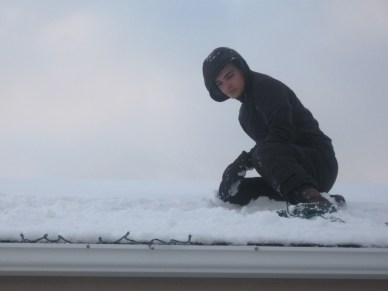





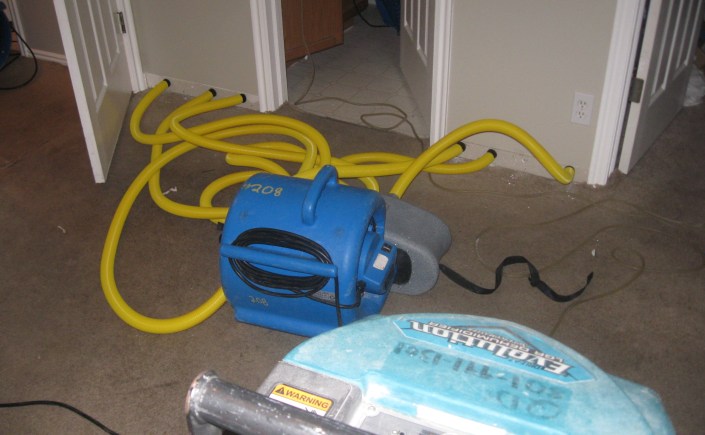
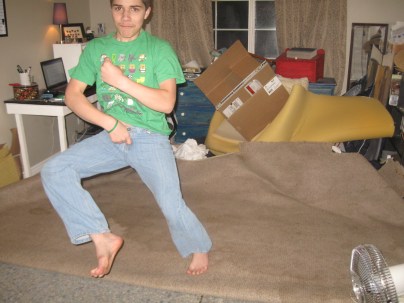
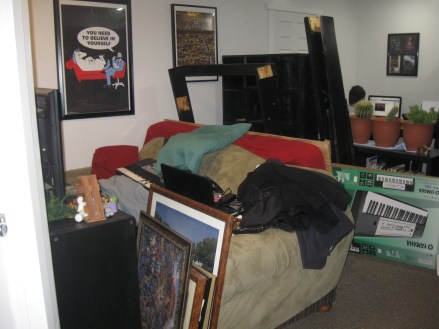






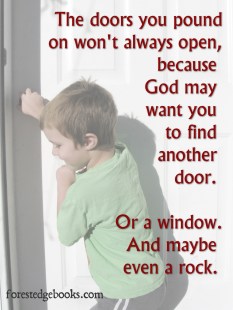
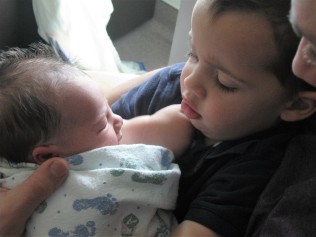
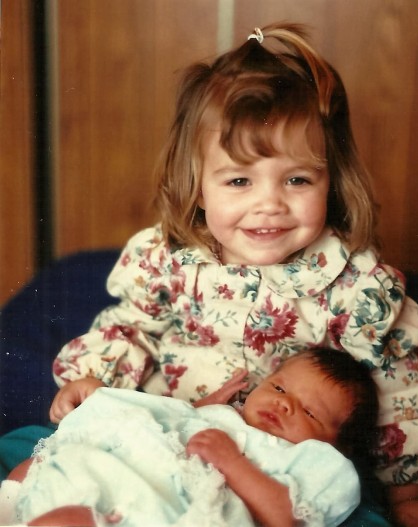
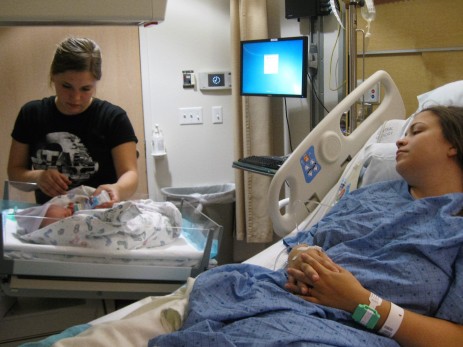
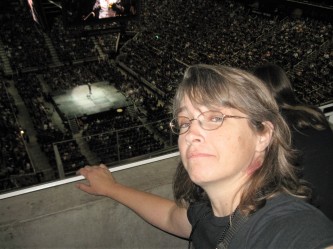

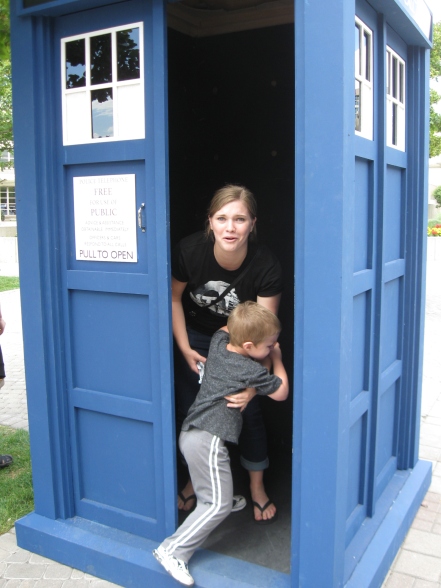


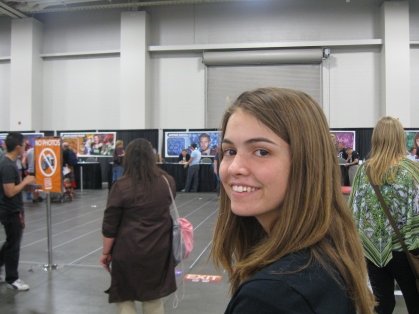


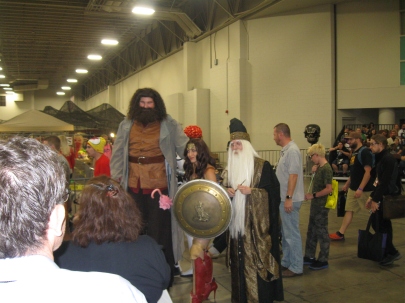

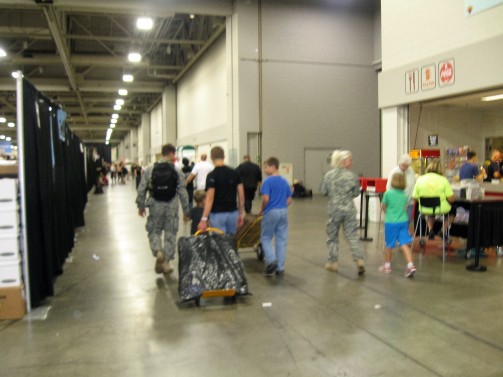
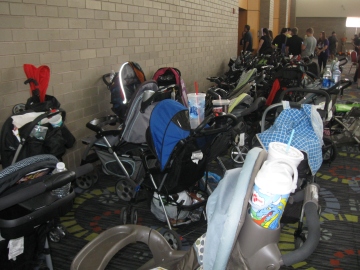



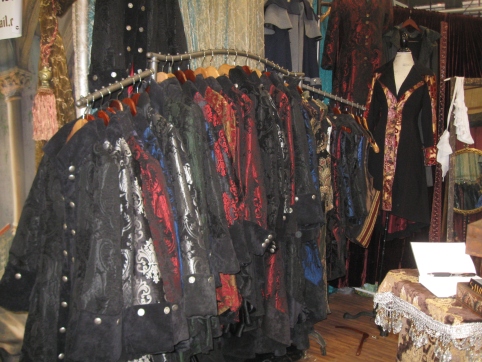

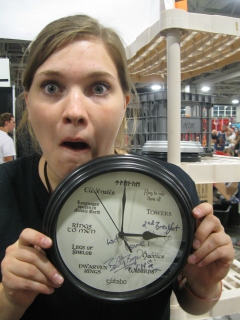
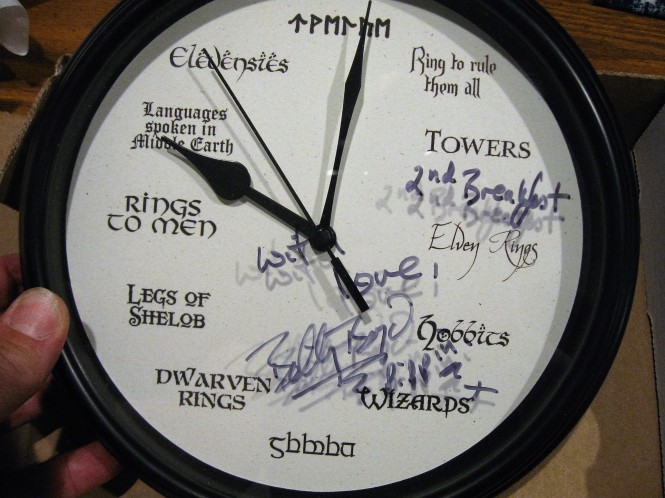

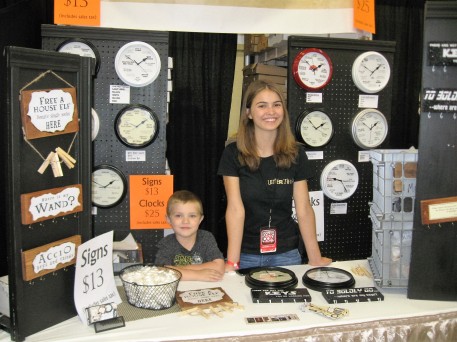
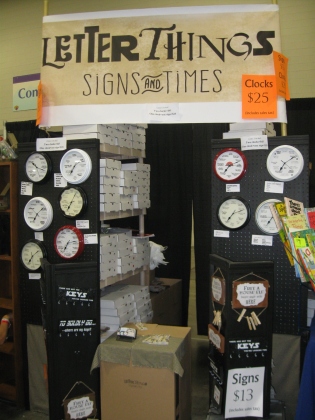



 Citizens have always taken it upon themselves to instigate change. Back in 1776 Thomas Paine published “Common Sense,” advocating that the colonies separate themselves from Britain. An individual—not a corporation or organization—gave other citizens the idea to break with the current tradition and be brave enough to begin the Revolutionary War.


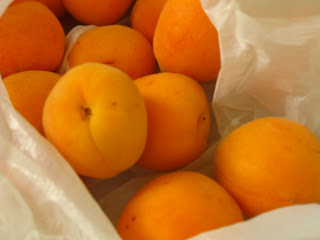


 Forestedgebooks.com