“She knew that in a very real way, she controlled the world. At least, she controlled the way her students would see it.”

“That’s right, sweety—that’s a dog. Doggies are bad. They will always bite you, even if they look nice. Keep walking . . .”

That was the conversation I overheard between a mom and her three-year-old daughter yesterday. I was pushing my son in a stroller past them, and glanced over at the evil beast behind a massive fence.
It was a small, fluffy mixed breed dog, panting happily, not snapping at all.

Not that I’m a huge fan of dogs—I tolerate them, at best—but I worry when an adult passes along their fears, irrational or not, to their children.

I cringed, but the damage had been done.
The child shuddered obediently and gripped her mother’s hand as they rushed home. The girl had been indoctrinated.

The thing is, we all indoctrinate our children, in good ways and bad.
I’ve heard some adults argue that “religious nuts” brainwash their kids into believing in their faith, but it’s still propaganda when adults persuade children to not believe in anything at all.

As parents we literally present the world to our children—a view which they then spend the rest of their lives believing or disproving, or talking to a therapist about.
A difficult question then is, What view of the world have I given to my children?

My mother was a classic case of paranoia run amok. Suffering in Germany as a child during WWII, losing her parents, her grandmother, and several cousins to the war, seeing some of her family interred in concentration camps, then escaping from her home (now a part of Poland) to the west by herself as a 16-year-old, just one day ahead of the invading Russians, is going to leave some scars.

Unfortunately, she refused to have those scars looked at, insisting every time we tried to get her treatment for her Post Traumatic Stress Disorder that she had things under control.
She didn’t.
She feared the world. She was afraid of people in uniforms (she hated the Boy Scouts—just like Hitler Youth, she claimed), people in stores (you never know why they’re looking at you), and people just chatting in the halls at church (she knew they were gossiping about her). Every person was a potential threat to her happiness, as it were.

Sometimes she was fine, going for months being cheerful and even joining in the conversations with other women in our neighborhood.
Then suddenly something would snap again—we never knew what the trigger was—and for many months and even years she was sure everyone hated her for her German accent, and that someone was coming to get her.

All of that rubs off on a kid, and even though I learned to distance myself from her delusions and paranoia as a teenager, I still feel my chest tighten when I see a group of women and I think I’m supposed to talk to them.
But rhetoric courses I took in college demonstrated how each person views the world in a different way and, most importantly, those views can change.

In my mom’s later years, her paranoia blossomed—one of the lesser-common side effects of Parkinson’s disease is hallucinations. And she did them magnificently.

My 40th birthday will always be memorable because she called to wish me a happy birthday, then said, “Well, your father’s all but out of the family now since I discovered he’s been having affairs.” The man was 78 at the time. My mom also complained about the listening devices in the house, the person living in the attic demanding sugar, and the horrible statue garden my brother and his wife had put up in the backyard.

My older sister called me two hours later to say, “I just had Mom committed to the mental hospital to stabilize her. How’s that for a birthday present?”

Now, four years later, my mother barely knows where she is or who she is. As her life slips away, I mourn for her that she never fully knew just how wonderful it could be. The world held her hostage since she was a little girl. She never knew how to change her view of the world, nor did she fully realize that for the past sixty-plus years she had a very easy life. All she could focus on was her fear.

That’s why I cringed when I heard that mother yesterday telling her daughter to be afraid of dogs. Undoubtedly she’s had some trauma in her past that she never got over, but to pass those fears on to someone innocent?
To taint an entire collection of creatures with just one ugly color because of a bias?
To assume that we as adults truly know how everything is, and that we’re completely correct in all our assumptions?

I don’t know whether to call that prejudice, or arrogance, or ignorance.
Whatever it is, it needs to be resolved to give our kids a fair and fighting chance.
And that’s probably the toughest thing for a parent to do.

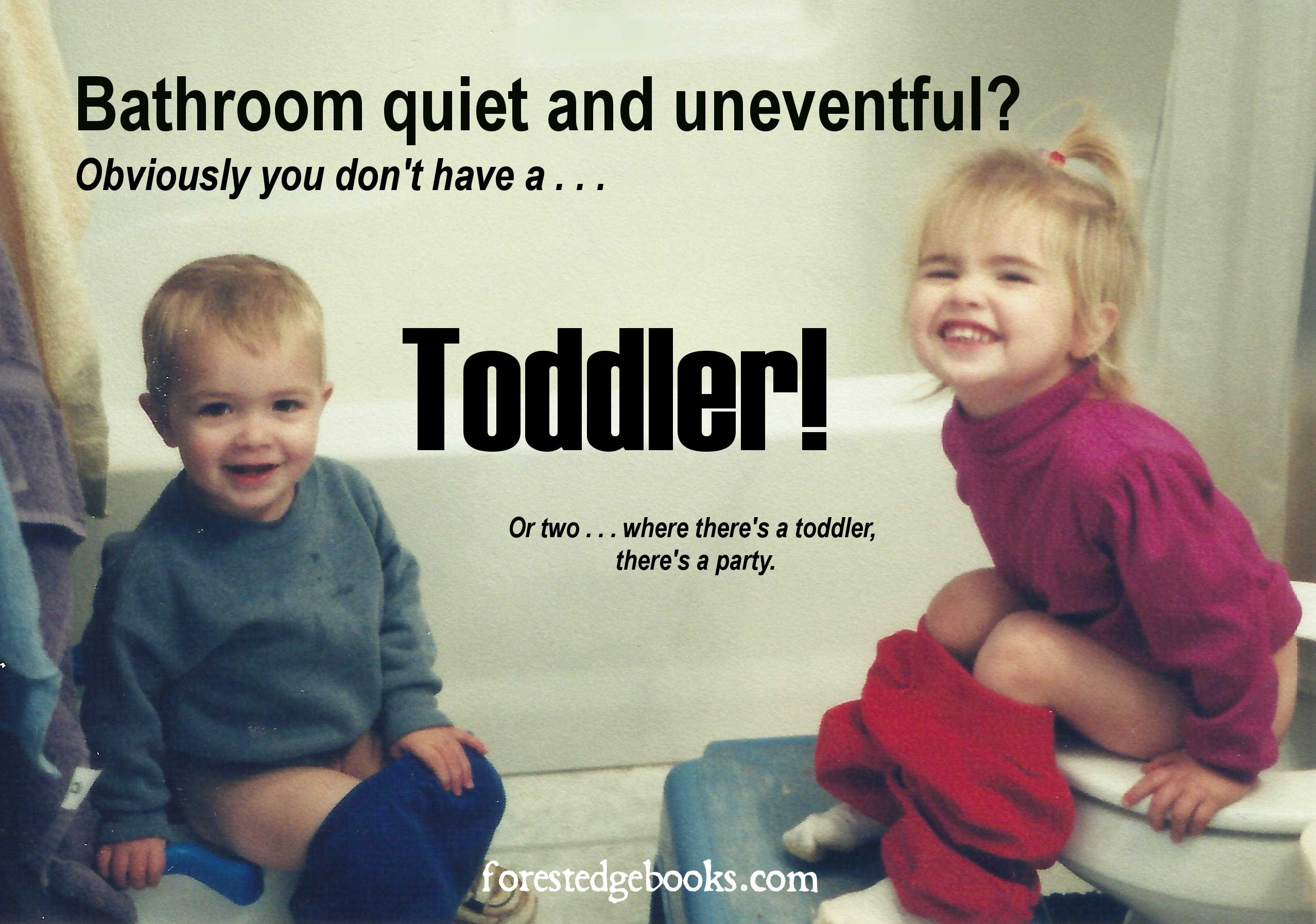
There’s no job too tedious that can’t turn terrifying when a toddler tries to help.

toddler quote

Nothing is as frightening as a toddler running with a pair of scissors . . . unless he’s running with a wet toilet plunger. And you know why it’s wet.

potty babies

I’ve come to realize that toddlers are the true terrors of the world. Sweet, hilarious, and darling, they can turn any ordinary event into something unpredictable, and anything somewhat challenging into a true trial. (Think: tents and campfires and forests and Yellowstone National Park and . . . toddlers. My heart rate’s already up, and we’re not going until August.)

tess tractor

I call my current toddler “The Motivator.” If any of my older children are slow to get a job done, I release The Motivator. He can find the butcher knife in the open dishwasher in two seconds flat, can dump a laundry basket in three seconds, and what he’s able to accomplish with an overflowing garbage can in four seconds is Al Qaida worthy. When my kids see him coming, they know they better work FAST.

dalton cabinets

I should rent him out to those who think their lives are dull. After half an hour, they’ll be cured.

teagan dryer

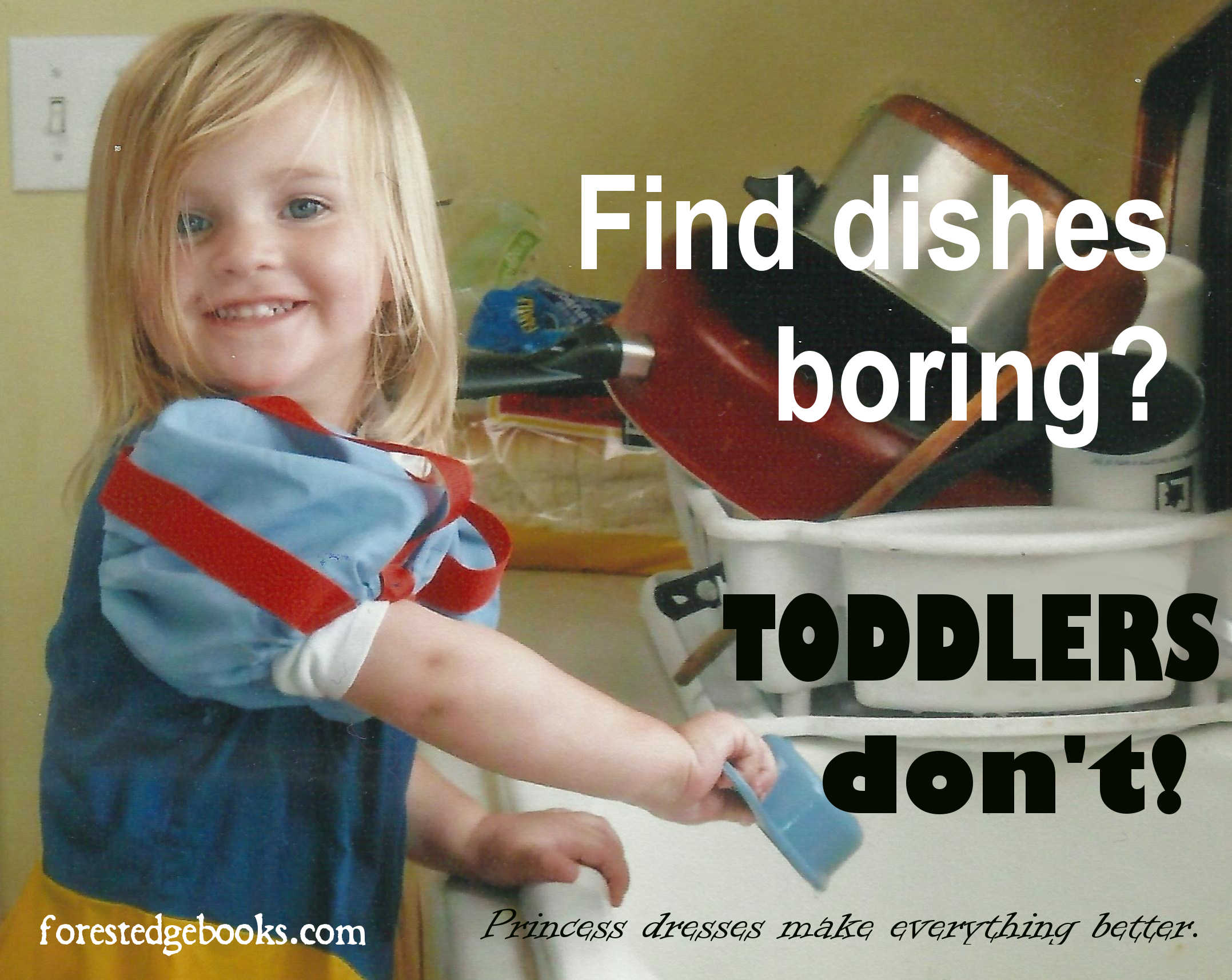
Do you find replacing bathroom plumbing boring? I have a remedy for that. Painting a bedroom? Fixing the starter motor in your car? Reorganizing a cabinet? Simply sweeping the floor? Oh, I have the motivation to make all of those jobs far more exciting.

zoe dishes1

And if you have a kitty litter box, you’ll really wished you didn’t.

And if you have a sewing box, you won’t much longer.

bubba bath

I write a bit about toddlers in my book, and I visited memories of my own nine children as toddlers (my last is 18 months old) for realism, because as Utah’s Poet Laureate Lance E. Larsen has said, “Writing is often more a matter of collecting and eavesdropping than inventing.”  I discovered there’s no way I could “invent” toddlers. They’re just far too inexplicable.

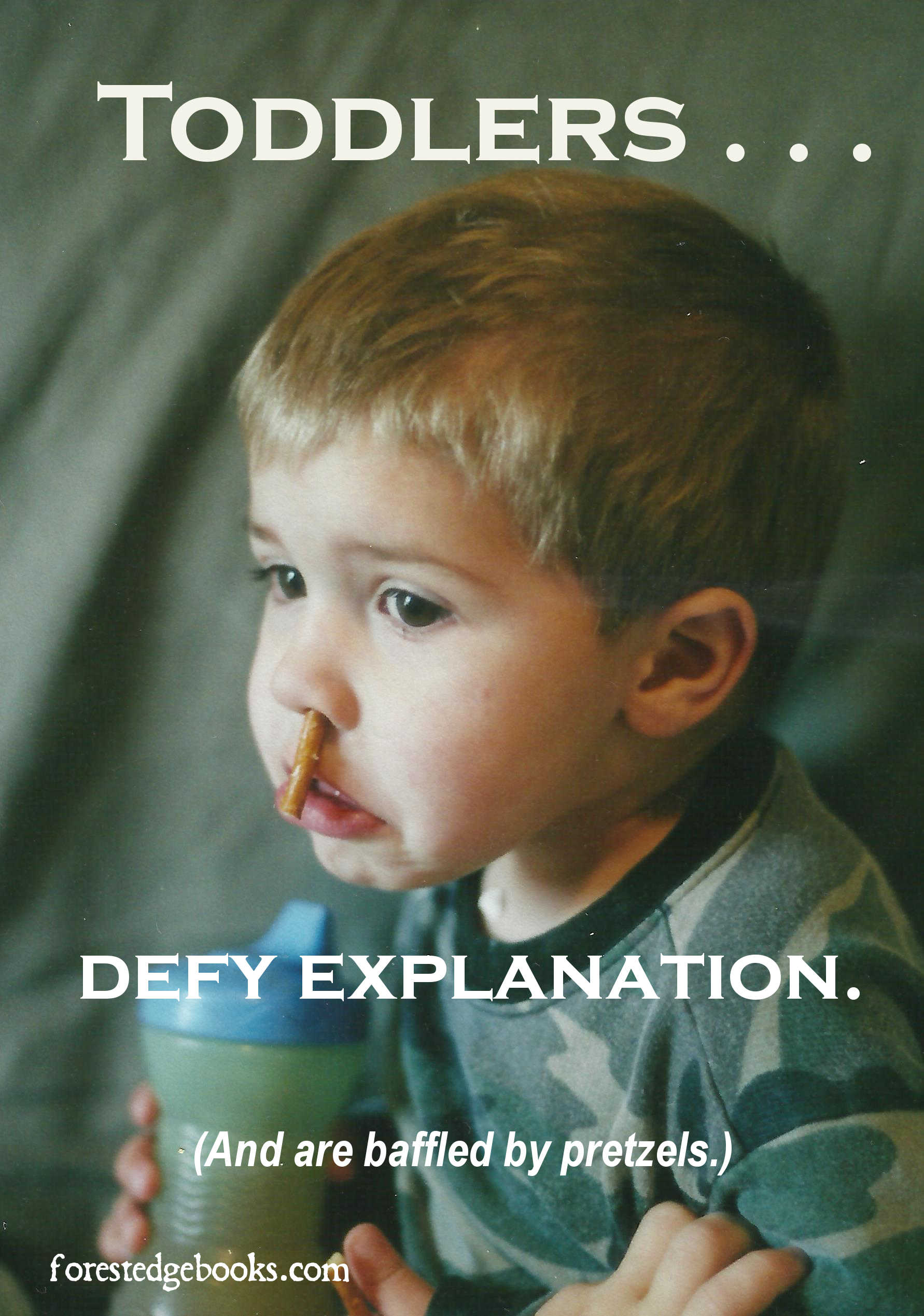
dalton pretzel nose

I adore toddlers. They’re the most exciting, terrifying, adorable, terrifying, kissable, terrifying creatures on earth. That’s why I’ve taken so many pictures of them over the years, and why I say a prayer of thanks each time they drop off to sleep.

“Just tell them that underneath it all, despite what they may see, the sky really is blue and they can count upon that fact.”

There’s no creature quite so arrogant and simultaneously so insecure as an 11-year-old. I learned this many years ago when I was asked to drive a group of 11-year-olds for a church group because I owned a station wagon. (Yes, I owned a station wagon at age 25, and was proud of it! I also owned one at 16, but that’s another post.)

So, with a carload of boys I didn’t know, I set off to deliver the group. Soon one very loud, very authoritative kid with unruly hair and far too many freckles announced, “Hey—here’s a riddle. What color is the sky?”

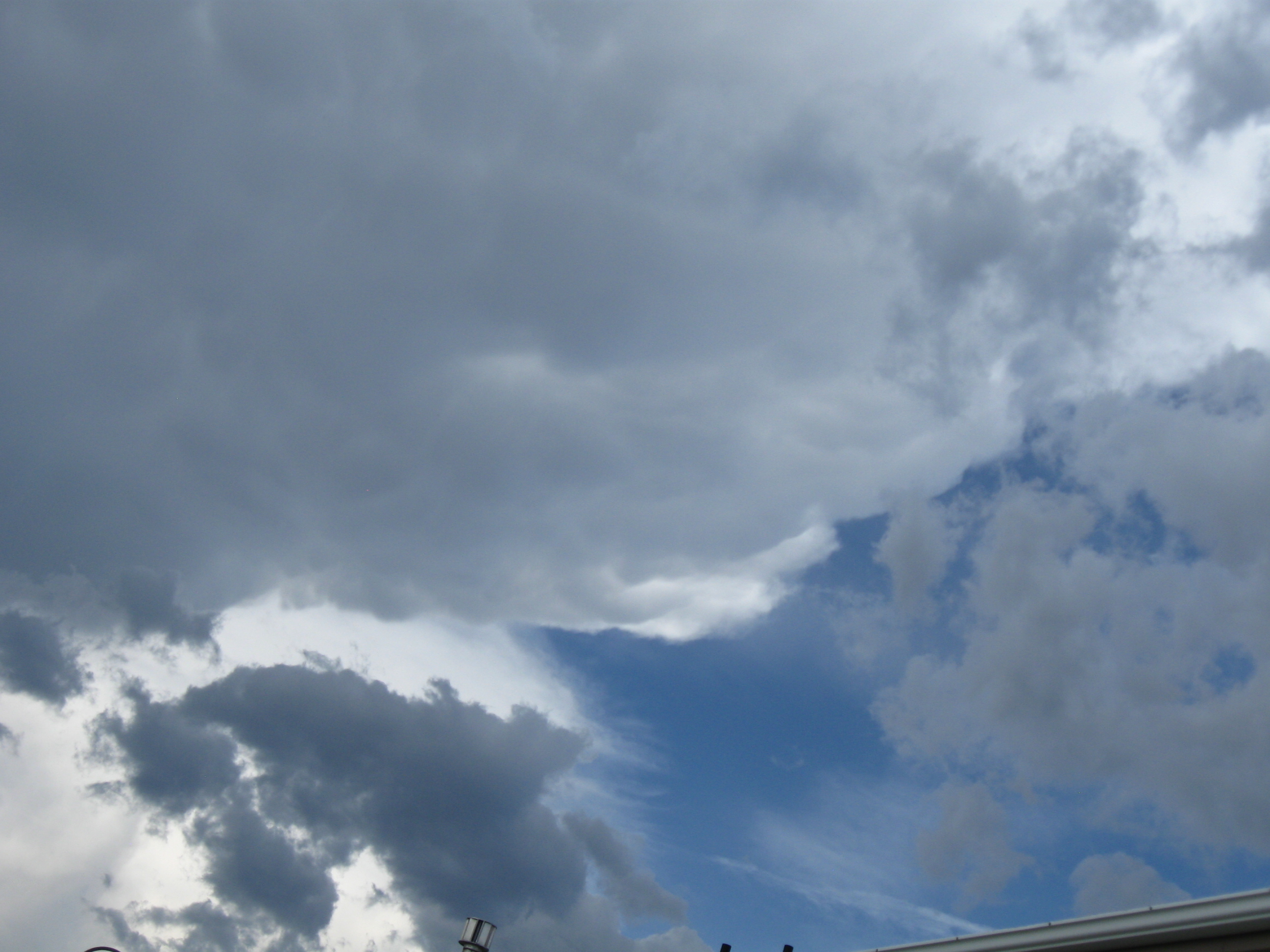
001Obedient, and bored, the other boys looked outside—

“HA!” shouted Hairy Freckles, “Got ya! Everyone knows the sky is blue! Suckers . . .” He added that last part with the same disdain I’d heard from his 14-year-old brother, who likely pulled the same trick on Hairy Freckles.

The other boys embarrassedly looked down at their hands. But I glared in the rearview mirror.

029“That’s not true,” I said plainly. “That bit—right there? That’s white.”

Hairy Freckles scowled and looked out the window, which he hadn’t done since he’d entered the car. “That’s a cloud!”

“And it’s not blue,” I nodded.

A couple of the boys, previously shamed, now hesitantly smiled.

006“That doesn’t count!” Hairy Freckles declared and gave me a look that said, If you were my mother, I’d have you put into a home.

“And that, right there,” I pointed out the window, ignoring him, “that gray bit with some red? Also not blue.”

“That’s a plane!”

“And it’s in the sky, part of it, and it’s not blue,” I said.

005Now all of the boys were smirking at their friend. Nothing’s worse than being put into your place by a know-it-all 25-year-old college student. Who’s female.

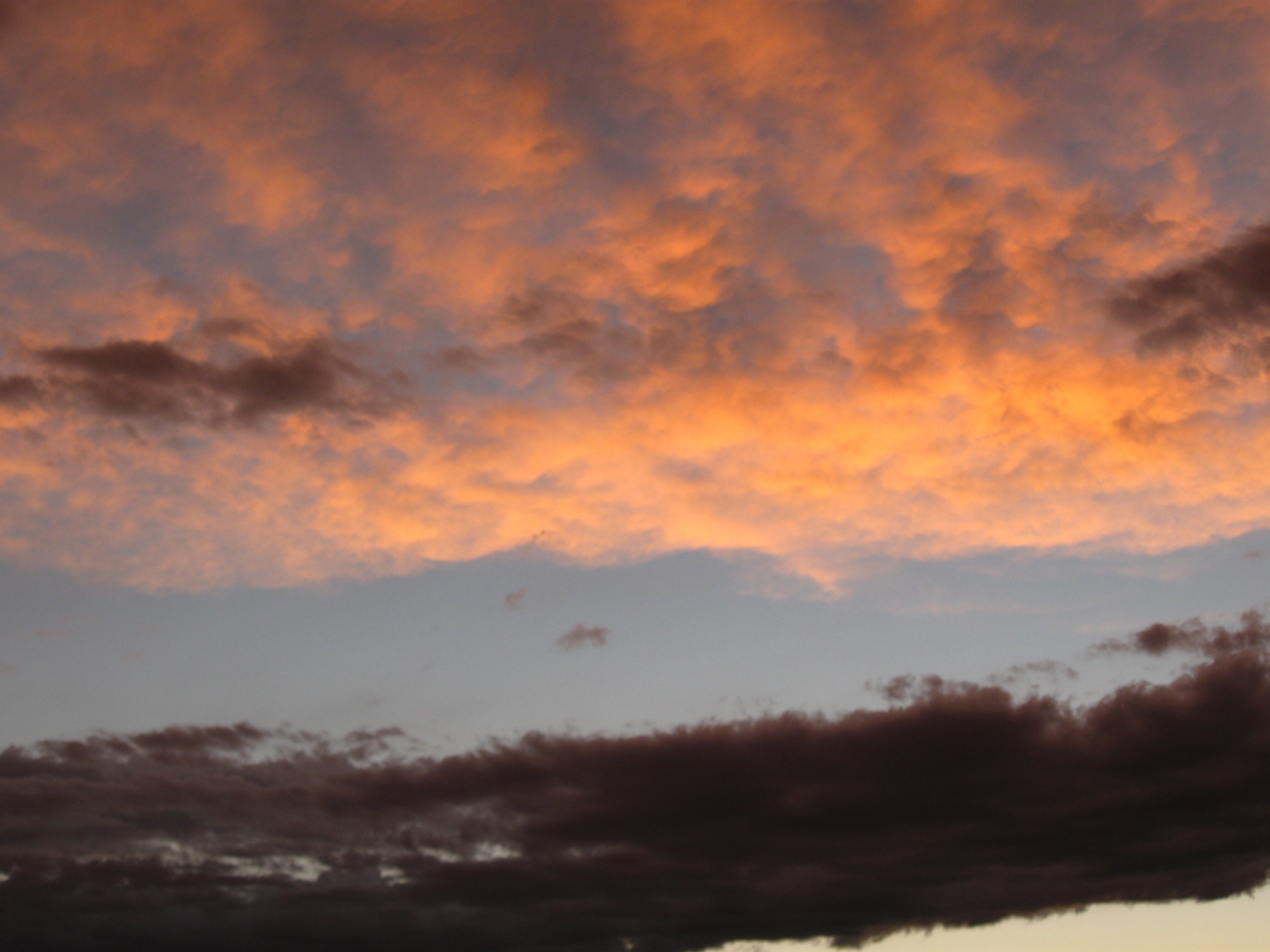
“Now, when the sun sets, ooh—definitely not blue,” I continued.

019 (3)“And what about night?!” another boy finally felt brave enough to contribute. “There’s definitely no blue then!”

The rest of the boys howled as if that was the funniest joke in the world, while Hairy Freckles glared at me through the rearview mirror.

“And then there’s that big bright ball of white,” I went on.

002“That’s the sun!” Hairy Freckles pointed out. “And it’s yellow!”

“No, it’s not,” I said easily. “It’s white. They just make you use yellow crayons in school to color it because your paper is already white.”

None of the boys knew what to do with that, even though they peered at it to make sure, then blinked away the fact that they just scorched their retinas.

“Hey, I just got Donkey Kong—” and just like that, the conversation turned. Because hey, these were 11-year-olds.

I’ve always been obsessed with clouds and sunsets, and since then I’ve taken dozens of pictures as evidence that they sky is NOT only blue. Yet I never cease to be amazed at the amount of children’s books, TV shows, movies, and even textbooks that simplify the complexity of the sky to declare, “The sky is blue . . .” when anyone  can tell that it’s much, much more.

011 (2)We do this with so many things, just like the middle school textbook my oldest daughter had in science one year that said, “Ocean water is made up of two things—salt, and water.”

“Rubbish!” my 13-year-old had declared, and asked to be homeschooled.

And I wonder, why? Why do we oversimplify the world, even to the point of telling lies about it—if you want to get that direct—to our children and ourselves? Why do we ignore the multiple colors and shapes in the sky and insist that it’s one color, especially when that color is actually just an optical illusion, produced by the sun’s light rays bouncing back blue?

More importantly, what do we miss when we assume we already know the nature of something, and don’t even look out the window to see if our assumptions are correct?

I suspect we miss the true nature of the entire world.

004


“All our ideas were just as pitifully inaccurate as four year-olds arguing over what kind of baby snake a worm is. “

There are a few conversations you don’t want to hear your children having in your backyard.

“Ooh! Look at all the baby snakes!”

Yeah, that’s on top of the list.

I was in my kitchen when I heard my three-year-old son and his friend in the backyard squeal in fascination. Our house was new, the yard unfinished and bordered on a canal, which bordered on a field, which apparently bordered on the edges of Snake Heaven. And that Heaven was invading.

(It’s just a photo–calm down.)

“Those are pythons. I know. My grandpa showed me baby pythons last week,” the friend said with great authority.

I gulped and quickly made my way to the back porch to investigate the terror. Now, I’m fine with snakes—as long as they’re in a zoo, in the wild, and far, far away from my house and my children.

“I don’t know,” my son, who knows nothing of snakes, said. “I’m thinking boa ’stricker.”

Bravely I marched to where the two little boys were crouched and poking with a stick.

Please let there not be rattling! No rattling!

“Pythons. Definitely.”

I put on an overly happy face—more for my benefit than for theirs—and said with forced cheeriness, “What do we have here?”

The beamed up at me, stepped away, and—

It was NOT baby snakes.

It was FAR worse.

Worms!

(I know, I know–you should have seen me convulsing as I sorted through the images looking for this . . .)

Yes, all right—worms terrify me far more than snakes. The massive earthworms they had uncovered were far more disgusting, slimy, and smelly—yes, they smell!—than snakes.

Oh, how I wished for a hole of rattlers right then.

I took a step backwards.

“Cool, right Mom?” my son said happily. “Strickers, right?”

“No,” I said, fighting back the urge to wretch. “Just worms, boys.”

Worms.

The friend shook his head. “Nope. My grandpa showed me baby snakes just like these last week in his garden. Snakes,” he promised.

I knew grandfathers like that. They misrepresent the world to their grandchildren as a one-sided joke, then wonder why when their grandchildren are teenagers they never want to talk to them.

“No, those are worms. I know. I had to dissect those in 8th grade.” The most traumatic year of my life. Not as if junior high isn’t bad enough, but let’s throw in a handful of worms and make you cut them up!

And people wonder why teenage girls are so moody.

Worms.

I backed away slowly, advising the little boys to leave the snake/worms alone and come in for a popsicle (popsicles are the end-all, be-all of distraction and reward).

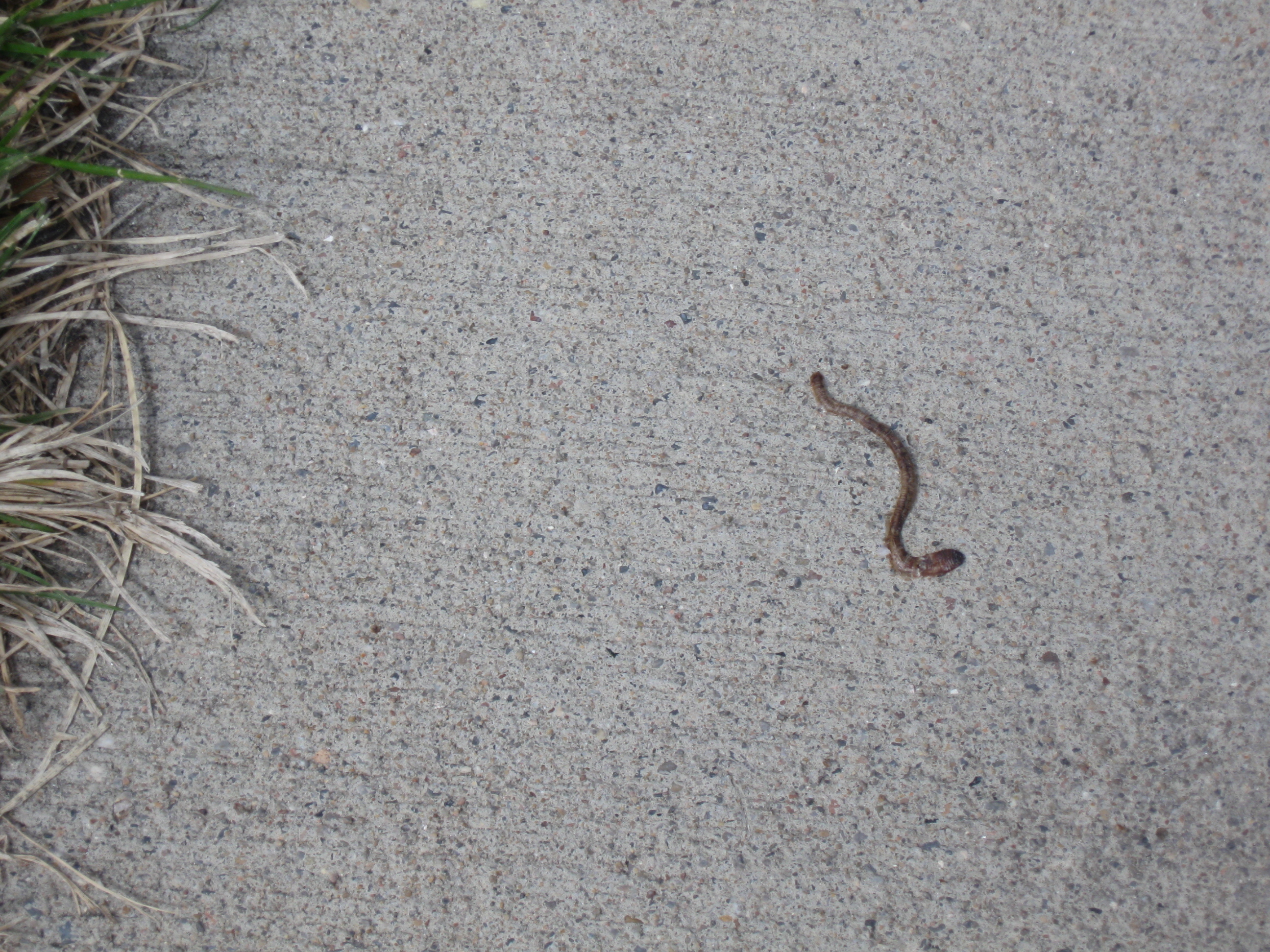
Back in the kitchen I tried to fight down the urge to throw up and tried not to think about the many dried up worms that must have been on the driveway. It had rained that morning. That means all cement becomes a horror show, with dried up bits that aren’t Chinese noodles. (When I see bowlfuls of those on salad bars, I feel like screaming, “Dried up worms! Everyone, run away! Dried up worms!)

Image

(Not a Chinese noodle, unfortunately.)

The odd thing is, I was more worried about worms—reportedly useful in gardens, but scientists lie all the time—than I was about the possibility of two little boys messing with a snake nursery. My own bias set me up to ignore a real danger. Snakes were seen in our backyard later in the season. Some may have even been dangerous. But I only recoiled when I saw the worms.

Now, sixteen years later, I encountered not-Chinese-noodles on the ground and again found myself doing the ooky tip-toe dance of “Don’t squish them!”

There are far greater hazards in the world, and I wonder, do I spend more time on things that don’t matter, that aren’t real threats, than I do on the things that are?