Don’t read this, don’t write that

Like every indie writer, I’m hoping that my efforts to self-publish will someday be enough that I can pay a bill or two. I have no fantasies of big J.K. Rowling bucks (ok, not realistic fantasies), but I’m always looking for ways to knock down my car loan a bit. 

So when an indie publishing company sent me YouTube testimonials from their best-selling authors, I eagerly watched to see what the grand secret is to making money.

Turns out, it’s writing smut.

Now, to be fair, I didn’t watch every last testimonial, but after the third one I began to see a distinct pattern, and it made me very uncomfortable.

The videos were well done, predictably following around the authors as they walked in grass, or along a beach, and maybe sniffed a flower or two, while the voice-over discussed how frustrating their former lives were (interestingly, most were school teachers) and how after independently publishing they had enough cash flowing in each month to not only take care of their children and pay their bills, but to quit their former jobs and take exotic vacations.

At some point I began to feel like I was watching an infomercial, so I wrote down the authors’ names and looked them up.

And my jaw dropped. 
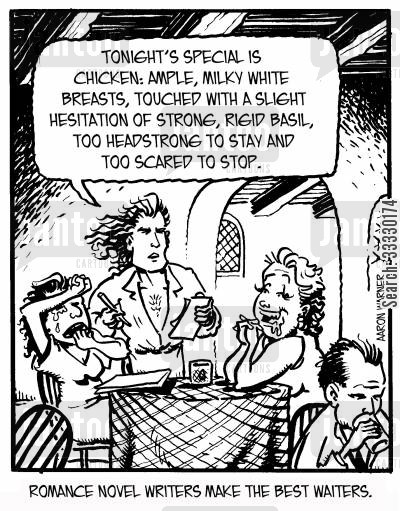
Women’s porn.
That was what each of them was writing (one even with her husband; I wasn’t sure if that made things better or worse). Now, I realize that genre of books goes under tamer titles, such as “graphic romance” or “erotica,” but the snippets I read in the previews—before I looked away after only a few lines—fit my definition of porn.

Not only did the subject matter shock and disappoint me, so did the books themselves. Many weren’t even 50 pages long and priced at over $5 for the e-book, which is hardly a bargain.

There were dozens of titles from the authors, all on the same themes of lonely women finding unrealistic men who are obsessed with, well . . . you know.
And the reviews were also disturbingly the same. I’ll spare you the details, but it was obvious by the hundreds of reviews that not one of the gushers cared about literary merit. 

Occasionally I ran across a one-star review, and it was filled with dismay. “What a piece of trash! I can’t believe people are writing—and buying—this crap that reads like the notes we passed in 7th grade. Write the word ‘boobies’ and everyone gets all in a titter. Is no one noticing this?! What’s happening to books?”

I don’t know, but I agree—literature is taking a nosedive.  I’m sorry—I shouldn’t even call this literature. Let’s stick with “smut.”

These books are in the same vein as Fifty Shades of Gray, which is all about a woman repeatedly “achieving” something, and sold more copies than the Harry Potter series.

Really.

Our society is fond of believing that reading is good. Hey, it’s better than (fill in the blank yourself). In fact, it’s quite difficult to find anything that encourages against reading (I know—I’ve been looking). Because . . .

Reading is empowering!
Reading let’s you escape!
Reading improves your mind!

Not always.

What you read changes you, for good or bad. And novel reading hasn’t always been held in great esteem. For many generations, calling someone a “bookworm” was an insult; you should be out working, laboring for your family, instead of lazing about the house with your nose in a book.

We’re all influenced by the books we read, some more than others. I can tell what kind of stories my children are reading based on their behavior that day. It’s not rocket science; it’s human nature. If we weren’t influenced by what we read, why would we bother?

There is something sacred, I think, about a great library because it represents the preservation of the wisdom, the learning, the pondering, of men and women of all the ages accumulated together under one roof to which we can have access as our needs require.  ~Gordon B. Hinckley (emphasis added)

Books can uplift and motivate us, but they can also send our thoughts into despair and fear, and everywhere else in between. There’s a certain magic there; but according to every fantasy book out there, magic is temperamental, and can go in any direction.

I’m anxious when I see how many sexually explicit and graphic books are now being written by women and for women. I can’t help but wonder, what does such an adolescent fixation on sex do to a person’s psyche and relationships? 

There’s been truckloads of research done on the negative effects of porn on men, but I’m beginning to think we need to start evaluating women as well. According to the book reviews I marveled at,  some of these readers do little else than indulge in these pubescent stories. I personally know of two marriages that suffered when the wives became too obsessed with a particular book series dealing with vampires and werewolves; so what’s happening in the lives of those who read books that are far more explicit and unrealistic?

Now, I’m sure there are those who will say I shouldn’t judge books and their contents. But to that I say, why not? Look at the reviews for any item on Amazon—those are judgments. Any time you think about reading a book or going to a movie, you ask for other people’s opinions (judgments) about it.

But what those who play the “don’t judge” card really mean is, Hey—you’re hitting a bit too close to home, and I don’t want to think about that right now. I’ve got another novelette about fat girls and their “achievements” to read.
The “don’t judge” argument is usually a front for, “stop making me feel guilty.”

This post is certainly not to say that all indie writers fall into this hole of smut. I’m acquainted with many self-published authors who create marvelous pieces of fiction and fantasy, who enjoy controlling their own work, and have written books that earn the title of “literature.”

In fact, I’m writing this rant in defense of the rest of us indie writers—the majority of us laboring to develop stories with character and purpose—to demonstrate we’re not all out to make a buck off of “low-achieving” women.

Our books are as different from these smut-o-grams as homemade, hand-breaded chicken fingers are from Chicken McNuggets. They may have similar names, but one is carefully prepared, finely balanced, and tastes marvelous, while the other is nasty chicken sludge boiled in oil.

That’s why I promise, right here and right now, that I will never make nasty chicken sludge, or write smut just to pay the bills. Some time ago a beta reader suggested that if I made my books more “interesting” (i.e. add some salacious details in the first chapters), I could really “make something of myself.”

That left a horrible taste in my mouth, and I told the reader I didn’t need them as a reader anymore.

Because how you feel after consuming something I created is far more important to me than my paying off my student loan debt. (And if you knew how big that is, you’d be even more impressed.)

Whose children are those?

“[T]he children belong to all of us.”
~Paul Reville, former Massachusetts secretary of education, Common Core enthusiast, and Harvard professor

Mr. Paul Reville.
(And some of the kids that apparently belong to him.)

Mr. Reville (and I’m trying very hard not pronounce his name as “revile” in my head) recently stated the above about who the children of America belong to (read an excellent discussion in Forbes about this here), and as a mother of nine, I’m baffled.

What, exactly, does this mean: my children belong to the country? The government?

So you will now change my toddler’s diapers? Drive my daughter to lacrosse practice? Take my son to his doctor appointments? Why, thank you!

Will you now make their meals, help with their school work, and take them shoe shopping, one of the most horrible experiences a mother and child can endure?

Yes, I’m being facetious; you—whoever this nebulous “you” is that constitutes “all of us”—certainly don’t want the daily grind of parenthood.

So why does Mr. Reville and others claim to have part possession of my children?

This question has weighed on me for years now, and I think I have a few answers.

The short answer is, because they want the capital my child may potentially make.

That’s all it is: money. How much might my child be worth someday. Yes, I realize this sounds crass and simplistic, but I’m afraid it’s true. As a citizen who’s watched the progress of education since I was an education major in college 25 years ago (I gave that up to become a college instructor instead, at the urging of some of my professors), I’ve tracked the changes in theories, especially as they applied to my children.

I’ve come away with one discouraging conclusion: Public education is not about improving the humanity of our citizens; public education is about producing the best workers to make the most money for our country and our leadership. You see, good workers make more money, which brings in higher taxes, which means those with a stake in product development (i.e. Bill Gates, et al.) and government (primarily the federal) make more money.

The children belong to “all of us” because the children are needed to make those in power more powerful.

The End.
Yeah, dismal story.

And while it’s a true story, I refuse to let it be the story my children will be forced into.

Mr. Reville, and Melissa Harris-Perry who also believes that “we have to break through our kind of private idea that kids belong to their parents or kids belong to their families, and recognize that kids belong to their communities,” you’re wrong.

You see, we are faced with an ideological split, here; I believe in God (yes, here it comes—I already see you rolling your eyes, but there are still a few of us God-nuts around, so you better learn to deal with us civilly), and I believe that God has sent my children to my husband and I. And I also believe that He has given us responsibility to raise them.

As a bold proclamation on families states, “Parents have a sacred duty to rear their children in love and righteousness, to provide for their physical and spiritual needs, and to teach them to love and serve one another.”

Ah, there’s a sticky word: responsibility. You see, Mr. Reville, children are not possessions, they are not future capital, and they certainly are not to use for your own means.

They are personalities, ancient and precious, sent here to embark on a most remarkable experience: mortality. The purpose of mortality is to test their will, develop their understanding, and see what choices they will make in the face of trials and temptations.

You happen to be in the exact same situation—you, too, are an old soul trying on a new body and seeing how well you do in this remarkable Test.

But Mr. Revill, you do not own my children. I don’t even own them. They are my stewardship, which is a very different thing than ownership.

Stewardship requires an accounting to be made to Him who gave you responsibility in the first place. Mr. Reville, I fear that the only person you and others with your mindset think you are accountable to are yourselves. That makes you akin to your own god, and I can’t think of a single human that was ever a worthy god.

You may claim that my children belong to you, to the state, but I will not give them up without a fight, I assure you. Already I’m showing these arguments and theories to my children and telling them how “all of us” is trying to control their education and futures.

Yes, everyone, I freely admit it: I’m indoctrinating my children to what I believe is most accurate and correct. I call that “teaching.”

And public education, especially the kind that Mr. Reville is promoting, is also its own brand of indoctrination.

So my friends, we have a battle brewing—one that’s actually been around for thousands of years. Education and who “owns” the children is just its front; the real battle is about who has the power, and how much we’re willing to let happen until we begin to fight back against that power.

“Education is a weapon, whose effect depends on who holds it in his hands, and at whom it is aimed.” ~Joseph Stalin (Yes, the bad guy in the Soviet Union)

Every revolt, every revolution, every call to arms has always been about power. And this time, the battle is beginning in our very homes and schools, by those laying claim to our children, and those of us refusing to let them go.

Lew Rockwell, a politician with whom I don’t always agree (I’m currently a political agnostic: I don’t really believe in any political party) nevertheless makes this excellent point:

“It isn’t a coincidence that governments everywhere want to educate children. Government education, in turn, is supposed to be evidence of the state’s goodness and its concern for our well-being. The real explanation is less flattering. If the government’s propaganda can take root as children grow up, these kids will be no threat to the state apparatus. They’ll fasten the chains to their own ankles.”

No, Mr. Reville; my children do not belong to you. I hope that someday their humanity, knowledge, work ethic, and values will benefit you and their communities, but those benefits will come because their parents were concerned first with raising people who respect God and feel a sense of stewardship to take care of the world and each other. Their purpose in life is to become warm, thoughtful, loving humans, not obedient worker bees. And Mr. Reville, I’m sure that in your old age, you’ll hope you’re surrounded by the former and not the latter.

In the meantime, please leave my children out of whatever schemes you’re devising, because frankly, I have no faith in you or in others that clomp around to the same dull drummer.

Consider these two thoughts  from another celebrated university professor, C. S. Lewis:

Education without values, as useful as it is, seems rather to make man a more clever devil.

Of all tyrannies, a tyranny sincerely exercised for the good of its victims may be the most oppressive.

Parents–hold tight to your children. I used to think I only had to worry about shady characters driving slowly down my street holding out candy to my kids. Now, we have all kinds of folks trying to take possession of something none of us truly own.

     Perrin turned to his wife. “This morning I told you our most precious possessions were safe with Zenos. But they aren’t—”
     “Our babies AREN’T safe?!” Mahrree squealed, twisting absurdly to look behind her as if she could see her children sobbing from miles away.
     “Mahrree, Mahrree,” he chuckled, “I mean, they aren’t our possessions.
       Mahrree breathed deeply and patted her chest to catch her breath.
      “Sorry,” he kissed her on the cheek. “Zenos is fine with them, I’m sure of it.” His face grew solemn. “But it’s been pressing deep into my mind, ever since I called them our possessions. It’s just that . . . Mahrree, we’re told in Command School about the duties of soldiers and citizens. One thing we had to recite was that sending children to school was the citizens’ responsibility to the government.”
      Mahrree blinked at the odd phrase. “Our duty to the government? To hand over our children to their care?”
     “That was one of King Querul the Second’s statements, and the Administrators never abolished it. After all, citizens earn money which is then taxed and given to the government. In a way, the government—and it doesn’t matter whose—sees themselves as owning the people. They don’t serve us,” he whispered harshly, “but instead, we work for them. Without our taxes, they’re nothing. They’re especially interested in the children, because if they’re successful, then so will be the government. Or perhaps I should say ‘wealthy,’ instead of ‘successful,’” he grumbled in annoyance. “It all comes down to riches and power.”

         ~Soldier at the Door, Book 2

We don’t do Santa

We don’t do Santa at our house.

anti santa

Now, before you label me a killjoy, call social services because I’m a terrible mother, or weep for my children because I’ve lost the Christmas spirit and am destroying the holidays, allow me to explain myself. Then you can start sending the critical responses.

I promise this won’t be a rant such as I once experienced delivered by a woman who was fond of pointing out that the letters in Santa can be rearranged into Satan. (She was also fond of roasting the opossums that wandered into her yard; I never accepted her offer to sample her stew.) This is an explanation of how we’ve chosen to do something more.

We used to do Santa for our three oldest children (who are now in their twenties) when they were younger, but over the years we’ve distanced ourselves from the magic, tricks, and well . . . deceit. Our six younger children never hear us mention Santa, unless we happen to be talking about a town in California.

As a child I dearly wanted to believe in Santa, despite the incongruities of his origin and abilities. I went to the point of analyzing, as thoroughly as my eight-year-old brain would let me, how he did everything in one night (magic dust, with some sort of cool physics involved), who all the other guys in Santa suits were (secret agents, bugged with mikes and recording devices to send the messages to Santa), and where he lived (under the ice cap—and this was many years before “The Santa Clause” movie; they stole my idea). I also concluded that the version of his origins, as told by the claymation TV show “Santa Claus is Coming to Town” was likely the most accurate, primarily because I thought the name Burgermeister Meisterburger was genius.

Bmmb

(And I also suspected my ancestors looked like Burgermeister Meisterburger.)

I still struggled with aspects of Santa, such as why reindeer seemed a viable mode of transportation, and the fact that Santa’s handwriting looked exactly like my dad’s calligraphy. But I eventually decided that my dad simply changed the tags once the presents arrived because elf writing was illegible.

So it was with utter shock and dismay that I received this news at age nine, casually delivered by my mom: “You know Santa’s not real, right?”

No, I did not!

In fact, I’d wrestled with this so-called truth for years—since I was five, at least—to make sense of a man of magic when I knew—knew—there was no magic.
So the whole Santa-thing was really a trick?
And the entire world was in on it?
What was the point of that?!
Why did all the TV shows and movies and stores and schools and even church, of all places, perpetuate the mythology as truth only to eventually say, “Ha! Fooled you!”

I was devastated. Then I was furious.

What other cherished beliefs from my infancy would be revealed as also hoaxes? For many months I worried that something else, something far more important and vital to my happiness, would also be revealed as a scam.

Fast forward fifteen years, to when my husband and I have a child old enough to know about Santa. Suddenly all those feelings of betrayal rushed me when my husband asked, “So how should we do Santa?”

I didn’t want to! I didn’t want to expose my children to the same beloved stories only to find out later they were merely stories.

But, family and societal pressures told us our children had to have Santa, and who were we to buck tradition? So, for our first three children, we did Santa. Visited him, sent him letters, wrapped the presents “from” him in special Santa paper, and all was fine until those kids started asking legitimate questions about his veracity.

Now I had a problem. I had always vowed I would never lie to my children (that’s not the same as teasing, which is a completely different form of torture). When they asked a sincere question, I would always give an honest answer about everything, from the Tooth Fairy to what Daddy means when he waggles his eyebrows at me.
(“Um, that means we need to talk. In the bedroom. Choose a movie—any movie you want.” Ok, so my honesty is relative.)

But the Santa Really Exists (SRE) movement meant I had to lie to my children, if only to protect their innocent friends from the reality. And I hated that.

So, after a few years of this moral quandary, I told my husband I simply wanted to quit Santa at our house—who were we to buck tradition? Whoever we wanted to be!—and happily he agreed. Since then, we’ve never regretted the decision to focus on our family and friends, and not even bring up the old fat man in red with an odd laugh like garden tools.

What are the benefits of not participating in SRE?

First, Santa doesn’t come off as a jerk. Trying to explain to my children the disparagement of Santa in delivering toys made me feel like a fraud.
“Why did the neighbor kids get a lot more from Santa than you did? Uh, you see, Santa doesn’t actually make the toys; he’s like a Secret Shopper. He buys the presents, wraps and delivers them, then sends us the bill. Yeah, that’s right.”
That was the only way to explain why our budget for each child was $45, while the neighbors had a budget of $300 for each kid.

My children accepted that answer until the year we were in a position to do a Secret Santa for another family. They eagerly helped us choose and wrap presents, but then the unavoidable question arose: “Why isn’t Santa shopping for them and just donating the presents?”

“Well,” I invented wildly, “he’s asked us to help him because, um, he’s too busy—”

“What, buying presents for the rich kids?” my eight-year-old daughter asked cynically.

I didn’t have an immediate answer for that. No matter what kinds of stories and explanations I created, Santa came across as a self-serving jerk whose services were available to the highest bidder. That’s not the spirit of Santa.

Second, we don’t have to lie to our children. By not playing into the SRE game we don’t have to keep up the façade that, something that I’ve always taught my children isn’t real, suddenly is for the month of December. Don’t get me wrong, we enjoy fantasy and magic—Harry Potter, Narnia, dragons and Merlin—we’ve got all the books, movies, costumes and games, and it’s fun and serves a purpose, but just not in the real world.

In our early parenting years we frequently struggled with juggling the mythology of Santa with the story of Jesus Christ, who we hold as reality. Once one of our children even said, “My friend at school said Santa is just your parents. So what is Jesus?” The notion of magic and miracles was so confused in her first grade mind she wasn’t sure what to believe.

And that bothered me, to my core. That was precisely what worried me as a nine-year-old. I had even decided, when I still believed in Santa, that on some level Jesus and Santa were related, and shared priesthood power and magic to accomplish Christmas.

Then Santa was revealed to be pretend, and so what about Jesus Christ?

For more than a year I paid very close attention in church each Sunday (well, it’s one way to get a kid interested about religion), waiting to hear something that would suggest that Jesus Christ and priesthood power were also just convenient and “fun” little lies. In fact, an acquaintance of mine who became disenchanted with all organized religion and the notion of God, told me the seed of that was planted when he learned Santa wasn’t real. It was society’s aggressive tactics to preserve this imaginary man, and the lengths to which everyone bought into the lie, that shocked him and led him to believe that everything is, at its heart, a hoax.

But I knew, in my heart, that Jesus Christ was not a hoax. After that year of deep ten-year-old introspection I developed a testimony of my Savior. I still believe in Him, and in my Heavenly Father, and in the Holy Ghost. I have felt them too many times influencing my thoughts and decisions to pretend my conscience is that clear and forward-planning. I have experienced miracles and even seen the laws of physics altered on two occasions to prevent potentially fatal car accidents. I have heard whispers, felt nudgings, and even once encountered a gentle cosmic slap upside my head trying to knock me into awareness when I was particularly hard-hearted.
God is real and involved and intensely worried about our welfare. Santa, however, is not.

I didn’t want my children facing those same troubling questions about what is real and isn’t, especially at such tender ages, so we quietly abandoned Santa a dozen years ago. When my children ask me the hard questions, such as if the Tooth Fairy is real, I answer with, “Is the Tooth Fairy magic? Remember what I’ve told you: magic is only pretend and for fun, but the power of the priesthood in Jesus Christ is very real and very powerful.” They don’t worry about magic anymore, because they have something better.

But, you may fret, what about the Spirit of Christmas? The Spirit of Santa?

Someone once remarked that Santa is the Savior in costume. That got me thinking: why not cut out the middle man and get straight to the Savior? We don’t need to be “Secret Santas”: we can be something grander, realer.

In other words, why not let Christmas be the time that we try even harder to be . . . like Christ? It’s His birthday we’re celebrating, after all. Why not celebrate it by doing what He did?

When you think about it, much of what we do in the name of Santa is what the Savior did and taught. Want to help that single mom down the street? Do so, and in the right spirit. Think about what the Apostle James wrote in describing pure religion: to visit the fatherless and widows in their affliction. (James 1:27)

Want to bring clothing and gifts to those in need? Visit those who are ill or lonely? Go ahead, and remember who suggested it first (hint: wasn’t Santa). Naked, and ye clothed me: I was sick, and ye visited me: I was in prison, and ye came unto me. . . . Inasmuch as ye have done it unto one of the least of these my brethren, ye have done it unto me. (Matthew 25:36; 40)

Let’s donate, share, encourage, serve, and love in the name of Christ, not Santa.
Yeah, Santa’s a good guy and all, but not nearly as great as the Savior of the world. 

So don’t feel sorry for my children because they don’t have Santa. Oh, they’ll get plenty of presents on Christmas Day from their parents and siblings, along with stockings full of candy and Pringles, and there will be a few surprises snuck in after they’ve gone to bed on Christmas Eve, but if they happen to leave out a plate of cookies, they’ll know they were eaten by Mom and Dad while we put the candy canes on the tree.

Our kids don’t have Santa, but what they have instead are parents that don’t lie to them (well, not about anything important) and a truer sense about the meaning of Christmas.

After all, it’s Merry Christmas, not Happy Santa Day.

“I don’t hold with traditions just for tradition’s sake. I’m rather progressive that way.”
~Perrin Shin, “The Forest at the Edge of the World”

One parent’s response to Time’s “The Childfree Life”

“When having it all means not having children.”

I read that subtitle from Time Magazine’s “The Childfree Life” and I thought:
When did having it all mean becoming as self-centered as the two-year-olds these non-parents sneer at?

Then I thought: 
When did having it all become the purpose of life?

I don’t think that’s a question many people worry about anymore, but it’s a most important one.

But let’s leave that aside for a moment and look at the question of, What’s the purpose of having kids?

I don’t like the answers of “As a duty to our society,” or “To perpetuate the species,” or “So someone will pay for my social security when I retire.” (That’s my reaction when people accuse me of being “overly reproductive.”)

All of those answers smack of some washed-out diatribe, a dull and pessimistic penance for being on the earth. But parenthood isn’t about passing on misery or fulfilling a duty. It’s about becoming an adult, with attitudes and understanding worthy of the definition of “maturity.”

I’m sure most of us didn’t become parents because we wanted to become “mature,” though. It’s a secondary and unexpected benefit, like panning for gold and finding diamonds as well.

As a young married I wanted a baby because I thought they were cute. I had the same affliction as many people whose pets double as their children: I wanted something to dote on, to dress up, to call “My Widdle Wiggy-wums” in public.

And then I had the baby.

It was nothing like carrying around a pet/pretend child (which we pathetically did with a cat for the year before).

Now, some who choose to be childless may defend their position by claiming their animal is like their baby. And I know they feel love and affection for it, but to believe a pet is the same experience as having baby is like comparing spending the afternoon in a wave pool with a vacation in Hawaii. The difference is miles apart.

I knew I would love my child, but I was completely unprepared for every aspect of the world to suddenly change. (And to also feel stupid for dragging my cat to stores.)

Parenthood causes a shift. I’ve seen it in nearly every new father and mother. The shift may occur as early as during pregnancy, or may not happen until the child reaches the first birthday, but at some point a person shifts from being a self-centered mere grown-up to a full-fledged adult.

What’s the difference?

Mere grown-ups (and it’s easy to become a grown-up; just don’t die before you’re around nineteen) look at the world and muse, I wonder what it can give me today.

Full-fledged adults (a much more fulfilling accomplishment than merely aging) look at the world and cry, Dear God! How do I make this a better place for my baby!? And everyone else’s baby?

It’s a drastic shift, a necessary shift.

The shift makes you forget about your own petty needs and wants (such as a shower and a decent night’s sleep), and makes you rabid about your child’s.

It’s the shift that makes you stop reading the sports page first and start paying attention to the headlines about education.

The shift that makes you more interested in local and national elections, in crime rates in your neighborhood, in safety in transportation, and in how the future will look in twenty years.

The shift moves mountains. Ask any parent whose child has been diagnosed with a mysterious or even fatal disease. They’ll rearrange all kinds of geography and even defy the laws of physics for that child.

In fact, I’m willing to submit that the vast majority of improvements to society—any society, in any year—was started by someone who was a father or a mother.

Because they felt that shift, and realized the world wasn’t about “having it all”; the world is about making it better for everyone.

The surprise of parenthood is that life becomes so much more meaningful when it’s lived for those you care for, rather than just for yourself.

Maybe avoiding this shift is why a certain segment of the population, not only here in America but in many parts of the world, rejects parenthood. They want to stay children themselves, always indulgent. That may sound like a flippant evaluation, but I’m sorry to say that each deliberately childless person I’ve encountered has had the same trait of, “It’s all about me, dear. Now would you tell that child to be quiet? I’m on a conference call here in the park.”

That’s why I submit that childlessness doesn’t solve problems, but it increases them.
I don’t believe that we should have children because one of them may change the world– someday–but I submit that we when we have children we feel the need to make the change–today.

Now I agree that parenthood isn’t some magical bullet that shoots maturity into people.  They are those who have no business having children, who still regard their Chihuahuas with more affection than they do their tweens.

And there are also some true adults who are childless not by choice but by biology, who do more than just send a couple hundred dollars to a children’s hospital and think they’ve done their part for the future of the world. These full-fledged adults dote on their nieces and nephews, volunteer to coach little league and scouts, and teach the children in Sunday school.

I’m worried about the grown-ups who forgot to outgrow the “mine!” period of toddlerhood. Perhaps the most disturbing element about “having it all” is that it resonates with the increasingly pervasive entitlement that seems to be overtaking the developed world. At some point we need to realize that the more each of us tries to have it “all,” the less there is for everyone else.

And when, in the history of the world, was anyone ever happy when they got everything they wanted? Even Alexander the Great cried like a baby (and threw a tantrum like a toddler) when he realized there was nothing left in the world for him to “get.”

Joy has always come from giving more than we get, from serving more than demanding. That invaluable understanding is what parenthood gives you.

And that also, by the way, is the purpose of life.

“My children have me tied?”
The thought had never occurred to Mahrree. True, her life was completely different now. And she didn’t participate in anything outside of the house. And she hadn’t thought about the condition of her hair in nearly two years. Or the condition of her clothes. Or her house. Or garden.
But caring for these little children, who she thought were funny more often than frustrating, loving more often than loud, was an honor. It said so in The Writings, and she’d chosen to believe it from the moment she knew she was expecting her firstborn. And choosing to believe it had made all the difference in her attitude as a mother.
Were they difficult?
Yes.
Demanding?
For some reason that word just didn’t seem right. 
(Soldier at the Door, Book Two)

“When she was young, she thought sarcasm was the sign of true wit.”

“But as she aged, she realized that sarcasm was just easy and lazy, and more damaging than enlightening.”

I’ve been thinking a lot about sarcasm lately, since it’s been such a dear friend of mine over the years.
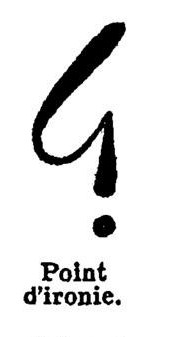
–See that? Putting such in italics? I can even write in sarcasm! irony mark
(Back in the 19th century they even experimented with a sarcasm/irony mark as above. Can’t find it on my keyboard, though.)

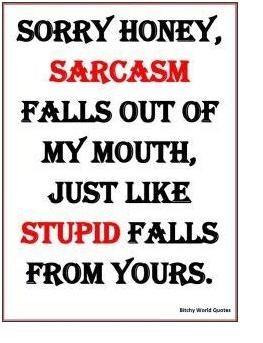
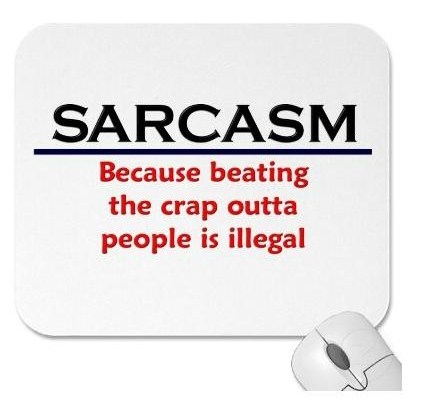
Sarcasm is everywhere, and in meme form, it’s a virtual epidemic. (Just try searching on Pinterest for Sarcasm, then stand back and shield yourself!)

sarcasm2

Then . . . I heard the sentiment above, that sarcasm is just easy and lazy and damaging.

And I thought . . . Oops.

Good old Wikipedia gave me more insight (and I mean that sincerely—I DO like Wikipedia, no snark intended). Look at the meaning:
The word comes from the Greek σαρκασμός (sarkasmos) which is taken from the word σαρκάζειν meaning “to tear flesh, bite the lip in rage, sneer”.  (http://en.wikipedia.org/wiki/Sarcasm)

Tear the flesh?! No, I don’t mean to do that! I just mean to be a bit snarky, but validate it by saying I was only being sarcastic . . .

“Sarcasm I now see to be, in general, the language of the devil; for which reason I have long since as good as renounced it.”
That’s from Thomas Carlyle.
That’s piercing me to the core.

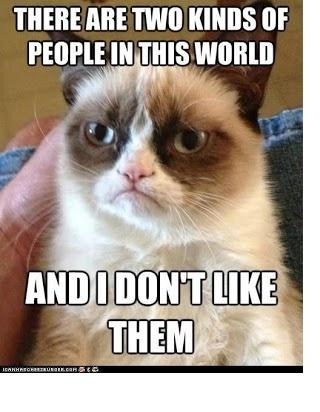
Language of the devil? Uh . . . maybe. Consider all of those angry cat memes. There’s definitely a connection. (I heard this cat’s name is Beelzebub . . .)

angry cat

(And I hate myself for sniggering at this. Funny, but . . .)

But is sarcasm really that awful? I mean, come on. People bug us, so we MUST retaliate, right?

sarcasm

Then I read this article about “No Corrupt Communication,” (read it here) by Jennifer Grace Jones: “Not all sarcasm is intentionally sinister, but it has a hypocritical edge because it requires us to say the opposite of what we mean. Some use it for humor, but it often damages our relationships.”

I’ve known families that communicate only in sarcasm, and there’s very little genuine love expressed. In fact, there’s very little expressed at all, except thinly veiled contempt, when I suspect they actually feel much, much more. But they’ve never learned to speak in any other way.

In another article I found this painful little nugget: “Sarcasm . . . is usually based on inordinate pride and is usually aimed at some person or group thought to be inferior.”

Erg. Yes. I may be guilty of this . . .

All right, I am. And I know it, because when I employ a little snarky jab, or laugh at yet another sarcastic meme, I always feel a twinge of regret later, as if I just ate the last of the cookies and told my kids I didn’t know what happened to them.
Initially, I enjoyed gorging myself, then afterwards I remind myself I could have done something much better.

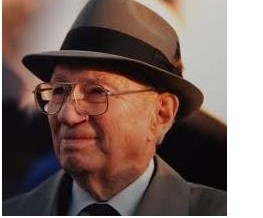
The words of a fantastic and inspired sweet old man, gone now from this world, put it like this:
“Everywhere is heard the snide remark, the sarcastic gibe, the cutting down of associates. Sadly, these are too often the essence of our conversation. In our homes, wives weep and children finally give up under the barrage of criticism leveled by husbands and fathers. Criticism is the forerunner of divorce, the cultivator of rebellion, sometimes a catalyst that leads to failure.”
~Gordon B. Hinckley

Hickley 1

Look at that face. That’s a man who never uttered a sarcastic word in his life. I want a face like that. (Except female. And a bit younger, and . . . but you know what I mean. And the hat–the hat’s awesome!)

But then I found this nugget by Dostoyevsky and, like any person forced to make a life in Russia, he sees things a bit darker, a bit harder: “Sarcasm is usually the last refuge of modest and chaste-souled people when the privacy of their soul is coarsely and intrusively invaded.”

Is there a place for sarcasm? It’s not always hurtful; occasionally we use it in our family in what I think are gentle, teasing ways . . . until my 5-year-old says, with sad eyes, “I don’t like it when you tease me. I feel confused.”

Ooh. Sorry.

Maybe sarcasm is ok only in limited circumstances, when the only other option is violence or rage.
Maybe it’s the only way to deal with disappointment.
I find myself leaning on it as a crutch when I deal with toddlers. For example, when I found my 19-month-old had colored again on the walls with “washable” markers (Crayola and I need to have a talk about the definition of “washable”), I looked into his big proud eyes and said, with all the sincerity of heart I could muster, “Why thank you. You know, when I was hugely pregnant with you and painted each one of these a nice pale blue in anticipation of your arrival, I hadn’t expected that you would want to augment the color with purple, brown, and pink. It’s just . . . lovely.”

Either that, or rage at the poor little guy even though it was my fault for thinking I had secured the markers, but failed to hide every chair in the house to keep them out of reach.  Sarcasm saved my little guy, calmed my frustration, and made me chuckle at myself as I uselessly scrubbed.

No, my soul wasn’t exactly “coarsely . . . invaded,” but something inside of me was pinged, and sarcasm saved us all.

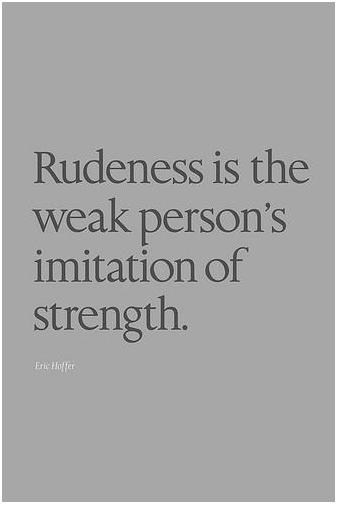
But I think these are rare circumstances. Consider this meme:

rude

Sarcasm, at its heart, is simply sheer rudeness to those we feel we’re superior to.

All of us are better than that, surely!

Again from Jones’s article: “I’ve noted that those who use [sarcasm] tend to underestimate its negative effects because they assume that what they say is humorous instead of hurtful. People who use sarcasm often think their targets are too sensitive or naïve when feelings get hurt. “She just can’t take a joke,” they say. In more disturbing cases, sarcasm communicates contempt for others and gives people the “dishonest opportunity to wound without looking like they’re wounding.”

I want to be better than that, so I’m attempting to put myself on a sarcasm diet. I’m going to parcel out my servings of sarcasm, or indulgences of snarkiness, as judiciously as I should be eating cookies. Sparingly, appropriately, and avoiding it as often as possible.

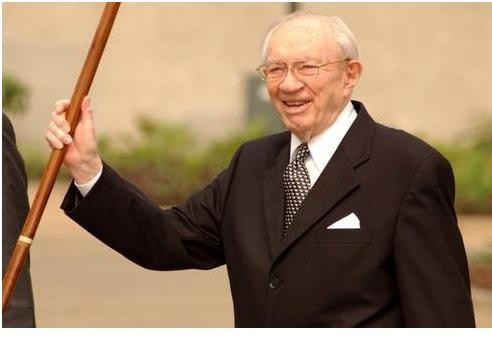
Another gem from that sweet old man, Gordon B. Hinckely: “I’m asking that we look a little deeper for the good, that we still our voices of insult and sarcasm, that we more generously compliment virtue and effort.”

Hinckley 2

Sarcasm is easy, lazy, and “the imitation of strength.”

I want to be stronger—truly stronger. And not eat so many cookies.

“Make your decisions as to what to embrace, but let me embrace my belief.”

In 1836 a prophetic man wrote the following words which we still need today: “We claim the privilege of worshiping Almighty God according to the dictates of our own conscience, and allow all men the same privilege: let them worship how, where, or what they may.” (emphasis added)

The idea of allowing all people to “worship how . . . they may” is vanishing. The definition of worship, like so many words today, has shifted to mean: whatever you spend your time, money, and thoughts pursuing. The implications reach even beyond worshiping Deity (although an argument can readily be made that just about anything can become one’s “god”).

The quote above is a declaration that each person should choose how they will live and who they will follow. Many cultures believe in a judgment day that will eventually evaluate the correctness of one’s life. But we mere mortals don’t make that final judgment. Nor should anyone force another to live a life that feels dishonest.

I’ve written this book series to speculate what may happen to a society when beliefs and ideals are eliminated to allow for only one point of view, and where people are restricted to only one location. Forcing a belief or behavior works, albeit only temporarily, as fallen political regimes—and rebellious teenagers—have demonstrated throughout millennia. A person’s individual belief is an intimate and even sacred thing. It’s also vulnerable, subject to enlightenment as well as destruction.

Beliefs can strengthen and unite us, but they don’t necessarily have to divide us. You don’t need to agree with all of my beliefs, nor do I have to agree with yours for us to still value each other.

You may not believe in a god, or you may believe in a different manifestation of Deity, while I believe in a Heavenly Father and his son Jesus Christ and the Holy Ghost.
But we can still talk together.

You may believe in redefining the definition of marriage, while I feel that only God can do that.
But we can still be Facebook friends.

You may disagree with me on gun rights, or trends in schooling, or the nature of the family, or evolution, or which chocolate chip is better—Nestle’s or Hershey’s.
But we can still eat cookies together.

We don’t have to agree on everything, but we must agree to respect each other.
And we can.

In fact, I grow when you challenge my ideals, and I appreciate the opportunity to evaluate further what I think I already know.

I’ve worked with people who were diametrically opposed to so many of my beliefs that it was difficult to find common ground, but we found it. And worked together effectively.
And even called each other friends at the end.
Because we respected each other.

Then again, that was about 20 years ago.

Our world doesn’t seem to want to embrace mutual respect anymore. We used to call it “tolerance,” but even the definition of that word has been skewed to mean, “If you don’t agree with me, it means you hate me, therefore I get to call you names and bully you.”

This all-encompassing preoccupation with the self, instead of concern for others, creates a me-above-the-world mindset that promotes the individual before anyone else.
And that creates tyranny.

All the “great” dictators of the world started as bullies, or were bullied. But we all learned back in grade school that once you allow the bullies to get power, no one feels safe.

The bullies are winning now, in much larger venues and with much higher stakes. Incivility has become acceptable and even trendy, and it’s forcing people to retreat to different sides and take up arms.
But when did an all-out war ever really resolve anything, except to prove who’s the better bully?

Now, I readily concede that what I attempt to paint as a clear picture of mutual tolerance becomes murky when one person’s belief begins to affect the life of another. What I strive to maintain in my life may infringe on what you believe, and likewise your ideals may harm me.

But it’s also a very large world, with a great diversity of cultures, ideals, and peoples.
The point is, there is room for everyone. There’s no need to force every person into the same spot, the same box, the same belief system.
There’s room to explore, to change, to grow, to move.

Diversity is good. Diversity makes us think and reevaluate. Diversity reinforces our beliefs, or it can even lead us to a better, higher ideal.

Even the topography of the world is vastly diverse. How dull would the earth be if we had no deserts, no forests, no plains, but only ocean? The oceans never invade deserts, and forests stop so that plains can exist.

People are even more varied than topography. I don’t see that as a problem, but as a solution. The ocean doesn’t insist the desert changes for it; it simply resides where oceans reside best. Nor do the beliefs of others need to invade the corner of the world I inhabit, forcing me to change. Allow me to live how and where I choose, and I promise I won’t try to transform your section either. We can even visit and learn about each other, and there may even be some shifting of minds and hearts.

But there’s no reason to angrily insist that all the ocean water needs to go, or that all of the sand needs to vanish. We need both deserts and oceans—there’s room for all of the earth’s diversity, and room for all of our diversity, too.

We can still allow everyone to coexist, without choosing to feel threatened that others are different. I appreciate the sentiment of the coexist bumper sticker, symbols of differing ideals combining together to create a diverse whole.

coexist

Having met earnest believers of other religions, I’ve felt myself enlightened by their depth of soul and sincerity of heart. Goodness, like cookies, comes in a variety of sizes, colors, and flavors. I’ve learned to not label individuals with the slurs of generalizations. That’s what bullies do—shove individuals into groups, then attack the whole to promote only themselves. Some days it already feels that the world is out to get us, because the bullies are winning.

Sometimes it’d be nice to retreat to the very edge of the world, where few people rarely venture. But now’s not the time to run away, but to take a stand and ask, “Why does civility, equality, and freedom mean you have to destroy me?”

I started writing this book series four years ago, and have been grimly surprised to see elements I worried and wrote about initially are manifesting in society today. Books seven and eight will describe a world which frankly terrifies me, and it seems we’re running headlong towards that end in real life.

I also decided some time ago that I can just drift with the current like an apathetic fish and float to whatever dismal end there is at the end of the river, or I can swim against the current and insist on staying right where I choose to be.

I’ve chosen to fight the current, and to live at the Forest at the Edge where I can still speak my mind and follow my heart.

You’re more than welcome to join me.

IMG_5601edit   Trish Mercer