The best Christmas idea in years

Normally I don’t pitch products on my website, but this time I’m making an exception, because this is a truly clever idea (one that makes you think, Daggum, why didn’t I come up with this?), and because I was asked to contribute to it.

Santa’s Red Letter is a marvelous service created by my neighbors (Craig’s an uber- talented graphic designer). How cool would it be to receive a customized letter, with a gold signature, from Santa himself?

Yeah, great idea, isn’t it? (You’re saying, Daggum! in your head, aren’t you?)

The best part is, the receivers of these letters won’t know it came from you and will be amazed to receive a lush, gorgeous message from the North Pole complete with their names and even a few personalized details.

Actually, the very best part is that $1 from each letter goes to the Toys for Tots program, so not only can you send a piece of magic for Christmas, but a needy child gets a bit of magic as well.

Toys For Tots

My neighbors and my children’s friends, the Stapleys, teaching their kids to buy presents for others. Seriously, how cute are they?

So why do I care? Because this year the Stapleys tasked me to write up the letters, and I’ll tell you, mentally putting myself in the very ample pants of Santa was quite the experience. I chanted in my head, “I’m a fat old elf, and I’m happy to write to this sweet little girl . . .” or “I’m a jolly old elf pretty ticked off with James in Centerville . . .”

Nice LettersThere are two categories of letters you can choose from. Red Letters are for Nice children and adults, and even groups. We came up with 14 different kinds, for a variety of situations. For example, how fun would it be for a school or church group to receive a letter from Santa thanking them for completing a Secret Santa project?  http://santasredletter.com/collections/red-letters/products/big-hearts.

I also thought about kids who sincerely try to do something good this season, and how delighted they’d be to realize that Santa noticed: http://santasredletter.com/collections/red-letters/products/just-like-jesus.

And if you have a child asking for a hard-to-get item this year (that maybe not even Santa might be able to find)? We came up with a letter for that, too: http://santasredletter.com/collections/red-letters/products/hard-to-find

And then . . .

Naughty LettersAnd then, I had the delicious delight to think about, What if Santa was pretty disappointed with a child or—even better—an adult? We came up with seven Black Letters (cue the ominous music), and yes, as I penned these, I thought about people I knew who deserved a tsk-tsking from Santa. Here’s my favorite:  http://santasredletter.com/collections/black-letter/products/hall-of-shame-letter Seriously, my Hall of Shame letter still makes me chuckle, and surely you know of adults who really deserves to find this in their mailboxes!

There are also letters for kids who have far too many items on their wish lists, kids who have been treading in Naughty territory and need a nudging back to the Nice side, and even congratulatory and surprise letters for adults.

No, I’m not getting any kickbacks from this website, but I do get a kick thinking about kids and adults who’ll have a fun shock from receiving a letter from Santa.
And I get an even larger kick that last year the Stapleys spent well over $200 on Toys for Tots from this project.

This Christmas, let’s make that donation even larger.
So send someone a letter (each is only $11.95). Amaze your friends and family.
Have a blast.
And start having a Merry Christmas!


What if Santa Wrote Back?

Don’t judge me=I’m already feeling guilty

Some time ago I came to the realization that whenever someone throws out the “Don’t judge me!” line, it’s because at some level they suspect that they’re in the wrong, but they’re not ready to admit it, and certainly not ready to resolve it, and would rather that everyone STOP REMINDING THEM about it.

It’s called GUILT, and for some reason we often think we shouldn’t have to deal with that emotion.

My most amoral character agrees:

“Man’s greatest weakness! Guilt, regret, feeling bad about behavior . . . It’s a forced condition, you know, shame about a misdeed. A behavior taught to humans that can, and must, be overcome. Ignore it long enough, it dies away as simple as that . . . Humans abuse themselves. With guilt. With regret. It holds them back, makes them feel as if they owe some duty to others, as if there should be some level of behavior all should aspire to. Well, there isn’t! 
~Chairman Nicko Mal, Soldier at the Door

Well, there is!

And my, do we hate it when someone tries to remind us that the purpose of our lives isn’t to indulge ourselves and hope there aren’t any consequences.

I first encountered this very weak logic back in high school in the 1980s, when punk music hit the US. I had a few friends embrace the culture, dyeing their hair black and using a bottle of mousse each morning to make it stand up straight, putting spikes on every inch of clothing, then scowling when people stared at them.

“Don’t judge me!” I never understood that; they purposely put themselves on display, then didn’t expect people to look?

As a senior in high school I became grunge before Kurt Cobain made a name for himself. I wore holey jeans, didn’t bother with make-up, spent only 5 minutes on my hair (and yes, a few boys commented that I needed to “do something with it”—which pronouncement meant they weren’t boys I’d ever be interested in) and I did so for a purpose. I wanted to prove that I didn’t care about my appearance, but wanted to focus only on trying to get a scholarship (since I hadn’t been the best student for the first 11 years of schooling). Yes, people looked at me–this was the height of preppiness; watch “The Cosby Show” to see how I should have been dressing–and I rather enjoyed it. It was also a good test for my vanity; am I still worthy, even though I don’t “look worthy.” I was trying to make a point, and I made it. Judge me! Go ahead!

Social media has given us even more ways to stand up and be judged, or to scream, “Stop judging me!” Today I read Matt Walsh’s blog on why Christian women should hate Fifty Shades of Grey. I’ll state right now that I think the novel is women’s porn, so I agreed completely with his position.

However, the real lesson is in the comments, as it always is; scattered among the remarks of “Thanks for stating what I always suspected about that horrible book,” were phrases such as, “Hey, nothing wrong with reading about a little sex,” or “So what if I like a little excitement in my books?” and, most common among the dissenters: “Don’t judge me based on what I read! How can you be a Christian and be so judgmental?”

Ah-ha . . . someone’s conscious has been pricked, yet again. If they didn’t feel any guilt, they wouldn’t be justifying themselves, and in the huge social media presence of Matt Walsh, no less. There, for thousands of readers to see, they declare their stance yet demand that no one judge them. How very odd.

Weird Al, Mandatory Fun, Word Crimes, Grammarly

I have no doubt a few grammar Nazis wished they could find a similar uniform.

I see pricks of guilt and judgment everywhere on the Internet, and it always tells much more about the responder than what they respond to. For example, Weird Al Yankovic just came out with a brilliant parody about common grammatical errors, and Grammarly interviewed him about it. Again, the great lesson was in the responses to the interview, because poor Al accidentally used the pronoun “that” instead of “who.”

Oh, there’s no group more self-righteous and unforgiving than Grammar Nazis. (I’ve ranted about them here. Grammar snobs put the Pharisees of Christ’s time to shame.) These responders, instead of appreciating the incredible work of Weird Al, which he shares freely on YouTube so that all of us English teachers can kill another five minutes of class time; instead of being grateful that someone with a greater sense of humor has taken up the grammar cause; no, instead of applauding him, Grammar Nazis vilified him:

“People that know me … people that still haven’t figured out” 😦 And he thinks he’s a grammar nerd. <shaking my head>
[As of this is some kind of special club, and he just violated its most sacred rule.]

I, too, was shocked to see that he used that instead of who. 
[Yes, she actually wrote “shocked.”]

Fortunately there was some reason among the rabble:

Alright, everybody caught the “that/who” error. He’s still a satirical genius. Disagreement with that proposition is dissent up with which I shall not put.

Judgment is everywhere on the Internet, and just as we’re quick to not have people point out our faults, we’re even quicker to point them out in others. I think that’s because when we’re feeling guilty, the fastest way to assuage that guilt is to point out how someone is guiltier than us.

For example, I read an article about a woman who recycles clothing from a thrift store, updates it, then donates it back. I was amazed and humbled to realize she’d done over 700 pieces. I can sew (sort of), but it never occurred to me to use that minimal talent in such a generous and creative way.

Again, the lesson was in the comments. There were plenty of judgments which, I suspect, arose out of guilt.

“Look at the photos—she’s just shortening the hems and sleeves. That’s nothing too special.”
[And yet, still likely more than you did.]

“She’s only taking fat clothes and turning them skinny.”
[And what have you done?]

“As a plus-size woman, I take offense that she’s reducing the amount of clothing that would fit me, making it for skinnier girls. They already have plenty of clothes . . .”
[Seriously, she wrote, “I take offense.”]

And on, and on.

What I don’t think people realize is how transparent they are, how they give the world a telling image of themselves through their comments. Invariably, the more defensive people become, the guiltier they demonstrate themselves to be. I find myself cringing at their responses, pitying them that they’d expose themselves so freely and easily, showing the world their self-centeredness and pettiness.

Oh, he’s not getting out. Trust me.

It’s the old crabs in a bucket. If any tries to climb out, the rest drag it down, until eventually the crabs have torn each other into pieces. We envy others who dare to climb higher, feel guilty that we’re not doing likewise, don’t want them looking down at us from above in judgment, so we drag them back down and tear them apart with our criticism.

Now, I realize that what I’m doing here is also criticizing, on the Internet, and demonstrating my own transparency. I’m judging and doing all of the same things I’m nagging about here. I’m not going to rationalize away my post, but I will draw a distinction: our society is very loath to declare something “moral” or “immoral.” You want to see declarations of “Don’t judge me!” fly? Then make a declaration of what’s right or what’s wrong. Oh, they’ll be coming out of the woodwork like termites exposed to sunshine to come after you.

Yet, this is what we must do:  make evaluations—of products, of ideas, of media, of people—in order to recognize the strengths and weaknesses, the logic and fallacies, the truth and errors, and publicly declare what we have recognized.

And then, this is very important, then do NOT be offended at what comes back at us. If we’re going to be brave enough to take a stand, we have to remain brave enough to let people see us standing there.

As a practicing Christian, I believe wholeheartedly in the Judeo-Christian beliefs of accountability to a higher Being, in following the 10 Commandments, in realizing that life isn’t about getting what I want and when I want it, but in serving others first. It’s crucial for me to recognize what elements in society detract me from pursuing my chosen lifestyle, therefore I not only read about but also comment on those elements.

However—and this is a BIG “however”—we must also be honest with ourselves as to WHY we are making these public evaluations, these statements of “this is bad, and this is good.”

  • Are we doing so because we are truly concerned about the direction of our society, and we want to point out the slippery slopes to help our friends and family avoid them?
  • Or are we critical online because it gives us a sense of superiority?
  • Because we displace our guilt when we shame others?
  • Because we’re merely crabs in a bucket, unwilling to let anyone else rise higher?

And when we decide–and it is a decision–that we are “offended,” we also need to be honest as to why.

  • Has someone pricked our conscience?
  • Demonstrated where we’ve strayed from our personal yardstick of acceptable behavior?
  • Were we looking for a reason to hate “X” or shun “Y” and so we’ve chosen to be offended?

Sometimes we swing that word around proudly, as if being “offended” is some kind of virtue.

Personally, I think it’s a weakness. Years ago I heard someone state this philosophy, and I’ve taken it as my own: “You cannot offend me, for I simply refuse to take your criticism, to see your opinion as overriding my own, to give your hurtful words any room in my mind. If I am right with God, then I needn’t worry about where you think I am wrong.”

(Yeah, it’s a lot like, “I’m rubber, you’re glue; whatever you say bounces off of me and sticks to you,” but a bit more eloquent.)

I’m not saying I live this philosophy perfectly—I took a beating from trolls not too long ago that really tested my resolve—but I’ve found that when someone says something that threatens to offend me, it’s usually because they’ve knocked something inside of me that I’ve tried to hide, like C.S. Lewis’s proverbial rats in the attic that we’re shocked to discover, but were always there, hiding despite our attempts to ignore them.

Over the years I’ve learned to not blast those “stupid people!” in online forums, but I instead I retreat to my closet, get on my knees, and ask where I should be doing better.

And I’ve also realized that God’s criticism is much gentler, more instructive, and more uplifting than any arguments I engage in on the Internet.

In the meantime, I appreciate those who state boldly their opinions on issues that concern me. Even if they declare, “There’s really nothing wrong with a little bit of porn,” I’m grateful, because then I know who I need to distance myself from in the future.

Idioms for idiots

Because hats don’t weave themselves. ~Sergeant Beneff (Book 3 “The Mansions of Idumea”)

In books 3 and 4 I have a character named Beneff who has an idiomatic problem with idioms. I wrote him, in part, as an homage to my father, who was intensely frustrated by American idioms: those phrases that everyone understands, even though they frequently make no sense.

Here’s a typical conversation my father would have with anyone who’d listen:
“Why do Americans say ‘Back and forth’? How can one go back without first going forth? It should be, ‘Forth and back’.”

Dad, a German immigrant, would sincerely ask this of everyone, looking for a logical answer, while I, as a child, would look for a convenient exit.

People would give my dad an uncomfortable smile that said, Have you taken an unusual medications today? before they’d shrug and say, “I . . . never thought of that before.”

After all, cows know how to smell the sunset. ~Beneff

However, almost always these innocent bystanders in our neighborhood/church/grocery store would later find my dad and say, “You know, you’re right! I’ve been thinking about it for days/weeks/months, and we say that wrong.”

But it’s still “back and forth” despite my dad’s aggressive reeducation programs.

dad confused

My dear father, making the face he usually did when confused by something, usually English.

And it’s still “Head over heels in love,” too, despite my father’s protests to the contrary. “Your head is ALWAYS over your heels! It should be, ‘Heels over head in love.’ Who came up with these things?”

Because if the boot leaks, check with the bakers. ~Beneff

That’s the age-old question, isn’t it? Where idioms come from? I found it quite easy to generate a number of Beneff-idioms that almost make sense, all in one afternoon during a particularly dull church service. And sometimes I wonder if that isn’t where some of our stranger phrases came from: the mind of someone slightly overheated, trapped on a bench, wrestling with a bored toddler. But there’s no definitive answer as to why we’re stuck with phrases that, even if you think you understand the context, still are illogical.
(Fathom out “whole nine yards”; I dare you.)

Over the years I’ve realized my father—now in his 80s and suffering from Alzheimer’s—was right. He became quite fluent in English, so much so that it’s still his remembered language, and not German. Once when I was a child he pointed out a butterfly and said, “Someone in English got that wrong, too; it should be a ‘flutterby’.”

(However, considering that German word for butterfly is “Schmetterling,” which sounds like something you need to whack repeatedly with a baseball bat to keep it down, I don’t think German is all that superior to English.)

After all, when the birds fly, it’s time to count the bushes. ~Beneff

052

(My mom certainly didn’t think he looked “bad.”)

Dad’s frustration with English began when he first came to America in 1953 as an eager 22-year-old, hoping for a new life after WWII. He’d been practicing his English, and when he went through immigration in New York, he was relieved all of his papers were in order. The agent inspecting them handed them back to my dad, who promptly and properly thanked him, to which the man responded, “You bad!”

My dad was stunned to be labeled so quickly, and that the man was smiling at him when he declared my father bad. For days my dad was shaken by this, and even heard other Americans declaring “You bad.” Finally, he realized that it wasn’t “You bad,” but “You bet!”

And that confused him even more.

Soon Dad connected with a relative, and mentioned this strange phrase to him. His relative explained that “You bet” was a weird American way of saying “You’re welcome.”

“But I don’t understand; they want me to bet? Bet what? I’m not a betting man!”

My father’s first few weeks in America were a bit stressful, as you can imagine.

As the wind blows, so squirrels are to trees. ~Beneff

All kinds of phrases flummoxed him:

“Why is dropping a hat making you do something faster?”

“But cutting mustard is easy!”

“Rule of thumb . . . well, my thumb is exactly one inch wide.”

“Hold your horses . . . hey, I understand that.” (And he used it a lot.)

But he always blushed whenever he said, “I’m pooped!” because he was never quite too sure about that one.

Anyone learning a second language is appropriately bewildered by idioms, and as a college student trying to learn German, I went to my dad for help with some of his native tongue’s idioms. But we both gave up.

“Look, we say ‘bite the sour apple’ and you say ‘bite the bullet’,” my dad tried to explain. “How is that more logical?”

“But I don’t think they mean the same thing,” I countered.

“Sure they do! They both mean, ‘Later, you’ll have to go to the doctor.’”

Twenty-five years later I’m still wondering about that.

And then there’s my German mother who, for years, thought the phrase “You’re crazy,” was “You’re grazy.” One day she confided to me, “I don’t even know what the word ‘grazy’ means, and I can’t find it in the dictionary.”

049

After 50 years of marriage, my mom was more than happy give her business to local bakeries, or her children.

She’s also the woman who, frustrated after failing yet again to master a pie crust, yelled, “Who came up with that phrase, ‘Easy as pie’? That’s a stupid idiom, and an even stupider dessert . . . get me some chocolate!”

Because that’s not a pig clucking. ~Beneff

Don’t read this, don’t write that

Like every indie writer, I’m hoping that my efforts to self-publish will someday be enough that I can pay a bill or two. I have no fantasies of big J.K. Rowling bucks (ok, not realistic fantasies), but I’m always looking for ways to knock down my car loan a bit. 

So when an indie publishing company sent me YouTube testimonials from their best-selling authors, I eagerly watched to see what the grand secret is to making money.

Turns out, it’s writing smut.

Now, to be fair, I didn’t watch every last testimonial, but after the third one I began to see a distinct pattern, and it made me very uncomfortable.

The videos were well done, predictably following around the authors as they walked in grass, or along a beach, and maybe sniffed a flower or two, while the voice-over discussed how frustrating their former lives were (interestingly, most were school teachers) and how after independently publishing they had enough cash flowing in each month to not only take care of their children and pay their bills, but to quit their former jobs and take exotic vacations.

At some point I began to feel like I was watching an infomercial, so I wrote down the authors’ names and looked them up.

And my jaw dropped. 

Women’s porn.
That was what each of them was writing (one even with her husband; I wasn’t sure if that made things better or worse). Now, I realize that genre of books goes under tamer titles, such as “graphic romance” or “erotica,” but the snippets I read in the previews—before I looked away after only a few lines—fit my definition of porn.

Not only did the subject matter shock and disappoint me, so did the books themselves. Many weren’t even 50 pages long and priced at over $5 for the e-book, which is hardly a bargain.

There were dozens of titles from the authors, all on the same themes of lonely women finding unrealistic men who are obsessed with, well . . . you know.
And the reviews were also disturbingly the same. I’ll spare you the details, but it was obvious by the hundreds of reviews that not one of the gushers cared about literary merit. 

Occasionally I ran across a one-star review, and it was filled with dismay. “What a piece of trash! I can’t believe people are writing—and buying—this crap that reads like the notes we passed in 7th grade. Write the word ‘boobies’ and everyone gets all in a titter. Is no one noticing this?! What’s happening to books?”

I don’t know, but I agree—literature is taking a nosedive.  I’m sorry—I shouldn’t even call this literature. Let’s stick with “smut.”

These books are in the same vein as Fifty Shades of Gray, which is all about a woman repeatedly “achieving” something, and sold more copies than the Harry Potter series.

Really.

Our society is fond of believing that reading is good. Hey, it’s better than (fill in the blank yourself). In fact, it’s quite difficult to find anything that encourages against reading (I know—I’ve been looking). Because . . .

Reading is empowering!
Reading let’s you escape!
Reading improves your mind!

Not always.

What you read changes you, for good or bad. And novel reading hasn’t always been held in great esteem. For many generations, calling someone a “bookworm” was an insult; you should be out working, laboring for your family, instead of lazing about the house with your nose in a book.

We’re all influenced by the books we read, some more than others. I can tell what kind of stories my children are reading based on their behavior that day. It’s not rocket science; it’s human nature. If we weren’t influenced by what we read, why would we bother?

There is something sacred, I think, about a great library because it represents the preservation of the wisdom, the learning, the pondering, of men and women of all the ages accumulated together under one roof to which we can have access as our needs require.  ~Gordon B. Hinckley (emphasis added)

Books can uplift and motivate us, but they can also send our thoughts into despair and fear, and everywhere else in between. There’s a certain magic there; but according to every fantasy book out there, magic is temperamental, and can go in any direction.

I’m anxious when I see how many sexually explicit and graphic books are now being written by women and for women. I can’t help but wonder, what does such an adolescent fixation on sex do to a person’s psyche and relationships? 

There’s been truckloads of research done on the negative effects of porn on men, but I’m beginning to think we need to start evaluating women as well. According to the book reviews I marveled at,  some of these readers do little else than indulge in these pubescent stories. I personally know of two marriages that suffered when the wives became too obsessed with a particular book series dealing with vampires and werewolves; so what’s happening in the lives of those who read books that are far more explicit and unrealistic?

Now, I’m sure there are those who will say I shouldn’t judge books and their contents. But to that I say, why not? Look at the reviews for any item on Amazon—those are judgments. Any time you think about reading a book or going to a movie, you ask for other people’s opinions (judgments) about it.

But what those who play the “don’t judge” card really mean is, Hey—you’re hitting a bit too close to home, and I don’t want to think about that right now. I’ve got another novelette about fat girls and their “achievements” to read.
The “don’t judge” argument is usually a front for, “stop making me feel guilty.”

This post is certainly not to say that all indie writers fall into this hole of smut. I’m acquainted with many self-published authors who create marvelous pieces of fiction and fantasy, who enjoy controlling their own work, and have written books that earn the title of “literature.”

In fact, I’m writing this rant in defense of the rest of us indie writers—the majority of us laboring to develop stories with character and purpose—to demonstrate we’re not all out to make a buck off of “low-achieving” women.

Our books are as different from these smut-o-grams as homemade, hand-breaded chicken fingers are from Chicken McNuggets. They may have similar names, but one is carefully prepared, finely balanced, and tastes marvelous, while the other is nasty chicken sludge boiled in oil.

That’s why I promise, right here and right now, that I will never make nasty chicken sludge, or write smut just to pay the bills. Some time ago a beta reader suggested that if I made my books more “interesting” (i.e. add some salacious details in the first chapters), I could really “make something of myself.”

That left a horrible taste in my mouth, and I told the reader I didn’t need them as a reader anymore.

Because how you feel after consuming something I created is far more important to me than my paying off my student loan debt. (And if you knew how big that is, you’d be even more impressed.)

Grammar Snobs

I’ve had acquaintances confess they fear writing to me because they worry I’ll be like this:

But I’m not. As a long-time college writing instructor and occasional professional editor (and occasional maker of mistakes myself), I assure my friends that I never correct one’s grammar unless they’re paying me. Because I refuse to be a Grammar Snob.

grammar

I’m not.
I promise.

Oh, I’m so glad you asked what a Grammar Snob is!

First, a disclaimer: as a teacher I will point out every last error I see in a paper, and will even lecture on the finer points of language usage.

But as a friend I would never correct another person outright or even in my mind, because if I did, that would turn me into the most wretched of self-righteous creatures, the Grammar Snob (or grammatical superbia).
(Did you see the snobby thing I just did there? Converted it into Latin? With the help of a website. Because I’m just faking a knowledge of Latin here.)

Grammar Snobs hunt for errors like a vulture for a corpse. When a friend emails about the heartache of discovering her husband has been cheating on her, Grammar Snobs can’t help but snigger that she wrote “udderly devastated.”

When a young couple continually writes “Greatful” in their blog about how wonderful the hospital care was for their infant with RSV, Grammar Snobs roll their eyes and mentally cross out all occurrences of the offensive mistake.

Discworld Quote by Sir Terry Pratchett. By Kim White.

Thank you, Terry Pratchett

When a teenager gushes about her acceptance into highly selective college, Grammar Snobs chuckle mirthlessly at her usage of more exclamation marks than should be allowed on one Facebook page.

Now, I may be taking things a bit far here, but I happen to know of some colleagues who fit this behavior, and I worry that our linguistical superiority is turning us into heartless buffoons.

We cringe when others with sense of heightened knowledge and a desire to demonstrate said knowledge barge into our personal spheres. Think about the fashion aficionado who gives your outfit the once over, then the twice over, then the long drawn-out sigh.

Or the neighbor with the personal gym in his garage who eyes you as you mow your lawn and shakes his head in time with your belly.

Or the political pundit who expresses outrage–yes, outrage!–that you have no idea what bill Congress is threatening to pass.

Don’t we hate all those people who point out we’re not on the same level as them?

Yet somehow Grammar Snobs don’t see themselves in that category. Perhaps it’s because many of us have appointed ourselves Champions of the English Language (or vindicem linguae anglicus—that Google translate is the bomb, baby). And in an attempt to preserve her purity, we feel the duty to point out when anyone attempts to heinously ravish our beloved mother tongue. 

But I think it’s something a bit less noble than that.

I think we simply like believing we know something more than the next guy, and we want to prove it.

In my undergrad work I had a professor who told our language usage class that he went to college as an eighteen-year-old full of ambition and promise, and was mortified to realize just how deplorable his command of the English language was. He spoke like the rest of his family—Idaho potato farmers—and quickly discovered the definition of the word “hick.”

Because he had dreams of becoming a university professor, he set out to improve his pronunciation and grammar. When he went home at Christmas he promptly showed off his new knowledge by correcting all of his family members, beginning with their ubiquitous “we was.”

The visit did not go well, as you can imagine.

Shortly before he was to head back to the big city, his grandfather pulled him aside and said, “You may know how to talk good, but you shore don’t know how to make people feel good. That’s more important.”

My professor told us that over the next few years he learned how to cultivate his “university tongue” but also easily reverted back to “farmer tongue” whenever he went home to visit. He could mangle verb tenses and drop incomplete sentences as easily as his uncles.

Now, correct grammar certainly has its place: in correspondence with those you don’t know, in formal situations, and in emails to those who have position over you.

(Note to parents of future college students: Please tell your children that sending an email to their professors with language such as “so umm like i was wundering if this is gonna be like a hard class or not lol?” is NOT the way to make a good first impression. Such emails violate all three of the above rules, and instructors remember these students. Oh, do we remember these students . . .) So true.

And yes, there are times to correct others in their grammatical missteps, but it really should be in private.

I know a woman who takes perverse delight in correcting her husband’s slight mispronunciations in public. She may think she comes across as educated, but what we’re all thinking is, “The poor guy. If that witch treats him this badly in public, what’s she doing to him in private?” My insides squirm whenever I see this couple approaching, and over the years I’ve noticed he says less and less, which is unfortunate because he usually had wonderful things to say. Even more unfortunately, his wife now gabbles endlessly, proving that she’s not nearly as educated as she pretends to be.

I’ve learned to train myself to not be hypersensitive to the tiny errors—and really, mixing up there/they’re/there are minor errors—when I read my friends’ posts and blogs. If I’m too fixated on their mistakes (which fixation is my problem, not theirs) then I miss the message they’re trying to communicate. Well, that's one way around the problem.

Grading freshman essays for twenty years has taught to me to focus on the ideas, not on the surface errors. That’s something graduate schools try to teach their composition TAs: surface errors shouldn’t account for more than 10% of an essay’s grade. More important are the deeper issues: organization, thesis, development of thought, logical fallacies, etc. In my grad school days there were a handful of TAs that would have red-inked an otherwise excellent paper into the depths of F-dom merely because the students struggled with then/than.

Grammar Snobs seem far more interested in demonstrating their grasp of linguistic trivia (or linguae minutiis; Google translate—where have you been all my life?) rather than trying to understand what’s being communicated. Just read the comments on posts to Grammarly.com’s Facebook page to see the Battle of the Grammar Snobs.
It’s embarrassing, it really is.
I put a wince on my face before I even start reading, just to save time.

So Grammar Snobs, may I issue this injunction: Be kind to your friends, your family, your social networks. Don’t miss the message because the writer doesn’t understand the importance of the Oxford comma.

When we obsess over the minutiae, we may miss the marvelous.
(Ooh—quick; someone make that a meme, will you? Nam cum obsiderent minutias super nos mira careat—It even looks good in Latin.)

Because the only thing more uncomfortable than a Grammar Snob is a Latin Wanna-be Snob. (Finite Incantatem.)

Punctuation

I don’t like Jane Austen, and I’m so sorry about that

After years of shielding my pride, of trying to convince myself I’m of another persuasion, of losing my sensibilities in the attempt, I’ve finally come to the conclusion that I must, once and for all, admit the truth:

I don’t particularly care for Jane Austen.

Although the Regency-era submarine was a clever twist.

Oh, how it pains me to write those words!  I feel positively wretched because for years I’ve done my best to watch every movie adaption and read every book, including Sense and Sensibility and Sea Monsters, and now I must confess that I rarely finished reading any of them because . . . I got bored.
Oh, dear.

Oh, I’m so sorry Jane! I’m so sorry all of my dear friends who love, love, love the regency period!

135

My darling daughter in her Regency-inspired wedding dress and hair, with my hunky husband.
(The only song he would willing dance to was “People Are Strange,” by the Doors. May explain a few things about us.)

I love it too. I’ve sewn empire waist dresses for my daughters as costumes, would wear one to church (the non-cleavage kind, of course) if I had the bosom to do it justice, and my oldest daughter’s wedding dress was obviously Austen-inspired.

But I slog through Austen’s books as if they are philosophy texts.
Actually, I’d prefer philosophy texts.
Oh, dear.

I came to this horrible conclusion as I tried to read one of my favorite authors about one of her favorite periods which was adapted into a movie that I thoroughly enjoyed: “Austenland.”
About one-third of the way through the book I found myself skimming—yes, skimming, as if I’m in college again and have to get through Thomas Hardy! How could I do this to Shannon Hale?

What’s wrong with me?!

I was hungrily looking, searching for the interesting parts . . .
And last night I nearly cried when I realized that the conversations, the nuances, the descriptions—all of that is supposed to be “the interesting parts”!

Oh, dear.

Where’s my romantic gene that revels in significant looks and subtle dialogue? I get completely lost in Austen-esque language, just like I was always lost in my college poetry classes.
(Hey, if your breaking heart feels the same way the stormy sky looks, just say so, ok? Don’t ramble on with images for three pages, because I have to write an essay on this, and my stupid grade depends on my inability to figure out a dumb puzzle written by a depressive dude hundreds of years ago!)

(Little wonder that when I pursued my graduate English degree, I shifted to rhetoric and technical writing.)

I have a sister who reads Pride and Prejudice every year.
I have daughters that do the same.
But I simply can’t. It took me my fourth reading attempt before I even finished it.
Oh dear.

I fear that I am alone in this I Don’t Understand this Madness for Pride and Prejudice (I-DUMPP).

It seems everyone else gets it.
“You’ve Got Mail” is essentially an adaption of Pride and Prejudice, and the book plays a part in the movie. Even if Tom Hanks’s character rolls his eyes as he muddles through the “hithers” and “dithers” he finishes it his first time around so he can discuss it with Meg Ryan.

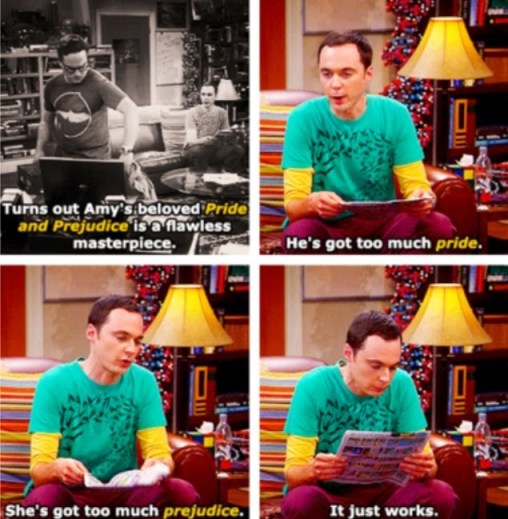
Even Sheldon Cooper on “The Big Bang Theory” read and had to acknowledge that Pride and Prejudice is a perfect novel.

Except that I find it . . . dull.

I love the time period; perhaps that’s why I adore Terry Pratchett; all the stories of DiscWorld are set in a similar time. But maybe my I-DUMPP is because I’m no good with subtlety. Since Pratchett’s characters frequently have the delicacy of a sledgehammer, I can relate to them.

Or maybe I suffer from I-DUMPP because I don’t have a romantic cell in me. My book club read a nauseatingly sappy book which had me cringing for so long my face was cramped for a week. As we discussed it, I mentioned that the kissing scenes were a bit too detailed and long, and I was met with several blank stares as if I’d just said I don’t understand why everyone doesn’t have a third hand like I do.

My friend/editor said sweetly, “That explains a lot in the first book you wrote—you really don’t do romance, do you?”

(All I had to type into Google was “Colin Firth white” and it filled in the rest for me.
Popped this up all on its own.
Even Google gets it.
So why don’t I?)

Nope. I simply don’t get it.

I try to, though. I chuckled when Shannon Hale wrote, “Colin Firth, in a wet, white shirt,” was that all women would need to hear to understand the appeal of Mr. Darcy.

But I don’t understand.

The I-DUMPP in me rather preferred Colin Firth in “Nanny McPhee,” or even better as King George in “The King’s Speech.”

I just can’t explain why this is better. Maybe because those bizarre mutton chops are missing. And there’s something about a dark blue uniform . . .

That’s because in every screen adaption and in every BBC version of P&P I keep trying to understand why Mr. Darcy is attractive. He just strikes me as a moody, quiet man without much to say or do except to brood.

Brooding is . . . boring.
I’m so sorry.
Oh, dear.

A British literary character I do appreciate is Commander Samuel Vimes of Ankh Morpork: ragged, rugged, and using his sword for more than foil practice. Perhaps this is why I write stories about men in dark suits and uniforms who run after the bad guys, rather than reading about men who stand around in parlors saying underhanded yet witty things that go over my head. I get fidgety when I read such passages, and want to drag the men out of those stuffy rooms and over to the pond so we can do something more constructive, like chase geese.

My husband doesn’t understand this notion of romance either—and he’s dutifully watched nearly all of the adaptations with me—which is probably why we’re such a good match. He proposed to me off-handedly in a baseball dugout after a spectacularly embarrassing intramural game I played in college (my fantastically hit ball—intended to impress my boyfriend–instead turned foul, and also the umpire into a soprano).

Dave smiling

Yet another man more appealing than Mr. Darcy; notice the lack of bizarre sideburns, the dark suit, and the presence of a smile.

Sadly, this is always what I picture when I think about any of Jane Austen’s leading men.
I’m so sorry.

My husband doesn’t bring me flowers, nor do I want them. Instead, we buy each other fruit trees or berry bushes, because those are far more practical. Our idea of date is wandering around HomeDepot sniffing the lumber, driving up the canyon looking for moose, or sharing a slice of cheesecake while watching something starring Rowan Atkinson in something entitled “Sense and Senility.”

Oh, dear.

And yet, we have nine children, so something seems to work.

want to love Jane Austen.like and respect the woman, and all that she accomplished.
And I want to see the purpose of taking long turns about the park (what the heck does that even mean?) and gossiping about people (although I thought that was a socially unacceptable thing to do).
want to see the long dances as something more than dull exercise where you have to touch men you wouldn’t touch in any other circumstances.
want to see these people doing nothing more than talking, picnicking, talking, walking, talking and riding as something interesting, but I just can’t.

Commander Sam Vimes, awesomely armed with a swamp dragon.

Instead, I want to smack them out of their fretting and lecture them like Sam Vimes did in Snuff, (a book I just finished reading for the fifth time, in two years. Oh dear.):

“Ladies, the solution to your problem would be to get off your quite attractive backsides, go out there in the world and make your own way!  . . . Trust me, ladies, self-respect is what you get when you don’t have to spend your life waiting for some rich old lady to pop her clogs. And takers?” 

(Sledgehammer diplomacy; I understand that.)

So forgive me, my dear friends, for while I love the idea of Jane Austen and all that revolves around her, she has become to me like peppers: I thought I loved them, I know I like the idea of them, and I certainly see their value in so many dishes, but on the rare occasions I actually get to eat one, I find myself gagging at the rubbery texture, at the flavor that’s too piquant for my tastes, so I spit it out and think, “Darn it—I really wanted to like that.”

If anyone else is willing to come out of the closet and admit to I-DUMPP, I’m here for you.

She’d read a few silly love stories when she was a teenager, trying to understand her friends and their longings for admirers. Most of the secretive tales were slid from girl to girl under desks where teachers wouldn’t notice, and were so sappy that she was surprised the well-worn pages weren’t stuck together from the goo.
~ “The Forest at the Edge of the World”

What you read matters

It is what you read when don’t have to that determines what you will be when you can’t help it.” ~Oscar Wilde

I’ve been thinking about a post I read of a woman bragging about how many books she read over the summer: over forty before she lost count. Since then I’ve noticed many other people claiming they read two or three books a week, and I’m astounded.
Why?
Not because I’m jealous (I’m assuming these women—all mothers—simply don’t sleep), but because I don’t know how they absorb what they read.

But maybe that’s my fault. I don’t read simply to zip through a book. Something inside me insists on devouring, savoring, then regurgitating the story. 
Uh, ok . . . that wasn’t very appetizing, but honestly I can’t come up with a more suitable metaphor.

What I read becomes part of me, of my psyche, and shapes how I view the universe and the minutiae around me. Because of that I’m very selective as to what I read. I know that, like a large soup, this book in my hands will add to the recipe of me, and I want to make sure that I’m not tossing in something unsavory or unsuitable, like a box full of donuts.
That’s not to say donuts don’t have their place (and the gluten-free part of me is now in Homer Simpson-like mode drooling and saying, “dooouughhnuuuuts”).

But a steady diet of donuts is unhealthy. (Oh, how I miss donuts!)

I’ve started many more books than I’ve ever finished. By the third chapter of a novel I decide if I will continue to add this ingredient to my stewing mind because it will expand the flavor or add a unique and unexpected taste, or if I will set it aside because it will taint the entire pot.
About half the books I’ve picked up I’ve put down again after half an hour. Sugar-coated nothingness—or worse, caramel-covered excrement—doesn’t belong in my head. 

I’ve seen many examples of people unconsciously exhibiting what they’ve read. Once I was tutoring a young woman with severe reading disabilities, helping her to learn reading rules she never before mastered. As we slogged through a passage about a young man confused and bewildered and looking for answers, we came upon this sentence:
“He wandered into to the woods to —”

I knew the word was “pray.
But she read the word as “party.”

When I quietly corrected her, she chuckled and said, “Guess you can tell what I was trying to read right before I came today!”
I didn’t ask.

For many years I did the following experiment with my students, to demonstrate how what is on their minds alters how they interpret the world. I divided the class into three sections and had the groups close their eyes. Then I wrote some words on the board, had one group read them silently, close their eyes again, and I repeated the procedure with the other two groups. Each group saw only their collection of words.
I then had all of groups open their eyes and tell me what the word should be that I wrote on the board: r_pe.

One third would say “ripe,” because the words I put on the board were banana, apple, and orange.

Another third would say “rope” because they read the words string, knots, and boats.

That’s when the third group would squirm uncomfortably, because they saw the word as “rape.”
Why?
Because on the board I wrote anger, violence, and power.

I never had a class that wasn’t surprised at how what was most recently in their mind affected the innocuous letters put before them, requiring their interpretation.

So I worry when I see acquaintances posting about books they’ve read, or talking about stories they love, because those were books I set aside. I hope that the rapidity with which they gulped down those words means none of them really stick, but it eventually all comes out.

A friend of mine says she can tell the difference between when her daughter has been consuming Shannon Hale versus Manga. The level of her teenage angst varies drastically, and sometimes the entire family suffers.

When I read something, I read and reread and reread. For a long time I thought perhaps this meant something was wrong with me (aside from my bits of OCD and other endearing neuroses). Even as a girl I read the Little House on the Prairie series about ten times.

But then I ran across this beautiful quote, timely in that this weekend is the 50th anniversary of when this great man graduated to the next world.

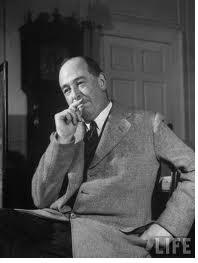
“I can’t imagine a man really enjoying a book and reading it only once.

“The sure mark of an unliterary man is that he considers ‘I’ve read it already’ to be a conclusive argument against reading a work. We have all known women who remembered a novel so dimly that they had to stand for half an hour in the library skimming through it before they were certain they had once read it. But the moment they became certain, they rejected it immediately. It was for them dead, like a burnt-out match, an old railway ticket, or yesterday’s paper; they had already used it. Those who read great works, on the other hand, will read the same work ten, twenty or thirty times during the course of their life.” cs lewis

Thank you, C.S. Lewis!
He also expresses marvelously how many of my other friends and I approach books:

The first reading of some literary work is often, to the literary, an experience so momentous that only experiences of love, religion, or bereavement can furnish a standard of comparison. Their whole consciousness is changed. They have become what they were not before.

On the other hand, I wonder if those who plow through novels like I tackle a tube of Pringles (blessedly gluten-free!) experience this, again from Mr. Lewis:

“When they have finished the story or the novel, nothing much, or nothing at all, seems to have happened to them.”

You tell ’em, Sean!

(But things happen to me when I eat a whole tube. Ugh.)

I have a few Terry Pratchett books which I’ve read five and six times, only so I can observe how he crafts the story. I watch intently for the tiny crumbs of foreshadowing he drops, savoring his turns of phrase and descriptions that dumbfound me in their creativity. And I laugh at the same spots every time, and I cry at the same places once I realize they are coming.

Somehow, it seems wrong to spend time in a story and not be moved and changed by it.

But perhaps even worse than being not changed, is being changed in all the wrong ways.

“Meme Fail” Part 2–worst advice anywhere

I love memes–I really do. Even if my first post (Read Part One here) about memes suggests otherwise.

I savor the combination of font, photo, and philosophy all distilled into one quick nugget. Some are fabulous, like this one:

well said

Absolutely LOVE Maggie’s expression.

The text doesn’t have to be confined to 140 characters or less, even though politicians, Hollywood-types, and sports coaches desperately try to be pithy and twitterable. Memes can be just a bit more.
A good meme should:

  • have words from something or someone with at least a little bit of credibility–spiritual leaders, philosophers, scientists, authors. Never repost the anonymous ones, or the grammatically incorrect ones. They’ve been written by people who take advice from beer commercials;
  • have a readable font. It can be cute and fun, but NOT too twisty or tangled, or so full of different fonts that anyone over 40 has to take off and put on their reading glasses multiple times just to get through it;
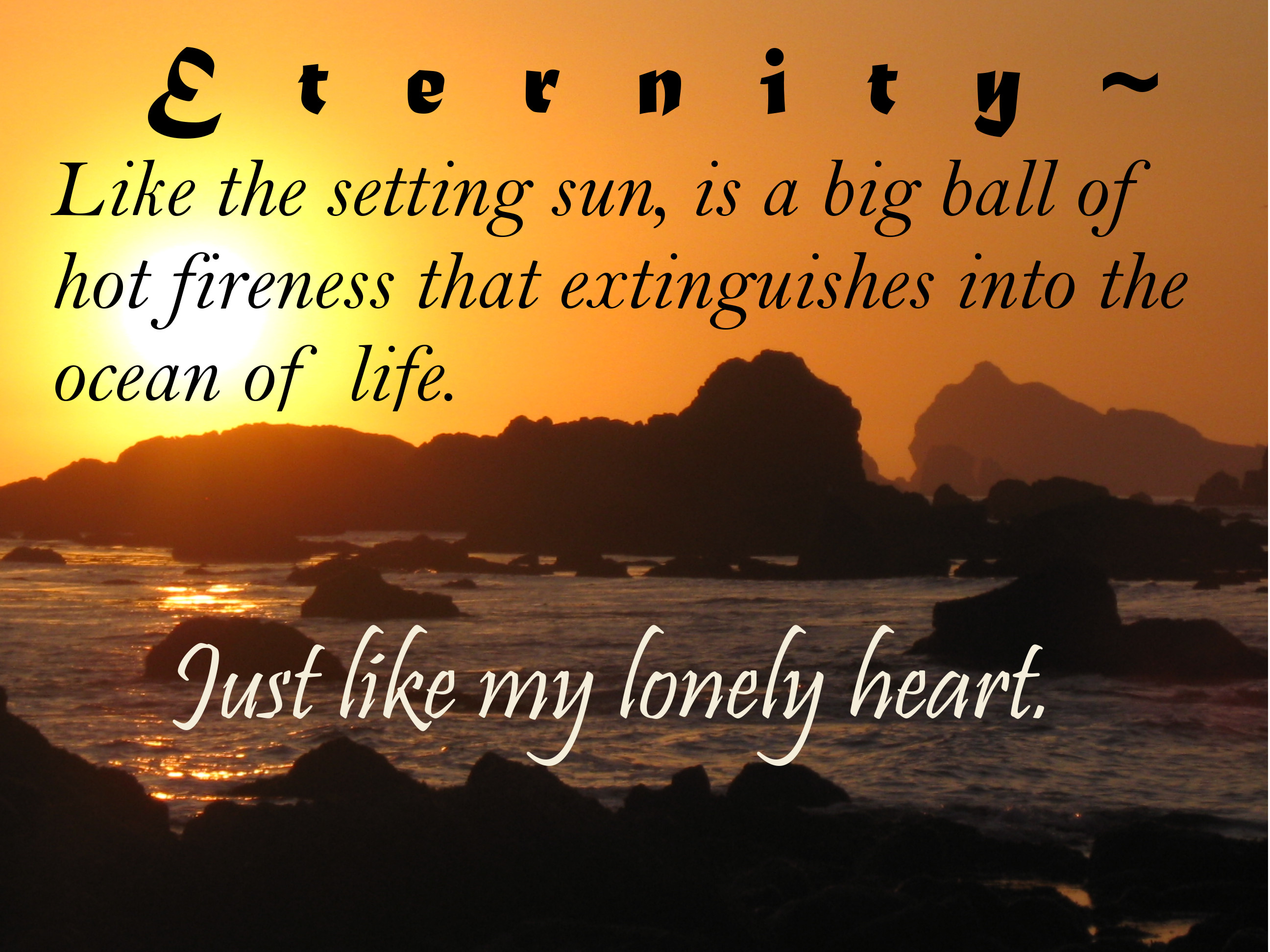
  • have, if available, original art. This can be a photo or an interesting background, but NOT the sun setting on the ocean! PLEASE! No more walking-on-the-ocean-at-sunset photos with any old random saying attached to it. Such as:

sunset meme

A caution about  memes: be careful with any that try to define the condition of one’s heart, eternity, or life. Especially when coupled with a sunset. It’ll make your brain all squishy, and you’ll think, “Hey, that just might be deep.” Here’s a hint–if you don’t understand it, it isn’t deep. Don’t be fooled by that beautiful sunset: it’s all jibber-jabber!

(I know, because that’s my photo and my saying, and I still don’t get it.)

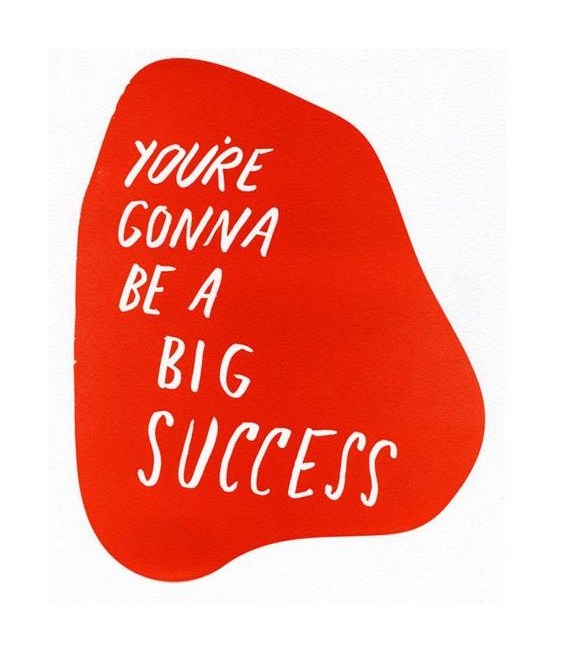
There are many bits of color and words that fail any logic test, yet somehow have bedded down and made a living in Facebook and Pinterest. For example, the blob below:

big success meme

There should be a rule that memes shall not channel fortune cookies, or blatantly lie. (Or have grammar problems, but that’s another rant.) No one can guarantee success, certainly not a melted cherry popsicle with spaghetti noodles on it.

This one below breaks two cardinal rules:

words meme

First, the font is all twisty-tangly, and second, it makes no sense. The teacher in me thinks, “Laziness!”

The English language has, according to the Oxford Dictionary, over 170,000 words, and there are PLENTY of ways to say them! (I suspect these are song lyrics from some emo-college band, written when someone suffered a terrible break-up with their significant other of three weeks. Get back to us when you CAN find a way to say things.
And please don’t add any sunsets when you do.)

I also don’t think memes should make vacuuming difficult:

glitter girl meme

Now, the photo’s nice, the font clear, but the message . . . seriously, have you EVER tried to clean up after someone trailing glitter?! Oh yeah–you don’t forget that chick any time soon.

Then there’s this:

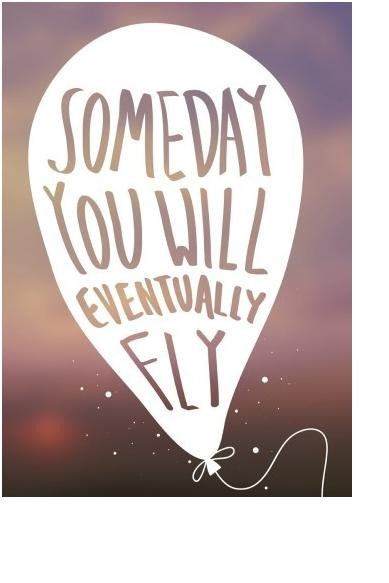
fly meme

Now this one’s just cruel. It’s a bald-faced lie, but enough people have bought into it that it’s made the rounds.

Ok, maybe it’s a metaphor that you will somehow, someday, for some odd reason, suddenly float away. Some unbearable lightness of being?
But if you think about it, that’s also a bad metaphor. I mean, look at this—it’s a BALLOON!
And what would happen if you were a balloon?
Well, if you don’t pop immediately—or have the helium sucked out of you by some people who value beer commercials and want to create their own memes—and if you’re lucky, you’ll float for quite awhile, buffered and batted about by the winds. But then you’ll start to deflate and sink into some dreary wilderness where you’ll be eaten by some poor wild beast which will then get you stuck in its gut and cause it to die.
Hmm, on second thought, maybe this an apt metaphor for life . . .

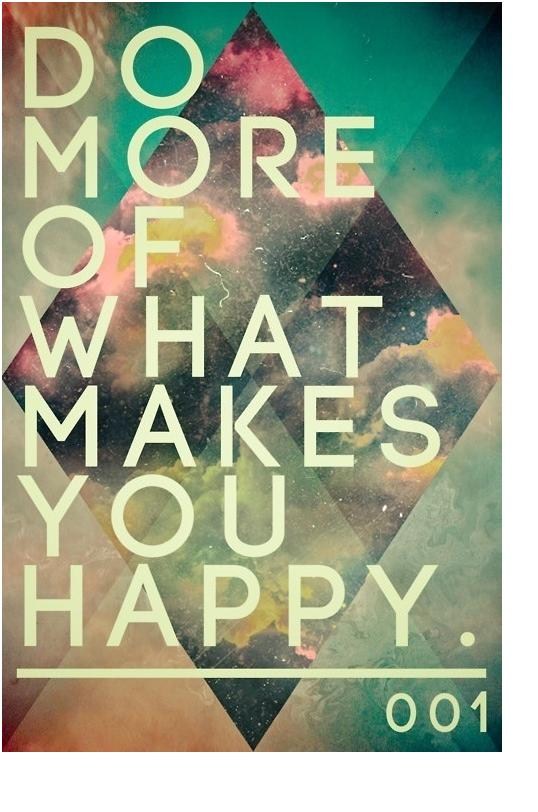
This next one is just simply dangerous.  “What makes you happy”?

make you happy meme

Well, what makes ME happy is not making dinner.

Not cleaning up the cat barf.

Not cleaning up the house, at all.

Not washing my hands . . . you get the idea.

Do MORE of that?


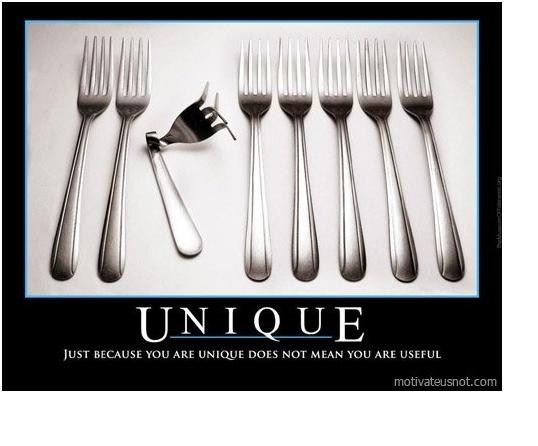
Sometimes I think we value memes because they introduce a new concept to us, even if that concept is rubbish, as beautifully illustrated here:

unique fork meme

Just because you are unique doesn’t mean you are useful.

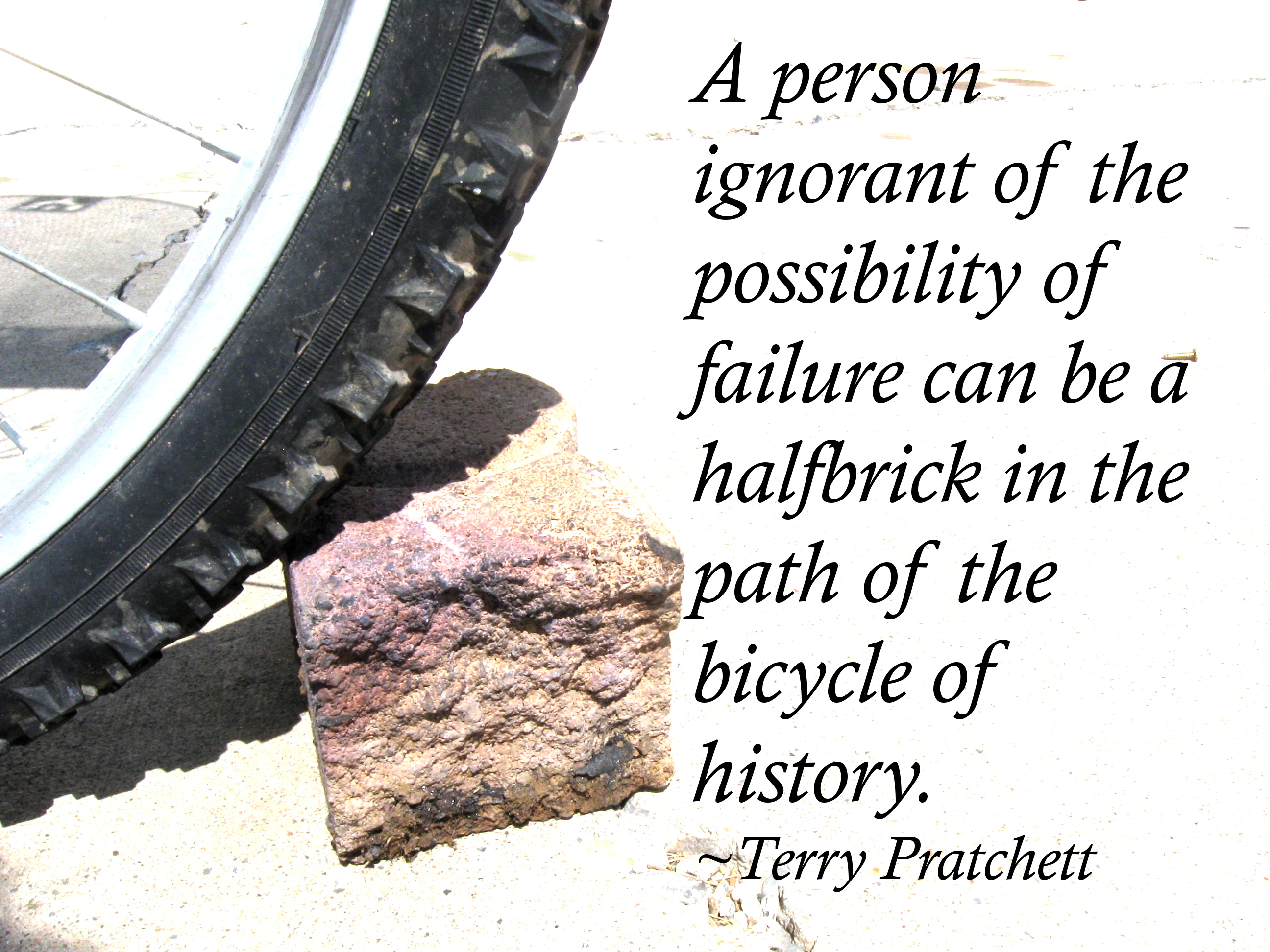
Great memes, however, make you think, then think again. They have photos that illustrate, and don’t use sunsets. Their words come from creative people who have dug deep into the world and found some nuggets worth holding up and sharing. Like this:

Terry Pratchett bike history

Each of Terry Pratchett’s books has about fifty meme-able sentences. Maybe I’ll make it my life’s hobby to meme them all.

Right after I find out who’s been meme-ing this other brilliant writer, Neal A. Maxwell:

Maxwell

Ah, meme-worthy!

“When she was young, she thought sarcasm was the sign of true wit.”

“But as she aged, she realized that sarcasm was just easy and lazy, and more damaging than enlightening.”

I’ve been thinking a lot about sarcasm lately, since it’s been such a dear friend of mine over the years.
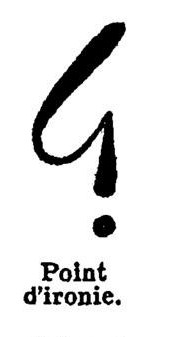
–See that? Putting such in italics? I can even write in sarcasm! irony mark
(Back in the 19th century they even experimented with a sarcasm/irony mark as above. Can’t find it on my keyboard, though.)

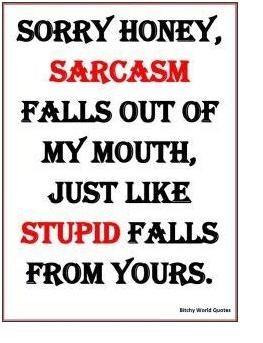
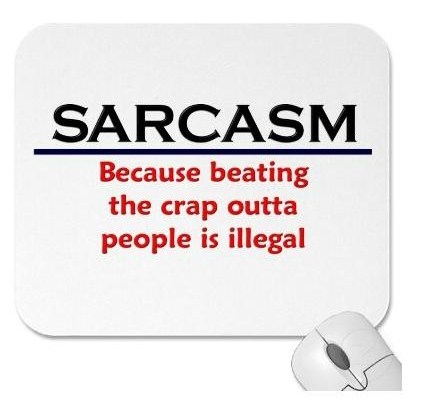
Sarcasm is everywhere, and in meme form, it’s a virtual epidemic. (Just try searching on Pinterest for Sarcasm, then stand back and shield yourself!)

sarcasm2

Then . . . I heard the sentiment above, that sarcasm is just easy and lazy and damaging.

And I thought . . . Oops.

Good old Wikipedia gave me more insight (and I mean that sincerely—I DO like Wikipedia, no snark intended). Look at the meaning:
The word comes from the Greek σαρκασμός (sarkasmos) which is taken from the word σαρκάζειν meaning “to tear flesh, bite the lip in rage, sneer”.  (http://en.wikipedia.org/wiki/Sarcasm)

Tear the flesh?! No, I don’t mean to do that! I just mean to be a bit snarky, but validate it by saying I was only being sarcastic . . .

“Sarcasm I now see to be, in general, the language of the devil; for which reason I have long since as good as renounced it.”
That’s from Thomas Carlyle.
That’s piercing me to the core.

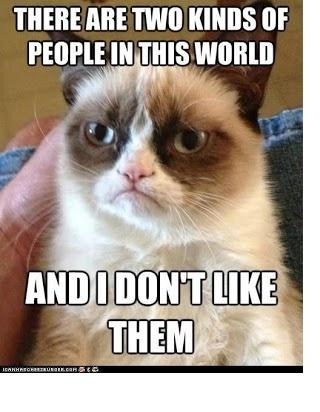
Language of the devil? Uh . . . maybe. Consider all of those angry cat memes. There’s definitely a connection. (I heard this cat’s name is Beelzebub . . .)

angry cat

(And I hate myself for sniggering at this. Funny, but . . .)

But is sarcasm really that awful? I mean, come on. People bug us, so we MUST retaliate, right?

sarcasm

Then I read this article about “No Corrupt Communication,” (read it here) by Jennifer Grace Jones: “Not all sarcasm is intentionally sinister, but it has a hypocritical edge because it requires us to say the opposite of what we mean. Some use it for humor, but it often damages our relationships.”

I’ve known families that communicate only in sarcasm, and there’s very little genuine love expressed. In fact, there’s very little expressed at all, except thinly veiled contempt, when I suspect they actually feel much, much more. But they’ve never learned to speak in any other way.

In another article I found this painful little nugget: “Sarcasm . . . is usually based on inordinate pride and is usually aimed at some person or group thought to be inferior.”

Erg. Yes. I may be guilty of this . . .

All right, I am. And I know it, because when I employ a little snarky jab, or laugh at yet another sarcastic meme, I always feel a twinge of regret later, as if I just ate the last of the cookies and told my kids I didn’t know what happened to them.
Initially, I enjoyed gorging myself, then afterwards I remind myself I could have done something much better.

The words of a fantastic and inspired sweet old man, gone now from this world, put it like this:
“Everywhere is heard the snide remark, the sarcastic gibe, the cutting down of associates. Sadly, these are too often the essence of our conversation. In our homes, wives weep and children finally give up under the barrage of criticism leveled by husbands and fathers. Criticism is the forerunner of divorce, the cultivator of rebellion, sometimes a catalyst that leads to failure.”
~Gordon B. Hinckley

Hickley 1

Look at that face. That’s a man who never uttered a sarcastic word in his life. I want a face like that. (Except female. And a bit younger, and . . . but you know what I mean. And the hat–the hat’s awesome!)

But then I found this nugget by Dostoyevsky and, like any person forced to make a life in Russia, he sees things a bit darker, a bit harder: “Sarcasm is usually the last refuge of modest and chaste-souled people when the privacy of their soul is coarsely and intrusively invaded.”

Is there a place for sarcasm? It’s not always hurtful; occasionally we use it in our family in what I think are gentle, teasing ways . . . until my 5-year-old says, with sad eyes, “I don’t like it when you tease me. I feel confused.”

Ooh. Sorry.

Maybe sarcasm is ok only in limited circumstances, when the only other option is violence or rage.
Maybe it’s the only way to deal with disappointment.
I find myself leaning on it as a crutch when I deal with toddlers. For example, when I found my 19-month-old had colored again on the walls with “washable” markers (Crayola and I need to have a talk about the definition of “washable”), I looked into his big proud eyes and said, with all the sincerity of heart I could muster, “Why thank you. You know, when I was hugely pregnant with you and painted each one of these a nice pale blue in anticipation of your arrival, I hadn’t expected that you would want to augment the color with purple, brown, and pink. It’s just . . . lovely.”

Either that, or rage at the poor little guy even though it was my fault for thinking I had secured the markers, but failed to hide every chair in the house to keep them out of reach.  Sarcasm saved my little guy, calmed my frustration, and made me chuckle at myself as I uselessly scrubbed.

No, my soul wasn’t exactly “coarsely . . . invaded,” but something inside of me was pinged, and sarcasm saved us all.

But I think these are rare circumstances. Consider this meme:

rude

Sarcasm, at its heart, is simply sheer rudeness to those we feel we’re superior to.

All of us are better than that, surely!

Again from Jones’s article: “I’ve noted that those who use [sarcasm] tend to underestimate its negative effects because they assume that what they say is humorous instead of hurtful. People who use sarcasm often think their targets are too sensitive or naïve when feelings get hurt. “She just can’t take a joke,” they say. In more disturbing cases, sarcasm communicates contempt for others and gives people the “dishonest opportunity to wound without looking like they’re wounding.”

I want to be better than that, so I’m attempting to put myself on a sarcasm diet. I’m going to parcel out my servings of sarcasm, or indulgences of snarkiness, as judiciously as I should be eating cookies. Sparingly, appropriately, and avoiding it as often as possible.

Another gem from that sweet old man, Gordon B. Hinckely: “I’m asking that we look a little deeper for the good, that we still our voices of insult and sarcasm, that we more generously compliment virtue and effort.”

Hinckley 2

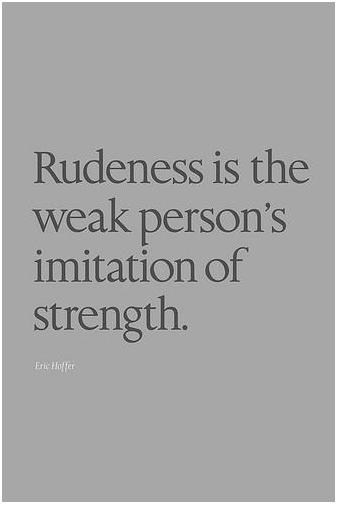
Sarcasm is easy, lazy, and “the imitation of strength.”

I want to be stronger—truly stronger. And not eat so many cookies.

“An author is speaking clearly and silently in your head, directly to you.”

Until I read this beautiful quote from Carl Sagan (thank you, Grammarly), I didn’t know how to articulate the sensation I’ve felt that I’ve snuck into a writer’s mind, and was welcomed there. But as I thought about it, I realized I’ve “experienced” a variety of authors in such a manner. Tell me if you’ve had similar impressions with these or other authors:

Plato: I approached his writing hesitantly, researching background about ancient civilizations, when about two paragraphs into the chapter I felt as if Plato himself had come into the room to have a chat. In my mind he was a small, narrow-bodied man wearing a white tunic and sitting on plain stool. He smiled as if glad to see someone else was coming “in” for a visit, and he wanted to help. He pointed out sections, waved for me to skip other parts, and cheerfully gestured to a chapter he knew I’d particularly enjoy. Then he sat back and smiled as I read, waiting to answer questions he’s known the answers to for thousands of years.

 J.K. Rowling: Reading her feels like a group activity, a sense of sitting on the floor on comfy cushions (a la the Room of Requirement) with about a dozen others of all ages and sizes—and no one cares that we seem too old to do this—while our friend Jo sits on a soft chair, but at the very edge of it, reading to us her stories and getting all of the voices just right.

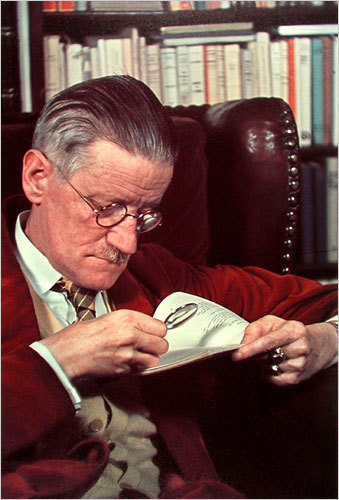
James Joyce: I’ve wandered a few times into Mrs. Dalloway to find Mr. Joyce sitting in the corner rattling on and on, only distantly recognizing I was there as he gestured to the wall and talked to the ceiling, until I quietly slinked out again and closed the door. I don’t think he ever noticed.

Hugh Nibley: This scholar and philosopher stands at a podium in a lecture hall, while I sit near the back frantically taking notes as he reads his words at break-neck speed. But I have a remote control, and every minute I zap him to pause his lecture, rewind, listen, then flip to the extensive footnotes while Professor Nibley waits, just on this side of patient. I bite my lip as I read the footnote, realize it introduces yet more names and archaic traditions I’ve never heard before, so I shrug, occasionally write down a reference to Google later, then hit “play” again, pretending all the while that even though I just sit on the surface of his topic, I understand the depths to which he’s diving. We both know I can barely tread water.

Flannery O’Connor: She tells me her stories as we wash dishes in the back kitchen of a large southern plantation home, and we snigger when the ladies with fancy hats walk past the window.

Shannon Hale: She tells me her stories as we drove up through the canyons in a big SUV to take the teenage girls from our church on a camping trip, because I met her at a book signing where she told me she also loves Terry Pratchett, and I knew right then we could be great friends.

J.R.R. Tolkien: He sits behind a grand desk, leaning back leisurely and gestures to maps on his walls and charts on the desk, while talking in an oddly lilting monotone about details and histories and peoples I’m not quite following until I fall asleep. Guiltily I shake myself awake a moment later, only to realize he never noticed I nodded off—he’s enjoying himself far too much. My daughters, however, glare at me in disgust.

Stephen King: Because he starts his stories by turning out all the lights, then shining a flashlight in his face, I slam shut the book just as he opens his mouth to speak, and I move on.

Lao Tzu: He’s a sweet, gentle man, forcing me to sit in an expanse of sand while he teaches me his verses of philosophy. Much like Oogway in “Kung Fu Panda,” he speaks slowly and repeats himself until he sees a light of understanding come in my eyes. Then he hands me a peach, and recites me another couplet about war, and fighting, and peace, and knowing.

Jane Austen: We sit primly in her parlor, with arms folded just so and skirts adjusted in just this way, and glance furtively at the door for someone wonderful or dreadful to come through it, while she tells me all the news of the town as quickly as she can before either of our mothers can interrupt us.

Jessica Day George: We sit in the back of some dull meeting gossiping quietly and giggling, hoping no one hears us, but knowing the speaker is glaring right at us.

Orson Scott Card: I actually sat in two meetings with him! At a small private college in Virginia! But I never spoke to him! And he never noticed me! And when I finally read Ender’s Game, I felt as if I was huddled in the corner of that classroom with his book, and he was watching me out of the corner of his eye as if to say, “It’s about time.”

PHOTO MISSING,

TO PROTECT THESE  NEXT TWO AUTHORS FROM SCORN                               

(because I’m sure they’re both just as lovely as can be, but create utter drivel)

Authors who will remain anonymous, but have a fondness for writing about males that turn into animals and woo silly teenage females: I gritted my teeth and cringed through these authors first books, as if I was stuck on a long bus ride behind two chatting women telling each other far too many details about their fantasy love lives. I closed my eyes periodically hoping to avoid gooey passages, only to run into other sections that not only made my eyes roll but caused me involuntary gagging. I got off the bus at the earliest possible moment.

Terry Pratchett: My all-time favorite author who I visit frequently. He lets me right into his mind, which is most intimidating and most marvelous. Every time I want to turn left, he shifts me to go right; I look down, he points me up, and I sigh and wish I could think of such turns. He takes characters, sets them in front of me, then describes them in such terms that I despair, because I’ll never come close to writing like that. But he just chuckles, grabs my arm, and drags me to yet another amazing place until suddenly I stop and say, “I just had an idea . . .” To which he smiles and waves good-bye until I come back again, because it’s not about being better than him, or even as good as him, but about discovering what I want to say.