Coming Home Will Sustain You (or, how a 50-year-old embarrassingly crashed a Homecoming dance)

This past week was Homecoming at the high school where I teach. My students who were sophomores when I first started are now seniors, and since the first week in September I’ve repeatedly heard from them, “I can’t believe this is my last [fill in the blank].” Some say it with great relief, others with great melancholy. Most feel both.

I confess I never understood the purpose of Homecoming as a high schooler. But I’ve grown sentimental in my middle-age. This week as I watched students dress up, dress down, act up, and break down, I’ve discovered why this week, which is frequently ridiculous and silly, is also a needed ritual. (You can read about my discovering the prom ritual here.)

A first-year teacher commented how the sociologist in him was intrigued to watch this week unfold. That made me wonder how future generations–anthropologists who will find our photos and artifacts–might view our rituals. For example, they may wonder what is the significance of dressing as each other.

IMG_758472344874_10157546432624909_206449053465051136_n

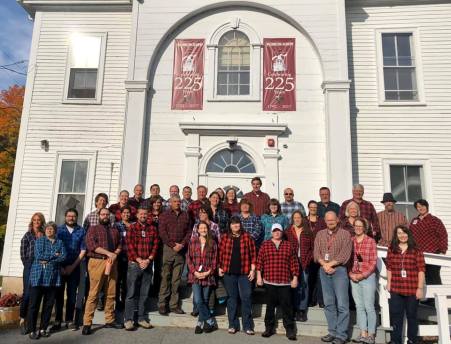
Or dressing so that we look like a school for lumberjacks.
71851059_929896145238_40632383484985344_n

Would they discover that the cause of this flannel plaid wardrobe choice was in honor of the absent and beloved science teacher who’s currently battling cancer, and is why more than half the student body dressed as he does every day?

Homecoming week

Surely future anthropologists will not understand Meme/Vine day, because I still don’t and I live in this time period.

As for crazy sock day—well, seeing our worship of designer shoes, they may conjure up some meaning there.

But the greatest ritual at our school takes place on Friday. No, it’s not the football game—although future researchers will understand that cultural significance with such ample data available. But they may not understand why we remain in the cold wind and rain, huddling on butt-freezing metal and whimpering, “Please, just let it end!”


72352224_10156925639398983_7389450155700781056_oIMG_0565IMG_7653

No, the greatest ritual at our school is called “Field Day” although it takes place indoors away from all wet, cold fields because hey—Maine.

A variety of tasks, worthy of gladiators (or lumberjacks) and requiring great skill and bravery are set up in our gymnasium, pitting each of the four grades against each other in a melee of screaming and shouting amongst duct tape, giant marshmallows, raw eggs, sacrificed Ding-Dongs, stretched out pajamas and balloons . . .

and large ropes with gladiator trainees on either side pulling for their lives.
IMG_0505IMG_0509

Not all these things occur at once, of course, although now that I’ve written that, I could see our intrepid associate head of school (or as I now think of him, Chief Gladiator Trainer) endeavor a way to combine it all into one massive challenge.

The events are intense and bizarre. In the past, Cheetos have been sacrificed for horrific displays of prowess and beard-ness (because hey–Maine). That ritual disturbed me greatly, for I love Cheetos, and four bags were rendered completely inedible, unless you also like the taste of shaving cream, which I don’t. (Please don’t ask how I know that.) Another past event required hundreds of balls and four competitors pretending to be “hippos” which are hungry. I’d love to see a future anthropologist puzzle out the meanings to those.

However, painting one’s face is common to the beginning of these rituals, as it has been for thousands of years among hundreds of cultures.

72296212_10156925632398983_4901087116764643328_o72231463_10156925636643983_5885913243607629824_oIMG_7684

Dressing to identify with one’s group is also historically common, as is parading through a town together to demonstrate your position in society.

72344228_10156925630843983_596751260141486080_oIMG_0532But will future anthropologists understand that these, below, are not really a king and queen? (And when I was helping to sash them, the king wanted the queen’s sash, and since he is the king, I started to obey and give it to him, which would have rendered his queen the new king. But then she insisted that she was the queen and wanted the queen sash. Because she was the king/queen, I had to give in. Some monarchies in history have collapsed faster than this.)
72133510_10156925627513983_7534139091277840384_o
But why? Why such ritual?

Our Chief Gladiator Trainer says he wants to build “school spirit,” which I think is code for, This will carry you, folks. (He always says “folks,” our Chief Gladiator Trainer. I can’t write anything in his voice without “folks.”)

“You will remember these days when you screamed for each other, high-fived your buddies even when they failed, gloried when they succeeded, and vowed that next year you’ll defeat the others, together. Even if you’re apart. For years, you will remember these days.

“This will carry you, folks.”

IMG_0518

IMG_0454

But that’s not the end of Homecoming week, for there is a dance. The strangest ritualistic endeavor yet. Cultures have danced for thousands of years, for a variety of reasons–some rather heathenish.

That was the worry of my fellow chaperones–their first dance as new teachers. Just what are we watching for? After giving them a few ground rules (I chaperoned several dances last year), we watched them dim the lights to nearly nothing so that the Glow Dance could begin.

(Did they worship lightning bugs, future anthropologists may wonder, that they have black lights, white shirts, glowing tape on the floor, and glow sticks around their bodies? Yes, yes we do.)

I heard another one of my seniors lament, “Our last homecoming dance!” I smiled and thought, Unless you’re a teacher. My fellow chaperones discussed the music and what was trendy when they were in high school a mere ten years ago, and that’s when it hit me: aside from the Chief Gladiator Trainer who made the rounds every fifteen minutes, each of the four other chaperones were the same ages as my oldest children.

Even as I bopped a little to the music, which I didn’t understand, I realized that I’m 50–Wait, am I old?!

Yes, yes I am. I was even complaining about the music, but then again, the 27-year-olds, were also grumbling, “The stuff they’re playing these days!”

But our gladiators in training were beginning to bounce, to dance, to chant and scream the lyrics, and I grew nostalgic. My homecoming dances feel only five years ago, not over thirty. This may be their last homecoming dance, but it won’t fade from memory. 

“This will carry you, folks.”

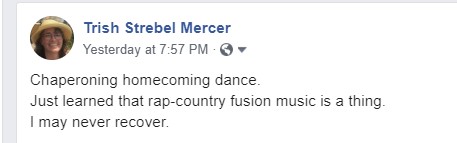
After commenting to a fellow chaperone, “What the heck are they playing?” I posted this on Facebook:
Fusion music

Noticing that one of the students acting as DJ liked my comment, I wrote him this from across the dance floor:

ask and you shall receive

The very next song was the B-52’s “Rock Lobster.”

And there I sat, on the edge of the dance floor, with one of the greatest dance songs from the 1980’s playing.

And suddenly I thought, Folks, sometimes you get to go back to Homecoming.

Sometimes, if you’re very, very lucky, you’ll find a group of kids who don’t care that you’re over-weight, over-age, and over-ridiculous. They’ll play you “Rock Lobster.”

What I did next couldn’t be helped.

I screamed, “NO!” (meaning “YES!” of course) and I rushed on to the dance floor, forgetting my chaperoning duties to make sure girls didn’t crowd the boys’ bathroom, and I danced.

Well, I call it dancing. What others may call it, I didn’t care. For thirty seconds I thought, You can still be an out-of-control 17-year-old, no matter your age!

Then for the next thirty seconds I thought, I hope my younger chaperones know how to work the defibrillator in the office. I may need it. 

Because I was trapped. Once they saw me weirding out to “Rock Lobster,” the rest of the students circled around me and started chanting. What could I do? I had to keep going.

I had another thought: If I danced like this an hour a day, I’d be as skinny as them again. 

Then I thought, If I dance like this for another five minutes, I’ll bust a hip.

I didn’t make it to the end of “Rock Lobster.” I gave up two minutes in, but still the kids were kind and cheered me.

As I strolled back to my post, exhausted and overheated and praying both hips would keep moving, I muttered to myself, “Yeah, you can go back again, guys. Don’t worry about this being your last Homecoming. That’s the whole point of Homecoming–doing it again. Coming home again. This will sustain you, folks. This will carry you.”

Thanks, WA students. You’re seriously the best place to come home to.

(Thanks to WA Development for letting me use some of their photos, and an extra big thanks to Ryan Conley, who told me to write this [“We need an epic post about Homecoming. I’m sending you photos to use.”] and who played for me “Rock Lobster.” You’re epic.)

Blurry evidence dance

Blurry photographic evidence I was dancing at Homecoming. And blurry evidence really is the best kind.

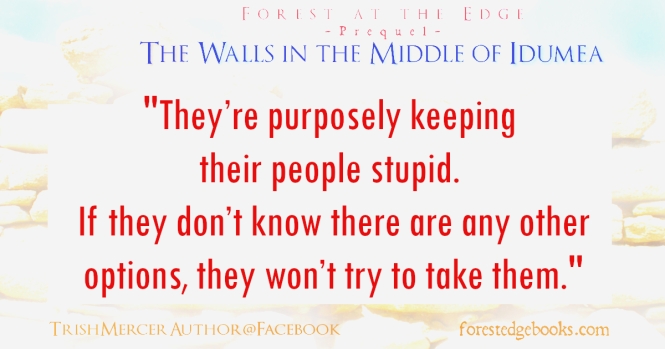
There is always hope and options; bizarrely, we don’t seem to want them.

I’m astounded at the level of ignorance people numbly accept. Never have we lived in an age with so much knowledge and data so easily accessible, yet we want very little of it.

For hundreds of years–no, for thousands of years, education was the coveted goal of nearly all people. To learn to read? Have access to a scroll? Learn beyond the basic numbers? Luxury! Some families would sacrifice all they had just to send one promising child to get an education, hoping he’d bring some of it back to share.

Now, we want only entertainment and sensationalism.
Give us crying teenagers terrified by exaggerated claims of global collapse.
Give us elderly politicians screaming about non-existent cover-ups.
Give us celebrities and journalists telling us how we’re all stupid and wrong.
But don’t give us reports of real suffering where we can help, or solid data about the actual changes in the world.

And certainly don’t give us any hope.

The high schoolers I teach are convinced the world is a horrible place to be. They want no part of it, nor do they want grow old in it. Unsurprising, many are depressed and without hope.

Decades ago I visited Washington DC for the first time and got lost in a less-desirable part of town. The person I was driving with told me to lock the car doors, that the people who lived there were “willfully dumb and dangerous.” I thought that was harsh, and said so. The person pointed out that those under-educated lived within walking distance of the greatest museums in the world, all for free. They could learn anything and discover everything, if they just exerted some effort. But they wouldn’t.

They didn’t want to know.

That was before phones and the Internet, before we could carry the world’s knowledge in our back pocket.

And still we don’t want to know.

We willingly accept only the shallowest of knowledge, and we limply accept the worst of fates. Our youth feel powerless, their only option to whine and throw tantrums at the world. They fight problems that don’t even exist, while ignoring larger issues that truly threaten to swallow them up. They’ve been given hopelessness, and actually believe it. They’ve given up their imaginations, so they can’t imagine better options. There’s little rebellion against the angst they’re handed; they just pocket it and skulk away.

I teach my students a Holocaust memoir, hoping they’ll realize that the hopelessness Gerda Weissman Klein faced was far more real than any manufactured issue-of-the-day, and not only did she survive, but thrived, just like hundreds of thousands of others, and millions of people all over the world today.

We have to flood not only the Internet but the minds of our families, friends, and youth we associate with hope, success, and optimism.

We have to tell them how many times the world was going to “end” over the past so many decades (my husband’s yearbook from the 1980s warned about the impending ice age, and how to survive it). And how none of those predictions have come true. None.

Our kids don’t know this, that we’ve been shaking our heads, rolling our eyes, and sighing heavily for fifty years at these sensational predictions. They don’t know that hope always exists all around them, and that a glorious future still awaits them.

We have to tell them! In our conversations, in our interactions, and in our social media. We have so many options and possibilities for our future, and bizarrely those options are frequently ignored.

Our laziness and easiness will destroy us long before the earth will collapse. That’s one prediction I hope I’m wrong about.

Walls meme horizontal People stupid


Power-hungry “toddlers” are trying to take over. Be a grown up and don’t let them.

I’ve never understand why people want to be “in charge.” They must think there’s great status, or acclaim, or money.

But it’s responsibility, criticism, and working far more hours than one will ever be compensated for.

That is, if the leader in power is doing things right.

I suspect most who crave power are intent on doing things wrong; they want people to praise (worship) them, they want every convenience and toy available, and they want no one to stand in their way.

Those who are power-hungry are simply toddlers. You can tell by their tantrums, their screaming, their raging, their demands to get whatever they want, and everyone else can just shut up.

The first time one of my toddlers screamed at me in a fit of fury to “shut up!” I was at first astonished, then I burst out laughing. My toddler responded by screaming more and more, until I put her into time out so that I could try to stop laughing.

Worryingly, adults who demand power and influence, and throw tantrums when the don’t get it, are much harder to put in a chair in the corner. Nor are they nearly as funny. I rarely find myself laughing anymore.

I’m deeply concerned that someday they may get exactly what they want, through their manipulative bullying tactics. And the last thing they’re going to be concerned with is their responsibility to others. They want the power to serve themselves.

Such “toddlers” in power would be a terrifying thing. That’s why we all need to act like grown ups and not give in to the tantrums around us.

“If they can’t manipulate me—and they’re discovering quickly that I’m no Stumpy—then they’re going to discredit me and try a new tactic. Call me paranoid, but since I don’t know who’s working for whom—and if anyone is actually on my side besides the enlisted men who I bribe with snacks—I can’t trust anyone,” Pere confided.

“Oh,” Relf said, his voice small. “That’s why you didn’t want me to speak until we got home.”

“Exactly. There are spies everywhere, son. Walking casually past, following a few steps behind, waiting in a shrub. It’s also why I don’t employ servants, or want to move into a larger home where we would need servants. Trust no one, Relf, not even your servants. They’ll bring you your meal with a smile one day then stab you in the heart the next.”

“Pere!” Banu exclaimed. “That’s not fair! My friend is a servant.”

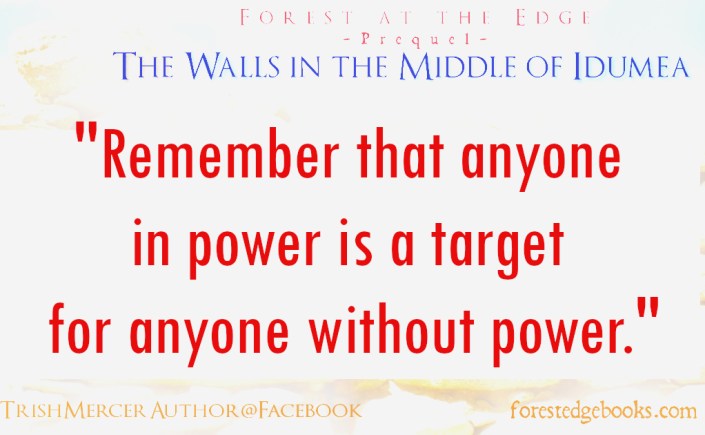
“And maybe we’ll employ her when all of this mess calms down. Until then, I stand by what I say, Relf. If not the servant, then the relative or friend of one. Remember that anyone in power is a target for anyone without power.”

~The Walls in the Middle of Idumea, available now on Amazon and here

Remaining in the background when things aren’t right isn’t right at all (Sneak peek into the prequel)


“You’re disappointed in me,” Pere concluded. “Well, it won’t be the last time, I’m sure. Being a commander, or even an adult, doesn’t mean we know always what’s right. We have to trust the nudges to do what we believe is right. And I think as long as you try to do the right thing, it will eventually turn out. It’s when you stop caring or don’t want to get involved and let anything happen—that’s when everything crumbles. General Stumpy was lazy and selfish. He allowed for all kinds of injustices and cruelty to flourish. The only example I have to follow is his; whatever he would do, I try to do the opposite. It’s all I’ve got.” ~The Walls in the Middle of Idumea

Too often I’ve publicly offended others who have come after me online–publicly and privately. And because I’m extremely non-confrontational (oh, how I wish I were like Mahrree!) I retreat, and decide to hide in the corner of my closet where I can never say or do anything stupid ever again.

Obviously I’ve not done well with self-banishment, because I’m still here. (Each self-imposed exile lasts no more than three days, because I can’t keep still.)

Lately, though, I’ve realized that retreat is selfish, feeling sorry for myself when I’m “picked on” is childish, and lurking in the background when things just aren’t right isn’t right at all. 

Someone has to say something; someone has to gently, kindly, firmly even stand up and say, “No. I cannot agree to this and will not submit to that.” Maybe because it’s the stories my parents told me of growing up in Nazi Germany are haunting me again, or it’s the examples of bullying and name-calling in the holocaust novel I teach my 10th graders, but increasingly I’m seeing the need for us to stand firm in our beliefs, to let people know what we think, and, if nothing more, demonstrate for others that we will not be intimidated.

Recently on a group discussion online I saw a woman relay something that happened in her church that alarmed her. She immediately wrote, “Not to say that this is wrong . . .” And honestly, I don’t know what she said after that because I HAD to write: “No, this IS wrong, and we shouldn’t be afraid to stand up and say so!”

Immediately I worried that I might offend, but I thought, No–I shouldn’t be afraid, either! Within minutes the response to my comment was overwhelming–in the affirmative. Comment after comment said the same thing, citing scriptures to back up what incorrect thing had been allowed to happen in the church, and the original woman who posted finally chimed in, after 50 responses with, “Thank you! I thought this was wrong, but I just wasn’t sure and I didn’t dare say anything. But now I will.”

It’s when we stop speaking out, stop standing up, and worry too much about offending the perpetually offended, that’s when it will all fall apart. 

It may still all crumble someday, but not because we didn’t say something about it. 

But I don’t think so. I think there will always remain pockets of strength that will withstand the oncoming anger (and, I beginning to suspect more and more, a future civil war) because we will be standing strong together.

New prequel is now available! Click on the image below to get it on Amazon, or read it here.

Walls BOOK RELEASE1

IT’S HERE! The Prequel: “The Walls in the Middle of Idumea.” (And it’s a great place to start reading the series.)

The prequel I’ve been promising is now on Amazon! (There’s no greater feeling than waking up in the morning and seeing emails from Kindle Direct that begin with “Congratulations!”)

This shorter book (180 pages) is a great place to start reading the series. It works as both background and teaser, giving insights to characters you already know (if you’ve read the series) or will encounter later if this is your first introduction into the Forest at the Edge series.

Since it’s a smaller book, the paperback is only $6.50 and the digital download is only $.99. I’ve also committed to always providing my books for free here on my website. Click here for the .pdf version of the entire book. It’s copyrighted and to be used only for your reading pleasure, but you may share it as you wish.

I realized earlier this spring that Pere Shin’s story about the servants in the king’s mansion needed to be told, especially now when we have so many people ignorant of what’s really happening around them. The servants were naive; but today, too many people willfully don’t care to know what’s going on. That only enslaves them, not frees them.

From the back cover:

 Newly appointed as High General over the Army of Idumea, 40-year-old Pere Shin knows he’s only a figurehead. He’s hardly the typical officer: he’s cheerful, overweight, and bribes his favorite enlisted men with sweets. The army only expects him to sit quietly out of its way.

But Pere Shin has other ideas. There are secret groups to be exposed, and wrongs to be righted–he just has to find out who, and what, and where they are. As he does, he discovers more problems than he anticipates. So when his teenage son Relf offers to help, Pere decides that now may be a good time to give Relf some early command school training. That’s not the first decision he’s going to regret.

Taking place four decades before Book 1 of the Forest at the Edge series, this prequel tells the story that later inspires Pere’s grandson, Perrin, to go beyond the barriers that hold him back to expose what’s really goes on behind the walls in the middle of Idumea.

Walls BOOK RELEASE1

You don’t know what’s down that road, but since even wrong roads can become right, take that road already!

In the coming weeks, many of my graduating seniors will be heading off to college, and as I’ve chatted with a few of them, it’s clear that the reality of what they’re doing–leaving rural Maine and heading out in the real, nasty world–is settling on their shoulders as easily as a Ford truck. Questions of, “Are you ready?” are met with nervous fits of giggles and a hesitant, “Yeah? No?”

Each year I take my students through Robert Frost’s, “The Road Not Taken,” and explain how the most notable lines are frequently misread:

I took the one less traveled by,
And that has made all the difference.

And even while it was the title of a popular self-help book for many years, “taking the road less traveled by” does not necessarily mean to “blaze your own trail” and that anything less is “unacceptable.” I’ve had students confide that they feel they have to be different from everyone else, and that following someone else’s path is somehow wrong, even if they really do want to walk in someone else’s very noble footsteps.

So I point out that the stanza begins with the ambivalent line,

I shall be telling this with a sigh

which, in most poetry, means a sigh of longing, of regret, of “what if?” Maybe the speaker wishes he hadn’t taken the “one less traveled by” when he saw two roads diverging; he may have made a mistake. Maybe the one less traveled by is NOT the correct road. But then again, maybe it is?!

And this is where many people freeze in life: trying to decide which road to take. Some may decide to turn back and not try either, while others can stand there for too long never making a choice until life or someone else forces them, which almost always leads to resentment.

I’ve heard students–and many adults–debate their decisions which seem innocuous and correct now, but what if they aren’t in the future? What if that’s the wrong road?

To that I say, SO WHAT?! GO ANYWAY!

Ok, let me calm that down a bit. As long as the path one takes doesn’t lead directly to prison, or hurting someone else, or hating one’s self, but is a carefully plotted, deliberately chosen path that should be ok, then GO! Take it! Don’t just stand there or worse, go back and try nothing!

And yes, there may be HUGE PROBLEMS down that path, but OK! LEARN FROM THEM! Embrace trials! Embrace problems! GROW!

Yes, I’ve made HUGE mistakes, some I still reel from. But I’ve also made huge compensations for those, and found myself on strange paths–well-trodden and also some less traveled by–and over my fifty years have discovered that all paths can become good. My biggest mistakes have eventually become my biggest lessons and biggest blessings. 

(I’ll admit that it took me nearly forty-nine years to finally come to that revelation, but whatever. And to my children, no, I’m not talking about any of you. And I’m not talking about your father, either.)

To everyone who hits a crossroads, who sees more than one option, who feels paralyzed to take those steps on the road where you can’t see its end, I say: GO! Just TRY IT! I’ll give you 99 to 1 odds that it’ll turn out good. Maybe not immediately, but eventually, and you’ll look back and say, “That turned out to be a decent road. It was rough at times, and the zombie attack was definitely unexpected, but I made it. And just look what I achieved along the way!”

(And by the way, The Walls in the Middle of Idumea is nearly here! My laptop took an unexpected siesta for many days, traveling down its own dark path until I could bring it home again which delayed my progress, but the book is almost ready for publishing.)

Walls meme horizontal WRONG PATHS


All boys have some brain damage or they’re not real boys. (or “You’re not going to believe what happened . . .”)

I have five sons, ages 7-25. All of them have some brain damage, and it happens something like this:

“Anyway, the little guy came barreling in there, and just as I stepped out, he turned and smacked right into my sword! Clanked his head, I’m sorry to report, but all little boys have to have some amount of brain damage, otherwise they aren’t real boys. And that’s how I met him.” ~The Walls in the Middle of Idumea, coming summer 2019

It starts when they’re babies and they roll into walls. On purpose. Again and again.

Then as toddlers they run into corners of tables, couches, and the walls, again. Sometimes on purpose, just to see if it will cause as much pain as before; sometimes on accident, because they’re actually running for the couch and somehow the wall got in the way.

As gradeschoolers, the brain damage occurs in too many ways to count, but here’s a short list:

  • bike crashes,
  • skateboard crashes,
  • walking crashes (they literally crash their foreheads into the driveway, and there was nothing around them to cause it, not even another brother),
  • tag-you’re-it crashes,
  • riding in a wheeled garbage can crashes (I refused to go help with that one, but got a hose instead),
  • let-me-hit-you-with-this-wheelbarrow crashes.

You get the idea.

When they’re high schoolers, brain damage occurs in more dramatic if not bizarre ways, such as falling out of 60 foot-high pine trees, or getting tossed out of a wheelchair a week after foot surgery when a friend (a teenage boy, of course) decides to entertain his temporarily invalid friend by taking him “four-wheeling” through the fields behind the house. (Fortunately the wheelchair suffered more damage than my son did. He moved to crutches sooner than he had planned.)

Then there are the real dangers: cars, boats, four-wheelers, motorcycles, walking down the street (STILL they trip over themselves and get road-rash in the oddest of ways).

And now after teaching high school for two years, I believe this even more:

Walls meme brain damag boys

I love boys, little and big, my sons and others’ sons. Their daring makes them courageous, powerful, and hilarious. My three adult sons seem to be managing all right, despite their earlier mishaps. Or maybe, because of them.

They see that they recover from their exploits, learn something useful along the way, and now have an awesome story to share.

So I cringe every time a son or a student begins a sentence with a sheepish expression and the words, “You’re not going to believe what happened . . .”

Because actually, I will.

Three ways to evaluate those who hold political power: when to run away and when to give them another week

I’ve created a list by which I gauge those in power: who I should run away from and who I’ll trust for another week. (By the way, the purpose of the world is NOT to serve us; this is how every major conflict begins.)

Now I won’t be naive and pretend that in the past those with power used it wisely. Thousands of years of dark history are against me on that. However, there have been bright points who realized that power was granted to them to see if they’d do the right things. Occasionally, true leaders and statesmen set aside their personal hopes and fears, and instead pursued the hopes and fears of the communities they represented.

Overwhelmingly, however, people with power have acted like 6-year-olds on their birthday, greedily taking everything handed them, believing they’re important and forgetting everyone else around them.  But they’re not as important as they deliriously believe, and usually the “day after blues” reveals that, too late.

So here’s the current draft of my list evaluating who to trust in power, still a work in progress. Feel free to send me suggestions.

When to run away from someone in power:

  1. When their every comment or observation is “I” based; they’ve forgotten they are to represent others and instead are obsessed with themselves.
  2. When their desire is to be front and center, when they use real problems and issues to get more attention for themselves (real people are merely tools). In fact, new problems may be “manufactured” to draw new attention to the person in power.
  3. When they’re increasingly defensive and angry, because only self-centered people are defensive and angry. (It’s a basic truth. Test that sad theory for yourself.)

When to support someone in power? Watch for this behavior:

  1. They focus on “you” not “I.” They (usually) remember that power has been given to them temporarily to do a job for others.
  2. They don’t give a flying fig what others think about them; they just go about doing what good they can. Often their public relations aren’t too good, but their results generally are.
  3. They don’t complain endlessly about problems real or manufactured. Instead, they go about fixing the problems. There’s action, not continued pontification.

Power in the United States is granted not because someone “deserves” it, or is popular, or attractive, or wealthy, or athletic. (Although you can make an argument that power has been granted to all of those in the past, and we can see now how those were mistakes.)

Power is granted to those we HOPE will take care of us, will fight for us, will remember that a large group of people are expecting them to represent us fairly and accurately. (Those people may also be popular or wealthy or attractive, etc. but those shouldn’t be the deciding characteristics.)

Many (most?) politicians forget how they got their positions, and instead of managing that power, the power tragically eats them up. It’s tragic for those they represent and even more so for the individual who really thinks that they’re someone important and special because they’re in office.

They’re not important or special. We the people get to take away that power, unfortunately often not until a lot of selfishness has been manifested (“My legacy!”) and a lot of damage has occurred, sometimes irreparably.

I suspect that Lord Acton’s quote of “Absolute power corrupts absolutely” can sadly be paraphrased to reflect modern politics as: “Any kind of power corrupts every kind.”

Walls meme horizontal POWER SERVE

New prequel coming Summer 2019!

Get the rest of the series here.

The world isn’t what you think it is, and why should it be?

I feel stupid confessing this, but I was slightly freaked out by Europe. We came back last month from eleven days in Rome and Greece, and while I was prepared for the trip, many silly things deeply worried me.

For example, the electrical outlets–two little holes? And their electricity is “different” than American/Canadian electricity? Isn’t it all the same zippity-zappity stuff that streaks across a stormy sky?

And no ice in drinks, anywhere. And water is served lukewarm, even when it’s 95 degrees outside (Fahrenheit; don’t get me started on trying to convert in my head from Celsius). And the grocery stores had little-to-no selection: only four cereals to choose from? What do these poor people eat for breakfast?! And a lot of roads didn’t have painted lines. The cars and pedestrians just winged it and hoped for the best.

IMG_2069.JPG

How many lanes is this? And yes, there’s soon to be a car going up the other direction.

And you have to pay one euro just to enter a bathroom, and there’s no guarantee there’ll be toilet paper or even soap.

IMG_3390.JPG

I bailed out fellow American women, twice, who danced frantically before these asking, “Wait, what?!”

And our hotel in Rome didn’t even have a sign above it, just a tiny typed piece of paper at a little bell on a stucco wall that we wouldn’t have noticed if the owner hadn’t been waiting for us. And why was he WAITING for us? And shop owners were very aggressive, and taxi drivers were practically shoving us into the back of their cars, despite our exclaiming, “But we have train tickets!” And there was no Dr. Pepper, anywhere, except at an expensive import shop.

IMG_3460

And at two euros each. And of course they’re not cold.

You get the idea.

Naive American traveler, that was me.

64739952_2354559224600330_3400368347462762496_o

Along with the donkeys of Santorini who smelled lovely on a hot, muggy evening.

Of course I’ve chuckled at naive travelers myself. We went to Yellowstone National Park many times when we lived in the west and shook our heads when we overheard people say, “That smell–can’t they do something about the sulfur? Why are there so many bison? They should build a fence to keep them off the roads. Are those really wolves out there, eating something that was alive? Should kids be seeing this? Why won’t they show us where the bears live? I want to pet a bear.”

Each of us has an idea of how the world is, and it’s narrow, distorted, and unrealistic. No two people will see the same sight the same way, but that’s how we learn, how we grow, how we realize that the world is not what we imagined it would be, and how we teach our imagination to become even broader.

And why should the world conform to our naive expectations? I see many entitled people complaining in the news and social media how the world is “disappointing” them in one way or another. This isn’t right, or that isn’t what they expected, and somehow they feel cheated. In this immense planet with unlimited options and glories around every corner, they bizarrely feel ripped off.

Strangely, it doesn’t occur to them that maybe they, with their selfishness and arrogance, are the real disappointment.

The adventure of life is discovering how diverse it is, being startled to realize that it’s not behaving the way we expect it to, and that it’s never going to be precisely as we demand. Often there are no painted lines, no obvious signs, no clear crossings, so just wing and hope for the best. You’ll survive the vast majority of the time, until you don’t. Life it just that simple, and that complicated.

Walls meme horizontalWorld

On Greece, Rome, leaning against ancient temple columns, and . . . oh yeah, a new book coming soon!

To my horror I realized today that it’s been over two months since I’ve posted here. The past couple months of teaching high school–with my students taking the AP English Literature exam (scores are released this weekend–biting my knuckles), helping with Junior Prom (I got to be the MC announcing students, but I held back from using my full <announcer voice, voice . . .voice>), getting the school’s literature and arts book published (thank you, Amazon), helping students write graduation speeches (“Why aren’t you mentioning me?”), and grading finals (did they answer all the questions? Just slap a 90 on that.)–well, all that took every last minute of my days.

Then, the last day of school on June 14, my husband and I took off for sheer indulgence to celebrate our 31st wedding anniversary, since we’ve never really celebrated any of our past anniversaries beyond eating a piece of cake. We left our family, flew to Rome–just the two of us–and took a cruise to the Greek isles. It was my first passport, our first cruise, our first major trip anywhere. (People on our ship asked us if we took “practice” cruises before, and I just stared at them, not realizing that’s a thing. Matching t-shirts on cruises are also, sadly, a thing.)

Some of my students, after hearing where I was going and responding to my pictures on Facebook, said, “Man, you must be RICH to go on this trip!” (Forgetting that we’re school teachers in America.)

I replied with, “Not by any stretch. I’m working a second job for two summers to pay for it, we planned our port excursions on our own to save money, loaded up on the breakfast buffet before we left the ship so we didn’t have to eat until we got back for dinner, and for souvenirs we collected sand in test tubes and rocks off of beaches. In Rome we found a grocery store and bought local food for meals, paid only for two guided tours (Delos and the Vatican) and otherwise purchased guide books or just sidled up to other tour groups to listen in on what we were seeing in Athens, the Colosseum, Olympia, etc. We didn’t purchase the drinks package on the ship (picked up our own soda off-ship), walked for miles every day or took local buses and trains instead of taxis, and THAT’S how you afford a Mediterranean vacation!”

I never imagined I’d actually write a paragraph as I did above. Such a trip never was a possibility, only a dream. Yet it happened (after a GREAT deal of planning and saving). I’m still surprised we went through it, and that nothing horrible happened as a result. (I’m guilty of believing that if I try to do something fun, the cosmos will come back and bite me later. It still may . . .)

If you’ve read my books, it’s no secret that I borrow from ancient Greece and Rome: architecture and ruins, leadership and armies, “bread and circuses.” I’ve researched a great deal of their societies to create my own in the Forest at the Edge series.

In Book 6, Flight of the Wounded Falcon,  I gave Perrin and Mahrree experiences I’d never had (ok a little wish fulfillment in my books). I also gave them a way to remember it:

 . . . Mahrree gazed again at the large painting that nearly covered the wall in their little gathering room. For their anniversary a few weeks ago, Perrin had asked a landscape artist to create for them a painting of the ancient temple ruin where they had trekked so often.

The Shins had expected a small picture, but the artist, knowing how much they loved the site, created an immense painting of breathtaking realism of the entire area, with details and colors that left both Perrin and Mahrree speechless.

But the best part was that she had included both of them in the painting, smiling and leaning on either side of a pillar at the top of the stairs of the crumbling temple. They were only a few inches high, but even then the detail was astonishing.

They discovered later that the artist had been surreptitiously following them. Their grandchildren, in on the surprise, had found occasion to ask them to lean against things so that the artist could quickly sketch them at the correct heights. . . .

On nights like this, Mahrree stared at the painting and wished she and Perrin were at the ancient site again, as they had been dozens of times, all alone. . . .

The last time they did it was just a few weeks ago, for their 44th anniversary, just before they’d been presented with the glorious painting.

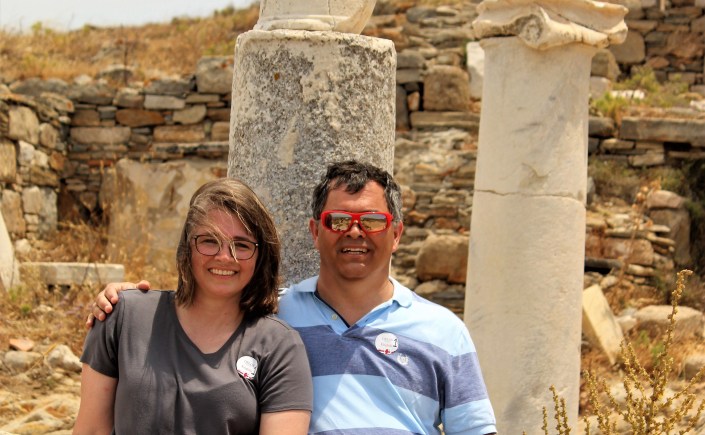
When Dave and I paid off the trip and realized we were actually going (although I kept thinking, Some disaster will strike and we won’t go; Greece will slip into the ocean, Rome will erupt in a giant volcano, I’ll get a horrible stomach flu . . .) I told my husband that all I wanted were a couple of pictures of us leaning against an old pillar. He hasn’t read the books (although I’ve used him on several covers) so he was a little confused by my request, but he was willing. (I wish you could see his, “Are you serious?” expression. After 31 years, I’ve seen it MANY times. He’s learned it’s just best to go along with things to keep me happy. That’s why we’ve been married for 31 years.)

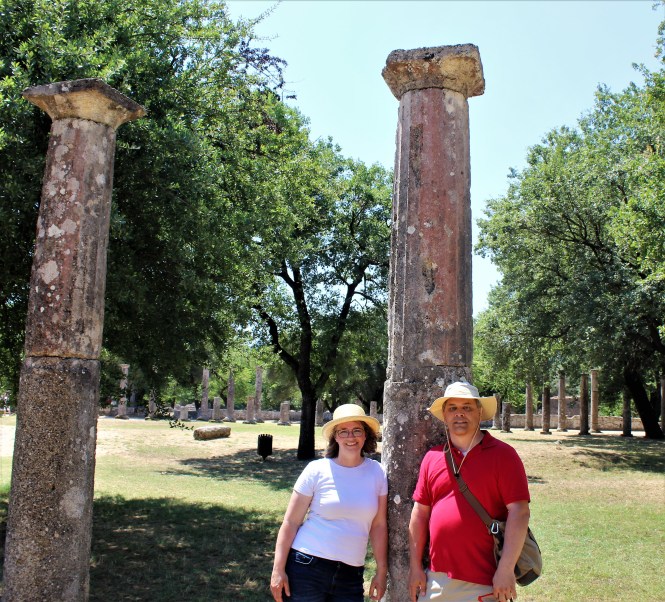
On the island of Delos, we asked a man with a camera like mine to take our picture. (Here’s a travel hint: always find someone with a nicer camera than yours to take your picture; people with only phones have no idea what they’re doing.) The wind wasn’t too helpful, but the excitement–for me, at least–wasn’t blown away as we posed at the Temple of Isis (not the current ISIS, but an ancient one, fortunately):

Two days later we were in Olympia where the ancient Olympics were held for a thousand years, and whoa–more columns to lean against! So again I recruited a photographer, and my husband gave me that same puzzled look, then gamely leaned against another column:

IMG_2816

I see these photos from just a couple weeks ago and I still can’t believe that I was allowed to visit some amazing places. I still marvel that I’ve been allowed to have nine children, to teach high school students, to write an entire books series, to meet so many marvelous people . . . sometimes life is just too good.

No, I amend that: very frequently life is just too good. When you stop and analyze it, and realize what opportunities it gives you, it’s overwhelming. We have to sit in the grass and just whisper, “Thank you.”

Even if the cosmos does decide to come back one day and bite me in the rear because it’s my turn for a new trial, I’ll still have had all of this. Too much, and too good.

Oh, and did you notice what I put in the title about a new book? IT’S TRUE! I’ve written a prequel about the first High General Pere Shin and the servants of King Querul, and it’s nearly ready to be published! (Ok, so I had a few minutes here and there the past three months, and surprisingly I produced a new book with that time.)

I plan to release it this summer, now that my life has slowed down a little, so watch for updates and a LOT more posts about The Walls in the Middle of Idumea, a Forest at the Edge Prequel.

And no, you do NOT have needed to read the series to read the prequel. In fact, I think it’ll be a good lead-in to the rest of the series, especially since it’s only about 180 pages (not as daunting as some of my other books). So if you have any friends that have been interested in reading, tell them they can begin here!

The Walls in the Middle of Idumea–coming very, very soon!