“Being offended” is not as admirable a trait as you may think it is

Taking offense and being insulted have elevated into national pastimes. Find any article posted online anywhere and read (if you dare) the comments. You’ll find a flurry of, “I’m so offended at . . .” or “I can’t believe someone would write . . .” or “Once again, another insulting article has been published by . . .”

Everyone, it seems, has reason to complain about their feelings being hurt.
Either we’ve become a nation of martyrs, or we’ve never matured beyond 7th grade.

I’m inclined to believe the latter. Even if no offense is intended, someone’s bound to twist another’s words and intents like a pipe cleaner into some hurtful shape, then complain loudly that they’ve been hurt.

This weekend I read about a high school which sent home a funny-yet-instructive letter explaining how graduates should dress for graduation (sadly, such direction is necessary because many people don’t understand the word “appropriate”) and naturally there were many students and parents who found it “offensive,” “insulting,” and “shocking.”

Clearly the attempt at humor—written by a teacher who had since retired, suggesting that this letter had been sent out many times before and was never met with such anger—was meant to lighten the mood of what could be an awkward explanation as to why boys should keep their pants pulled up and girls should keep their “girls” contained at the graduation ceremonies. Why people should choose to be offended at reminders to be appropriately dressed truly baffles me.

I also read a post by a man who was overwhelmed by the effort some moms put into craftiness, and how other women feel they have to compete with often over-the-top productions. “Just. Stop. It.” wrote Scott Dannemiller, because he had observed his wife struggling with her assignment for the treat bags of the 1st graders. (Since when do 1st graders need elaborate and decorated end-of-school treat bags?)

And what did women write in response? Oh, I’m sure you can guess: “He’s openly sneering crafty moms . . .” and “Why is it acceptable to openly mock people?” and “What an ungrateful, hateful rant!”

Personally, I thought the article was hilarious. Yes, some women believe everything they see on Pinterest and feel obliged to conform. And yes, I’m a “crafty person,” but the author made excellent points—

Ah, there’s the rub, I think: We simply can’t abide another person’s point of view, especially if it may border on pricking our conscience.

The idea that maybe we might be wrong about something is . . . hurtful?

Or are we too prideful?

The opposite of pride is humility, and while people give that a negative connotation, what “humble” really means is “teachable”: recognizing that we don’t know everything yet, that we aren’t perfect yet, and that we’re WILLING to be open to correction and suggestions on how to improve.

Oh yes—that’s not ANYTHING our society wants inflicted on it: humility? Blech!

Instead we throw a fit when someone suggests we (or our children) are dressing, acting, or saying anything inappropriate.

Instead of checking ourselves to see if we need to improve, we whine and whimper that someone’s being “judgmental” and “offensive” and “hurtful.”

Instead of allowing someone their own points-of-view, on any matter (we are a free-speech society, in theory anyway), we cry foul and proclaim “They hate us!” and in turn become bullies to those whose opinions we refuse to allow.

Aristotle once wrote, “It is the mark of an educated mind to be able to entertain a thought without accepting it.”

What he means is, let people have their opinions; you don’t have to affected by them at all.
But instead we choose to take offense at ideas that we fear threaten ours.
We don’t have to.

Look at that phrase: “Choose to take offense.”

First, it is a choice to be offended. I’ve known a few people who can manipulate the most innocuous statement to insinuate offense.

“She complimented me on my shirt today. Does that mean she thinks my shirt yesterday was hideous?”

“He said I could borrow his new lawnmower. Clearly he thinks my yard isn’t as good as his and I need his help.”

“She said I looked tired. What did she mean by that?!”

Probably nothing!

No one thinks as much about us as we think they do. Many of us learn that back in junior high when our natural narcissism makes us believe everything in the world really is only all about us. And unfortunately a lot of people get stuck at that phase, even as adults.

That’s the problem with “taking” offense; when we actively take (an action on our part) offense, we get stuck. All forward progress in our day, our week, our lives comes to a grinding halt because we stop and decide to fight what we choose to see as a personal attack on something we love to do or believe.  Quite often that “attack” is nothing more than a weak perception on our parts that we overinflate to gargantuan sizes, and we lose traction and time pouting that someone hurt our feelings when 99% of the time no such thing actually occurred.

But occasionally a very personal, very sharp attack does come at us, fully intending to wound or even destroy us.

There are times when offense is clearly meant, and the aggressor stands there waiting for us to fight back.

Still, we can choose to take offense, or not.

Years ago I heard someone say, “Go ahead. Try to offend me. You can’t, because I simply won’t accept offense.

The idea was astonishing to me, and one that I’ve tried to adopt myself. I’ve lived around people who chose to take offense at every little thing, and their lives were needlessly exhausting as they perceived attacks on every side.

However, not taking offense at anything—letting people say and do and imply whatever they want, and letting that mud fling past me instead of stepping into its path—has made my life abundantly easier.

On many occasions people have nervously said to me, “I hope I’m not offending you, but . . .” and what followed was nothing anywhere near offensive. (Usually they’re offering me and my large family their hand-me-down clothes. As a woman who hates shopping and spending money, it’s Christmas Day when those garbage bags are deposited at my front door!)

I smile and say, “I’ve chosen to never be offended by anything, so you’ve got to try a lot harder than that.”

But back to the deliberate offenses, the calculated attacks: Even then, we do NOT need to take offense.

The best example of this to me is that demonstrated by the musical “The Book of Mormon.” Yes, it’s won numerous awards, has grossed millions of dollars, has been received worldwide, and yes—it’s a deliberate attack on the beliefs and ideals of The Church of Jesus Christ of Latter-day Saints (LDS). We’re also known by the name “Mormons,” the name of the ancient author of the compiled book which is lampooned and mocked in the musical. The whole notion of missionaries and morality is parodied by writers who openly hate the Church and brazenly stole copyright names to turn all which we hold sacred into the profane.

Yet the Church has chosen not to be offended.
They’ve chosen not to fight.

They’ve chosen to step away from the mud flinging and simply go on with doing what they believe is right.

There are no lawsuits over the copyright infringements. There are no organized protests. There is no money or time or effort expended in wrestling in this muddy bath. Mormons have been persecuted before, to the point of theft and rape and murder. Compared to the horrors early members faced in the 19th century, a blasphemous little musical is nothing.

There are too many far more important tasks at hand, so the Church continues to focus on building its humanitarian efforts, churches, temples, and going about business as usual. I see the attitude of, “We’ll leave the judgments to God, and be about doing His work in the meantime.”

Well, I confess that wasn’t my initial reaction to the musical. When I first read about the production, I was furious. As a mother of missionaries, future missionaries, and married to a returned missionary, I panicked that such an outright mockery would damage the efforts of tens of thousands of sincere people.

That hasn’t happened. In fact, I’ve read of several accounts of people who attended the musical, decided to contact missionaries to make fun of them, but ended up joining the Church instead. In every major market there have been critical reviews commenting that the musical is abrasive, offensive, and vulgar, and if it were directed toward Muslims instead of Mormons, jihad would have been declared on all fronts.

But all the Church said about the musical was this:

The production may attempt to entertain audiences for an evening, but the Book of Mormon as a volume of scripture will change people’s lives forever by bringing them closer to Christ.

And that was it.
The producers of the musical state the Church is being a “good sport” about it, and blah, blah, blah, because what more can they do about someone who refuses to fight?

Frankly, I still hate the idea that the musical exists, and that people willingly pay ridiculous amounts to see Mormons and missionaries mocked. But I refuse to take offense.

In a fight, the one with the most power is the one who walks away from it.

“No one’s ever successfully insulted Rector Yung, because he refuses to be insulted. People do their best, but Yung won’t even acknowledge the attempt of an affront.”

The Falcon in the Barn, Book 4

Why I choose to be a Mormon

I haven’t been haven’t been coerced or brainwashed, nor am I stupid and delusional to believe what The Church of Jesus Christ of Latter-day Saints (LDS) teaches, despite what commenters on social media and articles about Mormons like to claim.

Instead, I’ve chosen to believe, and here are my six reasons why:

  1. Mormonism makes sense to me.

Straight off, I like what the LDS Church teaches.

Mormonism rings true in my mind and heart, more than any other philosophy, religion, or belief system I’ve researched. And yes—I’ve researched a lot of them, starting when I was a teenager. Even then I agreed with Socrates when he said, “The unexamined life is not worth living.” 

While I was born into a family that was Mormon, I took it upon myself to make sure I wasn’t duped into believing all of this stuff. At the age of 16 I started a serious, focused study of the Bible. I didn’t tell anyone what I was doing, but I read every single word—even the entire Old Testament, and boy was I happy to get to the New Testament—to make sure I knew what was in there.

And I decided that I wanted to believe in it. Belief is a choice, after all. While I think that some of the Bible is figurative, I believe that most of it is literal as far as it’s translated correctly, and I believe in Jesus Christ as my Savior, making me firmly a Christian.

But still I wanted to know what else was out there.

So beginning in high school when I had to read Siddhartha, I’ve researched over the years the main tenants and theories of the major belief systems, from Atheism to Zen Buddhism, and just about everything in between.  In each sect and philosophy I found elements that rang my inner “truth bell.”
(Except for Karl Marx and Christopher Hitchins; they barely clanked my brain.)

But my inner truth bells rang constantly when I read The Book of Mormon and Doctrine and Covenants, and when I studied the ideology of Mormonism. All the truths I found in the other religions and philosophies were represented in the LDS Church along with so, so much more. It’s that depth that won me over, because . . .

  1. Mormonism is the kind of life I want to live.

I’m baffled when others who don’t even know me, or any other Mormons for that fact, take it upon themselves to mock and deride our decision to follow this way of life: to be morally clean, provide charity to our friends and neighbors, pay tithing, actively worship Jesus Christ, observe the Sabbath Day, and make covenants in temples in order to perhaps in some distant epoch of time eventually grow, develop, and mature to become even like God himself.

I would never, ever make fun of the way another person lives their life—it’s their life; why would I be so arrogant as to criticize their decisions?—so I’m not sure why it’s always open season on Mormons.
(By the way, “The Book of Mormon” musical is not written or endorsed by Mormons. Trust me.)

But I’m a Mormon because I want to live a deliberate and purposeful life, and the teachings of the LDS Church provide me with the most logical and inspired guidelines to do so.  

The way I see life is that I have such a short time to be here, and I want to do as much and as best as I can.

I look it at this way: I’ve always wanted to visit London, England. In my mind I’ve fantasized and romanticized about what London would be like and secretly wished I were British. (I’m German, may the Brits forgive me.)

Now, if someone came to me and said, “You will have 24 hours to spend in London next week,” I assure you I wouldn’t just step off the plane in Heathrow, buy a six-pack, and sit on the banks of the Thames watching the boats go up and down for the day.

No, I’d start planning now for the best 24 hours ever. What would be the best and most important places to visit? Once I got there I’d ask the locals, where should I eat? What tourist traps should I avoid? Is Shakespeare playing in the park? Where’s the park? I wouldn’t want to waste any of my time idly.
(As you can imagine, my idea of a vacation isn’t the same as everyone else’s. We once vacationed at the beach, and by lunchtime on the second day I was bored out of my mind. “Isn’t there a museum or national park anywhere?!”)

I see my entire life in the same way. I get the feeling that my soul is very, very old, and that I waited for thousands of years to come to this earth. My existence after this life will also extend for thousands of more years, and beyond.

The line, “We are not human beings having a spiritual experience, but spiritual beings having a human experience,” by the Jesuit priest Pierre Teilhard de Chardin, also rings true to me, as does C. S. Lewis’s statement that “You have never talked to a mere mortal.”

Because this is my ONE shot at life (I couldn’t get behind the idea of reincarnation, unfortunately), and I’m sure I’ve been waiting for this chance for several millennia. I don’t want to waste it.

I’ve also decided (a choice, again) that Jesus Christ was the best example of how to live fully, and no other religion or ideology I’ve explored follows His example closer than the LDS Church.

Follow the teachings of The Church of Jesus Christ of Latter-day Saints is the way I want to spend my life.

  1. The LDS Church doesn’t require blind obedience.

This is another trite, overused cliché leveled against those who are Mormons: we’re non-thinking and gullible.

One man, trying to point out how stupid I was for following Mormonism, claimed that if the prophet said to jump, I’d ask how high.

I shrugged and said, “I thought that was only true in the armed forces.”

Silly me, I’d forgotten he was career military. What ensued next was a brief but lively conversation about the difference between commanders expecting absolute obedience to commands, versus people obeying prophets of God.

When I pointed out that the LDS Church never requires blind obedience as the armed forced did, the gentleman changed the subject because he really didn’t know that much about Mormons, which is my experience with most detractors.
They know hearsay, and little else. 

The truth is that the LDS Church emphasizes, again and again, the importance of individuals discovering truths for themselves; “gaining a testimony” is how it’s frequently phrased.

Here are some of the most often quoted scriptures in the church:

“But, behold, I say unto you, that you must study it out in your mind; then you must ask me if it be right . . .”

“And when ye shall receive these things, I would exhort you that ye would ask God, the Eternal Father, in the name of Christ, if these things are not true . . .”

“If any of you lack wisdom, let him ask of God . . .”

It’s a church that encourages its members, and those investigating it, to ask, ask, ask; to find out, find out, find out for themselves.

No blind faith. Put God to the test. Try it and see.

Back to my military friend; one thing he did admit was that the reason the soldiers obeyed their commanders was because they trusted them implicitly.

I likewise trust the leaders of my church. Their admonitions and suggestions have been correct again and again, and I’ve decided (choice, again) that they are prophets who receive revelation from God.

Here’s one example of thousands I could give. A president and prophet named Gordon B. Hickley said these words in a general conference of the church: Hinckley 2

“I am suggesting that the time has come to get our houses in order.

“So many of our people are living on the very edge of their incomes. In fact, some are living on borrowings.

“We have witnessed in recent weeks wide and fearsome swings in the markets of the world. The economy is a fragile thing. A stumble in the economy in Jakarta or Moscow can immediately affect the entire world. It can eventually reach down to each of us as individuals. There is a portent of stormy weather ahead to which we had better give heed.”

He said this in 1998.
He was right.
It’s been storming for 17 years now, with little relief in sight.

You can see what Mormon leaders have been saying for decades by clicking here and doing a search. Try it for yourself.

So yes, if the prophets of the LDS church says jump, I will, because I already trust their judgment.

And not blindly, but with my eyes and ears wide open.

  1. The LDS Church gives me great comfort.

No other religious organization or philosophical ideal I’ve encountered can provide the depth and breadth of explanations about life and death than the LDS Church. They literally have the meaning of life.

This understanding—that life is a brief but a very important point in our eternal existence—helps me understand why I’m here, what I’m supposed to be doing, and where I want to go afterwards.

This life is a test—a critical, calculated examination—of the nature of our hearts. What do we really, really want? Placed in this mortal state, with problems and struggles, we can truly see what we’re made out of based on how we treat our brothers and sisters.

We’re here to be tried, not to be partying. 

Years ago I worked with a woman who asked me, with the obligatory sneer, why I wanted to be a “good girl” to go to heaven where it undoubtedly would be boring because all anyone ever does is sit around strumming harps and singing. She was planning on going to hell, where all the “cool” people would be.

Befuddled by her overly simplistic ideas of heaven and hell, I hemmed and hawed for a minute before explaining that I believed heaven is a extension of this life where, with our friends and family, we continue to grow and are given greater responsibilities and abilities, whereas hell was a place where all of our regrets and failings torment us with what could have been.

She blinked at that, never having given any real thought to heaven and hell beyond what she saw in Saturday morning cartoons, and never again disparaged my beliefs. In fact, she asked about a few more details over the next few months, and I sensed she was looking for comfort for a pain she couldn’t yet admit feeling.

I recall the song by Eric Clapton called “Tears in Heaven” about the loss of his 4-year-old son. The lyrics are heartbreaking: “Would you know my name/if I saw you in Heaven,” as if the relationships we have on earth would somehow be lost in the next world.

Mormons know that not only will we recognize each other when we die, we’ll know far more about those we love because we’ll remember our relationships we had before we came to this earth.

And additionally, Mormons know that all pain in this life is temporary. 

All frustrations, all troubles, all disappointments will be rectified in the life to come. 

I can’t imagine how I’d live without that understanding. I think I’d be constantly depressed, like the older woman I met at her mother’s funeral.  She knew—knew—that everything about her beloved mother was gone forever. The Mormon bishop conducting the service for the family (because they weren’t affiliated with any religion) tried to assure her that her mother’s spirit was alive and well, and they could be together again someday.

But this woman shook her head and said, “That’s just too good to believe. I can’t accept it.”

Heartbreaking.

She didn’t dare take the comfort, too broken down by this life to imagine any other. I couldn’t live like that.

I need comfort to survive.

  1. What I “sacrifice” to be a Mormon is no sacrifice at all.

You’ve heard it all: Mormons don’t drink, don’t smoke, believe in chastity, fidelity, modesty, charity, and are focused on keep families strong.

Boooorrrring.

When I was 19 I worked in a mall on the east coast where I was the only Mormon among a lot of college students. Frequently they came to work with hangovers, slipped outside to smoke, and complained and fretted about their one-night stands.

I listened to the conversations but never said anything because it wasn’t a world I was part of. Dutifully I’d fold shirts, help customers, and just do my job.

One day a huge shipment came into the store, which meant pizza and beer as we unloaded. After a couple of hours most of the staff was impaired, and when customers rushed the store for the new products, I was the only one sober to deal with them.

The next morning we had to clean up the mess left behind the night before (the manager was as undisciplined as the kids he managed), and as one employee threw up in a trashcan and on a woolen sweater, and another sobbed uncontrollably in the corner because she and another worker had become “too involved” in the back room, someone asked me if I regretted being a Mormon and missing out on all of the fun.

I laughed until I realized he wasn’t being sarcastic.

I glanced around at the chaos and the employees still quite impaired, and said, “I have yet to see any of you have any fun.”

There was a full minute of silence in the store as they contemplated my statement, and since that day I’ve realized that what the world considers a sacrifice to be a Mormon isn’t any sacrifice at all. 

While I may have given up what the world considers “fun,” what I’ve gained instead is peace of mind.
Purpose.
Joy.

If you’re considering investigating the LDS Church, but worry about how difficult transitioning to that life may be, consider this weak but parallel example.

Over a year ago I was tired; bone-weary, deadly tired every single day and needing a two-hour nap just to get by. My brain was also fogged so much that I couldn’t think. I was forgetting important things, such as my 6-year-old out at a friend’s house until they sent her home at 9pm. Plagued also with constant bowel issues, I began to search for some solution to this daily misery that was robbing me of life. I was growing desperate and deeply worried.

I discovered that I was gluten intolerant, and I willingly gave up—for just a week—all the bread that I so dearly loved. In only two days I noticed everything in my life improving, and I made the change permanently. No, it wasn’t easy at first, but it was definitely worth it.

Fast forward to a dinner I had with some friends last month. One of them, enjoying a fluffy roll, apologized to me and said, “I don’t know how you gave up bread.”

“Because once I gave away bread,” I told her, “I got back my brain and my energy. Whenever I’m tempted to eat something I shouldn’t, I think ‘Do I want bread or my brain?’ Even though I’m not a zombie, it’s an easy answer: brains! And while I occasionally miss all things containing gluten, I’d give it up again in a heartbeat.”

Then it hit me: What I gave up at the time seemed like a sacrifice—I still struggle to find worthy equivalents to the food I loved, and would kill for a slice of thick, chewy pizza. But what I got in return was much, much more. I literally got my life back, and I feel 15 years younger (and have even lost weight to boot).

I invite you to find someone who joined the Church, and ask them if they miss what they gave up. Like my mother, they’ll likely say they had to give up alcohol, smoking, or something else, but what they received in return more than made up for what they lost.

In fact, they’ll wished they had “sacrificed” earlier to enjoy sooner what they have now.

  1. I love what I believe.

Some will still think that I’m delusional, that choosing (choice, again) to believe in golden plates and additional scriptures and visiting angels and temple worship and the notion that God still speaks to people is all absurd.

But you know what?

I love all of that.

And this is why Mormons want to tell you all about their religion: we want you to love it as well. 

Think about this: if you find a fantastic restaurant, or watch a movie that blows you away, or read a book that rocks your world, you tell everyone you know about it, right? You want them to share in what you’ve discovered.

So do Mormons. That’s why we send out missionaries (my third one is getting ready to leave at the end of the month for two years), make videos, extend to you invitations, and write blog posts about what we believe.

Now that doesn’t mean you have to embrace what we do. Maybe you don’t like that restaurant your friend recommended because you aren’t keen on curry, and that chick-flick doesn’t have enough car chases, nor do you like to read long books without pictures. No problem. Appreciate that your friend wanted to share with you something they love, then move on.

Same with those trying to share Mormonism with you. Just tell us you’re not interested, and we’ll still be your friend. 

But I’m warning you now–we may try to wave that curry bowl under your nose again every now and then, not because we don’t respect your decisions, but because we have hope you might change your mind someday.

Forgive us. We’re just too darn enthusiastic sometimes.

All people are free to choose what they want to believe—how, where, or what they may. We don’t want to infringe upon your right to believe what you want, nor do we want you to infringe upon our rights. We’re a “live and let live” kind of folk. Works best that way, we think. Let’s just all do what we think is best, and let God sort us out later.

Yet deep in my soul, I feel—scratch that, I know that being a Mormon is the best way to go, at least for me.

Call me delusional, I don’t care. 

But if—if— I wake up dead some day and discover that all of what the Mormons teach was pure nonsense, I still would have believed, because this “nonsense” gives me great joy, and I’d rather eke out my meager existence in delusional joy rather than in the quiet desperation I see ruling the lives of so many that I know and love.

That’s why I choose (choice, again) to be a Mormon. There’s simply nothing better in the world for me.

(7. Bonus reason: The LDS Church makes cool memes; I got all of these from lds.org.)

Teachers shouldn’t ask questions to get answers

It doesn’t matter what kind of teacher: public, private, or church Sunday School, the purpose of asking questions isn’t to get answers

(Not my actual Sunday School class, but roughly the same amount of kids.)

If only adults could understand that.

While I’ve taught college freshmen for over twenty years, I’ve also taught classes in my church. Right now I’m responsible to teach Sunday School to 15-16 year-olds, and because there was some kind of baby boom back in 1999, I have a class of 19 teenagers right now. The leaders in my LDS ward think I need “Help,” and today was a classic example of Question Anxiety.

That’s the best way I can put it: when I ask a question, the “Help” jumps in to answer it. Remember, the “Help” is a well-intentioned adult; but this class is for the teenagers, and when I pose a question they sit for a few seconds, thinking.

And that’s exactly what I want: I do not want answers; I want thought.

The older gentleman helping today obviously wasn’t comfortable with the silence, and tried to fill it each time it manifest itself.

But I love the silence! Wonderful things happen during it.

First, there’s the first five uncomfortable seconds when teens give each other the sidelong glance to see if anyone has an immediate answer.

That’s when the adults get nervous, and want to supply something—anything.

Because adults often work with A Plan. No matter what the task or chore or goal, most adults want A Plan, and getting quickly from point B to task H is imperative. Give answers, get moving along.

It’s because most of us were raised in the public school system which, even worse now than ever, has A Plan that must completed, no matter the needs of the children, no matter the level of interest—The Plan (quite often linked to Common Core) must be accomplished.

My son’s 11-year-old friend encountered this the other day. A substitute teacher set up four stuffed animals: a whale, a tiger, a dolphin, and an octopus. She asked the 5th graders which animal didn’t belong in the group.

Before you read further, what would your answer be?

Nice meme. Would read easier if the last two lines were, “to ask questions that EVEN YOU can’t answer.” But you get the idea . . .

My son’s friend said, “The octopus. Because all the other animals are mammals.”

That wasn’t the “right” answer, and the substitute, for whatever reason, came down a bit hard on him for not giving her answer. Instead of acknowledging that his answer was correct as well, and instead of stepping back and thinking, “Hey, clever. I hadn’t considered that,” she instead snapped at him that the tiger didn’t fit, because the rest of the animals were aquatic animals.

Stick to The Plan. Move along. The point isn’t education. The point is completing the task.

How tragic. This 11-year-old was thinking. He was right!

And that’s what teachers should want when they ask questions: the questions should make students THINK!

That’s what happens in my Sunday School class after those first five uncomfortable seconds. In the next five, kids start to muse to themselves, No one else is saying anything . . . maybe I should come up with something?

Another five seconds, and then a hand tentatively goes up with a comment I grin at and write on the board.

Then another hand. And another.

Yes! They’ll get there, without someone stepping in and supplying the answer too quickly for them.

But there’s still one more thing I want to have happen when I ask a question. Thinking is first, their responses is second, and then . . .

Well, let me tell you what happened today. The topic was The Nature of God, and I opened with asking the students, “What do you know about God?”

That was when the Helper, after five seconds, jumped in with several statements of what he, a sixty-year-old man, knew. Frankly, I didn’t care what he knew. I wanted to know what my 15-year-olds knew.

Eventually, they began to offer bits and pieces which I put on the board.

When I wrote, “Jesus has a body of flesh and bones, and not blood,” that’s when the magic happened.

One girl raised her hand. “Wait, Jesus doesn’t have blood anymore?”

“Nope,” I told her. “Resurrected beings don’t. He can’t die anymore, or even be injured.”

A couple of other teens weren’t aware of that either, and then came more questions. “So he could go skydiving and nothing bad would happen to him?”

“You got it. And here’s the awsome part—all of us will someday be resurrected too, with a perfect body of flesh and bone.”

Here’s where the discussion shifted into a little bit of silliness, but I let it.

“So when I’m resurrected, I can do extreme sports and not worry about getting hurt?”

“That’s right!”

Do you see what happened there?

The kids started asking the questions!

THAT should be the goal of every teacher’s lesson: not getting answers to our questions, but getting questions from our students. That means they’re interested. They’re thinking. They’re engaged!

And it doesn’t happen too often, unfortunately. I’ve heard of too many kids asking a question in school, and being told, after an awkward pause, “I’m not really sure, and since it’s not on the test, let’s not worry about that right now.”

Talk about killing the desire to learn. Kids have it naturally. It’s mostly gone by middle school. Can you see how it died?

I’ve also seen this a lot in my freshmen college students. After 12 years in the system, they rarely ask questions more compelling than, “Does the Works Cited page count as part of the six page requirement?”

Oh, I try. I bring in articles about issues directly affecting them, I show them entertaining video clips, and I purposely throw out nuggets such as, “Your high school teacher probably told you to never use the word ‘I’ in your papers, but we all know that’s total rubbish, along with never beginning a sentence with, ‘Because.’”

It’ll take a moment, but always a student will raise a hand and say, “Wait—we can begin a sentence with ‘Because’? What about ‘But’?” And for five minutes we have an interesting discussion, because a student wanted to know that answer, not because the teacher was looking for a programmed response.

Think back to any lectures you remember from college or high school. Do you remember any of them? At all? I remember a handful, and every one of them began with a question a student wanted answered, and ended with a teacher involving all of us in the discussion.

That is education. That is learning.

And it’s rarely happening anymore.

sunday school picture

Click here to see the curriculum for all of the youth in The Church of Jesus Christ of Latter-day Saints. Go ahead–we don’t bite. At least not that hard.

As for my Sunday School class today, Helper began to realize the kids were capable of answering the questions, and to his credit he backed off a bit, especially after I refused to make eye contact with him, but focused solely on the kids. They came through for me again, as they always do, with even a few more interesting questions that filled our 40 minutes quite easily. The LDS Church has purposely changed its curriculum for teenagers 12-18 so that they can run the pace of the lesson, and not the teachers.

If only school systems could do that as well: respect the child as a person wanting to learn, instead of part of a group that needs processing.

Not only would our children be smarter with that kind of child-focused education, but they’d be happier too, which should always be our foremost goal in education: happiness.

This was one of the things Mahrree loved about teaching: the rare moments when a student dares to wonder. The best learning happened when the students asked the questions, not the teachers.

It was also at these moments that she panicked, because sometimes the questions were so unexpected that she was caught by surprise. But it was the good kind of panic that lets you remember you’re alive, like being chased by a dog you know you can outrun, but it terrifies you just the same. It feels great when you finally reach home, or see the dog yanked back suddenly by its leash and you gloat at it triumphantly.

But first you have to run.

She always had a ready answer. “Chommy, what do you think?”

~Book 4, Falcon in the Barn (coming spring 2015)

The nativity is wrong! And we can blame Christmas carols!

Christmas carols have been lying to us for centuries. The Nativity is WRONG!

But only because the poets who wrote the lyrics simply didn’t know any better.

You see, the image we have of a traditional nativity is merely that: a tradition. (And if you’ve read my books, you know I’m a cynic about traditions.) Most of what we set up in December to remember the birth of Jesus Christ is wildly inaccurate, yet innocently so.

The truth, however, is even more wonderful than what we’ve always thought.

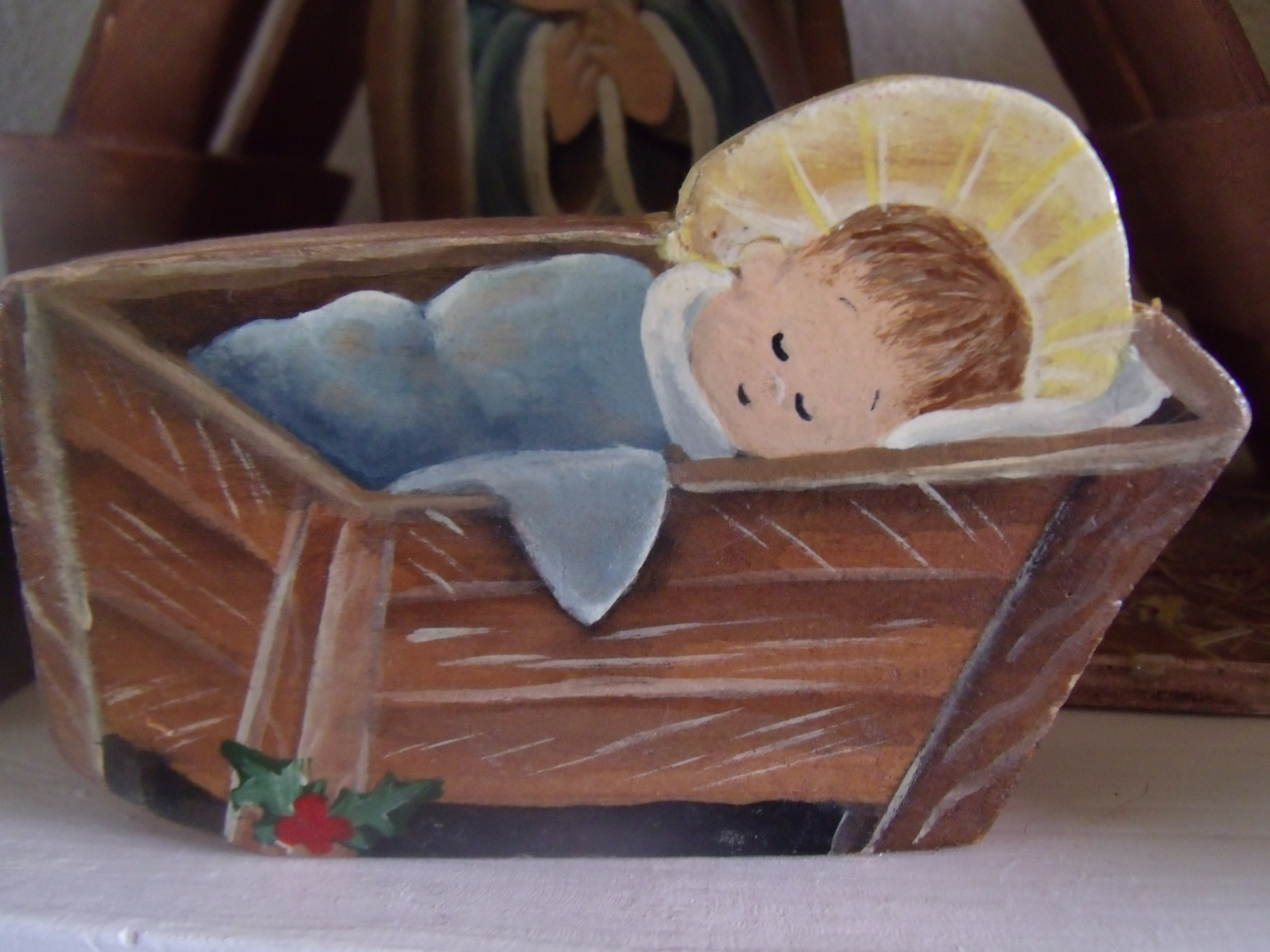
GEDSC DIGITAL CAMERA GEDSC DIGITAL CAMERA GEDSC DIGITAL CAMERAHere are scenes of a nativity I made over twenty years ago so my kids could have something to play with. (Although a few horns have been lost over the years. And a cow’s gone to pasture in the storage room.) More recently I’ve learned about Dr. Margaret Barker, a remarkable Methodist preacher and theologian who studied at Cambridge and has devoted her research to ancient Christianity. She’s written a book, Christmas: The Original Story demonstrating how we’ve messed up the story of the Nativity for so many years.

This year I’ve thought about her insights, and I’ve concluded that we can place much of the blame of incorrectness on our beautiful, meaningful, Christmas carols. My brief research shows that most of the religious songs were written during the 1600 to 1800s, in England and Europe, and reflect much more about the authors’ lives rather than the Savior’s.

Let me make it clear: I love these carols, and am happy when we sing them in church throughout December. But enjoying them doesn’t mean I don’t have to point out a few inconsistencies (because I’m just that cynical).

First, let’s look at some iconic images that really have no basis in anything except . . . well, everyone told us this is how it is.

An, old traditional icon. Creating an old–and likely incorrect–tradition.

For example, how many images do we have of Mary riding a donkey, heavily pregnant, for miles and miles on the way to Bethlehem because of taxes? The image is in movies, books, Christmas cards . . .

Now, where in the New Testament is that donkey mentioned? Yep, nowhere. (There’s an awesome talking donkey in the Old Testament, however.)

Mary likely didn’t even ride a donkey (I’ve read one suggestion that the riding of a donkey is the idea of a preacher in the 19th century who thought it would add realism to their reenactment). And who says they traveled alone? No one in the New Testament. We’ve romanticized the story. Read this fascinating blog (or watch the Youtube link) of Sandie Zimmerman, wife of Messianic Rabbi Jack Zimmerman:

If Joseph was just going to Bethlehem for administrative purposes, why would he have brought his nine-month-pregnant wife? They were told to go to their ancestral home. They lived in Nazareth, but that wasn’t Joseph’s home. Wouldn’t that be careless and irresponsible of Joseph to wait till the very last minute to take his wife?  . . . Don’t you think that Joseph would have been better prepared knowing that the Son of God was coming into the world? So, he was returning to his homeland.

 . . . Here’s what would have happened. First, the Roman census was ordered, and Joseph had to go immediately. Now, when I say immediately, I am sure they went a month or two beforehand, because if you read the passage, it says, “and while they were there, she gave birth.” So they were already there

GEDSC DIGITAL CAMERA

Sorry, donkey. You may not have been there. (And I even glued your ear back on.)

I also recently heard a suggestion that Joseph and Mary knew full well about the prophecies of where Jesus would be born, and deliberately moved to the City of David in anticipation.

And as for the image of Joseph frantically knocking on doors, because the inns were full? Zimmerman suggests that Joseph had a home there already, and it was full of family visiting because of the census (not taxes) so the home was packed. The family had no inns to go to, so Joseph devised another place for his ready-to-give-birth wife so she’d have some privacy.

 . . . Depending on what their house looked like, and let’s say they had a cave-like dwelling attached to the house, Joseph probably would have gone in there, gotten all the animals out, and cleaned it up, leaving the sukkah still standing. Then that’s where Mary gave birth to Yeshua, in something very clean, because Jewish law again would not permit her to give birth with animals around. 

While this alternative may mess with your vision of Mary and Joseph in Bethlehem, I prefer it. Joseph was planning and caring for his wife and future stepson, who would also be his future Savior. He knew what he was doing, and they were prepared.

So how do Christmas carols provide more myth than truth? Let’s examine “The First Noel,” historically also the First Offender, giving us lines such as “certain poor shepherds” and “on a cold winter’s night.” GEDSC DIGITAL CAMERA

Back in 17th century England, when these lines were penned, it likely was a cold winter’s night in Britain. But not in Israel! Forget the idea that there was snow on the ground at Jesus’s birth (there blows the credibility of a dozen Christmas cards I saw at the store). Snow in Israel is exceptionally rare. And Jesus was likely not born in winter, but in the early spring when sheep were lambing.

And about those “certain poor shepherds”? Doubtful there were as poor as our 1600-something poet liked to believe. Likely the real reason these shepherds were in the field with their flocks at night (normally they were kept safe in a sheepfold) was because the sheep were lambing, and these were no ordinary sheep. They were the paschal lambs, and the shepherds watching over them were making sure they were born healthily because they would become the sacrificial lambs in the temple. Remembering the covenant instituted by Moses–sacrificing a perfect lamb for the Passover–these priestly-shepherds would have, more than anyone else, recognized the significance of the birth of their Savior. It was to them that the angels came to announce the Final and Ultimate Lamb for the sacrifice.

GEDSC DIGITAL CAMERA

No, I don’t know why I painted him with a blue blanket. Maybe that’s what was in the Holly Babies book where I copied these pictures from.

Which leads us to “Away in a Manger,” a classic children’s carol. When the shepherds came to see the baby in the cave (get that wooden stable picture out of your head), they didn’t find baby Jesus in a “manger filled with hay.” Back in the 1880s when this song first became popular, I have no doubt every manger had straw in it. One source attributes the words to Martin Luther, who back in the 1400-1500s certainly knew about straw and mangers.

“Little Lamb,” by Jenedy Paige

However, the manger probably wasn’t made of lumber, but of stone.

Read this marvelous blog by Jenedy Paige and the accompanying painting she did of the newborn Jesus. Citing an article by Jeffrey R. Chadwick, she explains what I’ve read in a few other sources. The manger was stone.

Think about that: the manger was stone, likely for holding water (but emptied), since the animals had plenty of fresh grass around to eat. When the shepherds came to see baby Jesus, he was resting in a stone trough, like a paschal lamb sacrifice. They would recognize the symbolism, and fallen down to worship the Lamb of God.

Still, this manger with hay is surely a beloved image. In the LDS Church, we have several Christmas songs written for children to help them remember whose birthday we’re celebrating, but it’s impossible to get rid of that manger and hay.
So I’m sorry, “Once within a Lowly Stable:” Mary didn’t lay her baby in a “manger filled with hay.”
Same to “Oh, Hush Thee, My Baby.”
And to you, “The Nativity Song.” I’m so sorry . . .

Now that I’ve crushed your image of the manger, let’s discuss those swaddling bands. “While Shepherds Watched Their Flocks,” was written by Nahum Tate sometime between 1652 and 1715, and he gives the notion of swaddling cloths a bit of a negative connotation: “All meanly wrapped in swathing bands.” I’ve heard others describe swaddling cloths as evidence that Mary and Joseph were impoverished, and had only strips of cloth for their babe. Oh, the poor baby. No onesies? And it’s so cold outside! (Ah, got you—remember: no snow! Springtime.)

However, swaddling cloths were traditional, expected, and may have carried a variety of meanings. Back to Jenedy Paige and Jeffrey R. Chadwick:

. . . “swaddling bands” as scraps of fabric, [supposedly] showing the poverty of Mary and Joseph . . . were actually a big part of Israelite culture. When a young woman was betrothed she immediately began embroidering swaddling bands, which were 5-6” wide strips of linen that would be embroidered with symbols of the ancestry of the bride and groom. Thus the bands symbolized the coming together of the two families as one. 

And Dr. Barker, according to David Larsen,

“notes that ‘she wrapped him in swaddling clothes’ is literally ‘she wrapped him around.’ The important aspect of the inclusion of this detail in Luke’s story, for Barker, is that the newly born baby was clothed.  The ‘clothing’ of the ‘newly born’ high priest was an important part of the temple ritual where he became the son of God.” 

Sandie Zimmerman says that,

“Mary brought forth her firstborn son and wrapped him in swaddling clothes, back then when a baby was born, the umbilical cord was cut, the baby was salted, and then the baby was oiled with frankincense and myrrh. Even at His birth, that is a picture of His death, being anointed and being prepared.”

Consider this beautiful image as to where else the swaddling cloths may have come from. Zimmerman says,

“During the time of Sukkot, the priests were in the Temple. In the Holy of Holies, the high priest would take his linen undergarment, discard it, and lay it at the altar . . . It was traditional during Sukkot for the high priest’s garment to either be sold for money for the Temple or to be given to the poor.

We know that Joseph and Mary were poor because of the sacrifice they gave in the Temple for Yeshua’s birth, which was two turtledoves. It was required that you sacrifice a lamb and a dove, but if you were poor, they allowed two doves. Doesn’t it make sense that Mary got the wrapping from Zechariah the priest, who got it from the Temple, where it came from the high priest in the Holy of Holies? As she was wrapping her baby, she was wrapping Yeshua in high priestly garments.”

“Meanly wrapped” indeed.

The Stories Behind 12 Pieces of LDS Art

“Nativity,” by Brian Kershisnik

We also have an image of Mary alone, giving birth. Again, there’s nothing in the scriptures about that. Midwives—likely two—probably attended her. Learning about that ancient tradition always made me feel better about things. This marvelous piece by Brian Kershisnik (read full details here) shows all kind of help.

Now, about those “three kings.” We can blame John Henry Hopkins, Jr. who wrote “We Three Kings of Orient Are,” who decided 1) there were three; 2) they were kings, and 3) they were from the orient. GEDSC DIGITAL CAMERA

Nope, nope, and good gravy nope. The scripture in Matthew mentions “wise men.” Could have been two. Could have been 72. Just because they brought three gifts among them doesn’t mean there were three. Coming from the orient is also misleading. They came from “the east,”  but the idea that they are oriental, and have names–Melchior,  Caspar and  Balthazar—are, according to Dr. Barker, “the product of…fertile imaginations.” As David Larsen writes,

“Barker notes that ‘from the East’ can also mean ‘from ancient times.’ The coming of the magi could have been a sign that the ancient ways were being restored.  The gold, frankincense, and myrrh they brought were symbolic of the temple (all have important uses in the temple).”

And they didn’t visit Jesus at the stable (remember–cave). Matthew says they “came unto the house.” Jesus was a young child, no longer a “babe.” He was likely close to two-years-old, since King Herod, in his effort to destroy a future rival, kills all baby boys under age 2. Since it had been two years since the appearance of the star, it’d be very odd if Mary, Joseph, and Jesus were still hanging out in that cave/stable with/without a manger as we envision it with no hay in the stone trough. GEDSC DIGITAL CAMERA

So even though the song, “With Wondering Awe,” written in the mid 1800s in Boston, has the wise men hearing the angels singing (because that sound apparently carries for years) and seeking “the lowly manger,” that never happened. So take the wise men-who-aren’t-kings out of your nativity set. It’s a good thing they came later, because Joseph and Mary likely sold the costly gifts representative of his sacrificial death so they’d have enough supplies to hide in Egypt until Herod was nibbled to death by worms. (Thank you, Josephus, for that tidbit. Now, why don’t we have a representation of THAT in our nativities?)

Finally, the biggest lie of all in Christmas carols: the third verse of “O Little Town of Bethlehem.” Phillips Brooks, another 19th century author, clearly never was around when natural childbirth was occurring, or he never would have written, “How silently, how silently / The wondrous gift is giv’n.” As a mother who’s given birth nine times, I giggle every time I sing that line. And since I’ve shared this observation with a few friends, they now snicker in church during this hymn as well.

So back to my little Nativity scene. Years ago when I painted this set, I intended to make one for each of my children when they had kids. But I have to make a completely different one, now, with a cave, a stone trough, and a dozen wise men who somehow show up a couple years later at a house.
This will take some thought, obviously.
In the meantime, when we discuss our set on Christmas Eve, I spend an extra half hour explaining why everything is wrong, and on Sunday all of my teenage Sunday School students will hear this as well. Maybe one of them will know how I can create a stone trough in a realistic looking cave.

In the meantime, apologies if I’ve shattered your image of the Nativity and the songs we love to sing at Christmas.

But if you now see the birth of our Savior in a deeper, clearer way–you’re welcome. Frankly (or, Frankincense-ly), I now love the entire story even more.

nativity tinted2

Wildly inaccurate: Mary and Joseph weren’t 4 and 8, respectively. But still a sweet representation of the Nativity.

“I don’t hold with traditions just for tradition’s  sake.” 
Relf Shin held up the call for tradition as strongly as his son did. They tried to drop it on its head as often as possible.
     ~The Forest at the Edge of the World, Book 1

The family MUST come first

Contrary to common societal belief, as a wife and mother, I do need to put my family first. That’s why book four—The Falcon in the Barn—is a bit delayed. I’m now hoping for a January 2015 release (and that’s ambitious, too, so I apologize). I understand your frustration; I feel it too. I had planned to have Falcon ready by November but circumstances won’t let me.

Because I have a family that needs me.

Financial constraints have required me to get a part-time job. And another part-time job. One is only for 12 weeks, and requires me to grade papers at home for many hours. The other keeps me out of the house for 20 hours a week. All together, this means that the four or five hours I used to enjoy writing each day has diminished to 30 minutes (if I’m lucky) and usually late at night when I’m wiped out because I had to catch up on taking care of the house, homeschooling my kids, and figuring out why we’re out of milk again.

Writing progress is pretty grim.

On the other hand, I have enough income to keep the electricity and water on, and the car insurance up to date. Never mind that my joy of writing—along with all other hobbies—has to take a back seat for who know how long. But that’s ok, because my life’s not about me; it’s about taking care of my spouse and children.

Virginia Woolf famously wrote 85 years ago that “a woman must have money and a room of her own if she is to write fiction.” If I had plenty of money, I could quit my jobs and write.

But not only do I not have money, I don’t have a room of my own. My computer is perched in the corner of my bedroom, where—just now—my 7-year-old and her friends trudged in to ask for Otter Pops (we supply the neighborhood). Of course I said yes, then skimmed what I had written to find my spot again.

Interruptions define my life, because my life is all about family. I can think of only a handful of times over the years that I actually shut my door and told my family that no one was allowed in for the next half hour. Otherwise, the carpet to my computer has been worn thin, because they know they’ll find me here, either writing, editing, or grading papers. And I will never turn them away. They have to come first. I committed myself to being their support long before I committed myself to writing a book series.

virginia woolf

She wasn’t the happiest of women, committing suicide by drowning when she was 59.

Virginia Woolf didn’t have children (but likely was bi-polar, which some may argue is just as grueling), so she didn’t understand the pull and yank between being me and being mom/wife. I know it’s counter-culture to claim that I need to be mom/wife first. (“What about your needs? What about your development?” goes the familiar crank.) But frankly, I’ve known too many women who put themselves first, and lost everything else that was important. One writer admitted to still pounding on her laptop during the labor of her baby, and was so obsessed that she devoted all her time to her book . . . and none to her marriage, which ended.

It’s popular to say, “Oh, I’ve worked so hard! I need me-time,” but I’ve discovered over the years that “me-time” can be accomplished in about thirty minutes a day, even less if secret chocolate is involved. Some women I’ve known spend hours on themselves/hobbies/pursuits to the benefit of no one, not even themselves.

Oh, I’m not perfect. I’ll confess to fantasies about everyone going away for a week or so, leaving me with a perfectly clean house, full fridge, and absolute silence so I can write nonstop and really get something accomplished. I’m jealous of friends who take vacations without husbands and children, and drool over what I could get done with so much freedom.

But I also know that after an hour of such freedom I’d get fidgety, and would be on my phone to make sure everyone was all right, that clothes were on (we have “free ranging” issues with our toddler), and that they ate something more substantial than Nutella sandwiches again.

Because honestly, I’m not entirely all right without them. Working away from home, while leaving me with desperately needed cash in our bank account, also leaves me with great anxiety that I’m not doing my duty to my family. When I come home, I’m a mixed bag of relief and disappointment; relief that my 14-year-old remembered to change the toddler’s diaper and the living room isn’t too chaotic, and disappointment that my 16-year-old reports that everything was just fine without me.

Until circumstances change, I’ll lurch and strain and struggle to fit in 135 things where there’s space only for 97. I’ll forget a few things (note: I ended up doing the dinner dishes at 11:30pm) and maybe later tonight I’ll squeak in a half hour of rearranging book four, but only after I’ve gone with my husband to an alumni event at the college, and picked some apples with my kids at a neighbor’s, and did some sewing for Halloween costumes (curse the church for having a costume party TWO WEEKS before the actual date!), and run a load of laundry, and finished dinner, and helped my daughter with homework, and my son with homework . . .

So, yes—Falcon’s coming, my friends. But while I so dearly love writing it, I need to love my family more.

Thanks for understanding. (P.S. Took me another two days to actually post this after writing it. Sigh.)

Mahrree sighed and said, “My children have me tied?”

The thought had never occurred to her. True, her life was completely different now. But caring for these little children, who she thought were funny more  often than frustrating, loving more often than loud, was an honor. It said so in The Writings, and she’d chosen to believe it from the moment she knew she was expecting her firstborn. And choosing to believe it had made all the difference in her attitude as a mother. ~Book Two: Solider at the Door

The myth of hard work and wealth

I think there’s been more harm than good done by this statement: “If you work hard enough, you’ll be wealthy.”

I recently met a man named Charles who’s a chef, been working in restaurants since he was 16-years-old, and owned his own restaurant and his own catering business. But he can’t keep up anymore—working from 4am to 11am at the restaurant, catering on the side, and getting to bed by 10pm if he’s lucky only to get up again at 3:30am. He’s stooped over, walks slowly, but still smiles, albeit wearily. He’s 68 years old and doesn’t want to retire, but needs to slow down. However, he worries about the many people who rely on him and his industry. His past generosity means he doesn’t have much saved up, either.

Sara, in her 40s, has a husband is trying to finish his college degree. To help him, she’s now working full-time as a teacher’s aid in a school, and works an additional 20 hours/week at a hotel. In the few hours in between she helps her five kids with their homework so that her husband can study. She has a college degree, but couldn’t find full-time work anywhere in her field, so she’s burning the candle on both ends. Both Charles and Sara work very hard.

How often have you heard this statement? “Get a college degree, and your earning potential will increase.”

I know of far too many people to name with college degrees, with years of experience in management, training, HR, and sales who are currently working part-time jobs–which require no degree–and offer no benefits (we won’t get into the irony of the Affordable Health Care Act right now). There simply aren’t enough full-time jobs, and while a few of these people have considered moving to find work, they’re trapped by houses with no equity in them. Every month they sink deeper into the hole. 

Then there’s my friend with degrees in a hard science and a foreign language, but works as a seamstress. She said “Professional Alterations” was the most useful course she completed in college. And then there’s the friend who finished a graduate degree widely touted as the key to success, but neither he nor the twenty others he graduated with can find work making more than $14/hour. The market’s been saturated with people graduating with that same advanced degree.

I think this one gets under my skin the most: “Work smarter, not harder.”

I read this on an acquaintance’s website. Back in college he drove twenty-year-old German luxury cars, because he vowed he’d always drive new ones in the future. He does, a new model every year, as the head of a company that peddles a “forever young tonic” to vain and aging people. A blogger on his company’s site claimed, “Some people think luck just happens. We make it happen.” Then she went on about how much money one could make selling their snake oil. But I never believed one should become rich by manipulating the vulnerable or stupid. This rouse has been around for generations. It’s not working smarter, it’s working meaner.

How about this one: “Work hard enough, and you’ll get your piece of the pie.”

Or so claims another get-rich website, which buries the actual product they sell but talks all about the vacations their marketers take. The problem with this mantra is that there is only so much pie to go around. But those sitting at the top of a pie kingdom believe in the myth of “spontaneous pie generation,” that they won’t need to share some of the pie they snagged, but if others simple worked as well as they did, another pie would magically appear for them too–and they’re willing to sell you the secret.

As the discussion of the “haves” vs. the “have-nots” comes around again, there’s a prevailing notion of, “I deserve this, and you don’t, because you’re just not good/smart/hard-working enough.”

And this notion is a lie. I’ve always suspected that, but now I’ve seen proof.

Lately my eyes have been opened to how many people in America are hard-working and are just getting by. I thought it was just us, but I suspect it’s the majority. Forget wealth; we’re just trying to cover the mortgage. Like the nearly 70-year-old woman I know who lives with her struggling sister and her family. She works 30+ hours a week in manual labor to help cover half of the very modest mortgage. Hard working? I was by her side for four hours recently, and this so-called “elderly” woman worked circles around me! I was exhausted at the end of the shift and was going home to take a nap. She was going home to bottle several bushels of peaches.

I cringe when I hear disparaging comments about the working poor. And even though what qualifies as “poor” in America is still richer than the vast majority of the rest of the world, there are still millions of good, working adults just getting by month-to-month. Try being a janitor for a week. That’s hard work.

Yes, a great man . . . but he didn’t accomplish it all on his own. No one really does.

If hard work was all it took to become wealthy, there’d be a lot more living in luxury. Take a deep, searching look at the level of hard work many people in third-world countries accomplish, day after day. No one would argue they’re wealthy. So what gives?

The fact is, a great many that have wealth didn’t get there on hard work alone. Quite often we point to Benjamin Franklin as the epitome of working one’s way to the top. But Pulitzer Prize winning biographer Gordon Wood pointed out that Mr. Franklin was the beneficiary of numerous “patronages”: wealthy Pennsylvanians who donated him funds, set him up with those of influence, even paid many of his expenses to get him started with his printing business. “In the end Franklin was never quite as self-made as he sometimes implied or as the nineteenth century made him out to be” (The Americanization of Benjamin Franklin, page 27).

Many of the “greats” have to admit they stood on the shoulders of others, got started with the seed money of friends and relatives, received an inside tip, was in the right place at the right time, even got a bit lucky. Some have attained their positions by manipulation through a product—such as my acquaintance with the anti-aging cream—or have exploited a resource that wasn’t really theirs to begin with.

I love what Brigham Young said, over 150 years ago:

“People think they are going to get rich by hard work—by working sixteen hours out of the twenty-four; but it is not so. . . .
There is any amount of property, and gold and silver in the earth and on the earth, and the Lord gives to this one and that one—the wicked as well as the righteous—to see what they will do with it, but it all belongs to him.” (emphasis added)

Think about that—God’s given more to some than to others, to see what they will do. I sincerely doubt He’s expecting those with more to indulge themselves, but instead to “. . . have mercy on the poor,” as Proverbs 14:21 suggests, for “happy is he” who does.

Now, consider this notion of hard work, from Professor Hugh Nibley, one of the greatest thinkers of the 20th Century:

“What are the qualities that make for success in the business world? Hard work, dependability, sobriety, firmness, imagination, patience, courage, loyalty, discrimination, intelligence, persistence, ingenuity, dedication, consecration—you can add to the list. But these are the same qualities necessary to make a successful athlete, artist, soldier, bank robber, musician, international jewel thief, scholar, hit man, spy, teacher, dancer, author, politician, minister, smuggler, con man, general, explorer, chef, physician, engineer, builder, astronaut, scientist, godfather, inventor.

. . . You don’t have to go into business to develop character . . . There are over one half million millionaires in the country [in 1979 when he delivered this speech]—but how many first-rate composers or writers or artists or even scientists? A tiny handful.” (emphasis added; “Gifts,” Approaching Zion, pages 102-3).

I fear that many in our society don’t hold in any esteem those who truly work hard. Instead, we’re envious of those who seem to get away with working less, yet still get more. That’s what the 1% vs. 99% protests of last year were about: people wanted the magic spell to spontaneously generate their own pie, and if given that magical pie, the cynic in me suspects it wouldn’t be shared either. That’s why we uphold the corrupt system of some getting more only because we hope to rise to that level of luxury and leisure ourselves.

But that’s not how it’s meant to be.

Giyak exhaled. “Colonel, I appreciate your sense of fairness. Very few men have that anymore. That’s what makes you an excellent commander, I’m sure. But politics is different. More delicate. Those that live in the Estates are, are . . . more achieved. More deserving of their station in life. They worked harder, are smarter . . . I don’t know. Perhaps the good doctor could explain to us the differences in achievement in one’s life . . . but you see, those who nature have favored . . . nature has favored. That’s all there is to it. We, as a political entity, must also recognize that nature has chosen some for success rather than others.”

But Perrin wasn’t convinced. “I just worry about a society that deems one person more worthy than another. I believe in the Creator, and I believe He created us all equal. To see us deferring to some and neglecting—I’m sorry, not ‘neglecting,’ but marginalizing others in order to favor another? They’ve already been ‘rewarded’ with more by their status. Is it truly fair or right that a builder of a school makes three times as much as an eggman? Don’t children need food as much as they need education? Or why should I as a colonel make more than my major? We work the same hours, at the same fort, doing each other’s job most of the time . . . If extra silver’s to be given, it should be given to him with the greater need—”   ~Book 3, The Mansions of Idumea

This isn’t the last you’ll hear from on this issue of money, sharing, and worth. Oh dear, not at all. I’m just getting started . . .

Don’t judge me=I’m already feeling guilty

Some time ago I came to the realization that whenever someone throws out the “Don’t judge me!” line, it’s because at some level they suspect that they’re in the wrong, but they’re not ready to admit it, and certainly not ready to resolve it, and would rather that everyone STOP REMINDING THEM about it.

It’s called GUILT, and for some reason we often think we shouldn’t have to deal with that emotion.

My most amoral character agrees:

“Man’s greatest weakness! Guilt, regret, feeling bad about behavior . . . It’s a forced condition, you know, shame about a misdeed. A behavior taught to humans that can, and must, be overcome. Ignore it long enough, it dies away as simple as that . . . Humans abuse themselves. With guilt. With regret. It holds them back, makes them feel as if they owe some duty to others, as if there should be some level of behavior all should aspire to. Well, there isn’t! 
~Chairman Nicko Mal, Soldier at the Door

Well, there is!

And my, do we hate it when someone tries to remind us that the purpose of our lives isn’t to indulge ourselves and hope there aren’t any consequences.

I first encountered this very weak logic back in high school in the 1980s, when punk music hit the US. I had a few friends embrace the culture, dyeing their hair black and using a bottle of mousse each morning to make it stand up straight, putting spikes on every inch of clothing, then scowling when people stared at them.

“Don’t judge me!” I never understood that; they purposely put themselves on display, then didn’t expect people to look?

As a senior in high school I became grunge before Kurt Cobain made a name for himself. I wore holey jeans, didn’t bother with make-up, spent only 5 minutes on my hair (and yes, a few boys commented that I needed to “do something with it”—which pronouncement meant they weren’t boys I’d ever be interested in) and I did so for a purpose. I wanted to prove that I didn’t care about my appearance, but wanted to focus only on trying to get a scholarship (since I hadn’t been the best student for the first 11 years of schooling). Yes, people looked at me–this was the height of preppiness; watch “The Cosby Show” to see how I should have been dressing–and I rather enjoyed it. It was also a good test for my vanity; am I still worthy, even though I don’t “look worthy.” I was trying to make a point, and I made it. Judge me! Go ahead!

Social media has given us even more ways to stand up and be judged, or to scream, “Stop judging me!” Today I read Matt Walsh’s blog on why Christian women should hate Fifty Shades of Grey. I’ll state right now that I think the novel is women’s porn, so I agreed completely with his position.

However, the real lesson is in the comments, as it always is; scattered among the remarks of “Thanks for stating what I always suspected about that horrible book,” were phrases such as, “Hey, nothing wrong with reading about a little sex,” or “So what if I like a little excitement in my books?” and, most common among the dissenters: “Don’t judge me based on what I read! How can you be a Christian and be so judgmental?”

Ah-ha . . . someone’s conscious has been pricked, yet again. If they didn’t feel any guilt, they wouldn’t be justifying themselves, and in the huge social media presence of Matt Walsh, no less. There, for thousands of readers to see, they declare their stance yet demand that no one judge them. How very odd.

Weird Al, Mandatory Fun, Word Crimes, Grammarly

I have no doubt a few grammar Nazis wished they could find a similar uniform.

I see pricks of guilt and judgment everywhere on the Internet, and it always tells much more about the responder than what they respond to. For example, Weird Al Yankovic just came out with a brilliant parody about common grammatical errors, and Grammarly interviewed him about it. Again, the great lesson was in the responses to the interview, because poor Al accidentally used the pronoun “that” instead of “who.”

Oh, there’s no group more self-righteous and unforgiving than Grammar Nazis. (I’ve ranted about them here. Grammar snobs put the Pharisees of Christ’s time to shame.) These responders, instead of appreciating the incredible work of Weird Al, which he shares freely on YouTube so that all of us English teachers can kill another five minutes of class time; instead of being grateful that someone with a greater sense of humor has taken up the grammar cause; no, instead of applauding him, Grammar Nazis vilified him:

“People that know me … people that still haven’t figured out” 😦 And he thinks he’s a grammar nerd. <shaking my head>
[As of this is some kind of special club, and he just violated its most sacred rule.]

I, too, was shocked to see that he used that instead of who. 
[Yes, she actually wrote “shocked.”]

Fortunately there was some reason among the rabble:

Alright, everybody caught the “that/who” error. He’s still a satirical genius. Disagreement with that proposition is dissent up with which I shall not put.

Judgment is everywhere on the Internet, and just as we’re quick to not have people point out our faults, we’re even quicker to point them out in others. I think that’s because when we’re feeling guilty, the fastest way to assuage that guilt is to point out how someone is guiltier than us.

For example, I read an article about a woman who recycles clothing from a thrift store, updates it, then donates it back. I was amazed and humbled to realize she’d done over 700 pieces. I can sew (sort of), but it never occurred to me to use that minimal talent in such a generous and creative way.

Again, the lesson was in the comments. There were plenty of judgments which, I suspect, arose out of guilt.

“Look at the photos—she’s just shortening the hems and sleeves. That’s nothing too special.”
[And yet, still likely more than you did.]

“She’s only taking fat clothes and turning them skinny.”
[And what have you done?]

“As a plus-size woman, I take offense that she’s reducing the amount of clothing that would fit me, making it for skinnier girls. They already have plenty of clothes . . .”
[Seriously, she wrote, “I take offense.”]

And on, and on.

What I don’t think people realize is how transparent they are, how they give the world a telling image of themselves through their comments. Invariably, the more defensive people become, the guiltier they demonstrate themselves to be. I find myself cringing at their responses, pitying them that they’d expose themselves so freely and easily, showing the world their self-centeredness and pettiness.

Oh, he’s not getting out. Trust me.

It’s the old crabs in a bucket. If any tries to climb out, the rest drag it down, until eventually the crabs have torn each other into pieces. We envy others who dare to climb higher, feel guilty that we’re not doing likewise, don’t want them looking down at us from above in judgment, so we drag them back down and tear them apart with our criticism.

Now, I realize that what I’m doing here is also criticizing, on the Internet, and demonstrating my own transparency. I’m judging and doing all of the same things I’m nagging about here. I’m not going to rationalize away my post, but I will draw a distinction: our society is very loath to declare something “moral” or “immoral.” You want to see declarations of “Don’t judge me!” fly? Then make a declaration of what’s right or what’s wrong. Oh, they’ll be coming out of the woodwork like termites exposed to sunshine to come after you.

Yet, this is what we must do:  make evaluations—of products, of ideas, of media, of people—in order to recognize the strengths and weaknesses, the logic and fallacies, the truth and errors, and publicly declare what we have recognized.

And then, this is very important, then do NOT be offended at what comes back at us. If we’re going to be brave enough to take a stand, we have to remain brave enough to let people see us standing there.

As a practicing Christian, I believe wholeheartedly in the Judeo-Christian beliefs of accountability to a higher Being, in following the 10 Commandments, in realizing that life isn’t about getting what I want and when I want it, but in serving others first. It’s crucial for me to recognize what elements in society detract me from pursuing my chosen lifestyle, therefore I not only read about but also comment on those elements.

However—and this is a BIG “however”—we must also be honest with ourselves as to WHY we are making these public evaluations, these statements of “this is bad, and this is good.”

  • Are we doing so because we are truly concerned about the direction of our society, and we want to point out the slippery slopes to help our friends and family avoid them?
  • Or are we critical online because it gives us a sense of superiority?
  • Because we displace our guilt when we shame others?
  • Because we’re merely crabs in a bucket, unwilling to let anyone else rise higher?

And when we decide–and it is a decision–that we are “offended,” we also need to be honest as to why.

  • Has someone pricked our conscience?
  • Demonstrated where we’ve strayed from our personal yardstick of acceptable behavior?
  • Were we looking for a reason to hate “X” or shun “Y” and so we’ve chosen to be offended?

Sometimes we swing that word around proudly, as if being “offended” is some kind of virtue.

Personally, I think it’s a weakness. Years ago I heard someone state this philosophy, and I’ve taken it as my own: “You cannot offend me, for I simply refuse to take your criticism, to see your opinion as overriding my own, to give your hurtful words any room in my mind. If I am right with God, then I needn’t worry about where you think I am wrong.”

(Yeah, it’s a lot like, “I’m rubber, you’re glue; whatever you say bounces off of me and sticks to you,” but a bit more eloquent.)

I’m not saying I live this philosophy perfectly—I took a beating from trolls not too long ago that really tested my resolve—but I’ve found that when someone says something that threatens to offend me, it’s usually because they’ve knocked something inside of me that I’ve tried to hide, like C.S. Lewis’s proverbial rats in the attic that we’re shocked to discover, but were always there, hiding despite our attempts to ignore them.

Over the years I’ve learned to not blast those “stupid people!” in online forums, but I instead I retreat to my closet, get on my knees, and ask where I should be doing better.

And I’ve also realized that God’s criticism is much gentler, more instructive, and more uplifting than any arguments I engage in on the Internet.

In the meantime, I appreciate those who state boldly their opinions on issues that concern me. Even if they declare, “There’s really nothing wrong with a little bit of porn,” I’m grateful, because then I know who I need to distance myself from in the future.

Just how murky does the water have to be?

“That is some nasty water!”

Those were the first words out of my mouth yesterday as my husband and I, celebrating our 26th wedding anniversary, pushed the canoe out on to the water.

0621141227

Scenic and slimy.

For years we’ve said we wanted to explore the extensive marshy regions in our valley, and finally we were doing it, setting out to see how many birds and critters we could find.
But we were startled at the condition of the water.

“Well,” my husband said, “it is a marsh. And I guess it’s supposed to smell like Shrek’s backyard.”
We soon learned how to paddle without splashing each other—we didn’t want that murky gunk on either of us—and enjoyed gliding past cranes, egrets, and the occasional pelican.

0621141227b

(He hasn’t really changed in 26 years. But I have. That’s why there’s no photo of me.)

Suddenly, we found our paddles sticking, because the filthy water hid the fact that just inches below us was thick mud that smelled like Shrek’s outhouse. Eventually we had to resort to pushing our paddles into the mud to get out of the shallow patches, a few hundred feet across.

Once, after our paddles were sucked nearly out of our hands by the deep mud, I entertained the notion of stepping out of the canoe to push us free, but couldn’t imagine getting any of that mess on me.

“Not quite as romantic as Venice,” my husband commented at one point as he tried to punt us out of particularly sticky area, overgrown with algae.

That’s when the carp started. Apparently the temperatures were right, and love was in the air. Did you know that carp try to spawn on top of the water? Well, we know that now. If we had a bucket, we could have scooped up the giant things, some at least 18 inches long, as hundreds of them further disturbed the shallow muddy water around us.

At the end of an entertaining and tiring hour (canoe seats are not known for their comfort) we headed back to the pier, grateful we never got wet. Even though the channel there was deeper—maybe four feet—that water still wasn’t anything I wanted on my body.

0621141227a

Nice reflection, but take a close look at that water.

Obviously, not everyone felt the same way did. We drifted upon a family—dad, mom, and a girl about 9 years old—floating on large tubes. The dad said to his daughter, “You ready?”
When she cheerfully announced she was, the dad tipped over her tube sending her straight into the muddy, stinky water full of immoral carp.

My husband and I shared the same look: Get that girl a bottle of Clorox!

The girl’s parents nodded to us, as if they were sure they were going to get the “Parent of the Year” award for finding a free swimming area for their daughter.

Interestingly, neither of her parents wanted to join her, even though she claimed the water was nice and warm (tons of bacteria, algae, and biology going crazy will do that to water), and eventually they helped her back onto her tube.

Now, it’s not like we’re opposed to swimming in nature, or think that swimming pools are the only safe way to go. We’ve shocked others by allowing our kids to wade in the rivers in Yellowstone National Park and the Pacific Ocean off the coast of Northern California. Lakes, reservoirs, slow moving rivers–even the mighty Mississippi–have all have bathed our babies, and always first their father. (I usually stand on the bank, with towels.)

GEDSC DIGITAL CAMERA

Seriously, it was 72 degrees outside, Christmas Eve . . . and we were NOT going in?!

The best looks we ever got from strangers, however, was on Christmas Eve in Myrtle Beach, where our kids happily charged into the ocean and declared it warmer than the Yellowstone River. Several families were walking along the shore, but not a single person dared set a toe in. (And sent several disapproving looks at me, which I ignored.) My husband has a habit of diving into any water he can find, and dragging his children along as well, but on one condition: the water must be clear. If he can see the bottom, never mind the season or the temperature—we’re going in.

But not everything is worth submerging ourselves into, even if it looks inviting. For my semi-aquatic husband to say yesterday that he didn’t even want to touch the marshy water (“Next time, we’re heading up the canyon so I can ‘accidentally’ tip us over in a decent river.”) the situation is indeed serious.

After we paddled a sufficient distance away from the family that thought nothing of letting their daughter play in a dreary water world, my husband said to me, “Just how murky does the water have to be before they decide it’s too filthy to toss their child into?”

I’ve been thinking about that ever since, in many different ways. Everything, it seems, is growing murkier, and at some point we have to look at the churning around us and say, “We’re not getting into that.”

For example, the past year I’ve been more and more reluctant to use a family email we established 15 years ago. Back then, the service provided general news–helpful and innocuous. But over the years I’ve noticed it become more salacious, more liberal, and definitely more slanted. Every day there are articles promoting behavior that I teach my children to avoid, biased pieces mocking values I hold dear, and outright distortions of my beliefs and occasionally even my religion.

That water, which we used to freely swim in, is growing filthy.

But the question for me personally is, How murky does it have to get before I finally abandon it? Some days I feel like I’m jogging through Sodom and Gomorrah just to pick up my mail. The fact that the address is linked to so many subscriptions, family, and friends is why we’re hesitant to close it. I know that eventually I’m going to need to, but what will finally be the tipping point that makes me cry out, “Disinfectant for my eyes! Now!”

Already we’ve abandoned radio stations, types of music, certain kinds of video games, the vast majority of TV, movies of certain ratings, and books recommended to us because of the filthiness we didn’t want to wade through. And interestingly, we haven’t missed what we’ve left. We’ve found other places to swim, so to speak. There’s all kinds of marvelous options available to us, if we just make the decision to find them.

So, even as I write this, I realize I need to get out of the waters the moment I see them becoming polluted (and figure out how to transfer everything out of my old email address). But I’ll be the first to admit: sometimes we’re slow to remove ourselves from the slime–even though we know staying clean is a whole lot easier than scrubbing off the filth–maybe because we have a hard time believing that all around us is becoming toxic.

Or maybe it’s become muddy so slowly that we haven’t even noticed, because we’re distracted elsewhere.
For example, take the photo below; I was trying, with my cheap phone’s simple camera, to take a picture of the pelican in flight (that white triangle in the distance). But instead, I ended up with a clear picture of the water around me that reminds me of a cesspool.

0621141252

Yeah, I still don’t know what to call this  . . . this . . .  stuff.

I think I need to be looking more closely, more frequently, at what’s surrounding my family and myself. And keep my feet in the canoe.

Mercy out, mercy in

I was walking down the hall at the community college where I taught business writing to adults returning to college when I heard the words, “I will be merciful to those who show mercy.”

I stopped dead in my tracks, because it was evening and the halls were deserted.

Sometimes God likes to smack me upside the head.
“Well . . . thanks for that insight,” I said quietly to the hall as I continued on my way, perplexed.

Moments later one of my students came jogging around the corner, looking frazzled. During the day he drove a big truck—a giant dump truck in the nearby copper mine. When he had introduced himself to the class at the beginning of the semester, he said he’d spent the last ten years literally driving around in circles, and was ready for something new.

He’d been a good student, but now he stopped before me, breathless. “Mrs. Mercer! I know the paper is due tonight, but I didn’t get it done. Last night my little boy got really sick, so I spent the night with him in the ER because my wife’s pregnant and also sick, and I know I should have taken my work with me to finish . . .”

Somewhere during his panicked explanation, I quit listening, because all I could think of was “mercy.”

Take his school work to the ER and write while he held his sick toddler?

While he explained in graphic detail what ailed his son, I remembered the advice I’d been given when I was a TA in grad school: “Students will give you any kind of excuse to get out of turning in work on time. Don’t fall for it. Now’s the time to teach them that there’s only one definition of ‘on time,’ and anything less deserves to lose points. The real world doesn’t accept ‘late work.’ A real job would fire them for ‘late work.’ Teach them about the real world.”

What stupid advice, I thought.

Before Big Truck Driver could go on, I knew exactly what I had to say. “How’s your son?”

He stopped and stared at me. “Uhh, he was dehydrated and they had to do an IV which he didn’t enjoy, but he’s much better today.”

“And your wife?”

“Better too.”

“So how long do you need to finish your paper?”

“But it’s due tonight!” he reminded me, unnecessarily.

(Ok, maybe it would have cracked my driveway . . .)

“I’ll be grading those papers for days. Get it to me whenever you can.”

He grinned and turned it in to me by the next night. He even drove it over to my house on his way out of the copper mine. (This was before we were in the habit of emailing documents, and I’ll confess—I was disappointed he didn’t show up in his giant CAT.)

Shortly after that incident, others showed mercy to me, and over the dozen years or so since that evening at the community college, I’ve observed this principle I’ve learned to call “Mercy Out, Mercy In.”

Some call it karma, but I’ve discovered the mathematics of it are not a one-for-one relationship. For example, if I were to assign a numeral quality to the mercy I gave to my student, I’d give it a 2.

But when Big Truck Driver handed me his paper that night on my doorstep, the relief and gratitude he exuded was a factor of at least 50.

Something had miraculously multiplied, likes loaves and fishes.

I know, because I’ve felt that same unexplainable math in my life. Someone shows me a touch of mercy, but what I experienced at the receiving end was a much larger measure than what was given. I’ve been granted all sorts of things I like didn’t deserve: time, understanding, forgiveness, forgetfulness, and second chances. And third chances. And fourth chances.

Just recently I was on the end of “mercy in” again. No, I’m not about to give the details of some horrendous experience, because those “share all” blogs make me intensely uncomfortable. But something smaller will illustrate my point.

After spending over a month trying to understand the programs and equipment necessary for recording an audiobook, then recording my first chapter again, and again, and again, I submitted it to my mentoring group.

Rejected.

I confess I shed a few tears, which I rarely do. I had invested four weeks, over thirty hours, sold some personal items to afford the necessary equipment, and suffered through a learning curve that went so steep it toppled on top of me a few times.

I wanted to quit.
But I couldn’t quit.
I was so frustrated, but I so desperately wanted to get it right. The situation seemed hopeless and I felt utterly stupid. How could others succeed while I just couldn’t seem to figure it out?

It’s hard to come back from feeling completely stupid.

Then there was some “mercy in.” One of the reviewers sent me the short message: “But the reading was very good.”

Numerically, that probably cost her a value of 1, and maybe took her all of 15 seconds.

But I felt it a value of 100.

I dried my tears, licked my wounds, spent the next couple of hours experimenting, reconfiguring, rerecording (my fifth time on that same chapter), then submitted again . . .

Almost there.

I fixed a few more items . . .
Submitted yet again . . .

SUCCESS!

All because a mentor handed me a morsel of encouragement, a tiny tender mercy, and it was enough to get me where I needed to be.

I wondered later if that mercy meant so much to me because of what had happened the day before.

I currently teach a freshman composition class, and two of my students turned in their assignments that were  . . . well, completely wrong. One unintentionally plagiarized while the other fell victim to what most college freshmen do: if you’re not sure how to complete the essay, write a book report. (The assignment was an annotated bibliography.)

I had a choice: I could fail them both, saving me from having to grade two more papers, or I could offer some “mercy out.”

The answer was easy. I wrote to each of them, “You’ve misunderstood the assignment, and as it is, you’d earn a failing grade. But I want you to learn this; you’ll need it for the rest of your college career. So how about you take another crack at it, and turn it back in to me in 48 hours? Here’s what you need to do . . .”

That response cost me all of five minutes, maybe a factor of 3, including the extra time I’ll need later to grade their late papers. Marginal. Minimal.

But my students were most grateful (after they were chagrined and panicked). The mercy I extended to them cost me so little, but they received so much more.

Interestingly, the day I finally got approval for my audiobook recording, someone else wrote on my thread where I had requested feedback. This man, who I’ll call Bill, wrote, “I admire your persistence. You have much more than I do. I just can’t seem to get this right either.”

I saw a study once that suggested people born before 1975 will always struggle with technology. Bill was born much earlier than I was, according to his profile picture, and I knew his frustration.

Once again I had a few ways to respond to this: I could have ignored him, or I could have said, “You’re right, Bill. It’s too hard. No one blames you for quitting,” because hey—he’s actually competition for those who may choose between listening to his book versus mine. Why encourage the competition?

But after I had just experienced so much “mercy in,” there was only one response.
I started a new thread, addressed to Bill.
“Don’t give up! Now that I’m so close, I can taste it, and it’s marvelous. You’re so close!”
That cost me maybe a 1.

The moderator of the site jumped in with, “She’s right, Bill. You are very close to success, and I have a friend that can help you.”

When Bill later wrote, “Thanks, all. I think I will give it another shot,” you could feel his hope growing, his frustration lifting, and his joy returning: all results of receiving mercy.

Ready to hit the “smite” button. While this is one of my all time favorite “Far Side” cartoons, I don’t ascribe to the gospel of Gary Larson.

And it cost me so little.

We live in a vindictive society, where three-strikes-you’re-out sounds quite generous compared to the ever increasing no-tolerance policies that leak into everything. That’s why it’s even more important for individuals to give—and receive—mercy. We can’t survive without it.

In other terms, we could consider this repentance and forgiveness, terms which I’ve discovered hold negative connotations in some people’s minds. “Repentance” often creates images of an angry Deity throwing punishments at sinners.

But years ago I heard a much better, and more accurate of repentance: a loving Father with His arm around His child and saying, “Yes, you failed. But you know, failure doesn’t have to be permanent. How about we let you take another crack at this? I’ll even show you what to do . . .”

I think Greg Olsen has a better handle on “mercy out, mercy in.”

I’ll be the first to confess that some days, giving mercy is much easier than others. And those “others” days? They can be brutal–no doubt. There seems to be no mercy left in the world, for anyone.

But over the years I’ve discovered that it doesn’t cost me that much–practically nothing at all–to show mercy: to be kinder, to encourage, to let slide a mistake, to forget a slight, to ignore an insult, to think the best of a person or situation, rather than imagining the worst.

And really, it’s easier. Vindictiveness breeds anger and revenge, and frankly those efforts are exhausting!

It’s simpler to smile, offer mercy, and go on. Then, when you least expect–but need it the most–mercy will come back at you, with more force than you could ever hope for.

Mercy out, mercy in.

Mahrree felt they had been granted so many miracles in such a short time that it seemed as if the tender mercies of the Creator were focused entirely on her family. It didn’t seem fair to be the recipients of so much.

They had suffered some too, but in the balancing of the Creator the miracles always outweighed the tragedies. ~The Mansions of Idumea

Covers, exclamation points, and angelic fist-bumps!

If anyone in my house saw me holding my fists in the air today and whisper-shouting, “Yes! YES!” they didn’t say anything. I think my family has learned that odd things happen when I’m at my computer.

Today was a day of rejoicing, of fighting a battle that only I knew I was in, and that only I knew I’d won.

The great demon that I’d exorcised from me? I’d finally figured out how to do that cool little trick I did almost a year ago on GIMP.

Yeah, that’s all: a little bit of formatting for my COVER! YES!  (Fists in the air! Waiting for my angel to fist-bump me back! Thank You!!)
(Sorry—residual joy, leaking out of me.)

book 3 coverAA

I’m sharing this sneak peek with you, my friends, because I’m so stoked! (Yes, I did actually write “stoked” there. And yes, I know how it dates me, but I don’t care because I’m so . . . stoked.)

No one in my home knew that for a week I’d tinkered with my cover off and on, trying to do this one thing and that other thing that any other semi-savvy person could have figured out in 15 minutes.
No one knew that I uttered inane little prayers along the lines of, “Dear Lord, I realize there are far, far greater problems in the universe, but for the life of me I can’t get a shadow on this text. If You’ve got someone up there who could flick me on the side of the head to figure it out, that’d be great, but only if a butterfly doesn’t need saving first . . .”

I got flicked. A few times. AWESOME! THANK YOU! (Fists are still in the air, still waiting for my angelic fist-bump. My angel’s blinking at me, either unaware of this earthly custom, or smirking at my silliness.)
(That darn joy, leaking again . . .)

David o McKayI wonder how many of us have these private triumphs—and private tragedies. In the Olympics we saw the public joy and humiliation of athletes, but I’m convinced that David O. McKay is right, that probably 99.99% of all our jubilation and sorrow occurs silently in our heads, or in private cheers to the ceiling and Those beyond, or in the shower with the door locked and crying in the water so that even we don’t know how many tears we shed.

Because for as often as we are among others, critical moments in our lives are usually exceptionally private. (Except for a few families on TV with no boundaries, and we all send up additional prayers of gratitude that we’re not them.)

And every once in a while I think it’s ok to share an awesome moment, and even a few sad ones. (Hey, what’s Facebook for, right? Middle-aged women nattering?)

So here’s to a private triumph, shared with you. I FINISHED THE COVER TO BOOK THREE!!!
That means I’m on track to RELEASING BOOK THREE in APRIL!!! The Mansions of Idumea is coming!!!
(Man, all those exclamation points are exhausting.)
(But here are a few more, just because I’m in such an awesome mood!!!!!!)
(Now I feel like a fourth grader. Forgive me.)
(!!!!!)

So here’s also to hoping we all have very few private sorrows. Because I think that’s where my fist-bumping angel went: to sit with someone who thinks they’re alone, but they’re not.

Wishing each of you a good day of triumph–and a legitimate reason to use exclamation points–very, very soon.