22 Random things I learned at Comic Con 2016

I ran a booth, I dragged six of my nine kids with me, had two others meet us there, and three days of 12+ work days are still a blur in my head, but I remember a few things:

1. I am not in shape to run up three flights of stairs to see Mark Hamill in the distance. But once I got my breath back, hanging with Mark in the Vivint Center was totally doable.

img_1517

Me and Mark. I’m sure he saw me waving to him.

img_1522

2. My knowledge of geekdom isn’t as deep as I thought. I recognized maybe only a third of the costumes which paraded past my booth. But I did recognize TwoFlower—and the older man dressed as him was delighted that I also knew what his elaborate imp-in-a-box was. (Terry Pratchett’s version of a camera.)
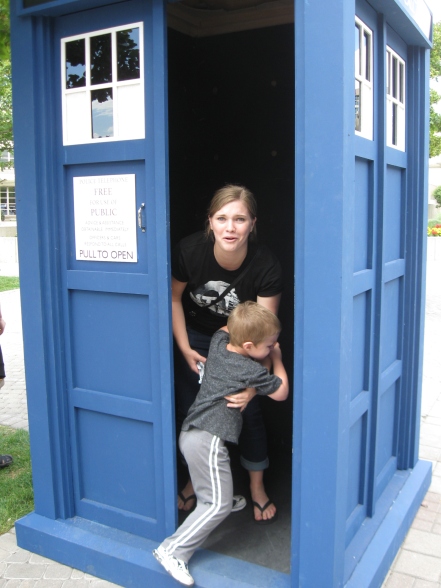
img_1532

(My four-year-old doesn’t yet understand the difference between pretend and real. He thought it was a real Tardis, just like he ran from the R2-D2 droid because it was too real.)

img_1528

(My daughter, in the green shirt, didn’t fear R2 whatsoever.)

3. People will freak out when the curtain they’re sitting by suddenly parts and someone (me) walks through it. Probably my best entertainment was leaving my booth by the back curtain to dart over to the bathrooms, shocking lurkers that life exists beyond the panels. I also got to hear a lot of juicy gossip from people who didn’t realize I was sitting just a foot away eating my dinner, especially about someone named Cheryl.

Wherever you are, Cheryl, your associates don’t believe for one minute you didn’t have surgery, and Daniel’s on to you.

4. Listen—really listen—to people to discover marvelous things. One young woman came to my booth asking if I had a Doctor Who clock. I told her I was gathering suggestions for one, and did she know anything about the older Doctors? She pulled out her iphone, wrapped as a Tardis, and in seconds she had up wiki pages of Doctor Who to back up her suggestions which she proudly stated.

Next she pulled out her ipad and showed me the scripts she’d downloaded from audio plays, and she trembled slightly with joy to find someone willing to appreciate her fanatical fandom.

Maybe, the thought occurred to me, she’d been waiting for three days to find someone needing her expertise, and while it was Saturday night and the Con was closing, we chatted for ten minutes about her knowledge. I gave her my card and told her to email me if she had any other suggestions, because clearly she was the authority, and she blushed with pride.

That’s when I also noticed she was alone. Maybe she’d come with someone else and would find them later, but I doubted it. I hadn’t yet seen anyone alone at Comic Con, but she wasn’t looking or waiting for anyone. She was hoping, perhaps, that someone would find her. We did.

img_1596

(My oldest daughter, due in three weeks, learned that working all day and evening won’t induce labor, unfortunately.)

5. A middle-aged woman not dressed in cosplay but wearing a badge (see photo above of my daughter’s all-powerful badge which got us passed all lines) looks like an authority. One afternoon I took a break and wandered over to where the celebrities were signing autographs. My purpose was to catch sight of Manu Bennett, who one of my old high school friends who I saw earlier says was worth gawking at, and who I’ve always thought would make a great Perrin Shin (one of the lead characters in my book series).

But I’d never be brave enough to meet him, because what would I say? Something creeper-stalker-like, such as, “I’ve written a book series, and I’ve imagined the main guy should be played by you”?

So I stood with my arms folded, about 70 feet away from the entrance where the celebrities came into the convention center, and I must have looked rather stern as I was lost in thought. Stern enough in my black t-shirt and beige pants that people gave me wide berth, except to ask me questions. “Where are the celebrities when they’re not here?” “Where’s the food court?” “Can I just go up to a celebrity and shake their hand?” I made up believable answers.

img_1594

My daughter and Rory from Doctor Who, Arthur Davrill. Hanging out at Celebrity Row.

I didn’t realize until later that I was dressed like the security guys, and that people probably mistook me as a supervisor (since my build obviously doesn’t scream, “SECURITY!”).

That’s when I wished I’d tested my philosophy, that someone walking purposefully will not be stopped. I wanted to go behind the black screen where the celebrities hid out, and stride down the corridor as if I belonged there.

But then I realized how embarrassing it’d be for my kids to have to go to the security office and bail me out (or whatever happens if someone’s caught). And there I’d be, weeping and saying, “I just wanted to see if he could be Perrin!”

The fantasy of doing it is better than the reality, in many ways.

Image result

Manu Bennett finally did come out, grinning and sauntering.
Definitely could be Perrin.

6. Some costumes are astonishing. I want to redo my bedroom to look her.

img_1599

(Not the Pickachu, but Queen Elizabeth.)
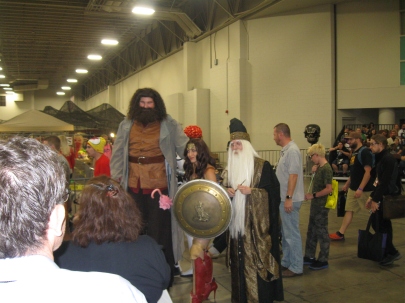
img_1592

Best/tallest Hagrid I’ve seen.

7. Some costumes are ridiculous. As my friend David Jensen observed, bikini armor is quite useless.

(No, no bikini armor here–just my old friend and helpful beta reader David Jensen who noticed the bikini armor. I love writing that: bikini armor.)

8. Even if the costume is many sizes too small, some people will insist on squeezing most of their body parts into it. Mercifully, I didn’t take any photos of those. But I still feel nauseated at the thought of bulging flesh.

9. People respect a soldier’s uniform. My oldest son wore his army fatigues (and bought a matching outfit for his girlfriend), swapping out his army patch for a Zombie Fighter patch. He was surprised at the amount of people who came up to shake his hand. Even the Asian workers at the Mongolian BBQ food truck, where he bought us all lunch, wanted a picture with a “real American soldier.” And here he thought no one would want to take his photo.
img_1582

The only shot I got of my family, as they were leaving Thursday night.

10. Some people will complain, no matter what.
“There’s too many people!” (You’re one of them.)
“I just know I’m going to get sick from something!” (When you’re with 100,000 people, yeah . . .)
“That costume is so awful.” (Have you looked at your own?)

11. Some people will find the bright side, no matter what. Those folks give me hope and inspiration.

12. Utahns with children really like Harry Potter. As evidenced by the amount of strollers parked outside the ballroom to hear Evanna Lynch (“Luna Lovegood”) speak.

img_1591

13. Don’t give up in the middle. I haven’t mentioned this yet, but during the last week I lost five pounds because of a knotted belly and twisted bowels. I’ve never, ever, done something this stressful in my life. (Except moving cross country, driving a van 2,000+ miles only four weeks after I had my 8th baby–that maybe was worse.) Never before have I invested and created and worked so much, and halfway through Friday I realized that the sales weren’t going to be what I had fantasized.

In fact, we’d barely break even. No one around us was doing huge sales either, and I found out later that very few of the vendors had the success they were hoping for.

I was ready to quit and leave, even though I knew I wouldn’t do it. I privately castigated myself, however, for my arrogance, my naïve hope. Why did I think this was a good idea in the first place?

Because every morning, for the past two months, I’d waken up with the clear image of what I needed to accomplish that day to be ready for Comic Con. Every day I felt the gentle reassurance that this was what I should do, that it would all be well, and that I should continue.

And so I did, waiting for whatever was to come, and eventually learning to have fun. By that evening I was talking freely with people and actually enjoyed myself. That’s huge for an introvert like me.

14. Watching it all come down is depressing. Like seeing the clean-up after a funeral. It really is all over.

img_1609

15. I saw marvelous things I’ll never see again. My favorite, which I didn’t have time to whip out my camera for, was the true Rastafarian, with massive dreadlocks, on the street outside the convention center on his skateboard, blaring reggae music. He was dressed like Spiderman as he whizzed by. Beautiful.

img_1593

The balloon Star Wars folks were also good, if not a bit squeaky.

img_1604

And this pirate ship, quietly gliding behind our booth at the end, like the Black Pearl in “Pirates of the Caribbean: At World’s End” when it’s carried by crabs across the salt flats (filmed here in Utah).
 

img_1587

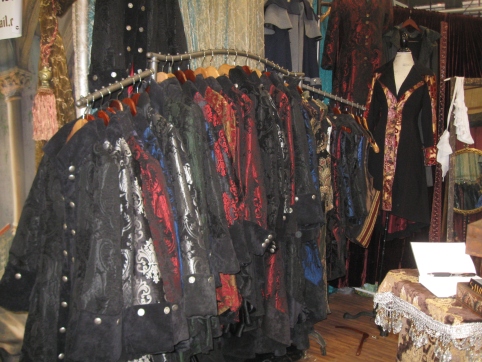
And I realized I really, really want a pirate coat someday.

img_1584

This massive box was on the loading dock. Welcome to Comic Con.

16. Awkwardness reigns. It’s a well-known fact that many geeks, nerds, and cosplay folks feel out of place in the regular world. They come to these conventions to find other fringe folks, and to be part of the group for once. Even then, there are still those on the fringes of the fringe groups, but they’re the ones who get all of the attention—positive attention, usually.

I told my kids that whoever seemed truly bizarre, but was wearing a wristband, was probably still ok.

It was the folks who weren’t wearing wristbands or badges they needed to steer clear of.

17. Not everyone “gets” it. The nice women running the booth next to me were clearly not part of the geek/nerd/cosplay world. Their product was kids’ books, and they were used to community fairs. Their eyes would bulge in shock or fear at what walked by next.

Then a very shapely woodland sprite sauntered past, wearing only a g-string and a lot of body paint, and I heard one of women murmur, “And I thought the state fair had some weirdos.”

18. Playing “Who is he/she with?” is a new sport. During quiet selling times, my daughters and I would sit back and watch who’d come by our booth, then try to guess what their significant other would look like, as they often were a step or two behind. We were often quite surprised, and occasionally uttered, “How’d he/she get her/him?” Some folks I’d never pair together, then again people probably think the same thing when they see me with my cute husband.

19. Karma exists. In my religion we don’t talk about karma per se, but I’m convinced it’s out there. I over prepared for Comic Con, bringing a lot of stuff I didn’t need, but that others around me did. My booth neighbors on various sides borrowed my tablecloth, my phone charger, my blank paper, my markers, took a lot of my free mints, and even let me bounce a wailing newborn while they handled customers (the hardest duty, I assure you).

For one brief moment I did feel slightly put upon as the child of my booth neighbors took candy from my booth for about the seventh time, but then I thought, “If I’m not here to help others, then what good am I?”

Maybe it was that attitude that karma recognized (whoever or wherever she may be) so that she allowed Billy Boyd, aka “Pippin” to wander by our shop with his security (dressed in black shirts like mine) and nod in approval at our stuff Saturday afternoon. I had missed seeing his panel Thursday night (you can see part of it below) but my kids had all gone and hadn’t stopped talking about him for two days.

By the time my daughter, who was in front and noticed (while I was sitting behind snacking) recovered enough from her shock to tell me who had smiled at our stuff, he was gone. But still I grabbed a Lord of the Rings clock and took off running into the mass of tens of thousands of people. I just had to give a hobbit a clock!

But I didn’t see him, anywhere, even after 20 minutes of searching. I admit I even prayed silently, “Dear Lord, if there’s any way I could give him a clock, may I? Where do I go? I know this seems silly, but I really would love to give him a clock . . .”

My oldest daughter, whom I called to tell what happened, later texted me, “I bet he’s gone back to sign autographs. Give the clock to his handler.” That’s when I knew . . .

20. Sometimes, you’ve got to just be braver than you’ve ever dared, even if you think you’ll vomit. “I’m going over to see Billy Boyd,” I told my daughter. “I have to try.” So I took the clock to celebrity row, and also took a Harry Potter one for Luna Lovegood, in case she was there. I was intending to leave the clock with Billy Boyd’s “handler” (that’s what they call them, as if they’re displaying their beasts at the zoo), because I hadn’t signed up to meet Pippin, nor had I paid $50 for an autograph. I stood in line anxiously, watching as the dozen or so in front me went to gush and have something signed. When I got to the handler, I explained what I wanted her to give him.

“No,” she said, with a slight smile. “You’ll give it to him yourself.”

I was not expecting that response. “I’m so nervous,” I confessed, “that I might throw up.” She told me they had buckets, and go ahead.

By this time Billy Boyd, down the table, was looking at me quizzically, so I thought, Gotta do it.

I took the clock out of the box and told him that he walked by our shop and smiled at it, to which he responded, “Yes, I remember!” because he could see my label on the box which matched the sign. (So all my work in branding actually was effective!) I said that we made a LOTR clock, too, and he said, “I didn’t know that.” I also didn’t expect him to respond to my frantic monologue, so I’m sure I stumbled in my words as I said, “My daughter was too shocked to say anything as you walked by, but she stared at you.”

“I saw that, too!” he grinned. That’s when I began to realize he was just an ordinary man. Sort of.

Then I told him, “All of my nine kids are huge LOTR fans–”

“You have NINE KIDS!?” he exclaimed in his awesome Scottish accent.

Oh, how I wished I could have recorded that and made that as my ring tone. “You have NINE KIDS?! You have NINE KIDS?!”

“I do!” I exclaimed back. “And they’ve all helped design and make this clock. They would love for you to have it, if you’d accept it.”

He took the clock and smiled at it, saying. “It’s lovely! It’s beautiful. Thank you!”

Mission accomplished!

As he read what each number represented from Middle Earth, and I sighed in satisfaction that I’d done more than I anticipated. I started to leave when Mr. Boyd surprised me with, “Is that the clock you want me to sign?” He was gesturing to the one tucked under my arm, the Harry Potter intended for Luna Lovegood.

Stunned by that, I said, “Actually, this is for Evanna Lynch. I don’t have one with me for you to sign. I really just wanted to give you that one from my kids.”

“Well then,” he said, “run back to your shop, get another one, and bring it back. I’ve got only five minutes before I have to do photo ops, so when you come back, jump to the head of the line, and I’ll sign it.”

I really wasn’t expecting that, and, with some embarrassment, I said, “But I haven’t paid $50 for your autograph.”

He looked me in the eye and said, “I don’t care. Run and get it.”

Pippin always was my favorite hobbit, now more than ever.

“Really?” I said (or maybe shouted.) “All right! Thank you so much!” and I took off running.

I’m not a sprinter, by any means, but I went as fast as I could, occasionally elbowing people in my way. I was nearly dry-heaving in exhaustion when I grabbed another clock at our booth and gasped to my daughter, “He’s going to sign this!” Then I ran back to get to his table again, propelled by so much adrenaline that I didn’t come down from it for about six hours.

Billy (we’re on a first name basis by now) was talking to some other people, so I had a minute to catch my breath and try to regain some composure.

He saw me, smiled, and I told him as I approached, “You’ve made this middle-aged woman run faster than she ever has. My kids are going to freak.”
img_1601

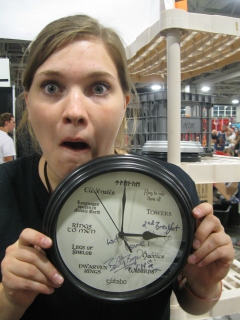
(My daughter, freaking.)

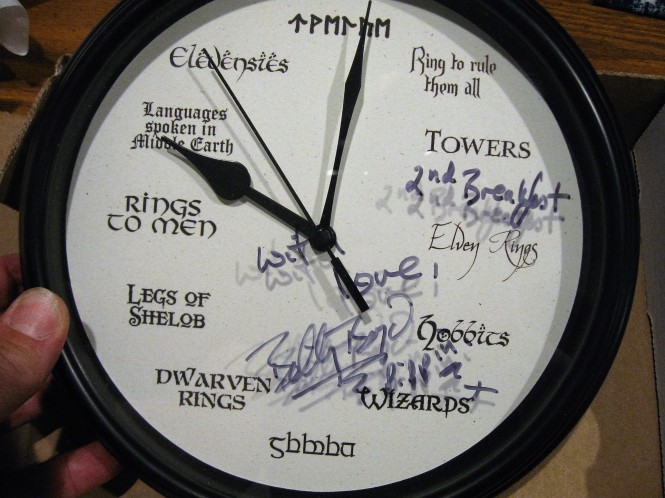
He wrote quickly, because he already knew what he was going to write—he’d been thinking about it! Under Towers for 2, he wrote “Second Breakfast.” Then he signed it, “With love, Billy Boyd, Pippin.”
img_1610

“Thank you so much! You’re just wonderful to do this.” I told him, and he did a little “Ah, gee it was nothing” shrug. “It’s going up on my living wall tomorrow,” I told him, then I bounded off.

I probably could have gotten a hug from him, too, and I’d seen him do selfies with others, but I hadn’t gone with the intention of taking something from him, even though he freely offered it. I already had a signature on something we made—a one-of-a-kind item. Somehow asking for a photo would have changed the moment, and I wanted it to be just as it was. Evanna Lynch was already gone, but I didn’t care. I’d gotten more than I’d expected.

I thought then what would have happened if I had given up halfway through Comic Con, if I’d let my anxiety and worry win, if I’d left and never came back. That’s when I learned . . .

21. Success isn’t always measured in $$$. That’s what God was trying to teach me, I realized toward the end. We did, in fact, cover our booth costs, along with advertising, parking, and food, which meant we didn’t lose anything but gained a lot in exposure. But more importantly, I think we were successful in who we reached, like the timid Doctor Who expert and TwoFlower, who was sure no one would appreciate Discworld.

I met several old friends from high school, and made some new ones.

I discovered I can do really hard things, and my kids learned more about business than they ever will any other way (my excuse for letting them skip school).
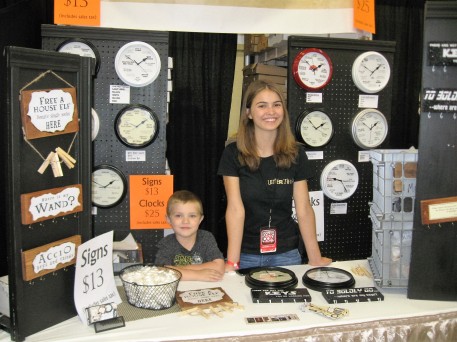
img_1530

One of three booth configurations we played with while there.

I also met people I never would have before. For example, I carried on a fun conversation with a transgendered couple, discussing Alice in Wonderland, clocks, and how difficult it is to walk around with branches in one’s hair (eye-poking hazards for those who follow.)

Had we met casually on the street, I doubt we ever would have chatted, sensing too many differences between us. But barriers come down in events like this, and we find ways to connect through common interests, and parted as friends who have shared compliments and a laugh.

And, I have to confess, I enjoyed the ego stroking. As a writer and Etsy shop owner, my world is pretty much what goes in and comes out of my laptop. Occasionally I get feedback from those who have read my books or purchased my goods, and those are magical days indeed when they tell me they liked my stuff. But rarely have I met the actual people behind the words. (And that’s fine; we introverts communicate best through writing.)

I admit that I teared up when, one afternoon, I realized there were five different people in front of my booth taking pictures of my signs and clocks. Many times the aisle in front of us was blocked by those stopping to read and chuckle. And when someone mentioned, “That’s clever,” or “No one is doing anything like this,” I felt validation. I’m embarrassed to admit that I needed and wanted that, but then I realize that’s all that everyone wants—assurance that they’re doing something good, something that brings others joy.

22. I wish I’d done more of that for others—given more compliments and reached out more to strangers—although my introverted self had stretched further into extrovert territory than I ever had before. There’s nothing better than to see someone light up when I tell them I admire the creativity they put into their costume, that I appreciated their work.

Even though we plan to move across the country next year, still my mind is reeling with ways to make it to the next Comic Con or FanX convention. Because now I know what to do, and how to make it even better for everyone with me.

Plus, it’s a great way to lose five stress pounds. Two months of this, I’d be down to my dream weight.
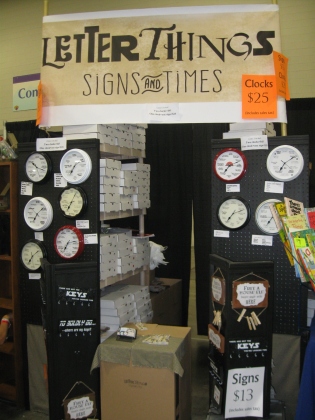
img_1600

I took a picture of our last set-up for “next time,” even though I doubt there’ll be a next time. Still, I can’t stop thinking about it . . . And that pirate coat. I need a pirate coat.


‘Twas the night before SLC Comic Con . . .

‘Twas the night before Comic Con
And all through the house
Was evidence that I’ve been working 60 hours a week for two months,
And am now too weary to keep up this rhyme scheme.

IMG_1502

Boxes and milk crates full of my goods from my Etsy shop LetterThings. It’s taken over my living room.

For the past two months I’ve been cutting and painting and hammering and screwing and designing and gluing and assembling. Then I was boxing and organizing and designing some more. If I sell 1/3 of all we bring, we’ll earn enough to re-shingle our roof. (Woo-hoo, great excitement.) If we sell everything, I get to afford some necessary remodeling in the house and maybe buy a new couch. (Ah, real excitement!)

IMG_1505

My daughter “Tetris-ing” our products in our full-size van, the greatest vehicle ever made. We filled the entire van.

Today my teenage son asked me, “So are you excited for three days of selling at Comic Con?”

I stared at him and said, “Never before have I been to Comic Con. Never before have I had a booth. Never before have I sold my stuff at a store front. Never before have I set up displays or kept inventory or sold with Square. Never before have I even owned a smart phone, which I bought just for this weekend.

“My stomach has been in knots for a week, my tachycardia has been flaring for the past two days and nights, and now I’m developing an ocular migraine, which means I’ve got a blind spot in my eye for the next hour. I’m terrified I’m going to forget something important, or mess up or screw up and ruin everything! My stress is through the roof!”

My son blinked at me and said, “We can find another way to raise the money for re-shingling the roof. You don’t have to do this, you know.”

I scoffed. “What, and miss all this fun?!”

If you’ll be at the Salt Lake City Comic Con this weekend, come find me at Beige 32 (man, I hope I find it myself). I’ll be there with stuff that looks like this:

bookmark for LetterThingsFINAL

In any other circumstance Mahrree would have been exhausted by the pace and the late hour, but every inch of her was filled with so much anxiety it propelled her onward. ~Book 5, Safety Assured Leaving East of Medicetti

America’s the land of revolutions; let’s start another one!

There are revolutions happening all around us in America, but we don’t always recognize them. But once we do, we realize we can be part of them.

If we dare.

Most of these revolutions arise from breaking with the status quo of our ancestors. And not just talking about change, but actually being part of it. Too often we spout niceties about being original and different, but in reality we’re terrified to not follow the crowd. Too frequently we want to be in on the latest trend, say the right thing in whatever is deemed politically correct for the day, and to be counted among the winners.

And that last reason—to be among the winners—is why people are afraid to be different.

For example, while so many people are personally opposed to both of the major political candidates running for president, they’ll vote for one of them anyway because that’s how it’s always been.

But that doesn’t have to be. We can begin to change the system, this year.

I know that’s scary talk, and I heard someone comment that this isn’t the time for a revolution, but revolutions are happening all the time. Every day people are rejecting what corporations and governments, and what tradition and the status quo, have been dictating should be.

This has always been the way change begins—not with large organizations or ensconced traditions, but with individuals. Margaret Mead famously said,

“Never doubt that a small group of thoughtful, committed citizens can change the world; indeed, it’s the only thing that ever has.”

Citizens have always taken it upon themselves to instigate change. Back in 1776 Thomas Paine published “Common Sense,” advocating that the colonies separate themselves from Britain. An individual—not a corporation or organization—gave other citizens the idea to break with the current tradition and be brave enough to begin the Revolutionary War.

Not that all acts by individuals will lead to such dramatic events (and there were certainly many more factors contributing to the war). But people have been going contrary to the prevailing winds for a long time. Eleanor Roosevelt once said,

“Remember always that you not only have the right to be an individual, you have an obligation to be one.”

What this means, as Hugh Nibley has written, is that we need to “Be different. Then you can make a contribution. Otherwise, you just echo something; you’re just a reflection.”

Emil Neufeldt 002

Emil Neufeldt

Many years ago, the Nazi party tried to make my great-grandfather into a reflection. Emil Neufeldt, who lived in the Prussian region of Germany during WWII, was a wealthy inventor and engineer, with great influence in the sugar industry. The Nazis knew someone with his stature and money would be beneficial to their cause, so in the 1930s they sent one of their best to recruit him.

My great-grandfather wanted nothing to do with the Nazis, but knew that openly opposing them could cause him trouble. So he came up with an idea. Known to be able to hold his alcohol, Emil drank the Nazi recruiter under the table. Then he marched to the local Nazi headquarters and demanded they drag their recruiter home. He told them in no uncertain terms they should never dare again try to make him one of their own.

Did Emil Neufeldt stop World War II? No.

Did he stop the Nazis? No.

Did he secure safety for his family and household, and not be bothered by embarrassed and humiliated fascists again? Yes, he did.

He made a difference in his small part of the world, and eighty years later his great-granddaughter proudly remembers his example of not following the dubious safety of authority. (Even though it involved alcohol.)

My mother also told me of a Catholic priest in their area who, in the early years of WWII, preached openly about the atrocities of the Nazis, and publicly questioned where all the Jews were going.

He vanished shortly after, never to be heard from again. Did he change the world then? Stop the Nazis? Discover and reveal what was happening to the disappearing Jews?

No.

He likely met their same fate in some concentration camp. But his bravery is remembered, right here, today. His words and worries and defiance was repeated, many times over by others just as daring, and eventually the war ended and the horrible truth was revealed.

We don’t remember mere reflections. We remember innovators. We remember those who changed the world, for better and for worse.

We remember contrarians. The word coined by Richard and Linda Eyre means”to go against the prevailing wisdom, to contradict what the majority seems to be thinking or doing. [A] ‘contrarian’ . . . describe[s] someone who thinks for himself and who is not swayed by trends or popularity or styles or the direction of the crowd.”

This is happening, all around us. Contrarianism frequently means rejecting foolish traditions of the past.

For example, when I was a teenager in the 1980s rampant consumerism was the tradition. You were openly judged based upon what you wore, what you have, and how big your house was. (Anyone remember Yuppies or “Lifestyles of the Rich and Famous”?) The era of McMansions was also born, then: gargantuan houses which no one could fill, and later, no one could afford.

But what’s the movement now? Tiny houses. Brilliantly constructed, carefully planned, and usually financially prudent, tiny homes are becoming the answer for many people who can’t afford even to rent.

So who started this trend? A man named Jay Shafer, along with Greg Johnson, Shay Salomon, and Nigel Valdez began the Small House Society back in 2002.  Not a corporation, not an organization, but a “small group of thoughtful, committed citizens” are striving to make housing affordable for everyone.

The government certainly isn’t behind this change. They’re still calling for us to spend, spend, spend in order to improve the economy. Remember a few years back when the feds sent us cash hoping to “stimulate” financial growth? There was no lasting benefits.

In the 1980s and 90s, the tradition to show you have “arrived” was to own a designer handbag. Now, companies like Coach are struggling, along with many department stores and malls, because consumerism was discovered to not be all that it was hyped to be.

The funny thing is, if you’re unhappy, buying stuff won’t fix that. The rising generations, already stuck with debt, logically and contrarily don’t feel like generating more just for a random symbol of status their mothers and grandmothers erroneously thought was so important.

Nowadays, there’s a quiet revolution toward minimalism; people deliberately getting rid of stuff, downsizing their homes, possessions, and priorities. Many websites and books can teach you how to toss all that weighs you down, to organize what you have left, and live a more peaceful, tranquil, simple life.

Again, these are led by individuals who, contrarian-like, have rejected the status quo and have discovered something much more satisfying. And it’s happening all around us.

When I was a child in the 1970s, I first heard about vegetarians, and the idea to avoid eating meat both alarmed and intrigued me. But vegetarians were hippies! Free-loving weirdos and tree huggers! What a non-traditional folk! (And a lot of folks over sixty still regard vegetarians this way, so be warned when you bring it up.) Never mind that there have always been those who have eschewed meat: veganism was only for those on the fringe.

But no longer. While advertisements try to push us toward more meat and protein and dairy products, consumption has declined in the past years. The burger places for which people in the 1960s-1980s developed such affinities are finding themselves struggling against a growing number of restaurants offering healthy alternatives. The web is awash in thousands of vegetarian sites, and what was once on the fringes of contrariness is now mainstream.

Again, no corporation or governmental entity has led the movement for healthier eating. (Sorry, Mrs. Obama.) People have decided, after being inspired by other thoughtful individuals such as T. Colin Campbell and “The China Study”, to eat healthier. Subsequent weight loss and markedly improved health are more powerful inducements than any kind of advertisement.

Need further proof of how we’re rejecting what a generation ago believed was so important? If you’re a millennial, you won’t know that starting in the 1970s we were involved in the cola wars, and those extended until the 1990s. Battles in advertisements between Coke and Pepsi were fought viciously to win our loyalty. This explains why your grandmother may refuse to eat at a certain restaurant because they don’t serve diet Pepsi. She’s still a victim of that bloodless battle to win her devotion. Never mind that soda is as unhealthy and addictive as sugared hummingbird water; cola was king.

1985 ad, when we believed one soda might be “better” for us than another.

Mercifully, people have come to realize that they needn’t define themselves by what foods and beverages they’re loyal to.

In fact, I’ve heard of many in my generation and older are stunned to hear their descendants may drink only water, and never want to eat at McDonald’s. No, this isn’t some kind of treachery; it’s individuals thinking for themselves, looking past the hype and realizing there’s nothing of substance to back it up. 

Along those lines, it may also shock and surprise you that there are families who do not want to ever visit Disneyland. Although the masses and advertising claim it to be the “happiest place on earth,” standing in lines and paying for exorbitant entrance prices, food, and swag doesn’t make everyone happy. You may be startled to know that some contrarians’ children will never walk on that hallowed ground, because they and their parents prefer the solitude, quiet, and low entrance fees of national parks.

Contrarians also show up in education, and have been for many years. Common Core and the associated scripts and texts which pander to it, are driving many families to homeschooling which, three decades ago, was a fringe alternative but is now almost trendy and fast becoming the new tradition.

And if you were around in the 1980s, you  might remember a crass movie called “Revenge of the Nerds.” Now, geek culture is the culture, contrary to what anyone would have believed 30 years ago.

Our attitudes of what is “acceptable” and how things “should” be are changing all the time.

Why can’t our attitudes then also change about how we elect a president?

Most Americans still feel obligated to side with either the Republicans or Democrats, even if they feel neither represents them.  And the arguments they use are old and tired: “Because of the electoral college, only a Republican or Democrat will win.”

Or, a vote for anyone else besides Republican or Democrats means, “Your vote will be wasted.”

Rephrased it’s, “Being different will mean you’ll be left out.”

Doesn’t that hearken back to every fear we had as kids? Not being part of the “in” group?

Too many of us adults still harbor those worries, desperate to be part of “the group” so that we matter. In my limited observations, it’s those middle aged and older who are most worried about being obedient to the brand of Republican or Democrat they were brought up with. They still think (hope?) all Republicans are like Reagan and all Democrats are like the Roosevelts.

Now consider this: how often has the “in” group made poor choices which affected thousands and even millions? Begin by listing obvious dictators, and count which societies are still doing well under them.

Think about all the examples I’ve just shown you about individuals making a difference, influencing others around them to be contrarians. Why can’t we extend this bravery and independent thought to overturn an antiquated and manipulative system for something that really works?

Now is the time for each of us to individually say, “I will no longer support this.” Revolutions don’t have to be bloody, angry things. In fact, nearly all of the examples of positive change I listed above have been thoughtful movements.

“As we watch the directions that society is taking we see the folly, and in our most lucid moments, we don’t want to follow the trends, we want to depart from them — to think more clearly and chart our course on light and truth rather than on the herd instinct that seems to dictate what most people do.” ~Richard and Linda Eyre [emphasis added]

Too often we believe that there are only two options: the established way, and the wrong way. But rhetorically speaking, this is a logical fallacy. If you’ve ever worked for a boss who claims it’s only his way or the highway, you know how miserable that situation can be, and it usually signals a business is in big trouble.

Refusing to see other possibilities is what traps us. There are ALWAYS more options—to any situation, problem, or ideal.

Change never comes from the establishment or a corporation. It always arises from insightful, thoughtful, brave individuals who refuse to believe “there’s no other way.”

My neighbor recently demonstrated this by showing just how few Americans really support the Republican and Democratic parties.

#iamsomeone (And, importantly, Dallin Crump’s just an individual who wants to illustrate a point; he receives no funding or sponsorships. He’s just a “someone,” a “thoughtful citizen,” trying to change America. The fact that millions of people have also viewed and shared this suggests he’s not alone).

It’s up to us to stop being afraid of being different, to embrace contrarianism, to stand up against the tide and slow it down, even if only for a little a bit.

incite change

“I have spent many years of my life in opposition, and I rather like the role.” ~Eleanor Roosevelt

I haven’t voted for either party in twenty years. At times, I’ve even written in candidates who I felt would be excellent leaders. I don’t feel my votes were wasted; I feel my conscience was satisfied.

We ourselves might not experience rewards from our subtle civil disobedience by not voting for either the Republican or Democratic candidate, but our children or grandchildren may.

It’s not necessarily for us that we stand up at this election, or at any other time, to defy the status quo. It’s for those who follow.

Generations from now, may we be remembered as the Thomas Paines, the Emil Neufeldts, and the Catholic Priests who did something more than meekly follow the noisiest crowd. We should be–must be–remembered as those who lent a hand in turning the country around.

“It’s rare,” Gleace told them, “that anyone in the world comes up with new ideas, or pokes at old notions to discover if what everyone believes is actually true. But you,” he smiled slyly at Perrin and Mahrree, “you poked all the time. And that’s how you got here.”

“Our poking caused trouble,” Mahrree pointed out.

“Ah, but the very best kind!” Gleace declared. “The kind that makes people question everything they know. People need to be poked every now and then.”

~Book 5, Safety Assured Leaving East of Medicetti

On apricots, bathrooms, and legacies

[Today my friend texted me, “Have you had your fill of apricots yet?” That reminded me of something I wrote four years ago on another blog, and I before I rush off to pick some, then later rush off to the bathroom, I wanted to republish it here.]

This is no ordinary bag of apricots.

It’s a legacy, a reminder of those who are no longer here, or leaving soon.

Apricots are the perfect fruit. In my mind, Eve hands Adam an apricot. She has a whole fig leaf apron full of them. And raspberries jammed in a pocket. (But that’s another story. And no, I’m not sure where Eve would have a pocket.)

I didn’t like apricots until I was about 11 or 12 years old. My oldest sister Judy, married with her own family, came to our house to pick apricots off of our tree during one of the rare years it produced. She taught me how their texture is firmer than peaches, less messy, and more subtle in flavor. And that flavor, when snatched from a tree on a hot August afternoon, was fantastic. She was right—I discovered I loved apricots as I picked them with her. Suddenly, she stopped.

“How many have you eaten?” she asked me.

“About 5 or 6,” I told her.

“Well, stop,” she said as she popped another in her mouth.

Hypocrite, I thought. “Why?”

“Because these will make you the best of friends with the toilet around this time tomorrow.” She swallowed down another one.

“How many have you had?”

“Probably 20,” she said nonchalantly. “I’ve already cleared my calendar for tomorrow afternoon. I’ll hate myself then, but for now? Heavenly!”

She later confessed that on the drive home, she had to put the bucket of apricots in the back of her van, out of her reach. The next day she lived in the bathroom while her husband laughed at her.

“But it was worth it!” Judy insisted when I next saw her. “Fresh and free apricots come only a few weeks of the year, and some years, not at all. Eat them while you can.”

Each year my mother and I watched our apricot tree, cheering at the popcorn-like blossoms and hoping for a good crop. Then, two years out of three, a frost killed the blossoms.

But when we had mild springs? One year we had a huge crop, and came home one day to see little orange bits all over the road in front of our house. Perplexed, we looked up on the hill where our apricot tree stood and saw that half of it was lying on the ground, the weight of so much fruit breaking it. Little apricots had rolled down the hill and became a mushy mess all over the road. Neighbors came to help clean up the mess, my mother made jam for two straight days. At the end, she cursed the little things for being so darned plentiful that year—and Judy and I ate far too many again.

My sister and mom, in 2007, clearly wishing they were eating apricots.

Yesterday, a neighbor wrote on Facebook how sick she was of making apricot jam, and I thought about my mom. She’s now 85 and fading slowly away. In hospice care, she doesn’t open her eyes, she doesn’t speak, and now she no longer eats. [UPDATE: My mother passed away in January of 2014.] She won’t taste apricots or make jam this year.

I moved away to the east coast some years ago, saw apricots for sale occasionally at the grocery stores for exorbitant prices, and remembered free Utah apricots. Then we moved back to Utah in 2007 and occasionally got an apricot or two, and loved them.

But there are still apricots, brought to me by a dear friend, in a bag [the same friend who texted me today–Allison doesn’t forget]. 

I don’t have Judy, either. She won her first round with cancer, but it came back more angry for a second bout, and nearly three years ago [seven, now], Judy passed away.
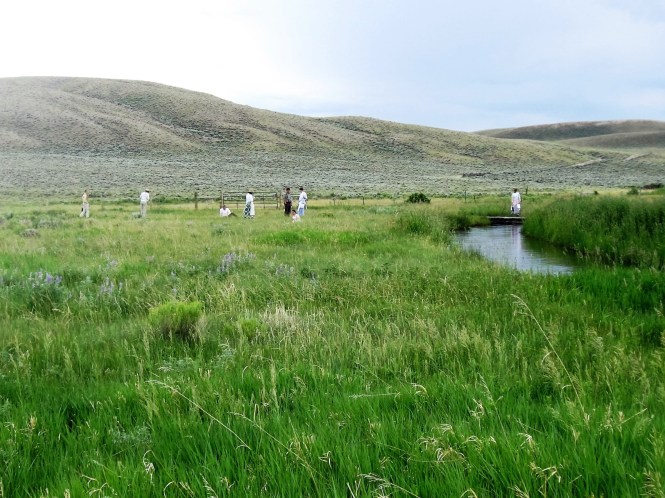
We don’t have that tree anymore, either. We sold the house, and the tree, a few years ago.

069

My mom, four years ago, briefly holding her youngest grandchild. She passed away in 2014.

Yesterday, I taught my 4-year-old [now 9-year-old] how to love apricots. After her fifth one I said, “We shouldn’t have any more. Too many will make you need to go to the bathroom a lot tomorrow.”

She nodded in agreement, but about ten minutes later came to me with another apricot for me to open and pit. “Just one more,” she promised. “The last one.”

I smiled and took one more as well.

Then ate about twenty-five more.

Today I’ve spent a lot of time in the bathroom.

IMG_0870

Judy and me, in 2007. No apricots in sight, but I’ll eat extra for her today, in 2016. And likely regret it again.

And I swear I’ve heard Judy laughing at me and saying, But they’re worth it, aren’t they?

[Today, I told my nine-year-old that the apricots were ready again, and she eagerly asked, “When can we go get them?” If you’ll need me tomorrow, I’ll be in the bathroom. I have to eat enough for not only myself, but my mom and Judy as well. Someone has to do it.]

“I don’t believe this!” Peto threw his arms in the air and clomped around the garden. “For moons I’ve been trying to understand the meaning of the peach pits, and here you tell me they’re only for growing more peaches? For crying out loud!” he exclaimed as he started for the road. “The pits are only for getting more peaches—”

Unless,” and once again Yung’s quiet calm voice cut through Peto’s complaining and pierced his heart, “unless the Creator wanted you to get something more out of them.” ~Book 4, The Falcon in the Barn

Does this look like failure to you?

Failure comes in many shapes and forms. Like this, for instance:

IMG_0802


Horrifying, right? Last Christmas I tried to make stuffed Chewbaccas for my family. In the past I’ve successfully made Totoros and Tribbles and Adipose, but last year? Not only once, but twice I failed to make anything not terrifying.

(Seriously, my four-year-old took a startled step back when I showed them to him. He made me hide them in the closet, where I found them again as I was reorganizing recently.)

I had carefully planned these Chewbaccas, bought the perfect furry fabric, drew up the patterns, cut and stitched, but when it came to stuffing them, bizarreness ensued.

I’ve been thinking a lot about failure, how it gets us to places where we didn’t expect to be. I love what J. K. Rowling, author of Harry Potter, has said about failure:

 . . . Why do I talk about the benefits of failure? Simply because failure meant a stripping away of the inessential. I stopped pretending to myself that I was anything other than what I was, and began to direct all my energy into finishing the only work that mattered to me. Had I really succeeded at anything else, I might never have found the determination to succeed in the one arena I believed I truly belonged. I was set free, because my greatest fear had been realised, and I was still alive, and I still had a daughter whom I adored, and I had an old typewriter and a big idea. And so rock bottom became the solid foundation on which I rebuilt my life.

My botched Chewbaccas aren’t on the same level of disappointment as Ms. Rowling’s early career, but I’ve encountered failures myself, some quite epic, which I don’t feel the need to reveal here. But Rowling’s words are profound when she remarks that succeeding in one arena would have meant she wouldn’t have arrived where she really needed to be.

Think back to when you were in high school, or college: what dreams did you have? Are you anywhere near where you expected to be?

I’m not. I’m miles away.

And I’m glad of that.

To my high school self, who and where I am now would have been seen as a disappointment. But looking back, I realize that my younger self failed to see where I really should be, what I needed to accomplish.

Failure, to one person, may be a raving success to another. I’m grateful for maturity and wisdom that have helped me see that I don’t want certain “successes,” and that what seems like “failure” can actually be a profound achievement. It merely depends on our situations in life, our perspective, and what we think is important.

I’m reminded of the story of a successful scientist who created life-saving medical devices. When asked about his upbringing, he told the story of his impoverished parents, and how they encouraged him to get more than the 8th grade education they had. Someone commented that it must have been difficult to be raised by such failures. But the scientist was startled by that comment, and replied that his parents had been the greatest successes he’d ever known. Thrust into their difficult circumstances, they still raised confident, ambitious children who accomplished marvelous things. Had life been easier, he surmised, their family likely would have been very average. Their earlier “failures” paved the way for their children’s accomplishments.

Not every failure is a later success, though. And sometimes, success morphs into failure, like these recipes.

How did such dishes of terror and texture come to be? (Click here and here to see even more recipes just like Grandma used to make, if you dare.)
Realize that these combinations went through some kind of review or committee, that several people had to experiment, taste, and decide, “Yes, these are the winners! Photograph and publish them!”

Which goes to prove that even a group of people with power and authority can make horribly wrong judgments.

We now see these recipes and shudder with thoughts of, “What were they thinking?!”

Why was this considered a success back then, and an utter failure a few decades later? What set of circumstances led people with the same taste buds as us to believe that mayonnaise improves every dish, that Jell-O can be considered a salad with the right veggies thrown in, and that SPAM is edible?

For that matter, what raving “successes” do we consider now will be regarded as dismal failures in the future?

But, likewise, what catastrophes are we experiencing now will be later seen as the beginnings of marvelous triumphs?

Perhaps the message here is, don’t discount your failures too quickly. Don’t harp on yourself too much for the disappointments you encounter, or even cause. Who knows, they just may be getting you on the road to victory.

Unless it involves Jell-O, mayo, SPAM, or disfigured Chewbaccas. Sometimes, a failure is a failure.

But maybe not always.

Halloween’s coming up.

Whereas my Chewies failed as Christmas gifts, they’ll likely be fantastic as Halloween decorations.

Maybe it’s just all about timing.

     “Colonel Shin,” Captain Thorne started, “if they’re incapable of making intelligent choices—”
     “They can’t learn to make those choices if they aren’t given the opportunity, Thorne,” Perrin told him. “Give them the opportunity to learn.”
     “And fail?”
     “Failure is part of learning, Captain. It’s not to be shunned—it’s to be embraced and learned from. Would you really want someone making all your decisions for you?”
                                         ~Book Four: The Falcon in the Barn

The parable of the protesting preschooler (or, when God drags us kicking and screaming)

He was sleeping happily on the couch when we hoisting him upright and informed him, “It’s time to go. Get up!”

If you’ve never roused a four-year-old from a late-afternoon nap, you have no idea of the battle which ensues.

He did not want to go, and he demonstrated that by shouting and flailing. Hiding under his blanket didn’t help (he was amazed that we could find him so easily), and when he started kicking, I decided he didn’t need to wear shoes anyway.

“I don’t want to go!” he wailed, but his 16-year-old brother took that as a challenge and flung him over his shoulder like a sack of flour.

Pummeling his big brother’s back, my littlest boy bellowed all the way to the van where he was dropped, shoved into his seat, and belted in before he could escape.

The shouting and protesting continued as we drove for twenty minutes to our destination, all of us trying to ignore his yelling as well as someone can ignore a horde of stinging wasps.

His shouts continued as we piled out of the van, and we received many looks of curiosity and amusement—and probably some disapproval—as we hauled out our protesting son and got in line behind the two hundred or so already ahead of us.

“I . . . do . . . not . . . want . . . to . . . do . . . this!” He was nearly dry-heaving now, and I ignored everyone’s stares around us as I held my objecting preschooler.

Not soon enough, the gates opened, the crowd before us piled in, and we followed, with angry boy still held tightly in my arms.

He quieted as he saw the scene before him, remembering that we did this last year, remembering that it wasn’t as awful as he thought.

He saw the piles of free pizzas—his favorite.

He saw the swimming pools—reserved for all of us who participated in the summer reading program set up by our local library.

He saw the water slides—and I could feel his rigid body go soft.

He wanted this.

But he wasn’t about to show that. Not yet. After all of his protestations, his pride couldn’t let him surrender so quickly.

So we sat down at a picnic table as the other kids and parents rushed into the water. He watched with both longing and resentment in his eyes.

My husband leaned over to me and whispered, “Go wade in the kiddie pool. I bet he’ll follow.”

So I announced my intentions to our son, then strode over to the pool. My feet had barely touched the water when he was by my side, dancing in excitement.

“So you want to go in?” I queried.

“YES!” he cried. Forgotten was his early protests, maybe forgotten was his twenty-minute temper tantrum, certainly forgotten was his pride as he began to strip, right there, to get out of his pants and underwear.

Discreetly I brought him back to our table where we covered him with a towel and put on his swimsuit. Then he ran—even though we shouted to only walk—back to the kiddie pool.

No amount of water could have wiped the smile off his face as he played and splashed and pretended to swim. We went down the big water slides together, and with joy he climbed out of the landing pool and raced back to the pool—the deep one, though—and jumped right in.

Dad followed, because our four-year-old can’t swim, and even though he bobbed under the water a couple of times until Dad could rescue him, he was still smiling as he coughed and spluttered to clear his lungs.

Pizza was eaten, the boy was nearly drowned a few more times, and a good time was had by all.

At the end of the evening when the sun went down and the winds came up, he was eager to be wrapped up in a towel and brought back home to a warm bath.

“So,” I started casually as I washed the chlorine off of him that night, “are you glad you went to the pool with us?”

He grinned.

“Even though you were screaming and crying that you didn’t want to?”

He laughed. Oh, that was so three hours ago!

I was about to be smug that I was right all along—he would enjoy it—until I felt God tapping me on the shoulder, as He occasionally does, to point out something He knows I’ll bite my tongue about later.

How many times has God placed before me a situation that I didn’t want because it would yank me out of my warm, soft spot?

How often has He dragged me away, kicking and screaming, to a new adventure?

How often has He patiently ignored my protests, even when I was utterly ridiculous in my complaints?

How often did He sit next to me, long-suffering, as I surveyed the scene before me, knowing that I’d want it, but that my pride wouldn’t yet let me admit it?

How often has He gently led me to the water, waiting for me to finally give up and jump in with both feet?

How often has He chuckled as I bounded and cheered and flopped and laughed with joy at my new situation that I was so sure I did not want?

And, perhaps most importantly, how long until I quit instantly whining to God whenever He thrusts me into a new situation that I will eventually love?

I’m afraid my pride won’t allow me to answer that just yet.

“There’s another plan for you, my boy. You’ve changed your path before, now do it again.” 

~Book 3, The Mansions of Idumea

Four reasons why change is the best, crappiest thing that can happen to you.

I hate and love change.

Sometimes change is most welcome: when you finally get a new job; when you finally move into that better place, and when that baby finally decides to be born. There are times when change is desired, sought after, even prayed and begged for.
The change that cancer is in remission.
The change that you are no longer in debt.
The change that you get to throw away your “fat” clothes.

But change is also a nasty beast. When life is floating merrily along, change is the white water rapids which you didn’t expect to throw everyone out of the boat.
Chronic illness.
Loss of job and/or house.
Death.

It’s when God whispers, “Plot Twist” in your ear, and you know nothing will ever, ever be quite the same again. And often, it’s a huge battle in our minds to decide if this latest plot twist is a good one or not.

But change has to happen, for these terrible, marvelous reasons:

1. It’d be horrible for things to stay the same. Don’t believe me? Think about this: What if your baby really did stay little forever? Never learning to speak, or walk, or play? After a while, you’d grow annoyed, even dissatisfied with this creature who does nothing but leaches off of you, year after year, whining and crying and demanding you carry it around. While it’s sad to see our little one outgrow those newborn clothes, it’s also thrilling to hear their first laughs, see them figure out how to toddle, and watch their personalities grow.

We don’t really want things to stay the same. We’re excited when that baby is old enough to catch a ball, when we can take him camping, or to the movies. While one stage quietly fades away, a new, even better stage takes its place. Progress is exciting.

2. We’re not mean to be stable. It’s the one thing in life most of us crave—stability. Maybe we crave it because it’s so elusive. I cringe whenever I read articles about money management and budgeting, because our income is rarely the same each month. And our family life is always changing; kids never have the same schedules year to year, and someone is always doing something new, somewhere else, with someone else. They go to different schools, go to college or the army, and find significant others, once again changing the dynamics of our family.

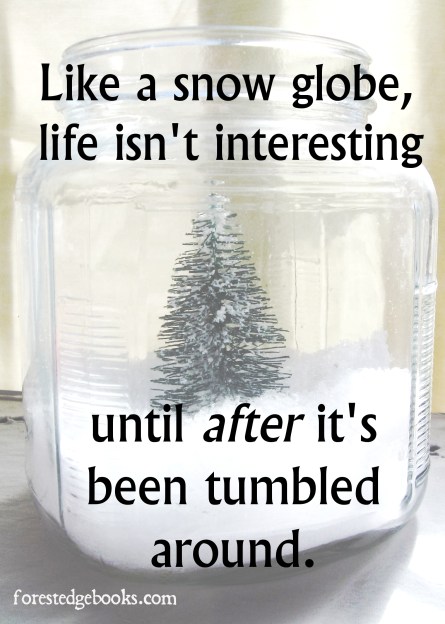
And thank goodness. Because, honestly, I find I get bored with predictability. While we crave stability, I think a lot of us also crave adventure. That’s why we go on vacations, take up new hobbies, write books, take classes, take on new challenges. We need to be shaken up every now and then. Snow globes aren’t interesting until after they’ve been tumbled around.

life as a snow globe

3. What would we miss if we didn’t change? Years ago we built our dream house, with a huge yard, and plans that we’d stay there forever. It’d be where our grandkids came to visit us.

Four short years later, we lost that home and had to move two thousand miles away. I was bitter that we lost our dream.

After two more moves, we settled in rural Virginia, and our kids had adventures we never could have had otherwise. We traveled and learned and had a great time.

Not long ago we had the opportunity to drive by our old “dream house.” I was startled to hear myself say out loud, “I’m so glad we didn’t stay here.”

Because staying would have been terrible . . . for me. I realized then, as I looked at our old house, who I would have been had we never left. I would have been narrow-minded, fearful, and quite prideful, I’m ashamed to admit, had I stayed in my small town, with my small ideas, and with my small ambitions. I needed to change, in order to help my nine children who have so many different challenges. Our change changed everything, and I liked who I had become because I was forced to change.

4. The only way to grow is through change. And I’m not just talking about our children. I’m talking about us—adults. We’re not done improving simply because we hit a certain age, although some may think we are.

I once met a woman who lived in the same house she was born in. She never traveled out of her little town, except occasionally down to the “big city” ninety miles away, which she found a terrifying place. She married and raised her family and lived to be quite aged, all staying in the same neighborhood, and only occasionally crossing the state line to visit a grandson in another rural community.

At first, I envied her. She had a place that was home. At the time, we were moving around a lot, and all I wanted was a place to consider a permanent home.

But I was struck by a strange sense of stagnancy. Of dullness. Of fear. Of entrapment as I chatted with her. She’d never seen the ocean. The “distant” states of Colorado and California were evil and horrible places. When she heard of all the states we’d lived in, she literally pulled back, almost as if she feared I was contagious. She promptly turned to the person next to her—a long-time neighbor—and started up a new, safer, more predictable conversation.

I didn’t feel as nearly as contaminated as my acquaintance thought I was. Moving to new states, starting new jobs, beginning new projects are—initially—terrifying, but eventually invigorating. I think about how much I’ve changed over the years, and I like what I’ve picked up along the way.

This poor, dear woman, however, never felt she could leave. Her great-grandparents settled the area as pioneers, and she felt duty-bound to stay where they had landed.

I always wondered if it ever occurred to her that her ancestors once started somewhere else, and made a lot of changes in their lives to get where they finally ended? That perhaps they appreciated the changes they experienced, and maybe were sad that she never encountered any?

The purpose of life is growth through change, and that thought is simultaneously terrifying and thrilling.

Last month I was harvesting berries in our yard which, after eight years of work, is nearly exactly the way we want it. Our neighborhood is wonderful, the valley picturesque. We’re conveniently situated to all our children and the colleges they want to attend, and we love where we live . . .
Then God whispered into my ear those two words which terrify and thrill me: PLOT TWIST.

“No!” I nearly cried out. We’ve finally got some stability! Predictability! . . . Wait.

Have I become complacent? Narrow-minded? Or, even worse, stagnant?

Within a handful of short days, my husband was recruited, interviewed, and invited to take his dream job . . . thousands of miles away.

Change, coming again. I handled it in the most mature manner possible: I wept every day for three weeks.

Then God started trickling into my mind the reminders I listed above, knowing that while I’d “kick against the pricks” for a while, eventually I’d become intrigued. He patiently ignored my protestations, just like I do when I pat my children on the head as they whine about something they don’t want to do, but later will realize they really wanted all the time.

God’s smirking at me right now—yes, He does smirk. Because He also knows just how much I love a good plot twist.

But usually not while I’m in the very long middle of it, where I can’t see the outcome. While we’re trying to figure out if this change is temporary or permanent, who will join Dad and when, do we rent our old house, keep it, or sell it, then what will we move into, once we finally join Dad in several months . . .

Change.
I hate it.
I love it.
Right now, however, I just hate it. Mostly. (I have to confess, the coast of Maine is intriguing . . .)

Stay tuned. Plots change every day.

Crud and hallelujah.

Eventually Mahrree whispered, “I never wanted to leave this house . . . Every good memory is in this house.”

The woman answered just as softly. “And you take every good memory with you. Your life isn’t the house. Your life is your family. Things don’t matter. People do.”
Book 4, The Falcon in the Barn

(And thanks to eBookDaily, who today just featured me! Ebookdaily125)

If you don’t like “their game,” then for everyone’s sake, just leave it!

Today I’m going to tell you the secret to everlasting happiness: you don’t have to respond to everything that flashes your way, especially if it’s “not your game.”

Do you remember this rule from your childhood: “If you don’t like our rules, then you don’t have to play”?

Now, that may sound harsh—and it was usually uttered in a nasty tone whenever I heard it in elementary school—but nevertheless, the principle has some merit.

We tend to think that all ideas, actions, and behaviors should reflect everything we believe, and if someone is contrary in any way, we call foul, or are “shocked,” or “offended”.

But here’s something to consider: the world wasn’t made for you. Or for me. Or for any specific individual. It was made for all of us, and at times, we’re going to step on each other’s toes.

When that happens, don’t throw a fit, don’t get angry, don’t criticize—just move your toes.

For example, I follow a lot of Facebook groups, a few which I probably shouldn’t. One is a group of southern women who are romance writers. I don’t write romance, and I don’t live in the south. I know I’m not fully “one of them,” and I can’t play by all of their rules.

Not long ago they had a discussion about “What’s your favorite coffee for editing?”

I don’t drink coffee.

But I didn’t go on and comment about that. I didn’t say anything. I followed the thread for all of five seconds before realizing that everything I know about coffee comes from watching “Frasier” on Netflix.

Instead of announcing I couldn’t play because they were breaking my “personal rules,” or announcing haughtily that I felt left out, I did something astonishing:

I just moved on.

No judgment, no statements of “I don’t think this is appropriate,” no nothing. Just moved on. (Same thing when they had a discussion about wine, and I realized, once again, that all I know about wine comes from “Frasier.” This Mormon girl can say “chardonnay,” but I haven’t the slightest idea as to what it refers.)

I followed that group later again, when they had a discussion about drafting timelines. That was a game I could play and learn from.

I do the same thing with blogs I follow. Not all of them conform to my “personal rules” of what’s appropriate and what isn’t.

For instance, one collective blog filled with excellent insights on character and plot development references a lot of shows and movies I know nothing about, nor would ever watch. (Everything I know about “Game of Thrones” I’ve learned from these bloggers.) Quite often their language becomes coarse, even vulgar. Sometimes their descriptions are rougher than my tender eyes want to witness.

But I’ve never commented about those so-called offenses. I’ve never complained.

Because this is their game. Their rules. If I want to play, I’ll play. Otherwise I sit on the sidelines and wait for the moment when I feel it’s safe to jump in.

It would be highly inappropriate of me to comment that I occasionally find them going too far, or citing too many R-rated works, because this game isn’t for me. It’s theirs. I asked to join, because when these guys nail it, they really nail it, and I appreciate their candor and insights.

They let me be part of their game on the assumption that I’d let them play their game their way. So I do.

I could always leave them, if I find their game no longer fit my needs. I’ve quit following many blogs and Facebook groups for that reason.

And when I do leave, I do so quietly. I make no fuss. I don’t proclaim in a loud and angry post why I’m leaving the group. I don’t lambaste the blog owner, or the members of the group, or say anything at all . . . because it’s not my game. It’s theirs.

I simply tap the “unfollow” button, or the “unsubscribe” button, and go find something else that works for me.

(Yes, I’m boasting here about my elevated attitudes, because guess what? This my blog, and I get to set my rules. If you don’t want to play this game today, you may move on as well.)

I’ve walked out of performances, I’ve left gatherings early, I’ve even quit a job once because “their game” just wasn’t working for me. I never drew attention to myself, just slipped quietly out the door in search of a game whose rules fit my attitudes better.

And, unsurprisingly, I’ve found myself far happier as a result. It’s exhausting to pretend you’re one thing when you’re another, or to try to force yourself into a group where you really don’t belong.

There comes a time to be honest with yourself and those around you, to recognize that you’re playing their game wrong, and that you should go in search of a game more fitting to your needs.

How did I learn this? From a very brave woman. She grew up with my husband, married a very nice man, had several children, then everything fell apart. Her husband developed a mental illness for which he refused treatment, and after several years of anguish and violence, she divorced him. I know this only from personal conversations, because she didn’t deride or complain or advertise her pain online.

She simply, quietly, changed her status and last name when the divorce occurred, and moved on to begin her own game.

A few months later, she decided that there were too many hard memories for her in the LDS/Mormon church, and she and her children left it. Again, she did so quietly, without any fuss or public exclamations about doing so, nor did she deride those who choose to stay with it. The only way I knew they had found a new church was that she began posting sermon snippets from her new preacher, and advertising for their retreats and youth groups. She found a game that was more suited to how she wants to play this life.

There is no railing about her past, no criticisms of the groups and extended family that she left–she and her children just moved on.

So here’s my challenge: if you don’t feel comfortable with a situation—be it on Facebook or Twitter or any other social media platform, walk away from it. Don’t waste your time complaining, or antagonizing, or even dispensing what you perceive may be your very righteous judgment.

Just walk away.

This goes for larger issues, too. I’m astonished with many people who are angry at a political organization, or a religious group, or a long-time set of friends, or a difficult job, or painful family, and want to leave . . . yet never do.

Instead, they sit and harp and make everyone else around them miserable, intent on dragging everyone down with them, when they could instead get up and leave and find a group more in line with their philosophies.

To those who won’t make that clean break, but insist on venting like a self-centered teenager that the world’s not exactly as they want it, here’s my plea: Don’t waste everyone’s time getting mad at those playing the game you no longer like.

Go find your own game! Make it, if you must!

There are MILLIONS out there–go get one!

Create your own group, or blog, or even your own political/religious/grassroots movement!
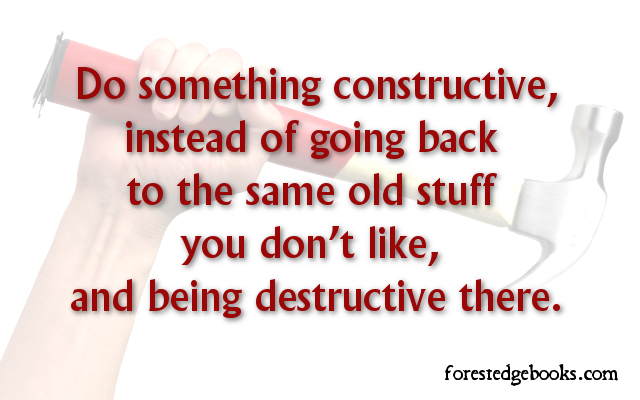
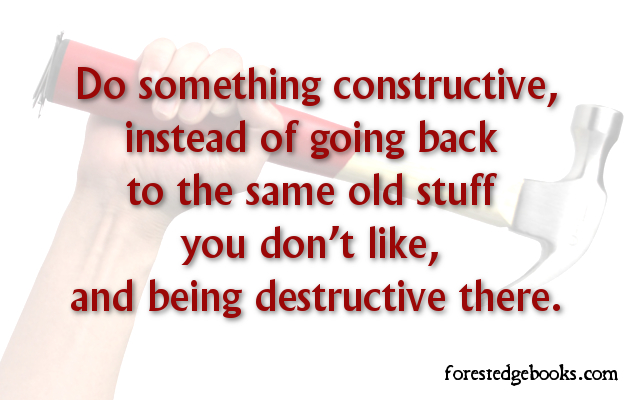
Do something constructive, instead of going back to the same old stuff you don’t like, and being destructive there.

Be constructive, not destructive

Who knows—maybe you’ll change the world with your new game.

At least you’ll no longer be unfairly burdening those whose games you no longer care for.


Why would normally sane people take teenagers out into the wilderness of Wyoming to walk for 18 miles?

My husband and I just returned from rough camping for three days and two nights with a bunch of teenagers, and it’s called “Trek.”

We weren’t the only ones, either, to take on this insanity.

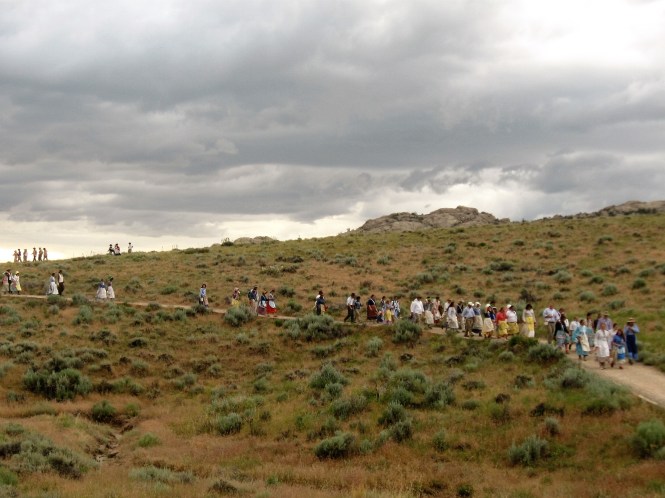
While Dave and I were responsible for eight teenagers, 13-17 years old, three other married couples from our ward (or congregation) accompanied us with their groups of eight kids (our two teenagers among them), along with nine other groups from our stake (about the size of a diocese).  We were “Pa” and “Ma” and they are our trek “kids.” All total, there were nearly 500 of us on this adventure.

IMG_1193

The Hyrum 12th Ward Trekkers

IMG_0870

Dave and my trek “kids,” before our “family” got too dusty and dirty.

At 6 am on Thursday, nearly 400 of us piled into ancient school buses with dubious safety features (about 100 followed in chase vehicles with our gear and food), drove for 6 hours on uncomfortable seats with no A/C, and spent the weekend pretending to be 19th century pioneers.

Yes, that means wearing dresses, aprons, and bonnets for girls. Because not all of our participants can sew, I made eight skirts, seven bonnets, seven aprons, and one relatively authentic pioneer shirt for my cute husband. The boys wore suspenders, long-sleeve shirts, long pants, no jeans, and bandannas. (But modern shoes, thank goodness.)

IMG_1156

Dave and I and two of our “real” kids. (The males in our family do know how to smile. Just not for cameras.)

Why would we go to so much effort, and drive for so long, just to walk around in the wilds of Wyoming?

Because our teenagers deserved it.

Not to suffer—which they did, but only mildly. But to discover incredible, amazing things about themselves.

Now I know I recently wrote about why the most dangerous words are “I deserve,” but here’s one thing all people everywhere deserve: perspective.

We all also deserve to discover a few things about ourselves. For instance . . .

Our teenagers deserve to discover their strength. Our kids are typical: they love their electronics, their games, their music, their cars . . . and they had none of those on trek. No, not even cell phones. (There really isn’t coverage out there, anyway.)

IMG_0995

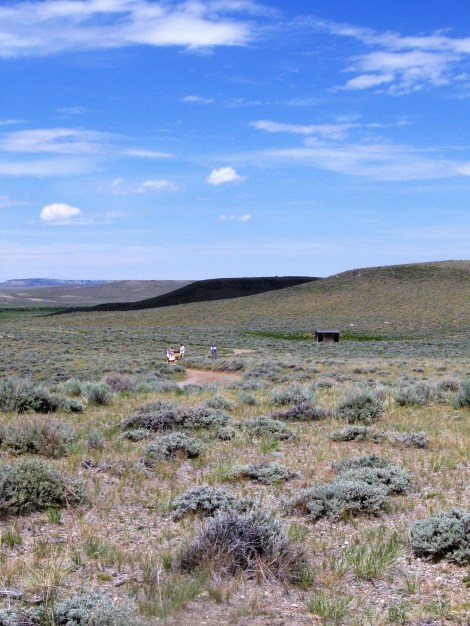
See any cell phone towers?

All of this means that our teenagers were, overall, soft. (So were most of us adults, to be fair.) While we’ve been trying to prepare these kids since March for this adventure—encouraging them to go walking, and even taking them out ourselves—I think only a handful were fully prepared for the experience.

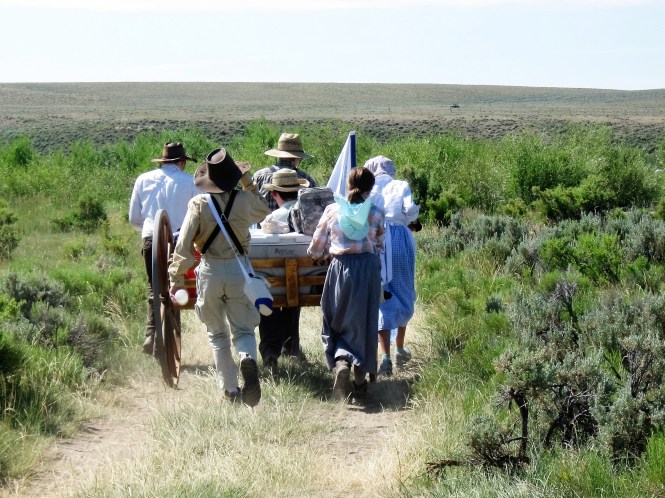
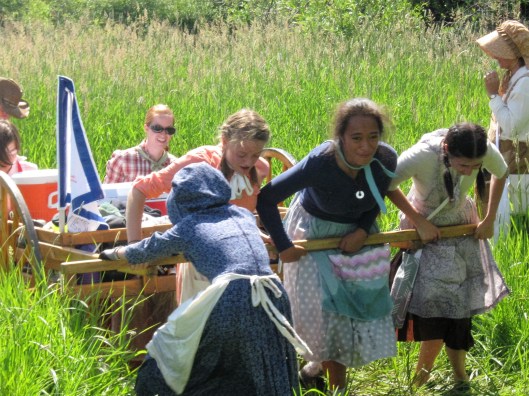
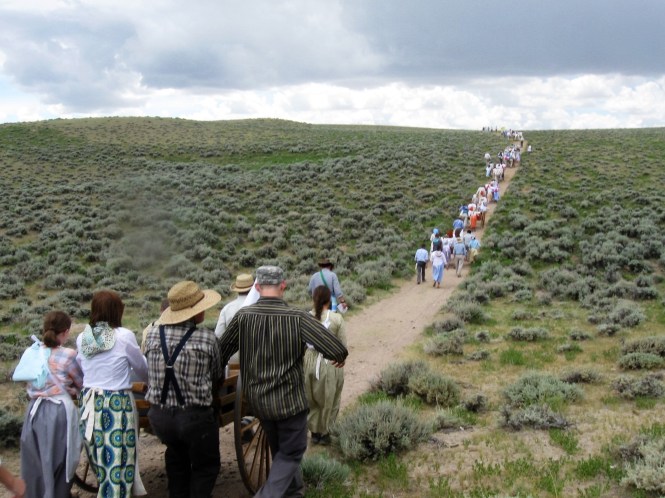
The second day of trek required 10 miles of hiking (later, we learned it was actually 12, but the senior citizen missionaries leading us initially said only 10, so that they kids didn’t lose heart). The terrain was varied and beautiful, but dusty and difficult, especially pulling and pushing a 19th century handcart through the sand.

IMG_1081

(Knowing how much I love epic-looking clouds, God generously provided some for our photos.)

The kids grew tired, despite the water and Powerade and Jolly Ranchers and hoagie sandwiches and bags of Milano cookies. (No, we didn’t eat like pioneers—that’s for sure.)

But they persevered. We “Trek Parents” were always by their sides to encourage and help, but we didn’t need to do much because the kids helped each other. They told stories. They made up song lyrics. They cheered when boys tried to sneak off subtly into the bushes to relieve themselves, and returned victorious from watering the shrubs despite threats to sensitive body parts from mosquitoes.

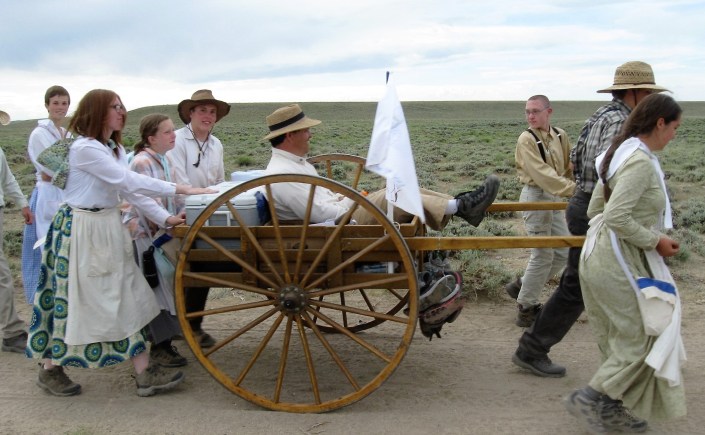
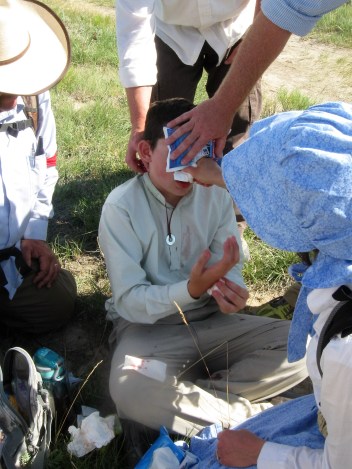
When one of our trek sons developed the most epic nosebleed ever, and the EMT and nurse who accompanied our group of one hundred finally got the bleeding stopped, they recommended that he ride for a time, seeing how pale he was.

IMG_1046

Our kids hastily made room in the handcart, helped in their “brother” get in, then, without any complaint about the added weight, cheerfully pulled him to the river where we crossed, pioneer-like, three times in the rushing water, pulling their brother.

IMG_1050

IMG_1068

Our teens deserve to discover their strength, and their compassion, and their fortitude.

IMG_1070

IMG_1059

Trek isn’t some exercise in futility—walking in enormous circles without running water or bathrooms. (And the porta-potties were few and far between. At one point, I took matters into my own hands by holding up a tarp and letting girls hide in front of me to relieve themselves on the Oregon trail. Quite literally on the trail. That’s why we brought lots of flushable wipes with us.)

IMG_1105

The disparity of porty potties. We taught the men they were allowed to water the bushes. Leave the potties to those of us wrestling with skirts, aprons, and bloomers.

Trek is an exercise in perspective, which our teenagers deserve to understand.

It think few people realize this, but over half a million people used the Oregon/California/Mormon Trail over a span of 25 years—from 1843 to 1869. The trail was so well-used that the original wagon ruts are still quite visible, nearly 150 years after the last wagons used them.

IMG_1120

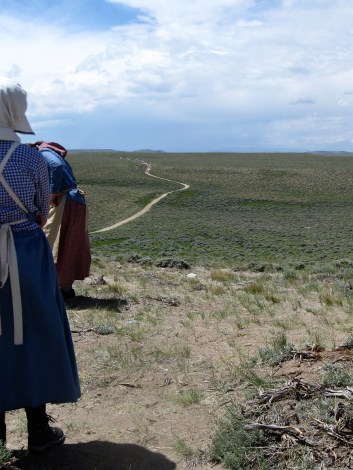
These are the actual wagon ruts, from 150 years ago, caused by 500,000 pioneers. The distance, astonishing. The vista, immense. The trees and water, non-existent.

Among the 500,000 who trekked west were 60,000 Mormons, fleeing the persecution and mobs of Missouri and Illinois. In fact, they frequently trekked on the other side of the rivers, away from other pioneers who still saw them as targets for persecution and theft. The Mormons figured no one would bother them in the wild west (part of which eventually became Utah), so they took to wagons, and later handcarts, to get there. Most traveled safely, with their mortality rates similar to that of the rest of the country.

IMG_1119

Except for two groups of poor immigrants from England, Sweden, and Denmark. They arrived in America with very little money, had to build handcarts, and got a late start from Iowa City (now Omaha, Nebraska). The Martin handcart company had 665 immigrants, the Willie company around 500. They didn’t leave until August, when they should have been arriving in Salt Lake City, 930 miles away. (You can read more in detail about these companies here.)

Wyoming weather is unpredictable, and 1856 was brutal. In early October, snowstorms hit the beleaguered handcart companies, covering the poorly-dressed and running-out-of-food immigrants with over a foot of snow. It was impossible for them to progress, and they’d been crossing rivers with chunks of ice floating in it. Freezing, without proper clothing or shoes, and surviving on only half a cup of flour a day, the handcart companies were doomed. One group, the Martin Company, eventually took shelter in a cove which protected them from the Wyoming winds, but not the snows.

IMG_0982

Martin’s Cove, Wyoming

It was here that we first took our teenagers, and explained to them that it was sacred and hallowed ground, for not only did the handcart pioneers take shelter there, over 50 died and were buried in unmarked graves. President Gordon B. Hinckley also stated some years ago that the Savior walked there, making it akin to a temple.

Here the Martin Company waited for rescue parties, which Brigham Young had sent from Salt Lake City, over 350 miles away. Sixteen supply wagons and many healthy men headed out immediately, but traveling by wagon on unimproved roads with snows flying meant their progress would also be hampered. (Eventually 250 wagon teams were dispatched.) Many of these rescuers also suffered from hunger, illness, and exposure because they went to help.

When they found the Martin Handcart company, the immigrants were beyond frail, many of them dying, and couldn’t cross another freezing river to get to the cove for shelter. About 15 men, most of them young men and older teens—like those we had brought with us last week—carried the several hundred people across the waist-high river, over and over again, all day long in the bitter cold and snow. Miraculously, all of the young men rescuers survived, although they suffered from the effects of their heroic deeds for the rest of their lives.

IMG_0949

One of three statues commemorating the rescuers who carried pioneers through the icy rivers to the shelter of Martin’s Cove.

This was what our teenagers deserve to see and learn; to recognize their own strength, to see what others had done. Some of our kids had ancestors who were among the immigrants or the rescuers. As they walked the three miles of the cove, they did so in silence. Imagine that—over a hundred teenagers, hiking quietly recognizing the strength and faith of those who had gone before, and the willingness of other teenagers to sacrifice to save others. They deserve to learn reverence.

Our teens also deserve to discover they can do hard things. That evening we drove on our buses an hour west to where the Willie handcart company was discovered by the rescuers. What took us only an hour to drive took the rescuers several days to accomplish in snow and wagons. Here we camped, ate far better than the pioneers did (taco salad and pudding cups, anyone?) and spent the next day hiking that 12 miles I mentioned earlier.

IMG_1091


At one point in our trek, all of the men and boys were sent on ahead, recreating the fact that many of the pioneers were women who traveled alone with their children. The men were gone because many had been recruited to join the Mormon Battalion; other men had died along the way, giving their last rations to their wives and children. Still other men went on ahead to prepare the way for their families to follow.

IMG_1121

Preparing for the “Women’s Pull” and watching our men and boys walk away.

IMG_1122

On the other side of the valley, the boys were taught for a few minutes about their responsibilities to their families, God, and community, while on our side the girls were taught about their strength and ability to do hard things.

Then the girls and Mas pushed the handcarts, by ourselves, ¾ of a mile to where the Pas and boys were waiting and watching. They weren’t allowed to come help, but just observe as we struggled through the sand to get the carts up the hill.

IMG_1123.JPG

One of my older (real) sons, who did trek four years ago, said that was the hardest moment—seeing the girls struggle and knowing that he couldn’t help.

However, another recreation we did was that of a Danish wife whose husband became too ill to continue. He told her to go on without him, but she dragged him into the cart and hauled him herself for two weeks until he improved.

On our trek, we had a Ma and Pa act that out, with us at the top of a hill watching as the small wife half a mile away struggled to heave her very tall husband into the cart, then start pulling it all by herself. Even though it wasn’t “real,” still I couldn’t take any more pictures because I was too teary-eyed, watching my friend try to get her husband up that sandy hill.

IMG_1110.JPG

After a minute, one of our leaders said, “Any of the young men here want to go help?”

They did, four of them, eagerly jogging down the hillside to rush to her aid and help her push and pull her husband to the top of the hill. I have no pictures of it, because it was a sacred moment. None of us need photos to remember that.

Our teens deserve to discover that there’s nothing more important than family. Ten miles into that hike, our group paused at Willie’s Meadow, where the handcart company of 500 finally had to stop, out of food and facing too deep of snows. The rescuers found them, too, and got them over Rocky Ridge, 16 miles away to where the supply wagons had stopped, unable to go farther. After that ridge, another 13 people died, and after they were buried, two of the men who buried them also died.

It was in the meadow, where the kids were told about the Willie company, that we handed each teenager a letter, written some weeks ago by their parents. One hundred teens then went off on their own to sit in silence and read their letters, and spend a few minutes writing in their journals.

IMG_1152

IMG_1151

All of Dave’s and my trek “kids.”

Again, complete silence. Dave and I quietly took pictures, and felt that even our whispering was too loud as we watched our trek kids, our own two teenagers, and about 90 more read, contemplate, and even meditate in an area of complete peace and tranquility.

That evening our ward group—about 50 of us—sat around a campfire and talked about our impressions of the two days, of what we learned.

IMG_1171

Teenager after teenager stood up and expressed their thoughts, talked about their love for their families, their ancestors, and those who were there that day helping them to learn.

That night the sky was astonishing—no moon, no light pollution, and no clouds meant that our kids could stare up into a sky crowded with stars and the Milky Way, and feel the universe come down and touch them. Even after such an exhausting and long day, no one wanted to go to their tents just yet. And so Dave and I stood with our eight adopted trek kids, after our “family” prayer and a group hug (which was more of a scrum), and gazed at the heavens which gazed back at us.

Finally, at midnight, we sent them off to bed, reminding them we had camp to take down in the morning, and visit Rock Creek to see where the rescue wagons had been, before the long drive home.

At Rock Creek, where the 15 of the Willie Company had died, we saw their burial area, and sat down on wooden planks for a devotional. That’s when the storm came, an isolated thunder shower, dumping cold rain and even hail upon us as our stake president tried to talk to us about the sacrifices and faith of the pioneers.

IMG_1220

We see the storm coming, and realized that we packed in another vehicle all of our jackets and ponchos. There was nothing we could do but wait to be hit.

We shivered. We froze. And, because it was before our lunch of more sandwiches, grapes, and even soda and more Milano cookies (there’s a Pepperidge Farm factory in our valley–lucky us), we were hungry.

For ten minutes we experienced a tiny fraction what the pioneers did, and it was utterly miserable. One of our leaders said that he had prayed we would have the weather we needed. Apparently, we needed to feel a little bit of discomfort in our very comfortable lives.

After the storm passed, we were able to take shelter in those buses which seemed to be as luxurious as a hotel. (Ok, not quite, but you see where I’m going with this.)

IMG_1203

Even though the school buses were miserable, they were far better and much faster than wagons, or handcarts.

IMG_1246

Exhausted fellow Mas and Pas, trying to sleep.


IMG_1245

(Wait–this means I’m the only responsible adult awake on the bus?!)

It’s now been a few days since we’ve returned, and I’ve finally got all the laundry washed and put away, the tents swept out, the Dutch ovens reseasoned, and the many supplies we gathered and purchased stowed away. The mosquito bites are healing, and last night I saw all of my trek daughters again, along with several of their mothers.

Would they say that trek was “fun”? Parts of it definitely were, especially for my 17-year-old daughter who was the only one who took a bath for three days, because the swift current of the Sweetwater River pulled her under briefly.

IMG_1079

But “fun” wasn’t the point. Over and over the parents of my kids said, “She said it was the best experience of her life,” and “He even broke down as he said how great it was,” and “She said it was a lot harder than she expected, which meant it was even better than we hoped for,” and “It changed him.”

So why did we drag these kids in pioneer gear out to the wilderness and walk them near to death (or so some claimed)?

Because they deserved it. Everyone did.

IMG_1161

(Pa Mercer wore the right boots, but not the right socks, which left him with many blisters. However, riding on the handcart proved more uncomfortable than walking, so his ride lasted about 50 yards. He bailed out when he saw the first major dip in the trail coming, to the relief of our kids.)

IMG_1022

(And I deserve to see my #6 child smile.)

The most dangerous words are “I deserve.”

The worst decisions I’ve ever made can be traced back to my believing that I “deserved” something.

No good action follows the declaration that we “deserve” something. I know the internet is awash in memes that declare we all deserve better, and should bend all efforts to attaining what we so desperately want and feel we should have, but such focus on the self leads to very dangerous, wholly self-interested thinking.

Whoa–let me get out of the way first before I’m mowed over . . .

We use the words “I deserve” to prove why we should have a benefit, and why possibly someone else shouldn’t. Why we should be given an endowment, an entitlement, first dibs, or even that perfect parking space.

We justify indulging ourselves in a multitude of ways—from spending too much and eating too much and pampering too often—all on the basis of our “deserving” it.

We say “I deserve” to prove that we shouldn’t be inconvenienced, or mistreated, or insulted, or hurt.

But other people can be. They’re not as worthy as us. They don’t deserve what we get.

“Well, that’s a little different . . .”

We claim “I deserve” when we aim to promote ourselves, even at the risk of demoting someone else. When we demand preferential treatment, ahead of everyone else. The inconsequential, the tender, the innocent, even the guilty and the important “deserve” to be trampled in our rush to get what we “deserve.”

I deserve” means no one better get in my way, or tell me anything other than I’m the most special creature ever created, even though seven billion people also inhabit this earth, along with a trillion other living organisms. We think, for some inexplicable reason, that the world owes us something.

We tell ourselves “I deserve” to justify our greed, our selfishness, our childishness, and our often vain ambitions. 

‘Ms. Clinton, some have suggested that you aren’t healthy enough or are too old to pursue the presidency. Do you have a comment on that?’. I knew I had crossed a line for her right away. She snapped back, ‘It’s my turn. I’ve done my time, and I deserve it.

Think about what happens when people think “I deserve”: They believe they can justify any behavior, tweak any law, get away with any indiscretion, or rationalize any sin because they “deserve” to.

The word itself suggests the opposite of serve: de-serve.

But no one deserves anything, especially not pain, especially not anger, especially not suffering.

I do, however, tell my children that everyone deserves kindness; but that’s because I expect them to give kindness, not demand it from anyone else.

Does anyone else hear a toddler in their head, screaming, “Gimme gimme gimme!”

Be very, very wary anytime someone says, “I deserve.” Nothing unselfish follows such a declaration.

And be even more wary when you begin to think this way for yourself.

I deserve

“Tonight,” Perrin said, “I decided the most harmful sentences begin with, ‘I deserve.’” Book 4, The Falcon in the Barn